
Google's TurboQuant reduces AI LLM cache memory capacity requirements by at least six times
The Challenge of LLM Memory Constraints
As large language models (LLMs) continue to scale, the hardware requirements to run them effectively have become a significant barrier for developers and enterprises alike. At the heart of this bottleneck is the Key-Value (KV) cache. When an LLM generates text, it must store the intermediate computational states of previous tokens to predict future ones. This KV cache grows linearly with sequence length, consuming massive amounts of high-speed GPU memory. For long-context applications, this memory footprint often exceeds the capacity of available hardware, leading to slower inference speeds and increased costs.
Understanding why memory capacity is a constraint for large language models requires looking at the architecture of modern transformers. Because the model must keep the entire context window active in memory, the KV cache frequently becomes the limiting factor for how many users a single server can support simultaneously. Without efficient management of this data, scaling AI infrastructure becomes prohibitively expensive and technically complex.
What is TurboQuant?
TurboQuant is a specialized technology designed to solve the memory bottleneck by compressing cache data. At its core, it functions as a highly efficient quantization technique that allows the KV cache to occupy significantly less space without discarding critical information. By transforming the high-precision numerical representations of the KV cache into a more compact format, TurboQuant enables models to handle larger context windows on the same hardware.
This is a major step forward in the shift toward Small Language Models and efficient inference. By reducing the raw data volume required for a single inference pass, TurboQuant democratizes access to high-performance AI, allowing developers to deploy sophisticated models on more modest infrastructure. It effectively bridges the gap between massive computational demands and the physical limitations of available hardware.
How TurboQuant Optimizes Cache Capacity
To understand the mechanics of how TurboQuant reduces memory usage, we must first address the question: How does quantization improve AI performance? Quantization involves reducing the precision of the numbers used in a model's calculations—for instance, moving from 16-bit floating-point numbers to lower-bit integer representations. While standard quantization is often applied to model weights, TurboQuant applies these principles specifically to the dynamic activation states stored in the cache.
By implementing advanced bit-packing and compression algorithms, TurboQuant achieves a reduction in memory footprint by at least six times. This allows for:
Increased Throughput: More requests can be processed in parallel because each request occupies less space in the GPU's memory.
Extended Context Windows: Models can process much longer documents or codebases without triggering out-of-memory errors.
Hardware Agnosticism: By optimizing the software layer, the benefits are realized regardless of the underlying silicon, making it a versatile tool for AI infrastructure.
Does TurboQuant affect LLM response accuracy? Generally, researchers design these quantization techniques to stay within a tolerance threshold where the impact on output quality is negligible for most practical applications. However, as with any aggressive optimization, developers should validate model outputs when precision is mission-critical.
The Impact on Cloud Infrastructure and Security
The implications of such memory savings extend deep into enterprise architecture. As organizations integrate more AI, the ability to pack more models into cloud clusters directly influences operational costs and speed. This is particularly relevant when considering the broader ecosystem of cloud services; as seen in the recent Google Completes $32B Acquisition of Wiz: A New Era for Cloud Security, the future of enterprise AI relies on balancing massive scalability with robust, hardened protection. Efficient memory management via TurboQuant allows security-focused infrastructure to run more leanly, reducing the attack surface by minimizing the number of distinct hardware instances required to host complex AI workloads.
Practical Applications for AI Developers
For developers, the goal of optimization is to build better user experiences. Consider how tools like Google NotebookLM can now turn your notes into AI videos; features like these require the underlying model to process massive amounts of unstructured user input quickly. By utilizing optimizations like TurboQuant, developers can ensure these applications remain responsive even when users upload lengthy PDFs or complex research databases. Efficient inference is the engine that makes these creative, high-latency tasks feel instantaneous.
Tradeoffs and Considerations
While the benefits of memory reduction are clear, developers must balance model speed with accuracy. When applying aggressive quantization, it is important to:
Benchmark Task Performance: Always run your specific use case against a baseline to ensure the compression does not introduce hallucinations or logic errors.
Monitor Latency: While memory usage drops, the compute cost of decompressing data during inference must be factored into your total latency budget.
Consult Official Documentation: Refer to the Google AI Research guidelines to understand the specific quantization schemes supported for different model architectures.
Conclusion
TurboQuant represents a pivotal advancement in the quest for efficient AI inference. By addressing the fundamental bottleneck of KV cache memory, it enables a new generation of high-performance, cost-effective applications. Whether you are building long-context RAG systems or interactive media tools, optimizing your cache footprint is no longer optional it is a competitive necessity. Subscribe to our newsletter for the latest technical deep dives into AI optimization and infrastructure scaling.
Related Articles
View all articles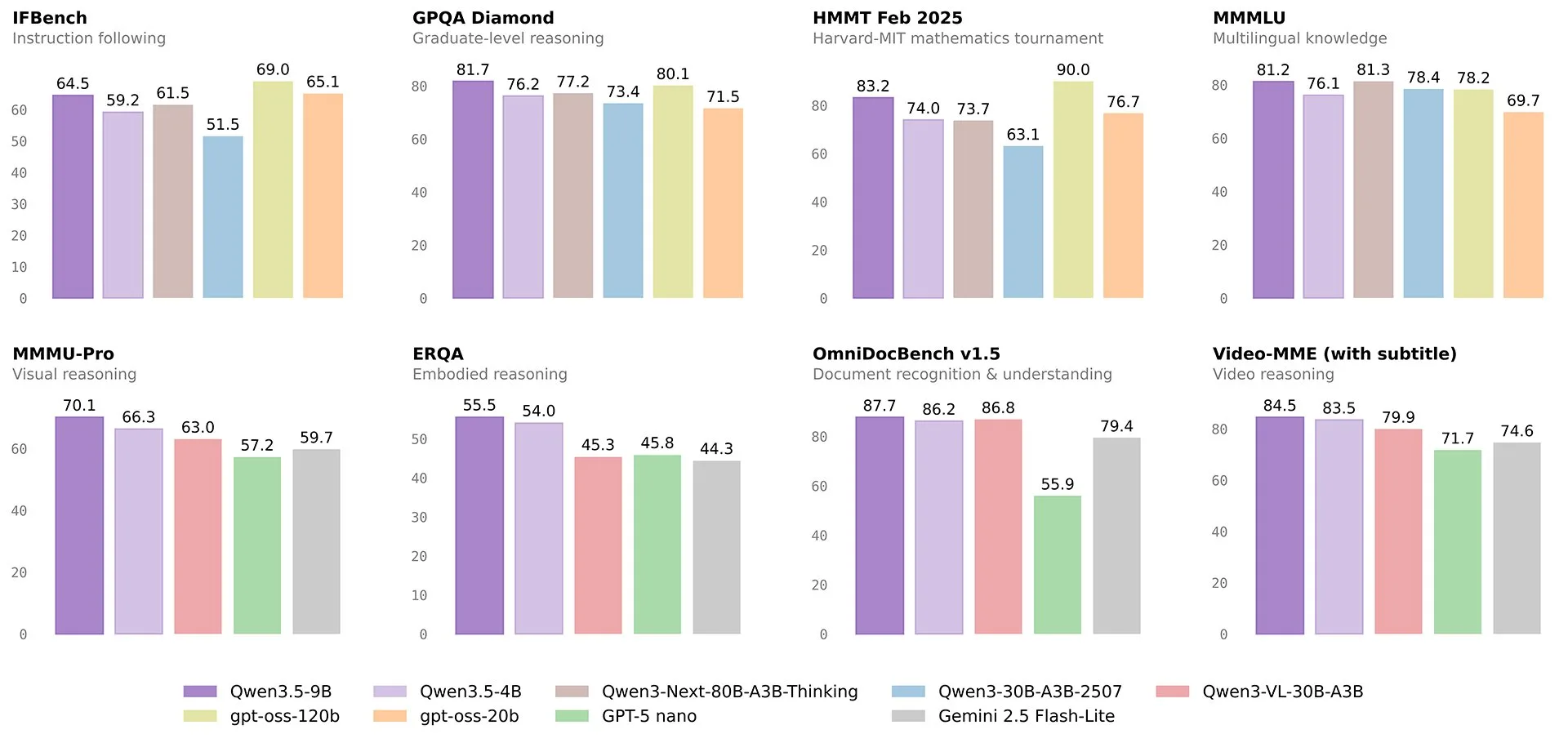
Qwen 3.5 Small Model Series Released: A New Era for Efficient AI
Explore Alibaba's Qwen 3.5 Small Model Series. Discover its innovative features, performance benchmarks, and impact on efficient AI development.

AMD Unveils Lunchbox-Sized PC for AI, Demos Massive 235B Parameter Model
Discover AMD's compact PC and its live demo of a 235 billion parameter AI model. Explore the future of AI on consumer hardware.
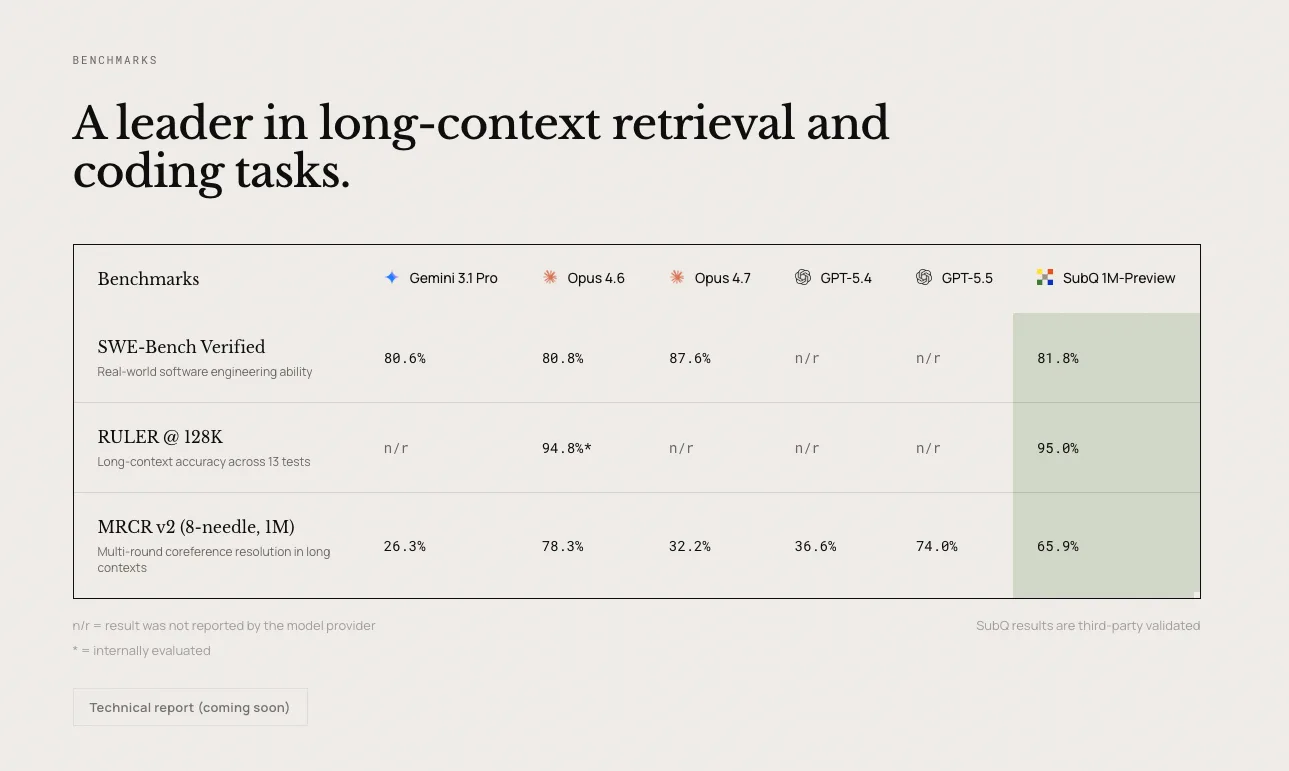
SubQ is a sub-quadratic LLM built for 12M-token reasoning
Explore how SubQ utilizes sub-quadratic architecture to enable massive 12-million-token context windows for advanced AI reasoning and data processing.
Continue exploring
Find AI agents by workflow
More in Industry Insights
Browse more articles in the Industry Insights category.
AI articles
Explore more guides and insights tagged AI.
Machine Learning articles
Explore more guides and insights tagged Machine Learning.
AI Agent Categories
Browse use-case pages for sales, productivity, coding, customer service, and more.
AI Agents Landscape
Explore the full directory map and compare agents by workflow and category.
Agent Skills
Find reusable skills, capabilities, and building blocks for AI agent workflows.