
Goldman Sachs: AI Agents Could Drive 24x Token Demand
The Goldman Sachs AI Agent Forecast: A Paradigm Shift in Token Demand
Goldman Sachs, a titan in the financial world, has released a report that could significantly alter our understanding of the future of artificial intelligence and its intersection with blockchain technology. The core prediction? That the proliferation of AI agents could lead to a staggering 24x increase in token demand. This forecast is not merely a speculative number; it points to a fundamental shift in how AI systems might operate and interact economically. For investors, developers, and enthusiasts in both the AI and crypto spaces, understanding this potential demand multiplier is crucial for navigating the evolving technological landscape. This article delves into what AI agents are, why they might necessitate tokens, the mechanics behind this projected demand surge, and the broader implications for the digital economy.
What are AI Agents and Why Do They Need Tokens?
At its heart, an AI agent is an autonomous entity designed to perceive its environment, make decisions, and take actions to achieve specific goals. Unlike simple AI programs that execute predefined tasks, AI agents possess a degree of independence and learning capability. They can adapt to new situations, optimize their strategies, and even collaborate with other agents. Think of them as sophisticated digital workers or assistants capable of performing complex operations.
The need for tokens arises from the potential economic frameworks within which these agents will operate. As AI agents become more sophisticated and engage in a wider array of tasks, they will likely require a standardized medium of exchange for several key functions:
Accessing Resources: AI agents may need to pay for computational power, data access, or specialized AI models developed by others. Tokens can serve as the currency for these transactions.
Incentivizing Actions: To encourage agents to perform specific tasks, share data, or contribute to a network, tokens can be used as rewards or incentives. This is a core concept in many decentralized autonomous organizations (DAOs) and decentralized applications (dApps).
Facilitating Transactions: In complex ecosystems, agents might need to exchange value with each other or with human users. Tokens provide a fungible and easily transferable unit of value.
Governance and Voting: In decentralized AI networks, tokens can grant agents (or their human operators) voting rights on protocol upgrades, parameter changes, or the allocation of resources, fostering a more democratic and efficient system.
The concept of tokenization AI is thus not just about digital assets; it's about building robust economic models that power and govern sophisticated AI systems. Understanding the fundamental drivers behind AI agent economics is key to grasping their potential impact.
The 24x Demand Multiplier: Unpacking the Mechanism
The prediction of a 24x increase in token demand from AI agents is a significant figure. Goldman Sachs suggests this surge will stem from the inherent operational and economic needs of these autonomous entities. The mechanism is multifaceted:
Automated, High-Frequency Transactions
Unlike human users, AI agents can operate 24/7, executing a vast number of transactions at speeds far exceeding human capabilities. If millions of AI agents are actively performing tasks, interacting, and transacting within an ecosystem, the sheer volume of micro-transactions could dwarf current levels of token utilization. Each interaction, from querying a database to executing a smart contract, could potentially involve a token transfer.
Complex Value Chains and Inter-Agent Collaboration
Advanced AI agents are unlikely to operate in isolation. They will form complex value chains, with one agent's output becoming another's input. For example, an agent specializing in market research might pass its findings to a trading agent, which then executes trades. Each step in this chain could require token-based payments or access fees, creating a cascading effect on token demand. This interconnectedness is a significant factor in how AI agents increase token demand.
New Economic Models for AI Services
AI agents can unlock new service models that are currently unfeasible. Imagine AI agents that can autonomously manage investments, provide personalized legal advice, or even orchestrate complex logistical operations. The economics of these services will likely be built around tokenized payments, creating a continuous demand for tokens as the operational currency of these future AI-powered economies.
The Role of Tokens in AI Economies
Tokens are poised to become the foundational economic layer for advanced AI ecosystems. They can represent not just value but also access, reputation, and computational resources. As AI systems evolve, the demand for these versatile digital assets is expected to grow exponentially, driving the need for efficient and scalable blockchain solutions. The future of AI tokens is intrinsically linked to the utility and economic design of these agents.
Scenarios for AI Agent Token Utilization
The potential use cases for AI agents leveraging tokens are vast and span numerous industries. Here are a few illustrative scenarios:
Decentralized AI Marketplaces: AI agents could act as buyers and sellers of AI models, datasets, and computational resources. A creative AI agent might purchase access to a specialized image generation model, paying in tokens. Conversely, a data analysis agent might sell its insights to a marketing AI agent.
Automated Supply Chain Management: AI agents could manage inventory, predict demand, and execute orders autonomously. A logistics agent might pay a token fee to a sensor AI agent for real-time shipment data, which then triggers payments to a transportation AI agent upon successful delivery.
Decentralized Finance (DeFi) Operations: AI agents could become sophisticated traders, portfolio managers, or even validators on blockchain networks. They might use tokens to stake, borrow, or lend assets, optimizing strategies based on real-time market data. The impact of AI agents on blockchain tokenomics could be profound here.
Personalized Digital Assistants: Future AI assistants, acting as agents, could manage a user's digital life, from scheduling appointments to making purchases. They might use tokens to pay for subscriptions, services, or even to interact with other specialized AI agents on behalf of their human user.
These scenarios highlight how AI agents can interact with blockchain in ways that create organic and sustained token demand, moving beyond speculative trading to fundamental operational necessity.
Implications for Blockchain and Crypto Markets
The Goldman Sachs prediction carries significant implications for the broader blockchain and cryptocurrency markets. A 24x increase in token demand, if realized, would represent a substantial inflow of capital and utility into the digital asset space.
Increased Utility and Adoption
This surge in demand would move tokens beyond their current speculative nature for many use cases, grounding them in real-world economic activity. This could lead to increased adoption of blockchain technology as more applications and services become token-enabled to cater to AI agents. The future of decentralized economies is increasingly being shaped by such innovative applications.
Scalability and Infrastructure Demands
Current blockchain networks may struggle to handle such a massive increase in transaction volume and speed. This could accelerate the development and adoption of Layer 2 scaling solutions, sharding, and more efficient consensus mechanisms. The demand for robust and scalable blockchain infrastructure will become paramount.
New Investment Opportunities
For investors, this forecast points to potential growth in specific sectors of the crypto market. Projects focused on AI integration, decentralized infrastructure, and utility tokens designed for AI agent interaction could see significant interest. Understanding the economic implications of AI agents for the future is becoming a key investment thesis.
Regulatory Considerations
As AI agents become more integrated into economic systems through tokens, regulatory bodies will face new challenges. The autonomy of these agents and their role in financial transactions will necessitate clear guidelines and frameworks to ensure security, transparency, and compliance.
Potential Challenges and Considerations
While the outlook is promising, several challenges need to be addressed for this AI agent-driven token demand to materialize:
Technical Hurdles
Developing AI agents capable of complex economic interactions and ensuring seamless integration with blockchain protocols is a significant technical undertaking. Issues like interoperability between different AI systems and blockchains, and ensuring the security and immutability of token transactions, remain critical.
Economic Design and Tokenomics
The success of tokenized AI economies hinges on well-designed tokenomics. Poorly designed models can lead to inflation, lack of utility, or centralization, undermining the intended benefits. What drives demand for AI tokens must be carefully engineered into their core design.
Security Risks
Autonomous AI agents interacting with financial protocols present new security vulnerabilities. Malicious actors could exploit these agents or the protocols they interact with, leading to significant financial losses. The risk of bosses realizing their companies have been swarmed by legions of redundant AI agents also highlights potential operational inefficiencies that need careful management.
Ethical and Governance Concerns
Questions around accountability, bias in AI decision-making, and the governance of decentralized AI networks are paramount. Ensuring that AI agents operate ethically and in alignment with human interests will be a continuous challenge.
Looking Ahead: The Evolution of AI and Tokenomics
The Goldman Sachs report serves as a powerful indicator of the convergence between artificial intelligence and blockchain technology. The prospect of AI agents driving a 24x increase in token demand is not just a financial prediction; it's a vision of a future where AI systems are deeply embedded in our economic fabric, powered by decentralized digital assets. The ongoing evolution of AI and tokenomics suggests a future where intelligent agents will play an increasingly critical role in managing value, resources, and complex systems.
As we move forward, the development of more sophisticated AI agents, coupled with advancements in blockchain scalability and security, will be key to unlocking this potential. The interplay between AI's growing economic footprint and the established principles of decentralized economies promises a transformative era. For those looking to understand the forefront of this revolution, staying informed about the latest developments in top AI agent categories by demand and the underlying economic models is essential.
The journey from here to a world where AI agents are major drivers of token demand will involve overcoming technical, economic, and ethical challenges. However, the potential rewards – a more efficient, automated, and decentralized global economy – make this a future worth pursuing. Bosses realizing their companies have been swarmed by legions of redundant AI agents is a cautionary tale, but the underlying technology of AI agents and their potential integration with tokens offers immense promise.
Related Articles
View all articlesHow to Build Your Own Agent Harness: A Comprehensive Guide
Learn how to build your own agent harness. This guide covers essential components, frameworks, and step-by-step development for custom AI agent setups.
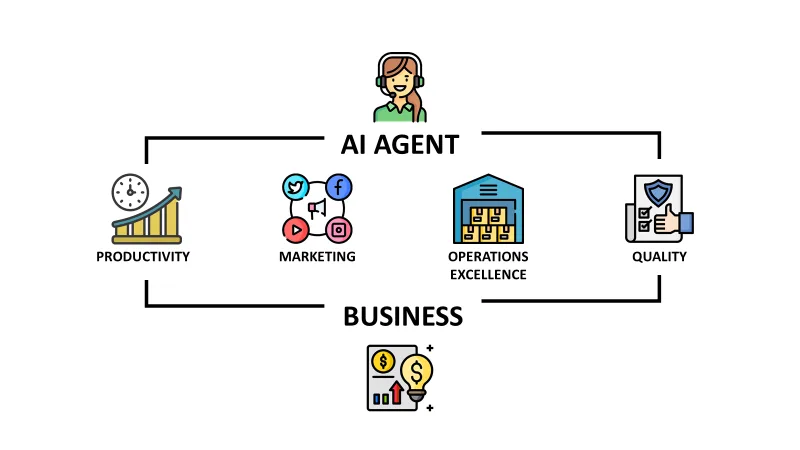
How to Make AI Agents Work for Your Business: A Strategic Guide
Learn how to effectively integrate AI agents into your business operations. Discover strategies for deployment, workflow automation, and scaling your AI capacity.
Runta Secures $20M Seed for AI Agent Execution Layer
Discover how Runta's $20M a16z-backed AI agent execution layer addresses critical production challenges like token efficiency, security, and operational cont...
Continue exploring
Find AI agents by workflow
More in Industry Insights
Browse more articles in the Industry Insights category.
AI articles
Explore more guides and insights tagged AI.
Blockchain articles
Explore more guides and insights tagged Blockchain.
AI Agent Categories
Browse use-case pages for sales, productivity, coding, customer service, and more.
AI Agents Landscape
Explore the full directory map and compare agents by workflow and category.
Agent Skills
Find reusable skills, capabilities, and building blocks for AI agent workflows.