How to Build Your Own Agent Harness: A Comprehensive Guide
What is an Agent Harness?
In the rapidly evolving landscape of artificial intelligence, the concept of an agent harness is becoming increasingly critical. At its core, an agent harness is a foundational architecture or framework that facilitates the development, deployment, and management of AI agents. Think of it as the operational backbone that allows individual AI agents, or collections of agents, to communicate, coordinate, and execute tasks effectively. It provides the necessary infrastructure for agents to interact with each other, with external systems, and with users, abstracting away much of the complexity involved in multi-agent systems. This guide is for developers, researchers, and AI enthusiasts looking to gain a deeper understanding of how to build agent harness solutions tailored to their specific needs.
The rise of autonomous AI agents and the need for robust orchestration are driving the demand for flexible and customizable agent harnesses. While off-the-shelf solutions exist, building your own offers unparalleled control and the ability to deeply integrate with unique workflows. By the end of this guide, you will have a clear roadmap for creating your own agent harness, enabling more sophisticated and efficient AI agent development.
Why Build Your Own Agent Harness?
The decision to build a custom agent harness rather than relying on existing frameworks often stems from a need for greater control, flexibility, and specific functionality. Off-the-shelf solutions can be excellent starting points, but they may not always align perfectly with the intricate requirements of a particular AI project. Building your own allows you to:
Tailor to Specific Needs: Every AI application has unique requirements. A custom harness lets you design communication protocols, state management, and interaction patterns that precisely fit your agents and their intended tasks.
Optimize Performance: You can fine-tune the harness for maximum efficiency, reducing latency and resource consumption, which is crucial for real-time applications or large-scale deployments.
Ensure Scalability: Design the harness with your future growth in mind, ensuring it can handle an increasing number of agents and more complex interactions without degrading performance.
Integrate Seamlessly: Achieve deeper integration with existing systems, databases, and APIs by building the harness with these specific connections in mind.
Control Intellectual Property: Keep your proprietary agent logic and orchestration strategies within your own controlled environment.
Moreover, building your own harness democratizes AI agent creation by providing accessible tooling. It empowers developers to experiment and innovate without being constrained by generic platform limitations. When considering how to make AI agents work for your business, a custom harness can be a strategic advantage.
What are the benefits of using an agent harness?
Even when considering building your own, understanding the benefits of the harness concept itself is crucial. An agent harness provides:
Centralized Management: Simplifies the oversight and control of multiple agents.
Standardized Communication: Establishes clear channels for agents to exchange information and commands.
Abstraction of Complexity: Hides the low-level details of agent interaction, allowing developers to focus on agent capabilities.
Error Handling and Resilience: Provides mechanisms for detecting, reporting, and recovering from agent failures.
State Management: Keeps track of the overall system state and individual agent progress.
Key Components of an Agent Harness
A robust agent harness is composed of several interconnected modules, each serving a vital function. Understanding these components is the first step in designing your own custom agent setup.
Core Logic and Orchestration Engine
This is the brain of the harness. It dictates how agents are invoked, how their outputs are processed, and how the overall task is managed. It might implement a specific orchestration pattern, such as:
Sequential Execution: Agents are run one after another, with the output of one feeding into the next.
Parallel Execution: Multiple agents can run concurrently, potentially speeding up tasks.
Conditional Execution: Agents are run based on specific conditions or decision points.
Agent Collaboration: Agents communicate and negotiate with each other to achieve a common goal.
Communication Protocols
Effective communication is paramount. The harness needs a standardized way for agents to send messages, receive instructions, and share data. Common approaches include:
Message Queues: Systems like RabbitMQ or Kafka can be used for asynchronous communication.
REST APIs: For synchronous request/response interactions between agents or with external services.
gRPC: A high-performance, open-source framework for remote procedure calls.
WebSockets: For real-time, bi-directional communication.
State Management
The harness must maintain the current state of the overall system and individual agents. This includes tracking task progress, agent status (e.g., active, idle, failed), and any contextual information relevant to the ongoing workflow. This could be managed using databases, in-memory stores, or dedicated state management libraries.
Agent Registry and Discovery
A mechanism is needed to register available agents and allow other agents or the orchestration engine to discover and invoke them. This is akin to a service registry in microservices architectures.
Input/Output Handling
The harness needs to manage how data enters and leaves the system, including parsing user inputs, formatting agent outputs, and interacting with external data sources or sinks.
Error Handling and Monitoring
Robust error detection, reporting, and recovery mechanisms are essential. The harness should log errors, alert administrators, and potentially implement retry logic or fallback strategies.
Choosing the Right Framework or Approach
When you embark on the journey to build agent harness solutions, you'll encounter various architectural patterns and frameworks. The choice of approach significantly impacts the development process, scalability, and maintainability of your system. This section explores some common considerations and relates them to broader AI development concepts.
Programming Languages and Libraries
What programming languages are best for building AI agent harnesses? Python is a dominant force in AI development due to its extensive libraries (like LangChain, LlamaIndex, SciPy, NumPy, TensorFlow, PyTorch) and ease of use. However, other languages like JavaScript (for web-based agents), Go (for concurrency and performance), or Rust (for safety and speed) can also be viable depending on the specific requirements of your project and the expertise of your team.
Architectural Patterns
Consider patterns that promote modularity and scalability. A microservices architecture, where each agent or core harness component is a separate service, can be highly beneficial for complex systems. Event-driven architectures, where agents react to events emitted by the harness or other agents, can lead to highly decoupled and responsive systems.
Leveraging Existing Agent Frameworks
While you're building your own harness, you might still leverage parts of existing agent frameworks. For instance, you could use a framework's agent execution engine as a component within your custom harness, or use its tools for prompt engineering or memory management. This approach combines the benefits of a robust existing solution with the customization of your own architecture. This is where understanding the difference between an agent framework and an agent harness becomes important; a framework might provide specific agent implementations or tools, while a harness is the overarching system that orchestrates them.
Artificial intelligence (AI) is intelligence—perceiving, reasoning, learning, and acting—demonstrated by machines, as opposed to intelligence displayed by humans or animals.
- Encyclopedia Britannica
Building a custom harness allows you to create a unique agent framework tailored to your specific operational needs. If you're just starting with individual agents, you might find it helpful to first understand how to build your own AI agent in 10 minutes before diving into the complexities of orchestration.
Step-by-Step Development Process
Building an agent harness is an iterative process. Here’s a structured guide to get you started on your DIY agent harness for AI applications.
Define Scope and Requirements: Clearly outline what your harness needs to achieve. What types of agents will it support? What are the primary tasks and workflows? Who are the end-users?
Design the Architecture: Based on your requirements, sketch out the core components and how they will interact. Choose your primary programming language and any foundational libraries or frameworks you intend to use. Decide on your communication protocols and state management strategy.
Develop the Core Orchestration Engine: Implement the logic that controls the flow of execution, agent invocation, and task management. This is the central piece of your harness.
Implement Communication Modules: Set up the message queues, APIs, or other mechanisms that will enable agents to communicate with each other and with the harness.
Build State Management: Develop the system for tracking and updating the state of agents and tasks.
Create Agent Integration Points: Define clear interfaces or protocols that agents must adhere to in order to be integrated into the harness. This ensures compatibility and simplifies the process of connecting different AI agents using a harness.
Develop Input/Output Handlers: Implement the logic for receiving external inputs and processing agent outputs.
Integrate Basic Agent Capabilities: Start by integrating a few simple agents to test the core functionality of your harness.
Implement Logging and Monitoring: Set up comprehensive logging to track system activity and errors. Integrate monitoring tools to observe performance and health.
Iterate and Refine: Based on initial testing, identify areas for improvement and refine your harness.
Integrating Agent Capabilities
Connecting individual AI agents to your harness is a critical phase. This involves ensuring that your agents can:
Register themselves with the agent registry.
Understand and process messages or commands sent by the harness or other agents.
Send back results or status updates in a format the harness expects.
Handle errors gracefully and report them.
This integration process highlights the importance of well-defined interfaces and clear communication protocols. For example, if your harness uses a message queue, each agent needs to know which queues to listen to and which format to use for its messages.
Testing and Optimization
Once your agent harness is taking shape, rigorous testing and continuous optimization are essential to ensure its reliability, performance, and scalability. This is where you transform a functional setup into a robust solution.
Testing Strategies
Unit Testing: Test individual components of the harness (e.g., a specific communication module, a state management function) in isolation.
Integration Testing: Verify that different components of the harness work together as expected. This includes testing the communication between agents and the orchestration engine.
End-to-End Testing: Simulate real-world scenarios by running complete workflows involving multiple agents and external interactions.
Load Testing: Stress-test your harness with a high volume of agents and requests to identify performance bottlenecks and ensure it can handle peak loads.
Failure Testing: Intentionally introduce failures (e.g., simulate agent crashes, network issues) to test the harness's error handling and recovery mechanisms.
Performance Optimization
Optimization efforts should focus on areas identified during testing:
Reduce Latency: Optimize communication protocols and data serialization/deserialization.
Efficient Resource Usage: Profile your harness to identify memory leaks or excessive CPU usage.
Concurrency and Parallelism: Ensure your harness effectively utilizes multi-core processors and can handle concurrent operations efficiently.
Database Performance: If using a database for state management, optimize queries and indexing.
Advanced Considerations and Future-Proofing
As you move beyond the initial development, consider these advanced aspects to ensure your agent harness is resilient, secure, and adaptable to future advancements in AI.
Scalability Challenges
The scalability challenges in multi-agent systems are significant. As the number of agents and the complexity of their interactions grow, the harness must be able to adapt. Consider horizontal scaling (adding more instances of your harness or its components) and vertical scaling (increasing the resources of existing instances). Designing for statelessness where possible can greatly aid in horizontal scaling.
Security
Security is paramount, especially when agents interact with sensitive data or critical systems. Implement robust authentication and authorization mechanisms. Encrypt communications between agents and the harness. Regularly audit your system for vulnerabilities. Consider how to manage access control for different agents and users.
Adaptability for Future Agent Advancements
The field of AI is evolving at an unprecedented pace. Your harness should be designed to accommodate new types of agents, emerging AI models, and evolving interaction paradigms. This means adopting modular designs, using standard interfaces, and avoiding hardcoding logic that could quickly become obsolete. Keeping your harness flexible is key to future-proofing your AI agent development efforts.
Building your own agent harness is a significant undertaking, but it offers immense rewards in terms of customization, control, and performance. It empowers you to create truly bespoke AI solutions. Ready to build your own agent harness? Start by exploring the core components and choosing the right approach for your specific AI project.
Related Articles
View all articles
How to Build Your Own AI Agent in 10 Minutes
Discover how to build your own AI agent in just 10 minutes with this step-by-step guide. Learn the basics and get started with AI agent creation today.
Top AI Agent Development Companies for Service Businesses in 2026
Compare top AI agent development companies for service businesses in 2026, including firms building support, scheduling, voice, sales, and workflow agents.
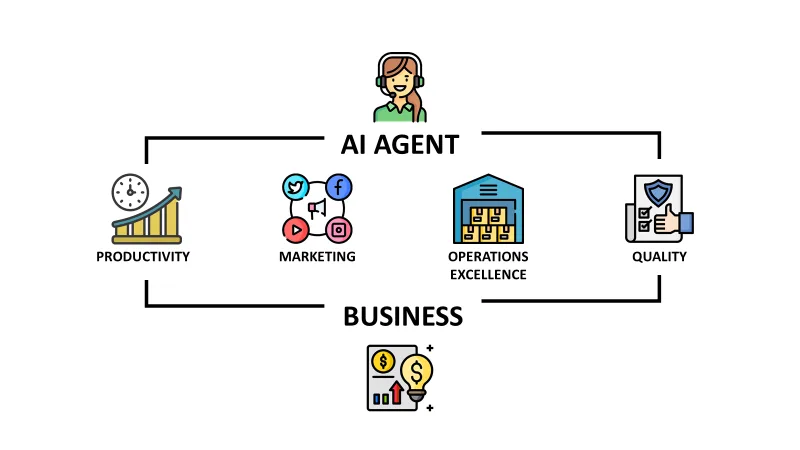
How to Make AI Agents Work for Your Business: A Strategic Guide
Learn how to effectively integrate AI agents into your business operations. Discover strategies for deployment, workflow automation, and scaling your AI capacity.
Continue exploring
Find AI agents by workflow
More in Industry Insights
Browse more articles in the Industry Insights category.
AI Agents articles
Explore more guides and insights tagged AI Agents.
Development articles
Explore more guides and insights tagged Development.
AI Agent Categories
Browse use-case pages for sales, productivity, coding, customer service, and more.
AI Agents Landscape
Explore the full directory map and compare agents by workflow and category.
Agent Skills
Find reusable skills, capabilities, and building blocks for AI agent workflows.