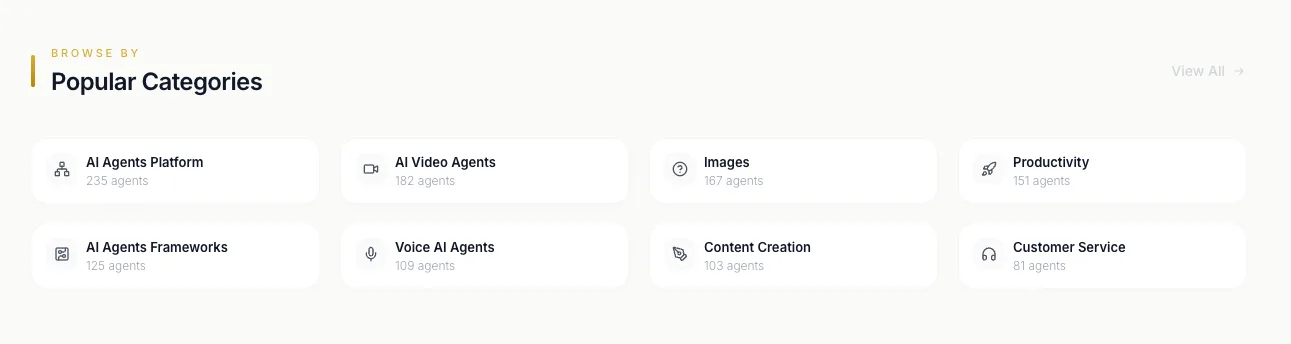
Top AI Agent Categories by Demand
Introduction to Autonomous AI Agents
The landscape of artificial intelligence is undergoing a fundamental shift. We are moving away from passive, chat-first interfaces toward proactive, action-first agentic workflows. An AI agent is a software system capable of perceiving its environment, reasoning about its goals, and executing tasks autonomously to achieve specific outcomes. Unlike a traditional chatbot, which is limited to conversational responses based on predefined intent, an AI agent can interact with external tools, APIs, and databases to perform work without constant human intervention.
This guide is designed for business leaders and technical stakeholders who need to understand the current AI agent categories driving market demand. By identifying which operational domains are most ripe for automation, you can better allocate resources, mitigate technical debt, and prepare your organization for a future defined by autonomous systems.
Customer Support and Engagement Agents
Customer experience remains the primary driver for early AI automation adoption. High-demand agents in this category move beyond simple FAQ responses; they handle complex, multi-turn interactions that require deep context retrieval. These agents can authenticate users, access CRM data, and execute transactions such as processing a return or updating account preferences directly within the chat interface.
What is the difference between a chatbot and an AI agent? While a chatbot is a user interface for retrieving information, an AI agent is a functional entity capable of completing a workflow. When a customer asks to change their shipping address, a chatbot might provide a link to a form. An AI agent verifies the request, checks the order status against the logistics database, updates the record, and confirms the change via email—all without human oversight.
Data Analysis and Research Agents
In the enterprise environment, the volume of unstructured data often outpaces the human capacity to synthesize it. Data analysis agents act as force multipliers for research teams. These agents are designed to ingest large datasets, identify patterns, and generate actionable insights or executive summaries.
These agents are particularly valuable for vertical-specific compliance tasks. By constantly monitoring regulatory changes and cross-referencing them against internal policy documents, they reduce the risk of human error. Law firms are a clear example of this — as AI handles document review and compliance monitoring, many are simultaneously working with outsourced legal virtual assistants to manage the human touchpoints that agents can't yet fully automate: client intake, scheduling, and follow-up communication. As organizations scale, the ability to automate the synthesis of information becomes a competitive advantage, turning raw data into strategic intelligence in real time.
Software Development and Coding Assistants
The demand for specialized AI software development tools is reaching an inflection point. Autonomous coding agents are no longer restricted to simple autocomplete functions. They are now being integrated into CI/CD pipelines to perform refactoring, write unit tests, and resolve dependency conflicts.
These agents excel at handling the tedious, repetitive tasks that often lead to developer burnout. By automating the boilerplate aspects of software maintenance, engineering teams can focus on higher-level architecture. However, businesses must understand the financial models behind these tools. Understanding how AI agent builders are actually making money is critical for evaluating whether you should build a custom solution or subscribe to a platform-based agent service.
Emerging Infrastructure and Protocols
As the complexity of AI systems grows, the industry is shifting toward decentralized, multi-agent collaboration. This move addresses the need for interoperability between agents owned by different departments or even different companies. By utilizing decentralized infrastructure for autonomous agents, enterprises can create secure, verifiable environments where agents trade resources, share data, and coordinate tasks without a central point of failure.
This transition is essential for industries where trust and auditability are paramount. Standardized protocols allow for modularity, ensuring that an agent specialized in logistics can seamlessly "talk" to an agent specialized in accounting, creating a unified, automated business fabric.
Evaluating Agent Readiness: A Strategic Checklist
Before deploying autonomous systems, businesses must assess their operational maturity. The risks of using autonomous AI agents—such as "hallucinations" in decision-making or unauthorized API execution—can be mitigated through robust testing and human-in-the-loop guardrails. Use this checklist to evaluate your readiness:
Define the Scope: Is the task repetitive, rule-based, and data-heavy? If so, it is a prime candidate for an agent.
Data Quality Audit: Does your organization have structured, accessible data that the agent can ingest?
Security and Compliance: Have you implemented identity and access management (IAM) controls for your agents?
Human-in-the-loop (HITL): At what stage of the workflow does the agent require human sign-off for critical actions?
Technical Debt: Are your current APIs documented and stable enough for autonomous interaction?
Conclusion
The shift from simple chatbots to autonomous agents marks a major evolution in digital productivity. Whether you are automating customer support, research, or development workflows, the core value lies in the agent's ability to act, not just inform. As you explore these AI agent categories, focus on identifying high-impact, low-risk areas where automation can provide immediate relief to your teams. Ready to integrate AI agents into your business operations? Contact our strategy team to assess your current workflows and identify the highest-ROI agent categories for your specific industry.
Related Articles
View all articles
Top AI Agent Development Companies for Service Businesses in 2026
Compare top AI agent development companies for service businesses in 2026, including firms building support, scheduling, voice, sales, and workflow agents.
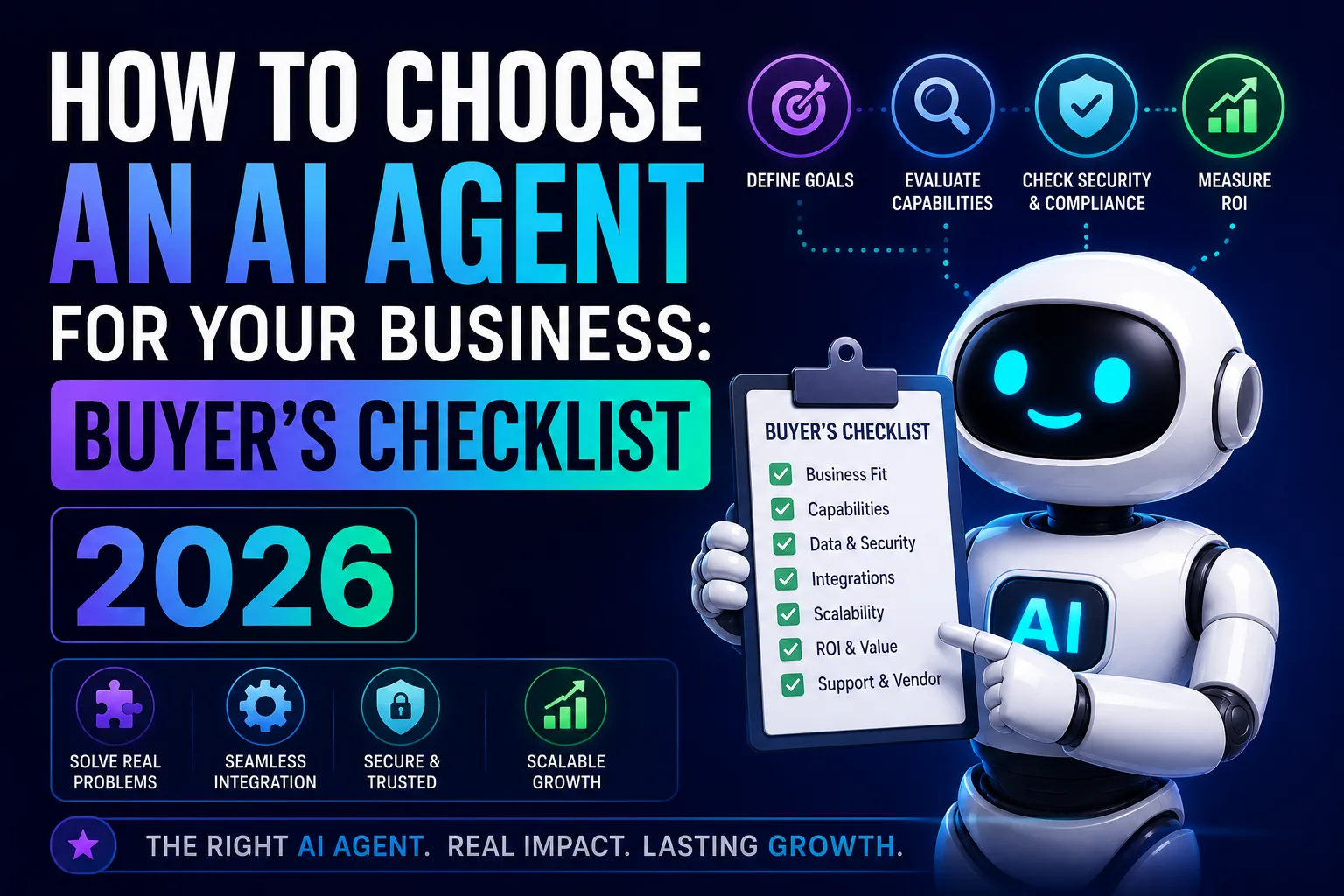
How to Choose an AI Agent for Your Business: Buyer’s Checklist 2026
Navigate AI agent selection for your business with our comprehensive checklist. Discover key criteria, essential features, and how to find the right fit.

How to Compare AI Agents Before Using Them in Your Business
Learn how to compare AI agents effectively. Evaluate performance, integration capabilities, and security to choose the right automation tools for your business.
Continue exploring
Find AI agents by workflow
More in Industry Insights
Browse more articles in the Industry Insights category.
AI Agents articles
Explore more guides and insights tagged AI Agents.
Automation articles
Explore more guides and insights tagged Automation.
AI Agent Categories
Browse use-case pages for sales, productivity, coding, customer service, and more.
AI Agents Landscape
Explore the full directory map and compare agents by workflow and category.
Agent Skills
Find reusable skills, capabilities, and building blocks for AI agent workflows.