How AI Agent Builders Are Actually Making Money
The Shift from Chatbots to Autonomous Agents
The landscape of artificial intelligence is undergoing a fundamental transformation. We are moving away from simple, reactive LLM wrappers which primarily function as conversational interfaces toward autonomous agents capable of executing complex workflows. Understanding how AI agent builders make money requires first recognizing this shift in value. Unlike a chatbot that merely retrieves information, an autonomous agent can interface with APIs, manage databases, and complete multi-step tasks without constant human intervention.
For developers and startups, this transition from passive assistance to active execution opens new doors for revenue. While traditional software models relied on seats or feature-gating, the agentic era is driving a more granular approach to monetization. This article is intended for product leaders, founders, and developers navigating the transition from standard SaaS to autonomous AI platforms.
Usage-Based Pricing Models: The Foundation of AI Revenue
Most builders start with usage-based pricing because it aligns directly with the underlying infrastructure costs, such as GPU compute and API token consumption. This model is often referred to as AI-as-a-service. By charging based on the number of requests, the volume of tokens processed, or the duration of an agent's active session, companies ensure that their revenue scales proportionally with their operational expenses.
Usage-based models are effective because they remove the friction of high upfront costs for the customer. However, they require sophisticated telemetry to monitor consumption. If you are building an agent platform, you must decide whether to pass through the costs of third-party LLM providers or build a buffer that accounts for your own infrastructure and development overhead. This ensures that as your users increase their agent activity, your margins remain healthy rather than being eroded by compute costs.
Enterprise Licensing and Platform Fees
As agents migrate from experimental sandboxes to critical business infrastructure, the complexity of managing them grows exponentially. Large organizations often struggle with agent sprawl, where dozens of disparate AI instances operate without centralized oversight. To solve this, vendors are increasingly offering platform-as-a-service (PaaS) models that bundle agent creation with governance, security, and integration tools.
This is where the industry is seeing a move toward centralization. When companies like Kore.ai launch platforms to act as a command center for enterprise agent sprawl, they are essentially selling the ability to manage, monitor, and secure hundreds of autonomous agents from a single pane of glass. These enterprise licenses often include annual recurring revenue (ARR) components, professional services for custom deployment, and multi-tenant management features that go far beyond simple usage-based fees.
Value-Based and Outcome-Oriented Pricing
Beyond compute costs, the most sophisticated builders are moving toward outcome-based pricing. This model treats the AI agent as a high-performing employee rather than a utility. If an agent is designed to process invoices, the builder charges per invoice successfully reconciled, rather than per token consumed. As these automated Workflows scale, businesses must ensure that transaction data flows accurately into their broader tax compliance services to prevent financial or regulatory discrepancies. This aligns the interests of the builder and the client: the better the agent performs, the more revenue the builder generates.
In this model, builders must be confident in the reliability and accuracy of their systems. To learn more about how these platforms are evolving to satisfy complex business requirements, explore how AI agents are changing product discovery and growth to reduce customer acquisition costs. By shifting the focus to business KPIs, builders can justify higher price points, as they are no longer selling code, but rather a reduction in operational labor costs.
Comparing Revenue Models
Token-based pricing: Best for high-volume, low-complexity tasks.
Subscription-based pricing: Ideal for platform access and management tools.
Outcome-based pricing: High-value model for business-critical workflows.
Hybrid models: Combines a base subscription fee with usage-based overage charges.
Trade-offs and Risks in AI Monetization
When selecting a pricing strategy, builders must account for the volatility of AI costs. As noted by the OpenAI API documentation, model costs can change based on performance updates and provider pricing shifts. If your monetization model is too rigid, a sudden spike in your underlying API costs could wipe out your margins overnight.
To build a sustainable business, consider these factors:
Infrastructure Buffer: Always maintain a margin that accounts for potential price hikes from base model providers.
Visibility: Ensure your customers have a clear dashboard to track their consumption to avoid billing disputes.
Scalability: Ensure your platform can handle the transition from a low-usage pilot to high-volume enterprise production.
Ultimately, the most successful builders are those who view AI agents as revenue-generating assets rather than mere cost centers. By combining clear usage metrics with enterprise-grade management tools, they create a sticky, high-value ecosystem that keeps customers coming back. Ready to build your own agent strategy? Download our guide on selecting the right monetization model for your autonomous AI deployment.
Related Articles
View all articles
How AI Agents Make Money: Revenue Models and Business Strategies
Discover how AI agents make money. We explore monetization models from per-outcome pricing to AaaS to help you build a profitable autonomous software business.
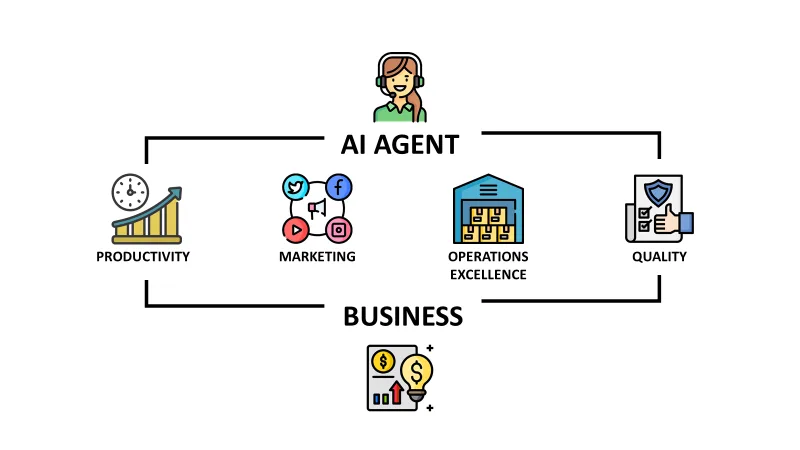
How to Make AI Agents Work for Your Business: A Strategic Guide
Learn how to effectively integrate AI agents into your business operations. Discover strategies for deployment, workflow automation, and scaling your AI capacity.
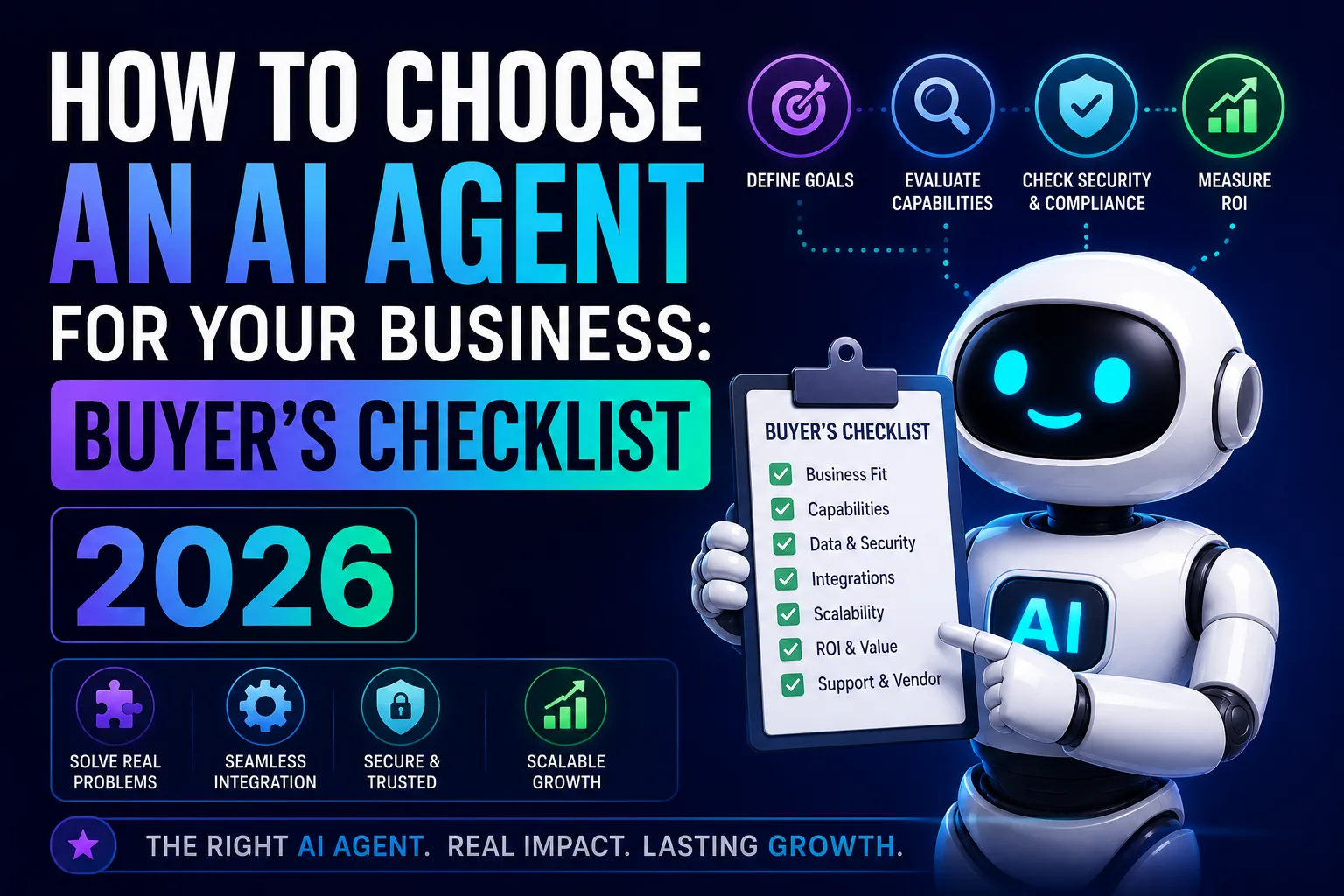
How to Choose an AI Agent for Your Business: Buyer’s Checklist 2026
Navigate AI agent selection for your business with our comprehensive checklist. Discover key criteria, essential features, and how to find the right fit.
Continue exploring
Find AI agents by workflow
More in Press Release
Browse more articles in the Press Release category.
AI Agents articles
Explore more guides and insights tagged AI Agents.
Monetization articles
Explore more guides and insights tagged Monetization.
AI Agent Categories
Browse use-case pages for sales, productivity, coding, customer service, and more.
AI Agents Landscape
Explore the full directory map and compare agents by workflow and category.
Agent Skills
Find reusable skills, capabilities, and building blocks for AI agent workflows.