How to Compare AI Agents Before Using Them in Your Business
Understanding the Role of AI Agents in Modern Workflows
The transition from static software to dynamic, autonomous systems marks a significant shift in business technology. Many leaders confuse simple chatbots with true AI agents. While a chatbot is designed to provide information through a conversational interface, an AI agent is an autonomous system capable of executing complex tasks, making decisions based on data, and interacting with other software tools to complete a workflow. To succeed, you must understand how to integrate these systems into your current operations; for a deeper look at the strategic implementation process, refer to our guide on how to make AI agents work for your business.
As companies move from simple tooling to autonomous workflows, the need for multi-agent orchestration becomes apparent. These systems allow specialized agents to collaborate, creating a more robust architecture for productivity. However, this power necessitates a structured approach to evaluation.
Defining Your Business Requirements
Before vetting vendors, you must audit your internal processes. An AI agent is only as valuable as the problem it solves. Are you looking to automate high-volume customer support tickets, or do you need a system to manage complex data entry across multiple legacy platforms? Defining clear KPIs—such as time-saved per task or reduction in manual error rates—is essential for measuring success.
When evaluating, consider the following:
Task Complexity: Does the process require subjective judgment or strictly rule-based logic?
Integration Depth: Does the agent need read/write access to your CRM, ERP, or communication platforms?
Human-in-the-Loop: At what point does the system require human oversight to verify decisions?
Key Evaluation Criteria for AI Agents
When you start to compare AI agents, you need a set of standardized performance metrics. Not all agents are built on the same architecture, and their reasoning capabilities can vary wildly depending on the underlying large language models (LLMs) and training data.
For small business owners who want to see how the leading AI agents stack up across these criteria, a side-by-side AI agents comparison can simplify the evaluation process and highlight which platform best fits their workflow needs.
Reasoning and Accuracy
Assess how the agent handles edge cases. If an agent encounters a scenario outside its primary training, does it fail gracefully, or does it attempt to hallucinate an answer? Evaluating error rates through rigorous pilot testing is non-negotiable.
Latency and Throughput
For real-time business processes, latency is a critical factor. An agent that takes thirty seconds to process a request may be unusable for customer-facing interactions. Measure how the agent performs under load and whether it maintains consistent response times during peak usage hours.
Security, Compliance, and Data Privacy
Are AI agents secure for business use? The answer depends entirely on the architecture you choose. You must prioritize vendors that offer robust data residency options and comply with industry standards such as SOC2 or GDPR. Transparency regarding how the model uses your input data for retraining is also vital; enterprise-grade solutions should allow you to opt-out of data sharing to keep your proprietary information confidential.
When assessing risks, consider the potential for data leakage. Always verify that the agent operates within a sandboxed environment with strict API permission controls. Implementing an AI Risk Management Framework provided by authoritative bodies like NIST can help you structure your security posture effectively.
Cost-Benefit Analysis and Scalability
The cost of an AI agent extends far beyond the monthly subscription fee. You must account for implementation labor, ongoing maintenance, and the potential costs of token usage or computational resources. A scalable solution should demonstrate a clear path to ROI by reducing the man-hours required for repetitive, high-stakes tasks.
Using a Structured Comparison Matrix
To avoid emotional decision-making, use a weighted scoring system. Create a spreadsheet listing your top technical and business requirements, and score each vendor on a scale of 1 to 5. This method removes bias and highlights which tool best aligns with your specific operational needs. For a more granular approach to this selection process, consult our buyer’s checklist for enterprise AI software selection.
Addressing Common Questions
What is the difference between an AI agent and a chatbot? A chatbot is a conversational interface, whereas an agent is an active participant in your workflow, capable of taking actions on your behalf.
How do you measure the success of an AI agent? Success is measured through objective metrics like task completion rate, reduction in human intervention, and the speed of end-to-end process execution.
What are the risks of implementing AI agents? Risks include data privacy vulnerabilities, model hallucinations, and the potential for cascading errors in automated workflows if proper human-in-the-loop oversight is not established.
Conclusion: Making the Final Decision
Comparing AI agents is not a one-time event but a critical component of your digital transformation strategy. Focus on vendors that prioritize transparency, security, and integration flexibility. Before committing to a full-scale deployment, always run a pilot program to observe the agent's performance in a controlled, real-world setting. By systematically evaluating your options, you ensure that your investment in automation drives genuine, measurable growth. Ready to transform your operations? Download our AI Agent Comparison Spreadsheet to start benchmarking your top candidates today.
Related Articles
View all articles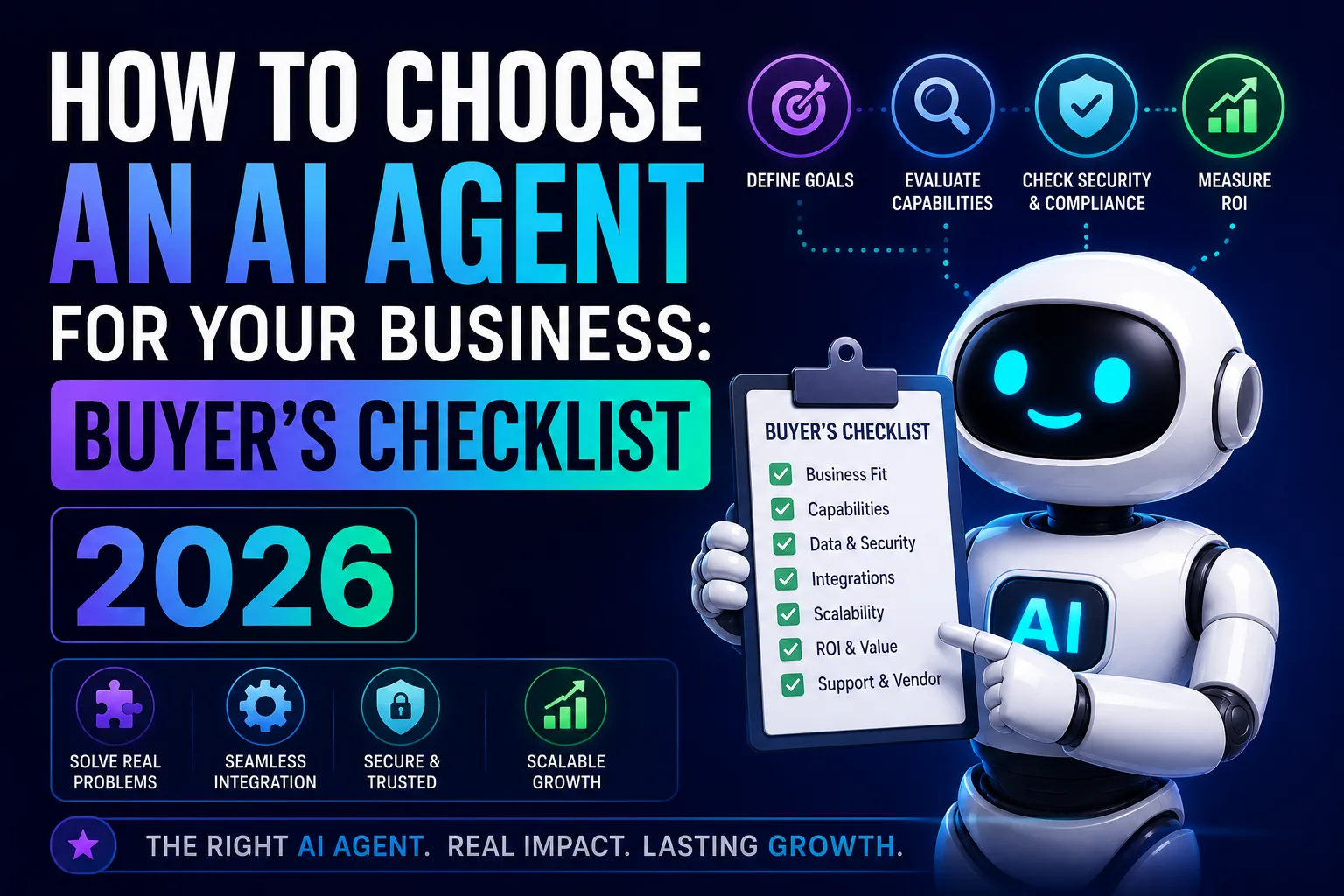
How to Choose an AI Agent for Your Business: Buyer’s Checklist 2026
Navigate AI agent selection for your business with our comprehensive checklist. Discover key criteria, essential features, and how to find the right fit.
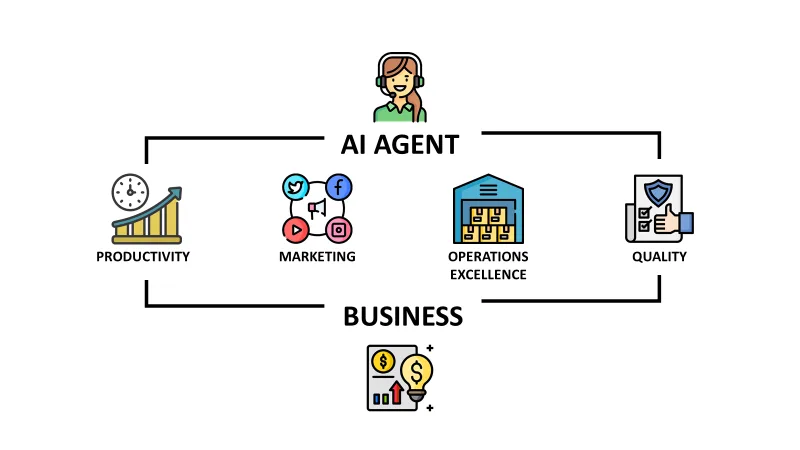
How to Make AI Agents Work for Your Business: A Strategic Guide
Learn how to effectively integrate AI agents into your business operations. Discover strategies for deployment, workflow automation, and scaling your AI capacity.

The Impact of AI Agents on Customer Support, Sales, and Business Automation
Explore how AI agents are changing customer support, sales, and business automation through faster service, lead qualification, and workflow execution.
Continue exploring
Find AI agents by workflow
More in Industry Insights
Browse more articles in the Industry Insights category.
AI articles
Explore more guides and insights tagged AI.
Automation articles
Explore more guides and insights tagged Automation.
AI Agent Categories
Browse use-case pages for sales, productivity, coding, customer service, and more.
AI Agents Landscape
Explore the full directory map and compare agents by workflow and category.
Agent Skills
Find reusable skills, capabilities, and building blocks for AI agent workflows.