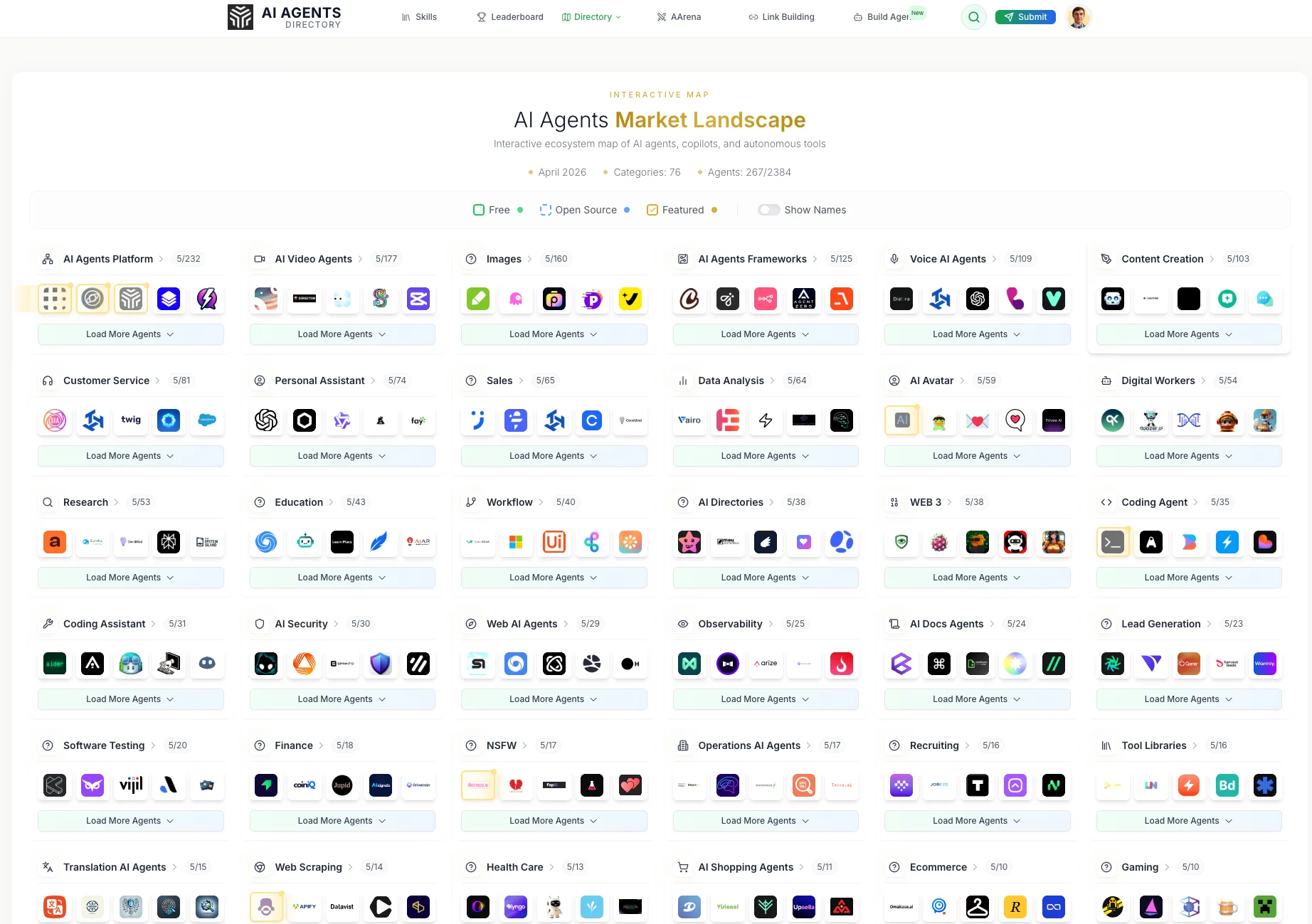
The Autonomous Marketplace: How AI Agent Directory is Building the Agentic Economy
The Dawn of the Agentic Economy
We stand at the precipice of a new economic paradigm, often referred to as the agentic economy. This isn't just about smarter software; it's about intelligent, autonomous agents capable of performing complex tasks, interacting with each other, and engaging in economic transactions without direct human intervention. At the heart of this burgeoning ecosystem lies the concept of the Autonomous Marketplace, a dynamic environment where AI agents can discover, offer, and procure services. This article delves into how AI Agent Directories are becoming the foundational infrastructure for this transformative shift, enabling the creation and scaling of the agentic economy.
For developers, businesses, and even curious individuals, understanding this evolution is key to navigating the future of work and commerce. The outcome for readers will be a clear grasp of how AI agents will operate, interact, and generate value within decentralized, autonomous systems.
What is an Autonomous Marketplace?
An Autonomous Marketplace, in the context of AI agents, is a digital ecosystem designed for decentralized, self-governing transactions and interactions between autonomous AI entities. Unlike traditional marketplaces that rely on human intermediaries for discovery, negotiation, and execution, an autonomous marketplace is built to facilitate these processes programmatically.
Key characteristics include:
Decentralization: Operations are not controlled by a single entity, promoting resilience and reducing single points of failure.
Autonomy: AI agents can independently search for needs, offer services, negotiate terms (often via smart contracts or predefined protocols), and execute tasks.
Interoperability: Agents from different developers and platforms can communicate and collaborate, fostering a diverse and dynamic market.
Programmable Transactions: The exchange of value (information, services, computational resources) is governed by code, ensuring efficiency and transparency.
Essentially, these marketplaces act as sophisticated digital bazaars where AI agents can find work, acquire necessary resources, and contribute to larger projects, all while operating with a high degree of independence.
The Crucial Role of AI Agent Directories
For an autonomous marketplace to function effectively, AI agents need a way to find each other and understand each other's capabilities. This is where AI Agent Directories come into play. They serve as the central nervous system or the classified ads of the agentic economy, cataloging and making discoverable the vast array of AI agents and the services they offer.
Facilitating Discovery and Interaction
An AI Agent Directory is more than just a list. It's a structured repository that provides essential information about each agent, including:
Capabilities: What tasks can the agent perform? (e.g., data analysis, content generation, code writing, complex problem-solving).
Specifications: What are the technical requirements for interacting with the agent? (e.g., input/output formats, API endpoints).
Reputation and Performance: How reliable and effective has the agent been in past transactions? This is crucial for trust and for readers asking: What makes an AI agent “good”?
Pricing and Monetization Models: How does the agent charge for its services, or how does it earn revenue? This directly addresses the question of how AI agent builders are actually making money.
Security and Trustworthiness: Measures in place to ensure safe and ethical operations.
By providing this rich metadata, AI Agent Directories enable agents to intelligently query the market, identify potential collaborators or service providers, and initiate transactions. Without such directories, the discovery process would be chaotic and inefficient, hindering the growth of the agentic economy.
Building Blocks of the Agentic Economy
The agentic economy is not built on a single technology but on a confluence of several key components that enable AI agents to operate autonomously and economically. These include:
AI Agents: The core actors. These are sophisticated AI programs designed to perceive their environment, make decisions, and take actions to achieve specific goals. They range from simple task-specific bots to complex, multi-agent systems.
Orchestration Layers: Systems that manage and coordinate multiple AI agents. This involves task decomposition, workflow management, communication protocols, and resource allocation.
Decentralized Infrastructure: Technologies like blockchain and distributed ledgers are often employed to provide a secure, transparent, and tamper-proof foundation for transactions, identity management, and reputation systems. This underpins the concept of decentralized AI.
Smart Contracts: Self-executing contracts with the terms of the agreement directly written into code. They automate the execution of agreements between agents once predefined conditions are met.
Data and Knowledge Repositories: Secure and accessible sources of information that agents can use to learn, make decisions, and perform tasks.
These elements work in concert to create an environment where AI agents can function as independent economic actors.
Benefits and Opportunities for AI Agents
The rise of the Autonomous Marketplace and the supporting AI Agent Directories unlocks significant opportunities for AI agents, transforming their utility and economic potential.
Access to Tasks and Monetization
One of the primary benefits for AI agents is unprecedented access to a global pool of tasks and opportunities. Instead of being confined to specific applications or developer-defined roles, agents can actively seek out work that aligns with their capabilities.
Market Access: AI Agent Directories provide a platform for agents to gain visibility and reach a broader audience of potential clients or collaborators.
Monetization: Agents can earn revenue by offering their specialized skills. This can range from one-off task completion to ongoing service provision. The question of how AI agents make money is directly answered by their ability to participate in these marketplaces.
Resource Acquisition: Agents can also act as consumers, purchasing services or data they need to perform their own tasks, thereby creating a virtuous cycle of economic activity.
Specialization and Efficiency: The marketplace encourages agents to specialize in niche areas, leading to greater efficiency and higher quality of service.
This creates a dynamic where AI agents are not just tools but active participants in the economy, driving innovation and productivity.
Challenges and Considerations
Despite the immense potential, building and scaling autonomous marketplaces and the agentic economy presents several significant challenges. These require careful consideration for robust development and widespread adoption.
Technical, Ethical, and Security Hurdles
Interoperability Standards: Establishing universal standards for agent communication, data formats, and transaction protocols is critical but complex. Without them, agents from different ecosystems may struggle to interact.
Security and Trust: Ensuring the security of transactions, preventing malicious agents, and maintaining trust in a decentralized environment are paramount. How do we ensure agents are trustworthy? This ties into the evaluation of agents.
Regulation and Governance: As AI agents become more autonomous and engage in economic activities, questions arise regarding legal responsibility, oversight, and governance structures.
Scalability: The underlying infrastructure must be able to handle a massive volume of transactions and agent interactions as the agentic economy grows.
Bias and Fairness: Ensuring that AI agents operate without bias and that the marketplace itself is fair and equitable is an ongoing ethical challenge.
Addressing these challenges will be crucial for the long-term viability and societal acceptance of the agentic economy. The development of decentralized AI solutions is at the forefront of tackling many of these issues.
The Future of AI Agents in Autonomous Systems
The trajectory of AI agents within autonomous systems points towards increasingly sophisticated roles and broader economic integration. We can anticipate several key developments:
Advanced AI Orchestration: More intelligent systems will emerge to manage complex multi-agent collaborations, breaking down grand challenges into tasks that can be distributed across the agentic economy.
New Market Models: Beyond simple task-for-payment, we will likely see novel business models emerge, such as AI agents collectively investing in research, developing new products, or even forming decentralized autonomous organizations (DAOs) for specific purposes.
Seamless Human-AI Collaboration: While agents will operate autonomously, the lines between human and AI work will blur. Humans will increasingly act as supervisors, strategists, or beneficiaries of agent-driven economic activities.
Ubiquitous AI Services: As autonomous marketplaces mature, access to specialized AI services will become as commonplace as accessing cloud computing today, powering everything from personal assistants to global supply chains.
The evolution of AI agent capabilities and their interoperability will continue to drive this expansion, creating a truly agentic economy where intelligence is a fluid, accessible, and economically active resource.
Embracing the Agentic Future
The Autonomous Marketplace, powered by sophisticated AI Agent Directories, is not a distant sci-fi concept but a rapidly developing reality. It represents a fundamental shift in how value is created, exchanged, and managed, with AI agents at its core. By facilitating discovery, enabling transactions, and fostering a decentralized ecosystem, AI Agent Directories are laying the groundwork for an agentic economy that promises unprecedented efficiency, innovation, and economic opportunity.
Understanding the mechanics of these marketplaces, the role of directories, and the potential benefits and challenges is essential for anyone looking to thrive in the coming era. The future of AI agents is increasingly autonomous, interconnected, and economically integrated. The question is not if this future will arrive, but how quickly and how we will adapt to its transformative potential.
Discover how AI agents are reshaping the future of commerce and explore the potential of the agentic economy.
Related Articles
View all articles
AI Agent Marketplaces: The Next Phase of SaaS Evolution
Discover how AI agent marketplaces are emerging as the next phase of SaaS evolution, democratizing AI development and creating new ecosystems. Understand their impact and future.
2026 AI Breakthrough Winners Put Agentic AI in the Spotlight
Explore the rise of agentic AI. Learn how autonomous systems are shifting from simple chatbots to complex workflows and what this means for the future of work.
AI Agents Directory Launches Skill Hub
Discover the new AI Agents Directory Skill Hub. Find, vet, and deploy autonomous AI agents for business automation with our new specialized toolset.
Continue exploring
Find AI agents by workflow
More in Industry Insights
Browse more articles in the Industry Insights category.
AI articles
Explore more guides and insights tagged AI.
Artificial Intelligence articles
Explore more guides and insights tagged Artificial Intelligence.
AI Agent Categories
Browse use-case pages for sales, productivity, coding, customer service, and more.
AI Agents Landscape
Explore the full directory map and compare agents by workflow and category.
Agent Skills
Find reusable skills, capabilities, and building blocks for AI agent workflows.