
2026 AI Breakthrough Winners Put Agentic AI in the Spotlight
Defining Agentic AI: Moving Beyond Generative Models
The landscape of artificial intelligence is undergoing a fundamental shift. While generative AI models like ChatGPT captured the world's attention by generating text and images, agentic AI represents the next evolution. Unlike passive models that wait for a user prompt to produce a single output, agentic systems are designed to perform multi-step reasoning to achieve a specific goal. They do not just chat; they act.
At its core, agentic AI is defined by its autonomy. While generative AI acts as a co-pilot—assisting a human in drafting an email or summarizing a document—agentic systems function more like an auto-pilot. They can plan a sequence of tasks, interact with external software tools, and iterate on their own work until the objective is met. Understanding this transition is essential for any business leader or developer looking to stay ahead in the current AI breakthrough trends.
The Evolution of the Agentic Economy
As organizations move toward more sophisticated automation, the infrastructure supporting these systems is maturing rapidly. We are witnessing the birth of an "agentic economy" where AI agents act as digital employees capable of executing transactions, managing supply chains, and handling customer service inquiries without constant human intervention. A critical component of this shift is the emergence of specialized platforms that organize and verify these digital workers. By leveraging an AI agent directory, enterprises can now discover and deploy vetted agents designed for specific workflows, effectively building the foundational architecture of the autonomous marketplace.
Key Characteristics of Agentic Workflows
To differentiate between a simple chatbot and a true agent, it is helpful to look at the architectural requirements of the system. An agentic workflow is generally defined by three pillars: planning, tool use, and memory. These systems must break down high-level objectives into actionable sub-tasks, interact with APIs or software interfaces to complete those tasks, and maintain a history of their actions to ensure continuity.
Core components of a functional agentic system include:
Planning: The ability to decompose a complex goal into a logical sequence of steps.
Tool Use: Access to external APIs, databases, or browsers to perform operations in the real world.
Observation/Memory: The capacity to reflect on previous outcomes and adjust the plan accordingly.
Constraint Management: Adhering to defined safety and operational guardrails while executing tasks.
For those interested in how agentic AI works in 2026, the focus has shifted from raw model capability to the reliability of these orchestration layers. Organizations are increasingly looking toward standards organizations like NIST to help define the safety parameters for these autonomous systems.
Transforming Business Operations
The practical applications of agentic AI are already being felt across various sectors. The most immediate impact is in commerce and operations, where autonomous agents are replacing static interfaces. For example, the industry is seeing a move toward an agentic storefront, where the shopping experience is managed by an AI that understands customer preferences and handles the entire purchasing flow autonomously.
What is the difference between generative AI and agentic AI?
Generative AI is a probabilistic engine—it predicts the next token in a sequence based on training data. Agentic AI uses a generative model as its "brain" but wraps it in a framework that allows for iteration, tool execution, and goal-directed planning. While generative AI provides the content, agentic AI provides the agency.
Can autonomous AI agents work without human input?
Yes, within defined scopes. These systems are designed to operate independently to complete specific tasks. However, in enterprise environments, they are typically deployed with a "human-in-the-loop" for high-stakes decisions or as a monitoring layer to ensure the agent remains within its operational parameters.
Challenges and Considerations
Despite the rapid progress, there are significant risks associated with autonomous AI agents. Reliability remains the primary hurdle. Because these systems execute actions in the real world, an error in planning or an incorrect tool call can lead to unintended consequences. Furthermore, security is a major concern; as agents gain access to enterprise data and financial systems, they become potential targets for malicious exploitation. Companies must invest in rigorous testing, observability, and robust oversight mechanisms to mitigate these risks before scaling agentic workflows across the organization.
Conclusion: Preparing for an Agentic Future
The trajectory of 2026 is clear: the industry is moving toward systems that do more than just talk. By shifting from passive co-pilots to autonomous agents, businesses can unlock new levels of efficiency and scale. However, success requires a methodical approach—starting with clear objectives, vetted infrastructure, and a deep understanding of the limitations inherent in current autonomous technology. As you begin your journey into this space, we recommend monitoring the official documentation of your chosen orchestration frameworks to stay updated on best practices. Ready to integrate autonomous systems? Subscribe to our newsletter for deep dives into the latest agentic infrastructure and automation frameworks.
Related Articles
View all articles
The 5 Best AI Agents and Tools for Productivity in 2026
Discover the top 5 AI agents and tools revolutionizing productivity in 2026. Learn how autonomous AI agents can automate tasks and boost your workflow.
Best AI Agents for Small Businesses in 2026: 10 Tools Compared
Discover top AI agents revolutionizing small businesses in 2026. Compare 10 essential tools to boost productivity, automate tasks, and drive growth.
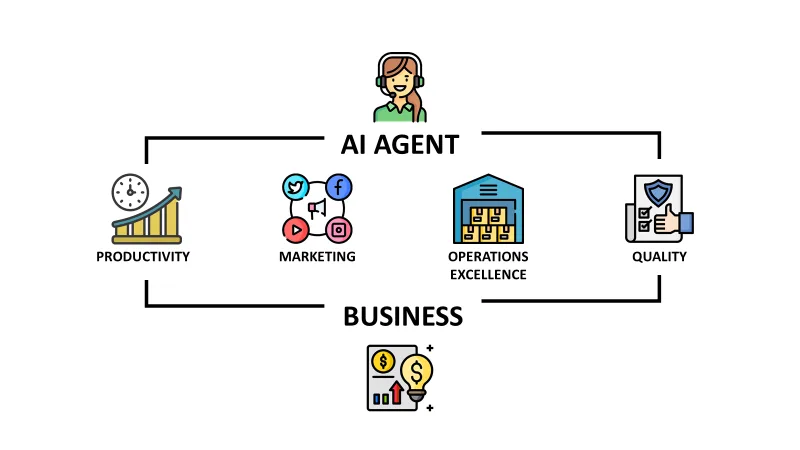
How to Make AI Agents Work for Your Business: A Strategic Guide
Learn how to effectively integrate AI agents into your business operations. Discover strategies for deployment, workflow automation, and scaling your AI capacity.
Continue exploring
Find AI agents by workflow
More in Industry Insights
Browse more articles in the Industry Insights category.
AI Trends articles
Explore more guides and insights tagged AI Trends.
Automation articles
Explore more guides and insights tagged Automation.
AI Agent Categories
Browse use-case pages for sales, productivity, coding, customer service, and more.
AI Agents Landscape
Explore the full directory map and compare agents by workflow and category.
Agent Skills
Find reusable skills, capabilities, and building blocks for AI agent workflows.