AI Agent Marketplaces: The Next Phase of SaaS Evolution
What Are AI Agent Marketplaces?
The landscape of software is undergoing a profound transformation, and at the forefront of this shift are AI agent marketplaces. These emerging platforms represent a significant evolution beyond traditional Software as a Service (SaaS). Instead of users subscribing to monolithic applications, AI agent marketplaces facilitate the discovery, deployment, and management of specialized, autonomous AI agents. Think of it as an app store, but for intelligent agents capable of performing complex tasks, learning, and interacting with various digital environments.
At their core, AI agent marketplaces are digital ecosystems where developers can build, showcase, and monetize their AI agents, and users – ranging from individuals to large enterprises – can find and integrate these agents into their workflows. These agents are not mere chatbots; they are sophisticated programs designed with specific functionalities, often leveraging advanced AI techniques like machine learning, natural-process language understanding, and decision-making algorithms. They can automate tasks, analyze data, generate content, provide personalized recommendations, and much more, acting as intelligent assistants or specialized tools.
The emergence of these marketplaces signifies a move towards a more decentralized and democratized approach to AI development and adoption. They aim to lower the barrier to entry for both AI creators and users, fostering innovation and accelerating the integration of AI into everyday business processes and personal lives.
Why Are AI Agent Marketplaces Emerging Now?
Several converging technological advancements and market demands are driving the rapid emergence of AI agent marketplaces. The maturation of AI technologies, particularly in areas like large language models (LLMs), reinforcement learning, and specialized AI frameworks, has made it more feasible to develop sophisticated and capable AI agents. These underlying technologies have advanced to a point where agents can perform tasks with a high degree of autonomy and accuracy.
Furthermore, the increasing demand for personalized and automated solutions across industries fuels the need for specialized AI tools. Businesses are looking for ways to enhance productivity, improve customer experiences, and gain competitive advantages, and AI agents offer a powerful means to achieve these goals. The traditional SaaS model, while successful, often struggles to provide the granular, task-specific automation that businesses now require. This gap creates an opportunity for a more flexible and modular approach.
The trend towards decentralization of AI development also plays a crucial role. Instead of relying on a few large tech companies to develop all AI solutions, marketplaces empower a broader community of developers to contribute specialized agents. This democratization of AI tool creation leads to a richer, more diverse set of offerings. Moreover, the concept of specialized AI agents, designed for niche tasks or industries, is gaining traction. These agents can outperform general-purpose tools in their specific domains, and marketplaces are the ideal venues for discovering and deploying them.
The rise of AI agent marketplaces is also influenced by the growing understanding of how AI agents create value. They can automate repetitive tasks, freeing up human capital for more strategic work, provide insights from vast datasets that humans might miss, and enable entirely new service offerings. This demonstrated value proposition makes businesses eager to adopt AI-powered solutions, and marketplaces provide a structured way to access them.
The Evolution from Traditional SaaS to AI Agent Ecosystems
The journey from traditional SaaS to the emerging world of AI agent ecosystems marks a fundamental shift in how software is developed, distributed, and consumed. Traditional SaaS models typically involve a vendor offering a complete software solution, often with a subscription-based pricing structure. Users would buy into a package, and while customization might be possible, the core functionality was largely predetermined by the vendor.
AI agent marketplaces, however, foster an ecosystemic approach. Instead of a single, all-encompassing application, users can assemble their desired functionality by selecting and integrating various specialized AI agents. This modularity allows for unprecedented flexibility and customization. A business might combine an AI agent for market analysis, another for content generation, and a third for customer sentiment tracking, creating a bespoke AI solution tailored to its exact needs.
This shift also impacts enterprise software procurement. Organizations are moving away from large, complex software deployments towards a more agile, service-oriented procurement model. They can trial and deploy individual agents as needed, scaling their AI capabilities incrementally rather than making massive upfront investments. This also opens up new revenue streams for AI creators, who can monetize their specialized agents directly through the marketplace, fostering a vibrant community of innovation. For developers, building and deploying agents on a marketplace can be more efficient than developing and marketing a standalone SaaS product, especially for niche functionalities. This leads to a more dynamic and competitive market for AI solutions.
Key Components of an AI Agent Marketplace
A functional AI agent marketplace requires several key components to operate effectively and serve its users and developers:
Developer Portal: A dedicated interface for AI developers to upload, manage, and update their agents. This typically includes tools for agent creation, testing, and submission for review.
Agent Repository: A searchable and browsable catalog of available AI agents, categorized by function, industry, or complexity. This is where users discover the agents they need.
Discovery and Search Mechanisms: Robust search, filtering, and recommendation engines to help users find the most relevant agents for their specific tasks and requirements.
Integration Tools: APIs, SDKs, and connectors that allow users to seamlessly integrate AI agents into their existing software, workflows, or custom applications.
Security and Compliance Framework: Measures to ensure the security of agents and user data, as well as compliance with relevant regulations and privacy standards.
Monetization and Payment System: A secure and transparent system for handling transactions, whether it's for agent subscriptions, usage-based fees, or one-time purchases. This is crucial for how AI agent builders are actually making money.
User Management and Governance: Tools for users to manage their deployed agents, monitor performance, and control access and permissions.
Rating and Review System: A mechanism for users to provide feedback on agents, helping to build trust and guide others in their selection process. This ties into understanding what makes an AI agent “good”?
Benefits for Developers and Users
The adoption of AI agent marketplaces offers significant advantages for both the creators and consumers of AI technology.
For AI Developers:
Wider Reach and Distribution: Marketplaces provide instant access to a large pool of potential users, eliminating the need for extensive marketing and sales efforts.
Accelerated Development and Iteration: Developers can focus on building core AI capabilities, leveraging marketplace infrastructure for deployment, updates, and user feedback.
Monetization Opportunities: Direct access to revenue streams through various pricing models, making it easier to earn from their creations.
Community and Collaboration: Potential for collaboration with other developers and access to shared resources or frameworks.
Reduced Infrastructure Overhead: The marketplace often handles hosting, scaling, and security, allowing developers to concentrate on AI innovation.
For Users (Individuals and Businesses):
Access to Specialized AI: Users can find highly specific AI agents tailored to their unique needs, rather than relying on generic solutions.
Cost-Effectiveness: Pay-as-you-go or subscription models for individual agents can be more economical than purchasing full-scale enterprise software.
Flexibility and Scalability: Easily add or remove agents as needs evolve, allowing for agile adoption of AI capabilities.
Faster Innovation Adoption: Quickly leverage the latest AI advancements without lengthy development cycles.
Democratization of AI: Empowers smaller businesses and individuals to access sophisticated AI tools that were previously out of reach.
Examples and Potential Use Cases
While the concept of AI agent marketplaces is still nascent, several platforms and emerging trends point towards their future. We can envision marketplaces specializing in various domains:
Business Process Automation Marketplaces: Agents designed to automate specific business functions like invoice processing, customer support ticket routing, data entry, or lead qualification. For instance, a small e-commerce business could subscribe to an AI agent that automatically handles customer inquiries about order status, freeing up human staff.
Content Creation and Marketing Marketplaces: AI agents that generate blog posts, social media updates, ad copy, or even design elements. A marketing team could leverage agents to brainstorm campaign ideas or draft initial versions of marketing collateral.
Data Analysis and Insights Marketplaces: Agents that can perform complex data crunching, identify trends, forecast outcomes, or generate reports from raw data. A financial analyst might use an agent to identify investment opportunities based on market sentiment.
Personal Productivity Marketplaces: Agents that help individuals manage schedules, organize information, research topics, or even learn new skills. A student could use an AI agent to summarize research papers or help prepare for exams.
Industry-Specific Marketplaces: Specialized platforms for healthcare AI agents (e.g., diagnostic assistance), legal AI agents (e.g., document review), or manufacturing AI agents (e.g., predictive maintenance).
The question of what are AI agent marketplaces is best answered by observing these diverse applications. They are becoming the central hubs where the specialized intelligence needed to navigate an increasingly complex digital world can be found and deployed.
Challenges and Considerations
Despite the immense potential, the growth of AI agent marketplaces faces several challenges:
Challenges in Developing AI Agents:
Developing robust and reliable AI agents is not without its hurdles. Key challenges include:
Data Requirements: Many AI agents require vast amounts of high-quality, labeled data for training, which can be expensive and time-consuming to acquire.
Ethical Considerations: Ensuring agents are unbiased, fair, and transparent in their decision-making processes is paramount. Issues like data privacy and potential misuse must be addressed.
Complexity and Integration: Building agents that can effectively interact with diverse systems and handle complex, multi-step tasks requires sophisticated engineering.
Maintenance and Updates: AI models can degrade over time or become outdated. Continuous monitoring, retraining, and updating are necessary.
Explainability: Understanding how an AI agent arrives at a particular decision can be difficult, especially with complex deep learning models.
Marketplace-Specific Challenges:
Beyond agent development, marketplaces themselves must address:
Trust and Verification: How can users be assured of the quality, reliability, and security of agents from various developers? Robust vetting processes are essential.
Interoperability: Ensuring agents can seamlessly work together and with existing user systems is critical for building functional ecosystems.
Regulatory Landscape: As AI becomes more integrated into critical functions, navigating evolving legal and regulatory frameworks will be crucial.
User Education: Helping users understand the capabilities and limitations of AI agents, and how to best deploy them, requires significant educational effort.
Addressing these challenges will be key to unlocking the full promise of AI agent marketplaces.
The Future Outlook for AI Agent Marketplaces
The future of AI agent marketplaces is poised for significant growth and innovation. As the underlying AI technologies continue to advance, we can expect to see more powerful, versatile, and specialized agents becoming available. The future of SaaS with AI agents will likely involve a hybrid model, where traditional SaaS applications integrate with or are built upon the capabilities offered by these marketplaces.
We are moving towards a future where AI agents are not just tools but active participants in our digital lives and work. This could lead to highly personalized digital assistants capable of managing complex aspects of our professional and personal lives, or hyper-specialized agents that drive efficiency in niche industries. The democratization of AI development will continue, allowing a wider range of individuals and organizations to contribute to and benefit from AI advancements.
The impact on enterprise software procurement will be substantial, leading to more agile, modular, and cost-effective AI solutions. The rise of specialized AI agents will enable businesses to achieve levels of automation and intelligence previously thought impossible. Ultimately, AI agent marketplaces are set to redefine software, creating a more intelligent, interconnected, and automated digital world. This evolution promises to unlock new levels of productivity and innovation, fundamentally reshaping how we interact with technology and each other.
Related Articles
View all articles
Top AI Agent Development Companies for Service Businesses in 2026
Compare top AI agent development companies for service businesses in 2026, including firms building support, scheduling, voice, sales, and workflow agents.
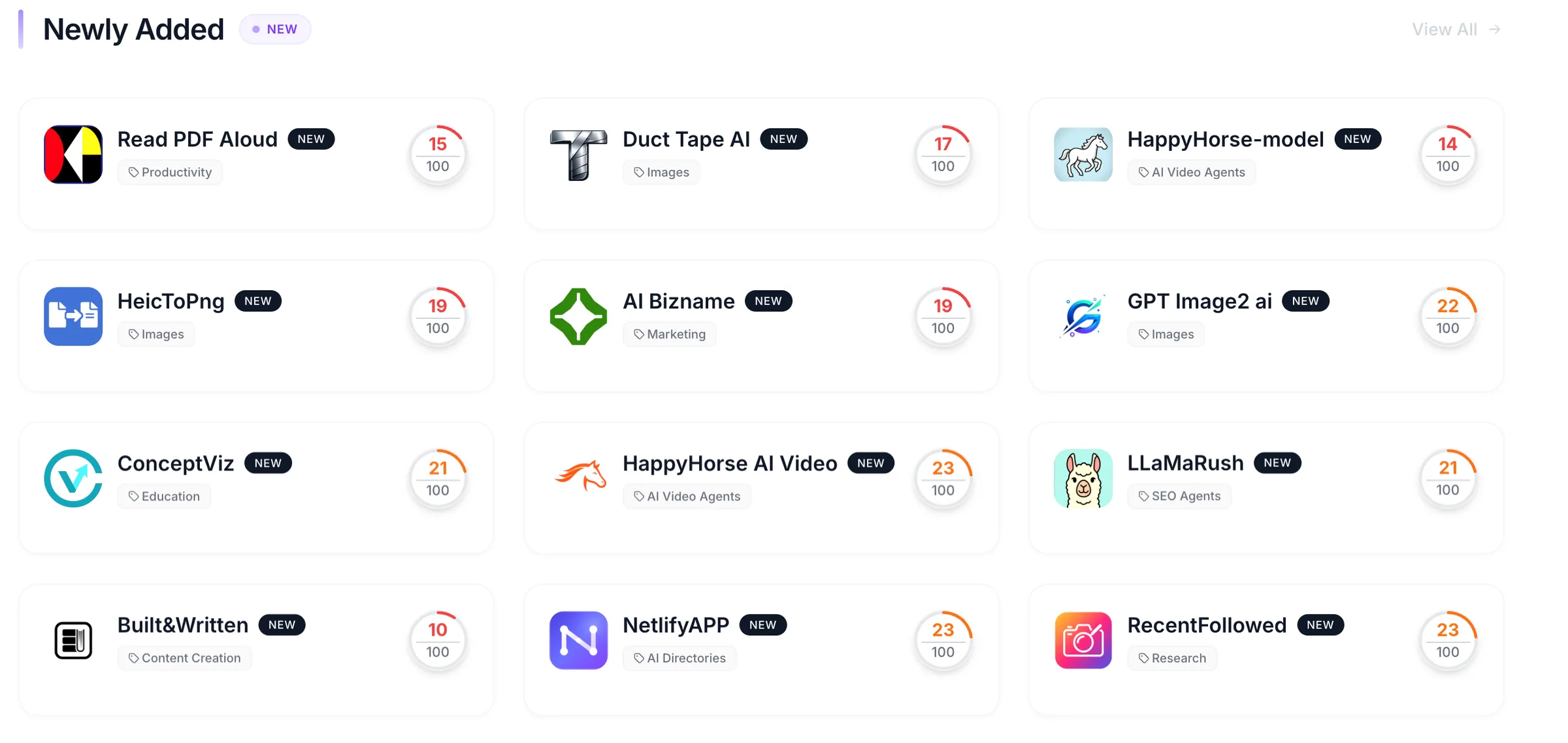
We Analyzed 2,000 AI Agents. Here’s What We Found
We examined 2,000 AI agents to identify common patterns, strengths, and limitations. Discover the reality of autonomous agent performance today.
How AI Agent Builders Are Actually Making Money
Discover how AI agent builders make money using diverse revenue models, from usage-based pricing to enterprise outcome-oriented strategies.
Continue exploring
Find AI agents by workflow
More in Industry Insights
Browse more articles in the Industry Insights category.
AI articles
Explore more guides and insights tagged AI.
SaaS articles
Explore more guides and insights tagged SaaS.
AI Agent Categories
Browse use-case pages for sales, productivity, coding, customer service, and more.
AI Agents Landscape
Explore the full directory map and compare agents by workflow and category.
Agent Skills
Find reusable skills, capabilities, and building blocks for AI agent workflows.