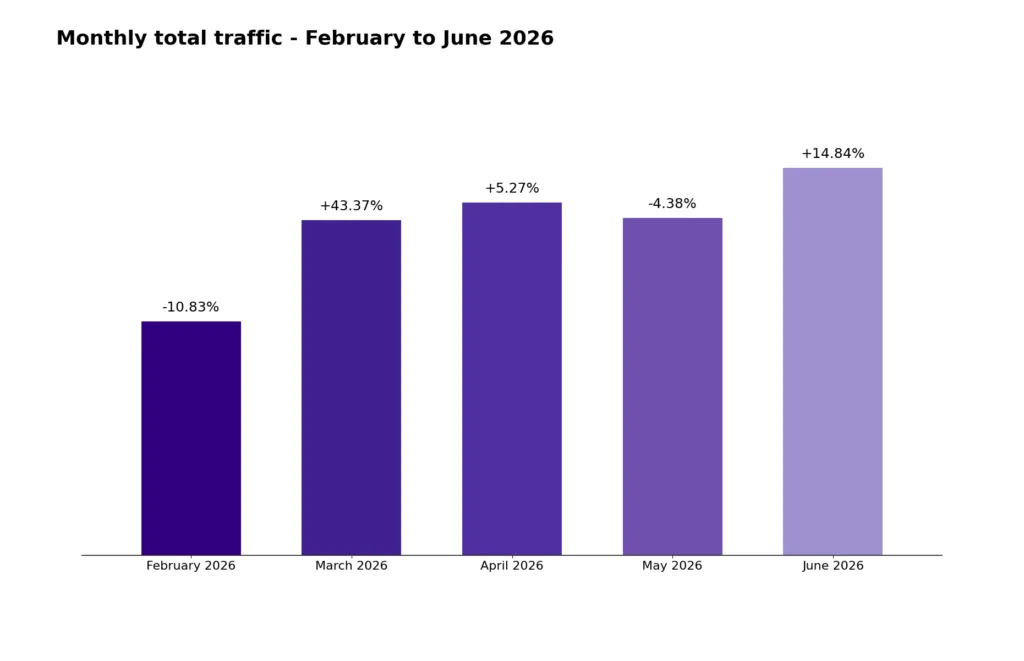
State of Agentic Traffic: Browser Agent Tooling for Developers is Catching On
What is Agentic Traffic?
The landscape of web interactions is undergoing a profound shift. Beyond the traditional user-driven requests and responses, a new form of traffic is emerging: agentic traffic. This refers to the communication and operations initiated by autonomous AI agents that interact with web resources, often mimicking or augmenting human user behavior. Unlike standard HTTP requests from browsers, agentic traffic is characterized by its programmatic nature, potential for complex decision-making, and the ability to perform tasks autonomously. Understanding this evolving phenomenon is crucial for developers navigating the future of web development and AI integration.
The core concept of agentic traffic centers on the idea of an 'agent' – a piece of software or an AI model capable of perceiving its environment, making decisions, and taking actions to achieve specific goals. When these agents interact with websites and web services, they generate a distinct type of traffic. This is not just about bots scraping data; it's about intelligent agents performing tasks, from automated testing and content generation to personalized user experiences and complex data analysis, all within a browser context.
Agent vs. Traditional Bot Traffic
It's important to distinguish agentic traffic from traditional bot traffic. While both are non-human initiated, traditional bots are often simpler, following predefined scripts with limited adaptability. Agentic traffic, powered by AI, involves agents that can learn, adapt, and make context-aware decisions. This distinction is fundamental to understanding the capabilities and implications of this new wave of web interaction.
The Rise of Browser Agent Tooling
As AI agents become more prevalent, the need for specialized tools to manage, develop, and deploy them within browser environments has become paramount. This is where browser agent tooling enters the picture. These are sophisticated development kits, frameworks, and platforms designed to equip developers with the capabilities to build, test, and orchestrate AI agents that operate directly within web browsers. The increasing automation of web tasks through AI agents is a primary driver for this trend, pushing the boundaries of what's possible in client-side AI interactions.
Browser agent tooling provides developers with a structured way to interact with web pages, simulate user actions, extract data, and execute complex workflows. Think of it as a sophisticated control panel for AI agents, enabling them to navigate the web with a level of intelligence and autonomy previously unseen. This shift signifies a move towards more sophisticated client-side AI interactions, where AI is not just a backend service but an active participant in the user's browsing experience or development workflow.
Key Capabilities of Browser Agent Tooling
The functionalities offered by browser agent tooling are diverse and rapidly expanding. Developers can leverage these tools for:
Automation of Repetitive Tasks: Automating form submissions, data entry, navigation through complex interfaces, and report generation.
Enhanced Web Scraping and Data Extraction: Intelligent extraction of specific data points from dynamic or unstructured web content.
Advanced Web Testing and Quality Assurance: Simulating user journeys, testing application responsiveness, and identifying bugs through programmatic interaction.
Content Generation and summarization: AI agents can browse web content to generate summaries, articles, or marketing copy.
Personalized User Experiences: Tailoring content and interactions based on real-time analysis of user behavior or external data.
Browser Automation for AI Workflows: Orchestrating multi-step processes that involve interacting with various web applications.
The development of specialized tools to manage and orchestrate these AI agents in browsers is a testament to their growing importance.
Why Developers are Adopting Agentic Tools
The adoption of browser agent tooling by developers is being fueled by a clear set of benefits and compelling use cases. The primary advantage is a significant boost in efficiency. By automating mundane and time-consuming tasks, developers can free up valuable time to focus on more strategic and creative aspects of their work. This increased efficiency directly translates to faster development cycles and quicker deployment of new features or applications.
Beyond efficiency, these tools offer enhanced capabilities for web testing. Developers can leverage agentic traffic for testing in ways that were previously difficult or impossible. Imagine an AI agent systematically navigating through an application, performing a wide array of user actions and edge case scenarios, and reporting back on any anomalies. This level of automated, intelligent testing can uncover bugs and usability issues that manual testing might miss, leading to more robust and user-friendly applications.
Furthermore, browser agent tooling opens up new avenues for application development. Developers can build entirely new types of applications that rely on AI agents to interact with the web, such as personalized research assistants, automated customer support bots that can browse knowledge bases, or tools that monitor competitor websites for changes. The potential for agentic traffic to redefine user experience and engagement is immense, allowing for more dynamic and responsive web interactions.
For developers looking to integrate AI agents into their workflows or build agent-powered applications, understanding how to choose the right agent is a critical first step. For guidance on this, consider exploring resources like how to choose an AI agent for your business.
Implications for Web Development and AI
The rise of agentic traffic and the accompanying browser agent tooling signals a significant evolution in the web development landscape and the broader application of AI. We are witnessing a shift towards more sophisticated client-side AI interactions, where intelligence is not confined to backend servers but is actively deployed and executed within the user's browser. This has profound implications for how we design, build, and experience the web.
One of the most significant impacts is on the future of web development itself. Developers will increasingly need to consider how their applications will be interacted with by AI agents, not just human users. This means designing for programmatic access, ensuring APIs are robust, and considering the security implications of AI-driven interactions. The development of specialized tools to manage and orchestrate AI agents in browsers will continue to mature, offering developers more power and flexibility.
The potential for agentic traffic to redefine user experience and engagement is vast. Imagine websites that can dynamically adapt their content and layout based on an AI agent's understanding of a user's immediate needs or goals, going beyond simple personalization. This could lead to more intuitive, efficient, and engaging online experiences. For those interested in building their own agent infrastructure, understanding the underlying principles is key. A comprehensive guide can be found in resources on how to build your own agent harness.
Challenges and Considerations
Despite the immense potential, the growing prevalence of agentic traffic and browser agent tooling also presents several challenges and considerations. One of the primary concerns revolves around security. As AI agents gain more sophisticated access to web resources, the risk of malicious agents being developed or deployed increases. Developers and platform providers must implement robust security measures to prevent unauthorized access, data breaches, and other forms of exploitation. Understanding the security implications of agentic traffic is paramount.
Ethical considerations are also at the forefront. The ability of AI agents to perform actions autonomously raises questions about accountability, transparency, and the potential for misuse, such as mass manipulation or the spread of misinformation. Establishing clear ethical guidelines and governance frameworks for AI agent development and deployment is essential.
From a technical standpoint, managing and scaling agentic traffic can be complex. Ensuring that agents operate efficiently, do not overload web servers, and adhere to web standards requires careful design and implementation. The impact of agentic traffic on web performance needs to be continuously monitored and optimized. Furthermore, the rapid evolution of AI technologies means that developers must stay abreast of the latest advancements and adapt their tooling and strategies accordingly.
The Future of Agentic Traffic
Looking ahead, the trend of agentic traffic and the sophistication of browser agent tooling are poised for significant growth. We can anticipate a future where AI agents are seamlessly integrated into the fabric of the internet, performing an ever-wider range of tasks. The increasing automation of web tasks through AI agents will continue to drive innovation, leading to more intelligent and responsive web applications.
The shift towards more sophisticated client-side AI interactions will likely result in new paradigms for user interfaces and user experiences. Agents might act as proactive assistants, anticipating user needs and performing actions on their behalf without explicit instruction. This could fundamentally change how we interact with digital content and services.
The development of specialized tools to manage and orchestrate AI agents in browsers will undoubtedly become more refined. We may see the emergence of standardized protocols and platforms that simplify agent development and deployment, fostering a more interconnected ecosystem of AI agents. The potential for agentic traffic to redefine user experience and engagement is not a distant dream but an ongoing transformation.
As this field matures, developers will have access to increasingly powerful and intuitive tools for harnessing the capabilities of AI agents. Staying informed about these developments and experimenting with new tools will be key to staying at the forefront of web innovation.
Related Articles
View all articles
Top AI Agent Development Companies for Service Businesses in 2026
Compare top AI agent development companies for service businesses in 2026, including firms building support, scheduling, voice, sales, and workflow agents.
How to Choose an AI Agent for Your Business: Buyer’s Checklist 2026
Navigate AI agent selection for your business with our comprehensive checklist. Discover key criteria, essential features, and how to find the right fit.
AI Agents in Higher Education: Uses and Best Tools for 2026
Explore how AI agents are transforming higher education in 2026, including 15 use cases, the best tools for students and faculty, benefits, risks, and implementation guidance.
Continue exploring
Find AI agents by workflow
More in Industry Insights
Browse more articles in the Industry Insights category.
AI Agents articles
Explore more guides and insights tagged AI Agents.
Web Development articles
Explore more guides and insights tagged Web Development.
AI Agent Categories
Browse use-case pages for sales, productivity, coding, customer service, and more.
AI Agents Landscape
Explore the full directory map and compare agents by workflow and category.
Agent Skills
Find reusable skills, capabilities, and building blocks for AI agent workflows.