AI Agents in Higher Education: Uses and Best Tools for 2026
AI Agents in Higher Education: 15 Use Cases and the Best Tools for 2026
Artificial intelligence has moved from an experimental technology to an everyday part of higher education. Students use AI to research topics, understand difficult concepts, improve their writing, analyze course materials, prepare for exams, and organize their work. Faculty members are applying it to lesson planning, assessment design, research, and administrative tasks.
The 2026 Student Generative AI Survey from the Higher Education Policy Institute found that 95% of surveyed full-time UK undergraduates used AI in at least one way. It also found that 94% used generative AI to support assessed work, although only 36% felt encouraged by their institution to use it.
Separate 2026 Coursera survey of more than 4,200 university students and faculty members across five countries found that more than 95% had used AI in an educational context. Eighty-one percent believed AI was positively influencing higher education. However, only 26% of faculty said their institution had a formal AI policy, and only 25% believed educators had the skills needed to use AI effectively. s creates an important challenge for universities. Students and educators are already adopting AI, but institutional policies, training, evaluation standards, and safeguards are struggling to keep pace.
AI agents could help close that gap. Unlike basic chatbots that only generate responses, AI agents can pursue goals, use tools, analyze multiple sources, interact with university systems, and complete multi-step workflows. In higher education, these systems can support everything from personalized tutoring and academic research to admissions, advising, student retention, financial aid, and campus operations.
This guide explains how AI agents are being used in higher education, the benefits and risks institutions should consider, and the best AI assistants and research tools available to students, faculty, and researchers in 2026.
What Are AI Agents in Higher Education?
An AI agent is a software system that can interpret a goal, determine which steps are required, use available tools or information, and take actions to achieve the desired result.
The terms AI tool, AI assistant, and AI agent are often used interchangeably, but they describe different levels of capability.
Type | What It Does | Higher-Education Example |
|---|---|---|
AI tool | Performs a specific function | Summarizes a research paper |
AI assistant | Responds conversationally to instructions | Explains a statistics concept or helps edit an essay |
AI agent | Plans and completes multi-step tasks | Identifies at-risk students, prepares outreach, schedules an advising session, and records the interaction |
NotebookLM, Claude, ChatGPT, Perplexity, and Elicit are primarily AI assistants or research platforms. They may include increasingly agentic capabilities, but they should not automatically be treated as fully autonomous agents.
True university AI agents are usually connected to systems such as learning-management platforms, student-information systems, research databases, calendars, email, financial-aid portals, and customer-support software. These connections allow them to move beyond generating text and begin completing useful work.
How Are AI Agents Transforming Higher Education?
The effect of AI in higher education extends far beyond helping students write essays.
AI agents can support three major areas:
Student learning and academic success
Faculty teaching and research
University administration and campus operations
EDUCAUSE found that AI is already affecting work across entire institutions. In its 2026 survey of 1,960 higher-education professionals, 94% said they had used AI for work during the previous six months. The most frequently identified opportunities were automating repetitive processes, reducing administrative burdens, and analyzing large datasets. 15 AI Agent Use Cases in Higher Education
1. Personalized AI tutoring
AI tutoring agents can adapt explanations, examples, questions, and practice exercises to a student’s level of understanding.
Rather than delivering the same lesson to every learner, an agent can identify where a student is struggling and change its approach. It might provide a simpler explanation, introduce a visual analogy, ask a diagnostic question, or recommend a review of prerequisite material.
The best tutoring agents guide students toward an answer instead of immediately completing the assignment for them.
2. Course-material analysis
Students can upload lecture notes, textbooks, slides, academic papers, transcripts, and assigned readings to an AI assistant.
The system can then:
Summarize major concepts
Identify relationships between sources
Explain difficult passages
Generate glossaries
Create study guides
Produce practice questions
Find conflicting arguments
This is particularly valuable in courses with extensive or highly technical reading requirements.
3. Research and literature discovery
AI research agents can help students and scholars define research questions, discover relevant publications, identify important authors, compare competing findings, and locate gaps in the existing literature.
These systems can reduce the time spent searching for papers, but researchers must still assess the authority, methodology, relevance, and limitations of every source.
4. Literature-review preparation
Literature reviews require researchers to find, screen, organize, compare, and synthesize large numbers of papers.
An AI agent can assist by extracting structured information such as:
Research question
Sample size
Methodology
Variables
Intervention
Findings
Limitations
Publication date
The researcher remains responsible for deciding which studies should be included and whether the resulting interpretation is academically defensible.
5. Writing feedback and revision
AI assistants can evaluate the clarity, organization, tone, grammar, and logical structure of academic writing.
A responsible writing workflow uses AI to ask questions and provide feedback rather than to generate an entire submission. For example, students can ask an AI assistant to identify unsupported claims, unclear transitions, repetitive language, weak evidence, or possible counterarguments.
The student should retain intellectual ownership of the final work.
6. Study planning and exam preparation
AI study agents can convert a syllabus, exam date, and course materials into a personalized study schedule.
They can also:
Divide topics into daily study sessions
Generate flashcards
Create practice tests
Track weak areas
Increase question difficulty
Schedule review sessions
Apply spaced repetition
This turns AI from a one-time answer generator into an ongoing learning companion.
7. Accessibility and multilingual support
AI agents can make educational materials easier to access by simplifying complex language, translating content, generating transcripts, summarizing long documents, and presenting information in different formats.
Students may be able to study the same material through text, audio, diagrams, flashcards, narrated presentations, or step-by-step explanations.
Accessibility teams should still evaluate generated materials for accuracy and compliance rather than assuming that AI-created content is automatically accessible.
8. Course and lesson design
Faculty can use AI assistants to create lesson outlines, discussion questions, classroom exercises, case studies, grading rubrics, and examples adapted to different skill levels.
An instructor could provide course objectives and assigned readings, then ask the system to create an activity that requires students to compare evidence, defend a position, or apply a concept to a new situation.
AI-generated teaching materials should be reviewed for accuracy, bias, accessibility, and alignment with the intended learning outcomes.
9. Assessment development
AI can help faculty create quizzes, practice problems, project instructions, oral-examination questions, and alternative forms of assessment.
It can also generate multiple versions of a question or adjust its difficulty.
However, AI is forcing universities to reconsider how learning should be measured. EDUCAUSE reported in 2026 that faculty and staff need clearer policies explaining when students may or may not use AI in assessments. The report also emphasized that understanding when not to use AI is an essential part of AI literacy. 10. Research administration
Research-focused AI agents can support grant discovery, proposal preparation, compliance documentation, project reporting, and communication between research teams.
An agent could monitor funding databases, identify opportunities matching a researcher’s field, summarize eligibility requirements, create a deadline checklist, and prepare an initial project outline.
High-stakes submissions must still receive expert review.
11. Admissions and applicant engagement
Admissions agents can answer prospective-student questions at any time, recommend relevant programs, explain application requirements, collect preliminary information, and remind applicants about deadlines.
A more advanced agent could personalize the experience based on the prospective student’s interests while escalating complex questions about admission decisions, immigration status, accommodations, or financial aid to qualified staff.
12. Academic advising
AI advising agents can help students understand degree requirements, compare available courses, identify scheduling conflicts, and prepare for meetings with human advisors.
They may also recognize that a student is missing a prerequisite or is at risk of delaying graduation.
AI should support not replace professional advisors, especially when decisions involve personal circumstances, mental health, financial pressure, accessibility needs, or major changes to a student’s academic plan.
13. Student-retention support
Universities can use AI agents to identify signals that a student may need assistance.
These signals could include repeated absences, missed assignments, declining grades, unpaid balances, incomplete registration steps, or limited engagement with course materials.
An agent might prepare a personalized outreach message or recommend an intervention. Human oversight is essential because predictive systems can be wrong, biased, or unable to understand the student’s complete circumstances.
14. Financial-aid and registration assistance
Students frequently need help navigating complicated policies, forms, deadlines, and institutional terminology.
An AI agent trained on approved university information can explain registration procedures, identify required documents, answer common financial-aid questions, and guide students to the correct office.
It should not make final eligibility decisions or provide unsupported promises about aid.
15. Campus IT and administrative support
AI agents can assist students, faculty, and staff with password resets, software access, classroom technology, policy questions, onboarding, scheduling, and other repetitive requests.
They can resolve simple issues immediately and transfer more complicated cases to a human support team with the relevant context already collected.
This can reduce response times without eliminating the need for skilled university employees.
Benefits of AI Agents in Higher Education
More personalized learning
AI agents can adjust explanations, activities, feedback, and study plans based on each student’s current understanding.
This level of personalization is difficult to provide consistently at scale through traditional course materials alone.
Faster access to support
Students do not always need assistance during normal office hours. AI agents can answer routine questions and provide initial guidance at any time.
For important academic or personal decisions, the agent should make it easy to reach a qualified human.
Reduced administrative workload
Faculty and university staff spend significant time drafting emails, summarizing documents, organizing information, preparing presentations, and completing repetitive processes.
EDUCAUSE found that higher-education staff and faculty were already using AI most frequently for brainstorming, drafting emails, summarizing long documents or meetings, proofreading, and creating presentations. Better use of institutional information
Universities maintain large collections of policies, course catalogs, handbooks, research materials, support documentation, and student-service information.
A properly designed agent can make this information easier to search and understand without requiring students or employees to navigate dozens of disconnected pages.
Stronger preparation for AI-enabled careers
Students entering the workforce will increasingly need to understand how to use, evaluate, supervise, and challenge AI systems.
Higher education therefore has a responsibility to teach AI literacy not merely ban or permit AI tools.
Best AI Assistants and Research Tools for Higher Education in 2026
The following platforms are not identical. Each addresses a different part of the academic workflow.
Platform | Best Use | Key Strength | Main Limitation |
AArena | Comparing AI models and agents | Tests multiple AI responses in one workspace | Not a dedicated academic database |
NotebookLM | Studying assigned materials | Source-grounded answers and learning formats | Quality depends on the supplied sources |
Perplexity | Current web research | Search-based answers with citations | Synthesized answers still require source verification |
Claude | Tutoring, writing and document analysis | Nuanced explanations and education-focused learning support | Not a replacement for specialized academic databases |
ChatGPT | General learning, research and coding | Broad capabilities and dedicated Study Mode | Can generate incorrect facts or citations |
Elicit | Literature reviews | Structured paper discovery, screening and extraction | Primarily focused on academic research papers |
How We Selected These Tools
The platforms were evaluated according to their:
Usefulness for students, educators, and researchers
Ability to work with academic materials
Source transparency and citation support
Tutoring and explanation capabilities
Research and literature-review functions
Support for multi-step academic workflows
Accessibility and ease of use
Privacy and institutional-control considerations
Risk of encouraging passive answer generation
Overall fit for higher-education use cases
Features, pricing, institutional access, and usage limits can change, so users should confirm current details before adopting a platform.
AArena: Best for Comparing AI Models and Agents in One Workspace
AArena is a unified workspace designed to help users discover, evaluate, and use different AI models and agents from one interface.
Instead of relying on a single AI provider, students, educators, and researchers can compare how multiple models respond to the same academic question. This makes it easier to identify differences in reasoning, writing quality, explanations, coding assistance, and research support.
AArena includes several ways to interact with AI:
Direct Mode: Work with one selected AI model.
Compare Mode: Review responses from multiple models side by side.
Battle Mode: Compare two responses without initially focusing on the model name and vote for the stronger result.
How AArena Can Be Used in Higher Education
A student could enter the same question into several AI models and compare:
How clearly each model explains a difficult concept
Whether different models reach the same conclusion
Which response provides the strongest argument
How accurately each model analyzes an uploaded passage
Which model produces the most useful study questions
How different models approach a coding or mathematics problem
Faculty members can also use AI model comparison to evaluate whether a platform is appropriate for a particular course, assignment, or student-support workflow.
For example, an instructor could ask several models to explain the same scientific concept at an introductory level and compare their accuracy, terminology, clarity, and teaching approach.
Why Comparing Multiple AI Models Matters
AI models do not always provide the same answer. They may interpret a question differently, emphasize different evidence, or make different factual errors.
Comparing responses can help students avoid accepting the first generated answer without question. It encourages them to examine competing explanations, verify claims, and decide which response is best supported.
This makes AArena particularly relevant for developing AI literacy and critical-evaluation skills in higher education.
Best for
Comparing AI models for academic work
Evaluating different explanations
Testing prompts across multiple platforms
Comparing writing and research support
Exploring specialized AI agents
Selecting the right model for a specific task
Limitations
AArena should not be treated as an academic database or a substitute for peer-reviewed research. Responses generated through any model may contain inaccurate facts, weak reasoning, or fabricated citations.
Students and educators should verify important claims against original sources and follow their institution’s AI-use policies.
Users can explore and compare AI agents and models through AArena.
1. NotebookLM: Best for Studying Course Materials
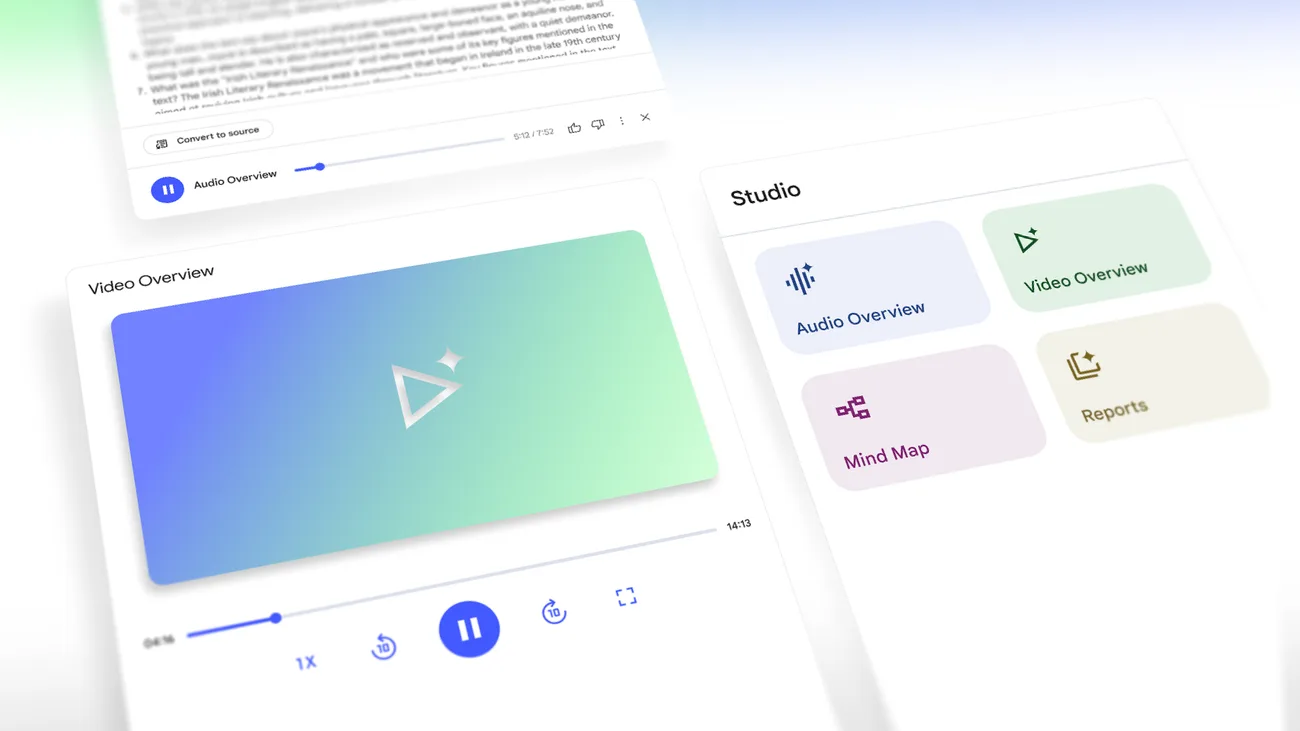
NotebookLM now also presented by Google as Gemini Notebook is designed to analyze a collection of selected sources.
Students and educators can add materials such as PDFs, websites, Google Docs, lecture notes, slides, and videos. The platform can answer questions about the content, summarize key ideas, identify relationships, and generate learning materials.
Google describes Gemini Notebook as grounded in the information users provide. It can generate summaries, study guides, flashcards, quizzes, audio discussions, and other learning formats with inline citations to the original materials. Best features
Source-grounded question answering
Inline citations
Study guides and summaries
Flashcards and practice quizzes
Audio overviews
Connections across multiple readings
Support for course and research materials
Best for
Understanding assigned readings
Preparing for exams
Reviewing lecture materials
Comparing research papers
Organizing thesis sources
Creating study resources
Limitations
NotebookLM is only as reliable as the sources it analyzes. A collection of incomplete, outdated, or low-quality materials can still produce a misleading result.
Source grounding reduces unsupported answers, but students should continue checking quotations, interpretations, and citations against the original materials.
2. Perplexity: Best for Sourced Web Research
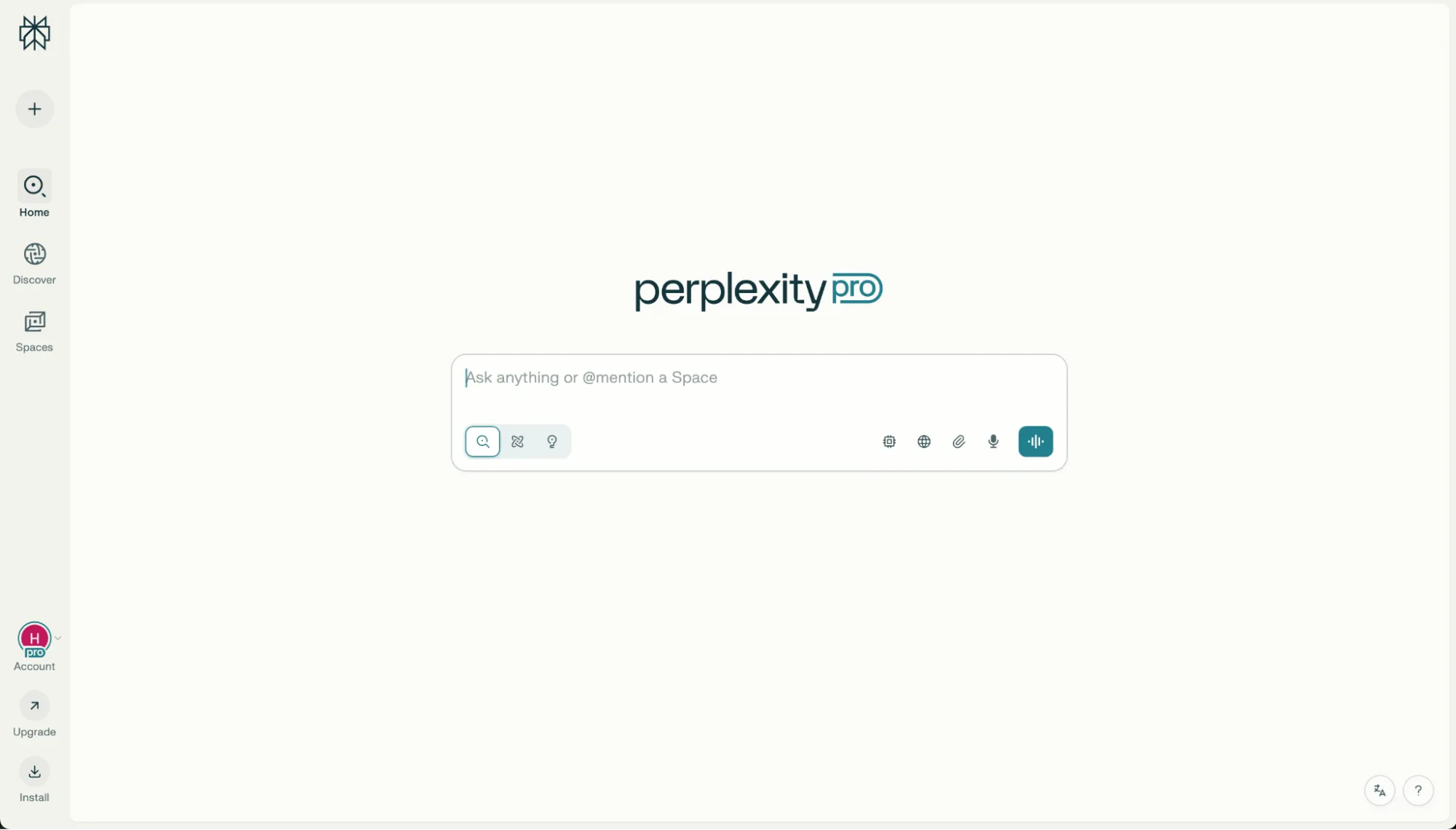
Perplexity combines conversational AI with web search. It is particularly useful during the early stages of research, when a student needs to understand a topic, identify important sources, or explore recent developments.
Its answers generally include links to the sources used, making it easier to inspect where information originated.
Perplexity currently offers an Education Pro plan for verified students and educators. It includes access to Learn Mode, Pro Search, file uploads, premium models, and education-specific guidance. Best features
Web research with citations
Follow-up questions
Current information discovery
File and image analysis
Learn Mode
Broad topic exploration
Best for
Finding recent sources
Exploring an unfamiliar subject
Developing a preliminary research question
Comparing viewpoints
Identifying publications for further review
Limitations
A cited answer is not automatically a correct answer.
Students should open the sources, determine whether they are authoritative, check that the citation supports the specific claim, and avoid citing Perplexity itself when the original publication is available.
3. Claude: Best for Nuanced Tutoring and Academic Writing

Claude is a general-purpose AI assistant with strong capabilities in explanation, writing, document analysis, reasoning, and long-form discussion.
Anthropic launched Claude for Education specifically for higher-education institutions. Its Learning Mode is designed to guide students through reasoning with questions rather than immediately supplying an answer. Claude for Education can also support faculty with rubrics, feedback, teaching materials, and administrative analysis. Best features
Learning Mode with guided questioning
Detailed explanations
Analysis of lengthy documents
Writing and argument feedback
Research organization
Course-material projects
Support for faculty and administrative work
Best for
Working through difficult concepts
Improving thesis statements
Evaluating arguments
Reviewing long documents
Drafting research outlines
Receiving structured writing feedback
Limitations
Claude can still make factual errors or produce an interpretation that is not supported by the source material.
Students should be especially careful when requesting academic citations, legal information, medical information, quotations, or precise numerical claims.
4. ChatGPT: Best General-Purpose Academic Assistant
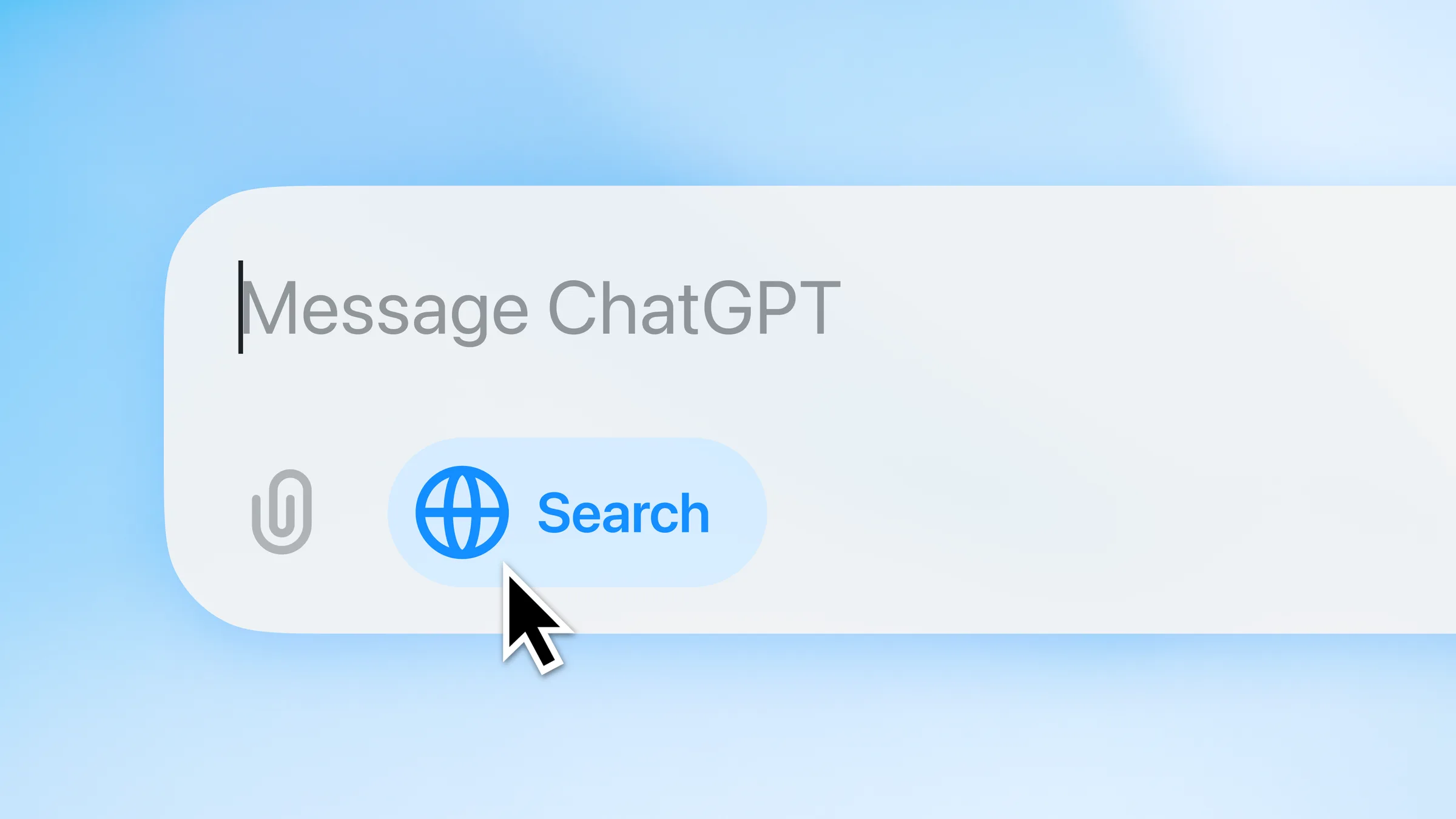
ChatGPT is one of the most versatile AI platforms for higher education. Students use it for explanations, brainstorming, writing feedback, data analysis, coding, research planning, language practice, and exam preparation.
Its Study Mode is specifically designed to guide students through problems step by step. It can ask Socratic-style questions, adjust explanations to the learner’s level, check understanding, create practice exercises, and work with uploaded images or PDFs. tGPT also offers deep-research capabilities for multi-step questions that require searching, analyzing, and synthesizing information from the web, uploaded files, and enabled sources into a documented report. Best features
Study Mode
Broad subject coverage
File and image analysis
Coding support
Data analysis
Research assistance
Brainstorming and outlining
Practice-question generation
Best for
Exploring new concepts
Studying through guided questions
Debugging code
Brainstorming research topics
Building study plans
Improving drafts
Preparing for presentations
Limitations
ChatGPT can produce persuasive but inaccurate information. It may invent references, misinterpret a source, make calculation errors, or confidently present an unsupported conclusion.
Students should verify important claims and use Study Mode or explicitly request guidance rather than asking the platform to complete an assignment.
5. Elicit: Best for Literature Reviews

Elicit is designed specifically for academic research.
It helps researchers discover papers, compare studies, screen publications, extract structured information, and create research reports. This makes it more specialized than a general-purpose AI assistant.
Elicit’s Systematic Review workflow can guide researchers through paper discovery, PDF uploads, inclusion and exclusion screening, data extraction, and report generation. Best features
Academic-paper search
Structured data extraction
Paper comparison
Screening workflows
Systematic-review support
Research reports
Evidence organization
Best for
Dissertations
Systematic reviews
Evidence synthesis
Research proposals
Comparing study methodologies
Identifying gaps in the literature
Limitations
Elicit is focused primarily on academic papers rather than general tutoring, writing, or university administration.
Some advanced workflows are limited to paid plans, and researchers must still make the final decisions about inclusion criteria, evidence quality, and interpretation.
Other AI Education Agents to Consider
The best platform depends on the student’s subject, learning style, research requirements, and institutional policies.
Specialized tutoring agents may provide a more focused experience than general-purpose platforms. For example, TutorGPT is one of the education-focused agents listed on AI Agents Directory. For students who need guidance from an actual tutor rather than an AI system, human-led platforms such as Brighterly serve a similar purpose outside the agent ecosystem, see how it works.
When comparing AI tutoring agents, consider:
Subjects covered
Quality of explanations
Use of source materials
Whether it guides or simply answers
Privacy protections
Pricing
Accessibility
Support for uploaded course materials
Instructor or institutional controls
For adjacent use cases, explore our guides to the best AI agents and tools for productivity in 2026 and the top AI agents for customer service in 2026.
Which AI Tool Is Best for Each Academic Task?
Academic Need | Recommended Starting Point |
Studying lecture notes and readings | NotebookLM |
Finding current web sources | Perplexity |
Receiving nuanced writing feedback | Claude |
Guided tutoring and broad academic help | ChatGPT |
Conducting a literature review | Elicit |
Comparing specialized tutoring agents | AI Agents Directory |
Many students will receive better results by combining tools rather than expecting one platform to perform every task.
For example, a researcher might use Perplexity to discover recent sources, Elicit to compare academic studies, NotebookLM to analyze a selected collection of papers, and Claude or ChatGPT to challenge the structure of the resulting argument.
Risks of AI Agents in Higher Education
Fabricated information and citations
AI systems can generate incorrect facts, nonexistent quotations, or references that look authentic but do not exist.
Every important academic claim should be checked against a reliable original source.
Loss of critical-thinking skills
AI can improve understanding when it asks questions, provides feedback, and helps students examine evidence.
It can weaken learning when students use it to avoid reading, thinking, solving problems, or developing their own arguments.
The difference depends on how the technology is used.
Academic-integrity violations
Permitted AI use varies by institution, course, instructor, and assignment.
Students should determine whether AI is allowed, what forms of assistance are acceptable, and whether its use must be disclosed.
Student-data privacy
Students and faculty should not upload confidential research, private student records, unpublished findings, protected health information, identifiable assessment data, or sensitive institutional documents to an unapproved AI service.
EDUCAUSE found that 56% of surveyed higher-education professionals had used AI tools that were not provided by their institution. It warned that unapproved tools may not have been evaluated for privacy, security, reliability, accessibility, copyright, or intellectual-property protection. Bias and unequal outcomes
AI systems can reproduce biases found in training data, institutional records, or the assumptions used to configure them.
This is especially serious when AI influences admissions, financial aid, disciplinary processes, hiring, grading, or student-retention decisions.
Unequal access
Students with paid AI subscriptions, faster devices, stronger digital skills, or better institutional support may receive an academic advantage over students without those resources.
Universities should consider whether required or recommended AI tools are accessible to every student.
Excessive automation
Not every educational activity should be automated.
Students need meaningful contact with instructors, advisors, mentors, classmates, counselors, librarians, and support staff. AI should reduce unnecessary administrative work without removing essential human relationships.
How Universities Can Implement AI Agents Responsibly
Begin with a specific problem
Universities should not deploy an agent simply because AI is popular.
A useful implementation begins with a defined problem, such as slow IT response times, confusing registration instructions, repetitive advising questions, or difficulty finding approved institutional information.
Use approved and controlled data
Agents should be grounded in current, authoritative institutional content.
Access to student records and internal systems should follow strict permissions, security controls, and data-retention requirements.
Keep humans responsible for high-stakes decisions
AI can recommend, organize, summarize, and prepare actions.
Humans should retain authority over admissions, grading, financial aid, discipline, employment, disability accommodations, mental-health interventions, and other consequential decisions.
Test accuracy and fairness
Universities should evaluate whether the agent provides correct answers, treats different groups fairly, escalates appropriately, protects private information, and remains accessible to users with disabilities.
Measure outcomes
Only 13% of respondents in EDUCAUSE’s 2026 work-related AI survey said their institution was measuring return on investment for AI tools. titutions should evaluate metrics such as:
Resolution rate
Response time
Student satisfaction
Escalation accuracy
Error rate
Staff time saved
Accessibility
Learning outcomes
Cost per interaction
Effect on underserved student groups
Publish clear policies
Students and employees need clear guidance explaining:
Which AI tools are approved
Which information may be uploaded
When AI use must be disclosed
How AI may be used in assessments
Which decisions require human approval
How users can report an error
How personal data is protected
Policies should be written in understandable language and updated as the technology evolves.
Frequently Asked Questions
What are AI agents in higher education?
AI agents in higher education are systems that can interpret goals, use information or connected tools, and complete tasks related to learning, teaching, research, student services, or university administration. Examples include tutoring agents, research agents, advising agents, admissions agents, and campus-support agents.
How are universities using AI agents?
Universities can use AI agents to support tutoring, research, course design, assessment development, admissions, academic advising, student retention, financial aid, registration, IT support, policy search, and administrative workflows.
What is the best AI tool for college students?
There is no single best tool for every student. NotebookLM is particularly useful for course materials, Perplexity for sourced web research, Claude for writing and conceptual tutoring, ChatGPT for general academic support, and Elicit for literature reviews.
What is the difference between generative AI and agentic AI?
Generative AI creates outputs such as text, images, code, or summaries. Agentic AI can pursue a goal, decide which steps to take, use tools, and perform actions. An AI agent may use generative AI as one part of a larger workflow.
Can students use AI for academic research?
Students can use AI to discover sources, generate search terms, compare studies, organize notes, explain methods, and identify possible research gaps. They should verify every source, follow university policies, and avoid presenting AI-generated analysis as their own original work when disclosure is required.
Are AI-generated citations reliable?
Not always. Some AI tools can fabricate references or attach a real source to a claim that the source does not support. Students should open every citation, confirm that the publication exists, and check the original passage before using it.
Can AI agents replace professors?
AI agents can provide explanations, practice, feedback, and administrative support, but they cannot fully replace faculty expertise, mentorship, judgment, classroom leadership, original scholarship, or human relationships.
How can AI improve academic advising?
An AI advising agent can explain program requirements, compare courses, identify missing prerequisites, prepare degree-progress summaries, and help students get ready for advisor meetings. Human advisors should remain responsible for complex or consequential guidance.
What are the main risks of AI in higher education?
The primary risks include fabricated information, academic misconduct, loss of critical-thinking skills, privacy violations, biased decisions, unequal access, copyright concerns, overdependence, and excessive automation of activities that require human judgment.
Is ChatGPT allowed in college assignments?
That depends on the institution, instructor, course, and assignment. Some educators permit AI for brainstorming or editing but prohibit generated final answers. Students should review the applicable policy and ask their instructor when expectations are unclear.
How can universities protect student data when using AI?
Institutions should approve and evaluate tools before use, minimize the amount of personal data shared, establish access controls, negotiate appropriate data protections, monitor connected systems, train users, and prohibit sensitive data from being entered into unapproved platforms.
Which AI tool is best for literature reviews?
Elicit is designed specifically for literature-review workflows. Perplexity can help identify current sources, while NotebookLM can analyze a selected collection of papers. Researchers should still use established academic databases and independently evaluate the evidence.
The Future of AI Agents in Higher Education
The next stage of AI adoption will not be defined only by students asking chatbots questions.
Higher education is moving toward agents that can understand institutional context, work across university systems, personalize support, and coordinate multi-step activities. A student may eventually interact with one agent that can explain course content, monitor degree progress, locate campus resources, prepare an advising meeting, and connect the student to the right human expert.
The opportunity is significant, but universities must avoid confusing automation with education.
The most effective AI agents will not do all the thinking for students or remove people from every process. They will help students ask better questions, help educators provide stronger support, and reduce administrative friction that prevents institutions from focusing on learning.
Students, faculty, and administrators can explore and compare specialized tutoring, education, research, productivity, and university-support agents through AI Agents Directory.
Related Articles
View all articles
The 5 Best AI Agents and Tools for Productivity in 2026
Discover the top 5 AI agents and tools revolutionizing productivity in 2026. Learn how autonomous AI agents can automate tasks and boost your workflow.
Top 5 Best AI Agents and Tools for Content Creators in 2026
Discover the top 5 AI agents and tools revolutionizing content creation in 2026, from text and video generation to SEO optimization and brand consistency.
Top 5 AI Agents for Customer Service in 2026
Compare the best AI agents for customer service in 2026, including Zendesk, Fin, Sierra, Ada and Salesforce Agentforce, by features, pricing, channels and use cases.
Continue exploring
Find AI agents by workflow
More in Industry Insights
Browse more articles in the Industry Insights category.
AI Agents for Higher Education articles
Explore more guides and insights tagged AI Agents for Higher Education.
AI tools for university students articles
Explore more guides and insights tagged AI tools for university students.
AI Agent Categories
Browse use-case pages for sales, productivity, coding, customer service, and more.
AI Agents Landscape
Explore the full directory map and compare agents by workflow and category.
Agent Skills
Find reusable skills, capabilities, and building blocks for AI agent workflows.