
Silverfort Puts Identity Controls Inside Copilot Agents
The Rise of AI Agents and the Need for Security
The integration of artificial intelligence into everyday workflows is accelerating, with tools like Microsoft Copilot transforming how we interact with data and applications. These AI agents offer unprecedented productivity boosts, but their ability to access and process vast amounts of information introduces significant security challenges. As AI agents become more sophisticated and autonomous, ensuring their identity is properly managed and their access is strictly controlled becomes paramount. This post explores how Silverfort is addressing these critical security gaps by embedding identity controls directly within Copilot agents.
Understanding Microsoft Copilot Agents
Microsoft Copilot acts as an AI-powered assistant, designed to enhance productivity across Microsoft 365 applications. It leverages large language models to understand user intent, generate content, summarize information, and automate tasks. For instance, Copilot can draft emails, analyze data in Excel, or generate presentations in PowerPoint, all based on natural language prompts.
The power of Copilot lies in its ability to connect with an organization's data and services. However, this connectivity also means Copilot agents, in a sense, operate with a level of access that needs rigorous oversight. The question arises: how do we ensure these agents are who they claim to be, and that they only access what they are authorized to access? This is where identity and access management for AI becomes critical.
The Identity Challenge for AI Agents
Traditional identity and access management (IAM) systems are designed for human users. They rely on credentials, multi-factor authentication, and role-based access control to govern who can access what. However, AI agents present a unique set of challenges:
Dynamic and Programmatic Access: AI agents often require programmatic access to APIs and services, which can be harder to monitor and control using human-centric IAM policies.
Contextual Awareness: Copilot agents operate within a specific context, understanding user intent and the data available. Ensuring this access is aligned with security policies requires a deeper understanding of the agent's operational context.
Data Sensitivity: Copilot agents can interact with highly sensitive corporate data. A compromised or misconfigured agent could lead to data breaches or unauthorized information exposure.
Attribution and Accountability: When an AI agent performs an action, it's crucial to know which agent performed it and why, for auditing and accountability purposes.
What are the security risks associated with AI agents like Copilot? Without robust identity controls, risks include unauthorized data access, privilege escalation, and potential misuse of the AI's capabilities. How can I manage access for AI agents? This requires specialized solutions that go beyond traditional IAM.
Silverfort's Innovative Solution: Identity Controls within Copilot Agents
Silverfort is tackling the identity challenge for AI agents head-on by integrating its identity security platform directly into the operational fabric of tools like Microsoft Copilot. Their approach focuses on establishing and enforcing identity controls at the point of interaction, ensuring that AI agents are authenticated and authorized before they can access sensitive resources.
Instead of relying solely on perimeter defenses or generic service account management, Silverfort embeds identity intelligence and enforcement capabilities directly within the Copilot agent's execution environment. This means that every action an AI agent attempts to take can be verified against established identity policies. This is a significant shift in how AI agent security is approached, moving from a reactive posture to a proactive, identity-centric one.
How does Silverfort secure AI agents? By applying its unified identity security platform to the unique access patterns of AI agents, Silverfort can:
Verify Agent Identity: Ensure that the AI agent requesting access is legitimate and authorized.
Enforce Granular Access Policies: Grant agents access only to the specific data and services they need to perform their tasks, adhering to the principle of least privilege.
Provide Real-time Visibility and Control: Offer continuous monitoring of AI agent activity and the ability to revoke access or block suspicious actions instantly.
This integration is crucial for maintaining strong identity and access management for AI, especially as AI technologies evolve. While solutions like Nvidia Puts AI Agents Inside the PC highlight the trend of embedding AI closer to users and devices, securing the identity of these agents remains a foundational requirement.
Key Benefits of Silverfort's Approach
Organizations adopting Silverfort's integrated solution for Copilot agents can expect several key benefits:
Reduced Risk of Data Breaches: By ensuring only authenticated and authorized agents access sensitive information, the risk of accidental or malicious data exposure is significantly lowered.
Enhanced Compliance: Granular control and detailed auditing capabilities help organizations meet stringent regulatory and compliance requirements related to data access and AI usage.
Improved Operational Efficiency: Streamlined identity management for AI agents reduces the administrative burden and potential for misconfigurations that can disrupt operations.
Proactive Threat Detection: Continuous monitoring and analysis of AI agent access patterns enable early detection of anomalous behavior that could indicate a compromise.
How Silverfort Enhances Copilot Agent Security
Silverfort's integration with Copilot agents is designed to be seamless yet powerful. The platform leverages its understanding of an organization's entire identity landscape, including human users, service accounts, and now AI agents. When a Copilot agent needs to access a resource, Silverfort's intelligence layer analyzes the request in real-time.
This analysis considers factors such as the agent's identity, the sensitivity of the resource being accessed, the context of the request, and established security policies. If the access is deemed legitimate and compliant, it is granted. If there are any deviations or suspicious indicators, access can be denied, or additional verification steps can be triggered.
This approach moves beyond traditional methods, where AI agents might operate under broad service account permissions. Instead, Silverfort enables dynamic, policy-driven access that adapts to the specific needs and risks associated with each AI-driven task. This provides a level of control that is essential for responsible AI deployment.
Comparison to Other AI Agent Security Approaches
While many solutions focus on securing the AI models themselves or the infrastructure they run on, Silverfort's distinct contribution lies in its focus on the *identity* of the AI agent. Other approaches might include:
Infrastructure Security: Ensuring the servers and networks hosting AI agents are secure.
Model Security: Protecting the AI models from adversarial attacks or data poisoning.
Data Access Controls: Implementing traditional access controls on the data sources themselves.
Silverfort's method complements these by providing a crucial layer of identity assurance specifically for the AI agent acting as a user or service. This is particularly relevant as organizations explore new ways to manage AI identities, much like how Identity Digital Proposes DNS Identity for AI Agents, demonstrating the growing industry focus on AI identity resolution.
Does Microsoft Copilot have built-in security features? Yes, Microsoft provides various security features for Copilot, but Silverfort's integration offers an additional, specialized layer of identity-centric security that can augment existing controls by providing deeper visibility and enforcement for AI agent access.
The Future of Identity in AI
The integration of AI into business processes is not a fleeting trend; it's a fundamental shift. As AI agents become more autonomous and capable, the need for robust, identity-centric security will only grow. The ability to precisely define, authenticate, and authorize the actions of AI entities will be as critical as managing human access today.
Organizations must prepare for a future where AI agents are treated as distinct identities within their security frameworks. This requires evolving IAM strategies to encompass these new entities, ensuring that security keeps pace with innovation. Silverfort's proactive integration of identity controls within AI agents like Copilot is a significant step in this direction, paving the way for more secure and trustworthy AI adoption.
Related Articles
View all articles
Identity Digital Proposes DNS Identity for AI Agents
Explore how Identity Digital's proposal for DNS-based identity provides a scalable, secure standard for verifying autonomous AI agents in the digital ecosystem.
Runta Secures $20M Seed for AI Agent Execution Layer
Discover how Runta's $20M a16z-backed AI agent execution layer addresses critical production challenges like token efficiency, security, and operational cont...
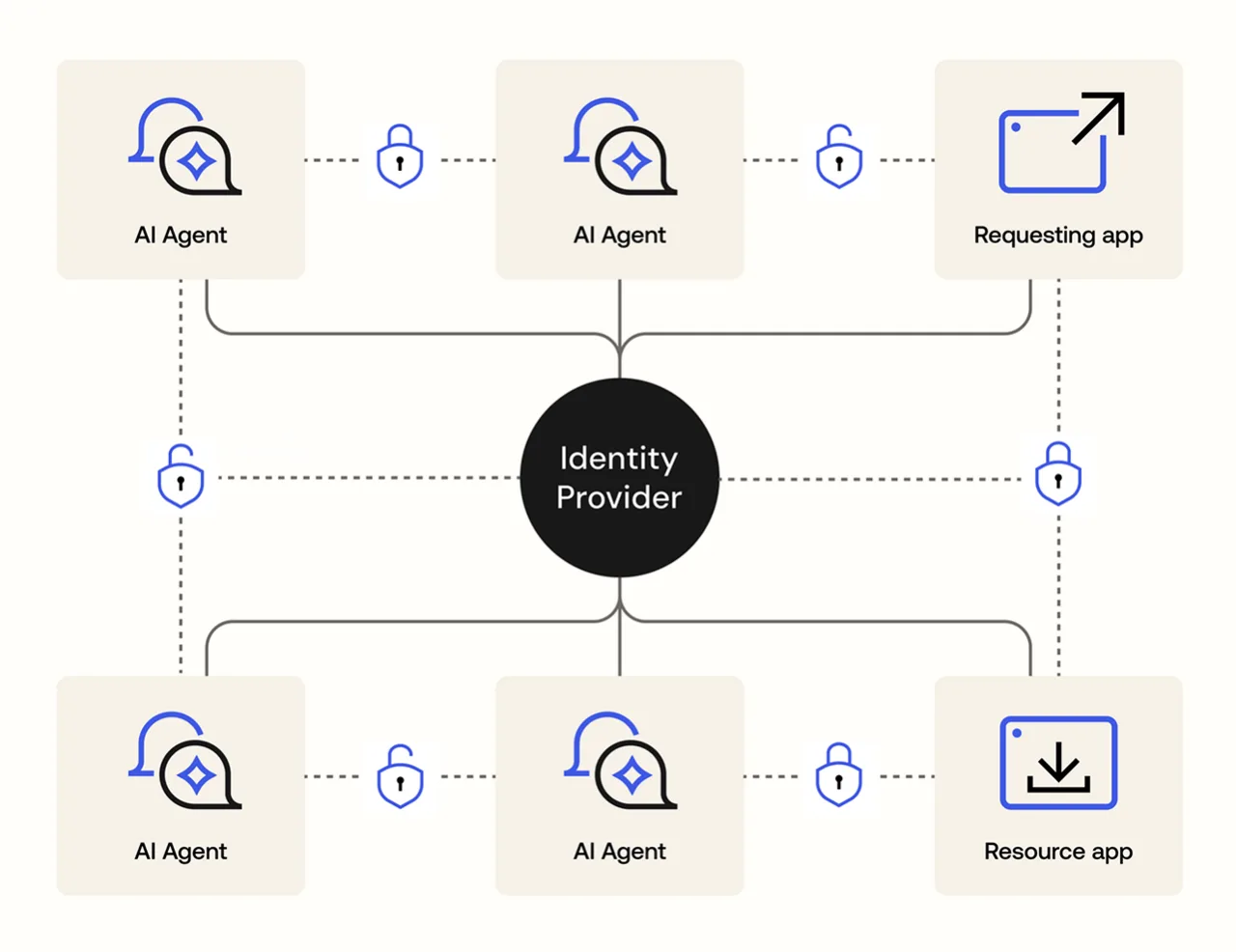
Okta Gives AI Agents Enterprise Identity
Learn how Okta and modern identity frameworks provide enterprise-grade security for AI agents, ensuring controlled access and verifiable actions.
Continue exploring
Find AI agents by workflow
More in Industry Insights
Browse more articles in the Industry Insights category.
AI Security articles
Explore more guides and insights tagged AI Security.
Microsoft Copilot articles
Explore more guides and insights tagged Microsoft Copilot.
AI Agent Categories
Browse use-case pages for sales, productivity, coding, customer service, and more.
AI Agents Landscape
Explore the full directory map and compare agents by workflow and category.
Agent Skills
Find reusable skills, capabilities, and building blocks for AI agent workflows.