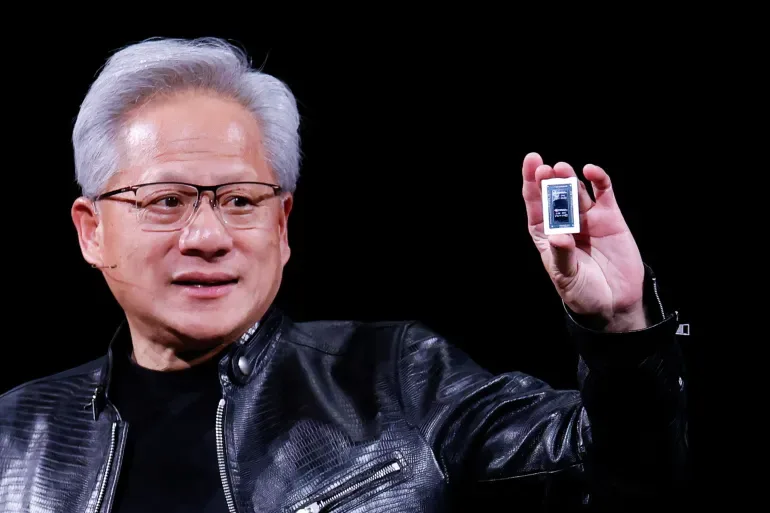
Nvidia Puts AI Agents Inside the PC
The Shift Towards On-Device AI
The landscape of artificial intelligence is undergoing a significant transformation. For years, powerful AI models and their capabilities have largely resided in the cloud, requiring constant internet connectivity and substantial server infrastructure. However, a new paradigm is emerging: AI is moving closer to the user, directly onto personal computers. Nvidia is at the forefront of this revolution, envisioning a future where intelligent AI agents are not just cloud-based services but integral components residing within the PC itself. This shift promises to redefine personal computing, making our devices more intelligent, responsive, and personalized.
What Are AI Agents and How Do They Work?
At its core, an AI agent is a system that perceives its environment through sensors and acts upon that environment through actuators to achieve goals. In the context of personal computing, these agents are sophisticated software programs powered by advanced AI models. They are designed to understand user intent, learn from interactions, and perform tasks autonomously or semi-autonomously. Unlike simple applications, AI agents can reason, plan, and adapt. They can process information, make decisions, and execute complex sequences of actions to assist users.
Think of them as proactive digital assistants that go beyond simple voice commands. They can anticipate needs, manage workflows, and even collaborate with other agents or applications. The underlying technology often involves large language models (LLMs) for understanding and generating human-like text, alongside other specialized AI models for tasks like image recognition, audio processing, and predictive analytics. The ability for these agents to operate locally on a PC is a game-changer.
Nvidia's Vision: AI Agents Inside the PC
Nvidia's strategic push to integrate Nvidia AI agents directly into the PC ecosystem is built upon years of advancements in GPU technology and AI acceleration. The company's vision is to empower personal computers with dedicated AI processing capabilities, allowing complex AI tasks to be performed locally rather than relying solely on remote servers. This decentralization of AI processing offers a host of compelling advantages for users.
Nvidia's approach leverages its powerful graphics processing units (GPUs), particularly those in the GeForce RTX line, which are increasingly equipped with Tensor Cores designed to accelerate AI workloads. This hardware foundation enables PCs to run sophisticated AI models efficiently, opening up new possibilities for on-device AI applications. The goal is to create a more seamless and intelligent computing experience, where AI is an ever-present, yet unobtrusive, assistant.
Key Benefits of Local AI Agents
The advantages of running AI agents locally on a PC are numerous and directly address common user concerns and limitations of cloud-based AI:
Enhanced Privacy: When AI processing happens on your device, sensitive data doesn't need to be sent to external servers. This significantly boosts privacy and security, as your personal information remains under your control.
Improved Speed and Responsiveness: Local processing eliminates the latency associated with sending data to the cloud and waiting for a response. This results in near-instantaneous actions and a much more fluid user experience.
Offline Functionality: AI agents running locally can continue to function even without an internet connection. This is crucial for users in areas with unreliable internet or for maintaining productivity during travel.
Personalization and Customization: Local agents can learn from your specific usage patterns and preferences more effectively, leading to highly personalized assistance and task execution tailored to your individual needs.
Reduced Costs: While there's an upfront hardware investment, local processing can reduce ongoing reliance on cloud services, potentially saving costs in the long run, especially for heavy users.
What Are the Advantages of Running AI Agents Locally on a PC?
The primary advantages revolve around privacy, speed, and autonomy. By keeping AI processing on your machine, you maintain greater control over your data. The lack of network latency means applications can react in real-time, making interactions feel more natural and efficient. Furthermore, the ability to operate without an internet connection ensures continuous utility, regardless of your location or network status. This also enables a deeper level of personalization, as the agent can learn your unique habits and workflows without external data sharing.
Potential Applications and Use Cases
The integration of AI agents directly into PCs opens up a vast array of potential applications that could fundamentally change how we interact with our computers. These agents can act as intelligent collaborators, streamlining workflows and enhancing creativity.
What Kind of Tasks Can AI Agents Perform on a PC?
The capabilities are broad and expanding rapidly. Here are a few examples:
Content Creation Assistance: AI agents can help draft emails, summarize long documents, generate creative text formats (like poems, code, scripts, musical pieces, email, letters, etc.), suggest improvements to writing, and even assist with basic graphic design or video editing tasks.
Task Automation: Imagine an agent that can automatically organize your files based on project, schedule meetings based on your availability and preferences, manage software updates, or even automate repetitive data entry tasks.
Personalized Learning and Productivity Tools: Agents could adapt to your learning style, provide real-time feedback on your work, and suggest resources to help you improve your skills. They could also proactively manage your calendar and to-do lists, ensuring you stay on track.
Enhanced Accessibility: AI agents can provide advanced speech-to-text and text-to-speech capabilities, real-time translation, and assistive features for users with disabilities, making computing more accessible to everyone.
System Optimization: Agents could monitor system performance, identify bottlenecks, and automatically adjust settings to ensure your PC runs at its best, potentially even predicting and preventing issues before they arise.
The potential for AI agents on personal computers to transform daily tasks is immense, moving us towards a more intuitive and efficient computing experience. For those interested in similar advancements, exploring the mainstreaming of AI agents in general can offer further context, such as in the article Google AI Agents Are Going Mainstream: What It Means for You.
The Role of Nvidia Hardware
Nvidia's hardware is pivotal to enabling AI agents to run effectively on personal computers. The company's dedication to developing powerful and efficient GPUs, particularly the Tensor Cores found in GeForce RTX cards, provides the necessary computational muscle for complex AI models. These specialized cores are designed to accelerate the matrix multiplication and convolution operations that are fundamental to deep learning and AI inference.
Without this dedicated hardware acceleration, running sophisticated AI models locally would be prohibitively slow and power-hungry. Nvidia's advancements in GPU architecture, coupled with their CUDA parallel computing platform and AI software libraries (like cuDNN and TensorRT), create an optimized environment for AI workloads. This not only makes AI agents feasible on consumer-grade hardware but also ensures they can perform demanding tasks with remarkable speed and efficiency. The commitment to Nvidia hardware for AI agents is a clear indicator of their long-term strategy in shaping the future of personal computing.
Will AI Agents Make My PC Faster or Slower?
This is a nuanced question. While running AI agents locally consumes computational resources and therefore uses power, the overall user experience can feel significantly faster. This is because AI agents are designed to offload tasks that would otherwise be slow or impossible for traditional software. For example, an AI agent performing real-time language translation or summarizing a lengthy document locally will likely be much faster than waiting for a cloud service. In essence, they enhance the PC's capabilities, allowing it to perform new types of tasks quickly. However, if an AI agent is running intensive background processes, it could potentially impact the performance of other applications, depending on the PC's hardware capabilities and the agent's optimization. It's a trade-off between dedicated AI processing power and general computing resources.
Comparison to Cloud-Based AI
While cloud-based AI solutions have been the norm, local AI agents offer a compelling alternative:
Cloud AI: Offers access to the most powerful and continuously updated models, scalable resources, and often requires less powerful local hardware. However, it relies on internet connectivity, introduces latency, and raises privacy concerns due to data transmission.
Local AI Agents: Provide superior privacy, speed, and offline functionality. They are ideal for sensitive data and real-time applications. The limitations include reliance on the PC's hardware capabilities, potential for higher power consumption during AI tasks, and the need for local model updates.
The future likely involves a hybrid approach, where the most demanding or frequently updated AI tasks are handled by the cloud, while privacy-sensitive, real-time, and personalized tasks are managed by local agents. This synergy ensures users benefit from the best of both worlds.
What This Means for the Future of Personal Computing
The integration of AI agents directly into PCs heralds a new era for personal computing. We are moving away from passive tools towards proactive, intelligent partners. This evolution is characterized by several key trends:
The Decentralization of AI: Intelligence is no longer confined to massive data centers; it's becoming distributed and accessible on personal devices.
The Democratization of Advanced AI Capabilities: Powerful AI tools, previously only accessible to enterprises or researchers, will become available to everyday users, enhancing productivity and creativity for everyone.
The Evolution of Personal Computing Interfaces: Interactions will become more natural and conversational, with AI agents understanding context and intent, reducing the need for complex commands or menu navigation.
Privacy-First AI Solutions: As users become more aware of data privacy, on-device AI offers a compelling solution that respects user autonomy and data security.
Hardware Acceleration for AI Workloads: The demand for AI capabilities will continue to drive innovation in PC hardware, making performance for AI tasks a key consideration for consumers.
The concept of AI agents is not limited to general-purpose PCs; specialized applications are also emerging. For instance, advancements in Vision AI Agents are transforming industries by enabling devices to 'see' and interpret their surroundings. As AI agents become more sophisticated and integrated into our daily tools, our PCs will transform from mere computing machines into intelligent assistants capable of understanding, anticipating, and acting on our behalf.
This technological shift promises to make our digital lives more efficient, intuitive, and personalized. By bringing AI directly into the PC, Nvidia is paving the way for a future where intelligent assistance is always at your fingertips, ready to help you achieve more.
Related Articles
View all articlesAI Gives You Answers. Your Personal AI Agent Makes Things Happen.
Discover how personal AI agents evolve from information providers to proactive assistants that make things happen. Explore their capabilities, benefits, and future.
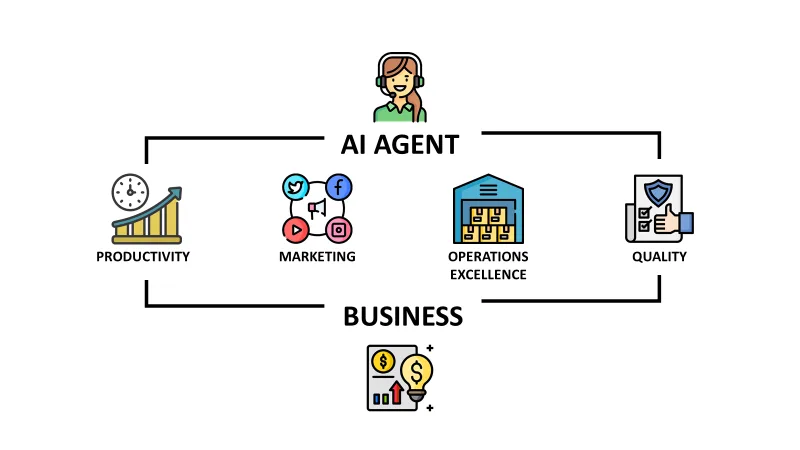
How to Make AI Agents Work for Your Business: A Strategic Guide
Learn how to effectively integrate AI agents into your business operations. Discover strategies for deployment, workflow automation, and scaling your AI capacity.
Nvidia Is Planning to Launch an Open-Source AI Agent Platform
Nvidia is reportedly launching an open-source AI agent platform. Explore how this move could reshape the AI development landscape and empower developers.
Continue exploring
Find AI agents by workflow
More in Industry Insights
Browse more articles in the Industry Insights category.
Nvidia articles
Explore more guides and insights tagged Nvidia.
AI articles
Explore more guides and insights tagged AI.
AI Agent Categories
Browse use-case pages for sales, productivity, coding, customer service, and more.
AI Agents Landscape
Explore the full directory map and compare agents by workflow and category.
Agent Skills
Find reusable skills, capabilities, and building blocks for AI agent workflows.