
Identity Digital Proposes DNS Identity for AI Agents
The Challenge of AI Agent Identity
As autonomous AI agents move from experimental sandboxes to enterprise production environments, the question of identity has become a primary security hurdle. Today, most AI agents operate as "black boxes," interacting with APIs, databases, and third-party services without a standardized way to prove their origin, purpose, or authorization level. This lack of verifiable machine identity creates significant vulnerabilities, including unauthorized data access and the potential for malicious spoofing.
For IT leaders and system architects, the challenge is clear: how do we build trust in a machine-to-machine ecosystem where the "user" is an algorithm? An AI agent identity is essentially a verifiable set of claims that proves an agent is who it says it is and that it possesses the specific permissions required for a task. Without a robust framework for authenticating these agents, organizations risk exposing sensitive internal infrastructure to automated threats.
How DNS-Based Identity Works for Machines
Identity Digital, a major player in the domain registry space, has proposed a novel solution: leveraging the Domain Name System (DNS) to provide a persistent, globally recognized identity for AI agents. DNS, the backbone of the internet, already maps human-readable names to machine-readable IP addresses. Extending this to include cryptographically verifiable machine identities is a logical evolution of existing infrastructure.
In this proposed model, an AI agent would be assigned a unique DNS record—effectively a digital "passport." When an agent attempts to access a service, the service provider queries the DNS record to verify the agent's identity and permissions. This process relies on established protocols like DNSSEC (Domain Name System Security Extensions), which ensures that the information received from the DNS query is authentic and has not been tampered with in transit.
Why DNS is a Viable Foundation for AI Verification
Using DNS for AI agent authentication offers several distinct advantages over proprietary, siloed systems:
Global Scalability: DNS is already designed to handle trillions of queries per day, making it an ideal substrate for a massive, distributed network of autonomous agents.
Standardization: By utilizing existing DNS infrastructure, organizations avoid the need to build entirely new, fragmented identity protocols that may not interoperate with one another.
Enterprise Familiarity: IT departments are already experts in managing DNS records, making the adoption of DNS-based identity for machines a manageable task rather than a complete overhaul of security operations.
Auditability: Because DNS records are public or semi-public, they provide an immutable, auditable trail of an agent's identity, which is essential for compliance and forensic analysis.
The Broader Landscape of AI Identity Solutions
The push for standardized protocols is accelerating as the AI tools market becomes increasingly fragmented. While DNS-based identity provides a strong foundation for verification, it is only one piece of the puzzle. The industry is currently exploring multiple layers of security to handle the complexities of AI, including specialized identity layers for AI agents that focus on granular, real-time access control. These layers often complement DNS by providing the deep, session-based authorization that DNS alone cannot support.
Furthermore, as we look at how businesses organize their AI workflows, the need for centralized registries becomes apparent. For instance, the AI agents directory and skill hub represents the growing necessity for a structured way to catalog what specific agents are capable of doing. While DNS verifies *who* the agent is, these directories verify *what* the agent is allowed to execute, creating a two-pronged approach to agent safety.
Comparing DNS Identity to Decentralized Frameworks
It is important to contrast DNS-based approaches with other emerging verification methods. Decentralized Identity (DID) frameworks, often built on blockchain or distributed ledger technology, offer a different set of trade-offs. While DIDs provide excellent privacy and self-sovereignty, they can be difficult to integrate into legacy enterprise systems that rely on centralized, hierarchical management. In contrast, DNS-based identity aligns with the traditional IT stack, making it easier to deploy in corporate environments that prioritize centralized oversight and auditing.
Key Tradeoffs and Security Considerations
No system is without risk. When considering DNS as the primary identity anchor for AI, IT leaders should be aware of the following:
DNS Spoofing and Cache Poisoning: While DNSSEC mitigates many traditional DNS attacks, any identity system is only as secure as its implementation. Ensuring that DNSSEC is strictly enforced is non-negotiable for AI agent identity.
Centralization Concerns: Critics of DNS-based identity argue that it relies on the existing registry/registrar hierarchy, which could become a point of failure or censorship.
Latency: Depending on the complexity of the cryptographic verification, there may be a performance cost during the initial handshake between an agent and a service.
For more information on how global standards are evolving, refer to the Internet Engineering Task Force (IETF), which continues to work on the protocols that govern the underlying infrastructure of the internet.
Conclusion
Identity Digital’s proposal to use DNS as a foundational layer for AI agent identity is a pragmatic step toward securing our automated future. By leveraging existing, battle-tested infrastructure, we can provide a scalable and auditable framework for machine identification. However, as the ecosystem matures, it will likely require a multi-layered approach that combines DNS-based identification with specialized authorization and skill-verification platforms. IT leaders should monitor updates from standards bodies closely, as the move toward a unified identity standard for AI is inevitable. Stay informed on the evolution of AI infrastructure by subscribing to our newsletter for updates on emerging identity protocols and standards.
Related Articles
View all articles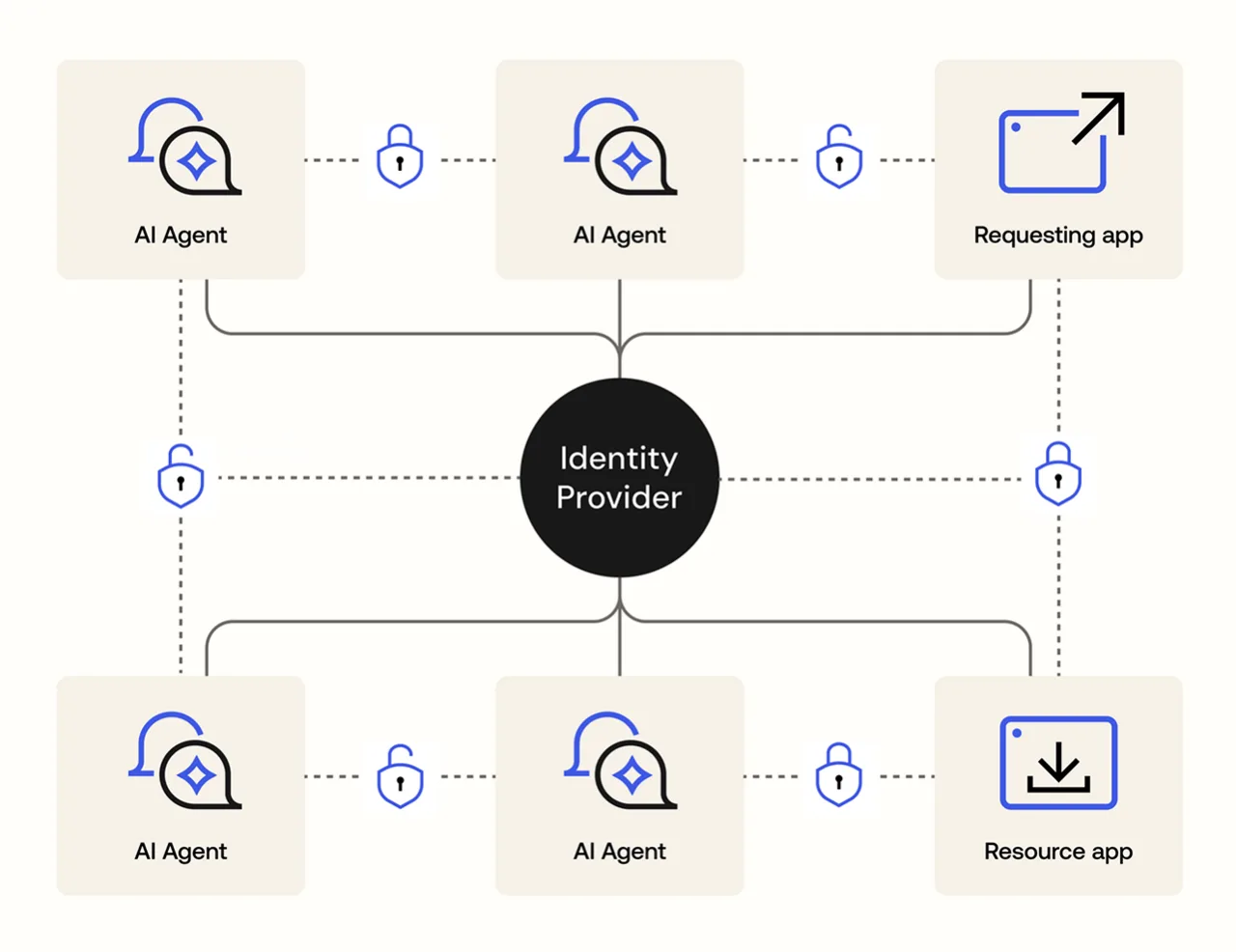
Okta Gives AI Agents Enterprise Identity
Learn how Okta and modern identity frameworks provide enterprise-grade security for AI agents, ensuring controlled access and verifiable actions.
Linux Foundation Moves to Give AI Agents Internet-Scale Identity
Explore how the Linux Foundation is working to establish internet-scale identity for AI agents to improve security, trust, and machine-to-machine interaction.

Silverfort Puts Identity Controls Inside Copilot Agents
Discover how Silverfort embeds identity controls directly into Microsoft Copilot agents, fortifying AI security and protecting sensitive data. Learn more.
Continue exploring
Find AI agents by workflow
More in Industry Insights
Browse more articles in the Industry Insights category.
AI Security articles
Explore more guides and insights tagged AI Security.
Infrastructure articles
Explore more guides and insights tagged Infrastructure.
AI Agent Categories
Browse use-case pages for sales, productivity, coding, customer service, and more.
AI Agents Landscape
Explore the full directory map and compare agents by workflow and category.
Agent Skills
Find reusable skills, capabilities, and building blocks for AI agent workflows.