Okta Gives AI Agents Enterprise Identity
The Rise of Autonomous AI Agents in the Enterprise
The enterprise landscape is undergoing a fundamental shift. We are moving from a world where software is purely reactive waiting for a human to click a button to a world of autonomous AI agents capable of executing complex workflows, making decisions, and interacting with sensitive corporate data. For IT and security leaders, this transition necessitates a new approach to governance. AI agent identity is no longer an optional feature; it is the cornerstone of a secure, scalable AI strategy.
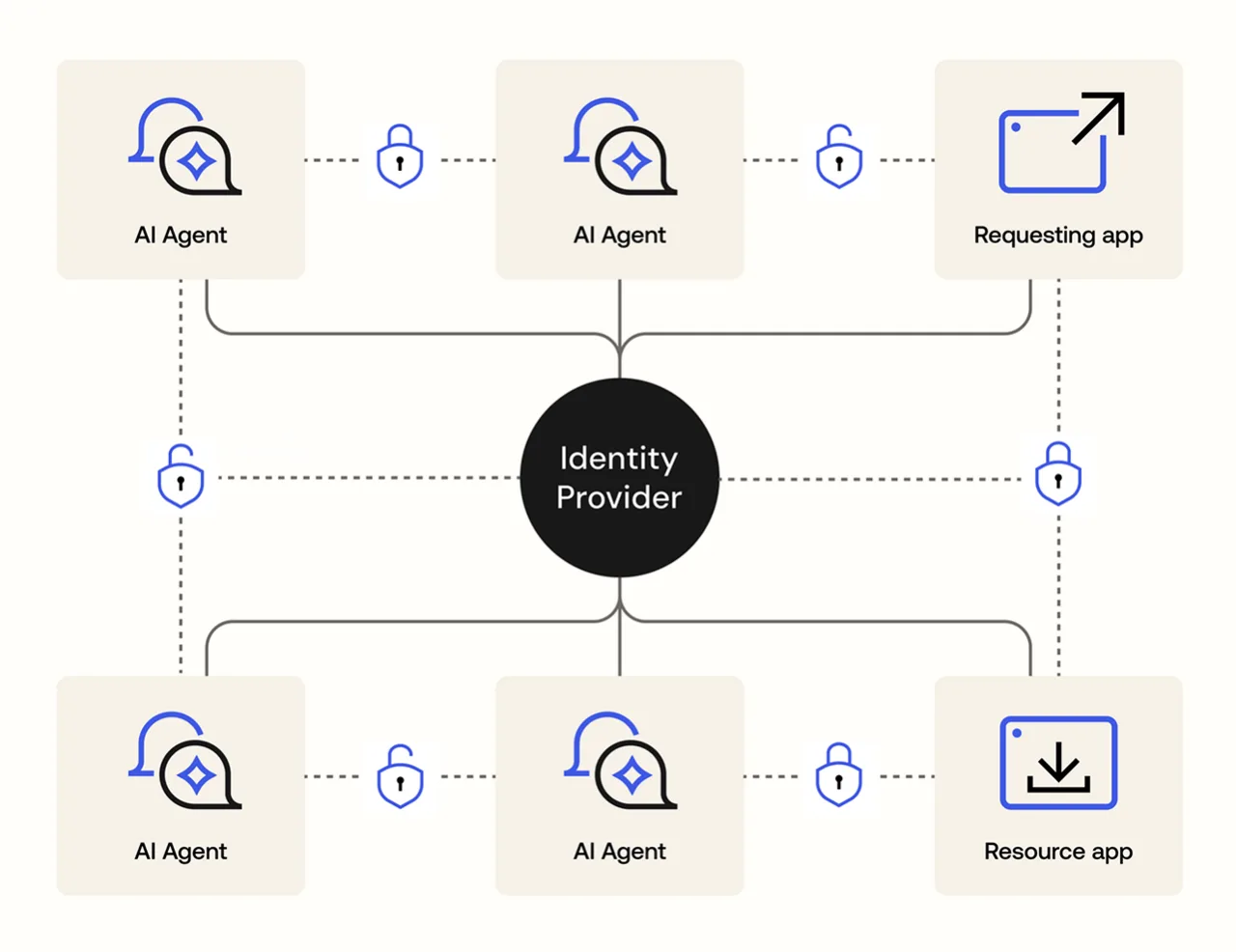
An AI agent is a software entity that perceives its environment and takes actions to achieve specific goals. When these agents operate within an enterprise, they require access to APIs, databases, and internal applications. Without a robust identity framework, these agents represent a massive security blind spot. By treating AI agents as first-class citizens within an identity provider like Okta, organizations can apply the same rigorous security policies to machines that they apply to human employees.
The Challenge: Why AI Agents Break Traditional Identity Models
Traditional identity management was designed for humans. We authenticate users via passwords, multi-factor authentication (MFA), and session timeouts. These controls are built on the assumption that a human is behind the keyboard. AI agents, however, operate at machine speed and scale, often 24/7. Granting an agent broad, user-like permissions is a recipe for disaster; if an agent is compromised, an attacker could leverage its credentials to exfiltrate data or disrupt critical infrastructure.
The fundamental conflict arises because agents lack physical presence. In cybersecurity, we define machine identity as the cryptographic credentials such as certificates, API keys, or tokens that allow a machine to prove its identity to another machine or resource. Understanding concepts such as machine identity, Zero Trust, API security, and access governance is much easier through a comprehensive Cyber security Course, which provides practical knowledge for protecting modern AI-driven enterprise environments. Unlike humans, agents cannot perform a manual MFA prompt. Therefore, securing enterprise AI workflows requires a shift from human-centric to machine-centric identity management, where granular, attribute-based access control (ABAC) dictates exactly what an agent can do, when it can do it, and what data it can touch.
Okta’s Approach to AI Agent Identity
Okta is evolving its identity platform to address the unique requirements of machine-to-machine (M2M) and machine-to-resource interactions. By leveraging established standards like OAuth 2.0 and OpenID Connect, Okta allows organizations to assign unique identities to AI agents, just as they would to an employee or a contractor. This approach ensures that every action taken by an AI agent is authenticated, authorized, and logged for audit purposes.
Key to this strategy is the integration of Zero Trust principles. In a Zero Trust architecture, no entity—human or machine—is trusted by default. Okta enables security teams to enforce policies that limit an agent’s scope of access to the minimum necessary for its specific function (the Principle of Least Privilege). For instance, if an agent is designed to summarize meeting transcripts, its identity should be restricted from accessing financial databases or HR records. This granular control is essential to prevent unauthorized AI agent actions.
How does identity management differ for AI agents vs humans?
While humans interact through browser-based logins and MFA, AI agents interact through API calls and service accounts. Humans have long-term identities tied to a lifecycle (onboarding/offboarding), whereas AI agents often have ephemeral, task-specific lifecycles. Furthermore, while human behavior can be monitored for anomalies like unusual login times, AI agent behavior must be monitored for logical anomalies—such as an agent attempting to access an unauthorized endpoint or requesting a volume of data that exceeds its defined operational profile.
Comparing Identity Frameworks for AI
The industry is currently exploring several methods to verify the provenance and integrity of autonomous agents. While Okta provides a robust backbone for authentication, other frameworks are emerging to tackle the verification of agent identity across decentralized systems. For example, some experts have suggested that Identity Digital Proposes DNS Identity for AI Agents as a way to provide verifiable, domain-based trust for autonomous entities interacting over the public internet. These approaches are complementary: while DNS-based identity helps establish the "who" and "what" on a global scale, Okta provides the internal "how" for enforcing granular access permissions within the corporate perimeter.
Integrating Agents into Enterprise Ecosystems
As organizations deploy more sophisticated AI, the need for a unified identity backbone becomes critical. For example, as platforms like Anthropic Goes All-In on “Enterprise Agents” (Cowork + Plugins) continue to gain traction, the reliance on plugins and third-party integrations grows. Each of these plugins acts as an extension of the agent, and each requires its own identity token to interact with enterprise resources safely. Without a centralized identity provider managing these connections, IT teams lose visibility into which agents are accessing which plugins, creating a fragmented security landscape that is impossible to audit.
Best Practices for Securing AI-Driven Workflows
To secure your enterprise against the risks of unchecked automation, security leaders should adopt a structured approach to identity governance. Follow this checklist to ensure your deployment remains compliant and secure:
Inventory your agents: Maintain a centralized registry of all autonomous agents, including their purpose, data access requirements, and the human owners responsible for them.
Implement non-human identity standards: Use service accounts and dedicated OAuth scopes rather than sharing human credentials with agents.
Enforce Least Privilege: Regularly review and restrict the permissions of each agent to prevent lateral movement in the event of a breach.
Establish Audit Trails: Ensure that every API call made by an agent is logged with its unique identity, allowing for forensic analysis and regulatory compliance reporting.
Monitor for Behavioral Anomalies: Use SIEM tools to alert on unexpected agent behavior, such as attempts to access sensitive PII or unauthorized external endpoints.
For further reading on the technical standards governing non-human entities, refer to the NIST Special Publication on Zero Trust Architecture, which provides the foundational framework for securing modern, distributed environments.
Conclusion
The integration of autonomous agents into the enterprise is inevitable, but it does not have to come at the cost of security. By leveraging Okta to manage AI agent identity, organizations can extend their Zero Trust strategy to cover the entire machine landscape. This ensures that as your AI agents grow more capable, your ability to govern, monitor, and secure them grows in tandem. Ready to secure your AI deployment? Contact our identity architects to discuss your zero-trust roadmap for autonomous agents.
Related Articles
View all articles
Identity Digital Proposes DNS Identity for AI Agents
Explore how Identity Digital's proposal for DNS-based identity provides a scalable, secure standard for verifying autonomous AI agents in the digital ecosystem.

Silverfort Puts Identity Controls Inside Copilot Agents
Discover how Silverfort embeds identity controls directly into Microsoft Copilot agents, fortifying AI security and protecting sensitive data. Learn more.
Runta Secures $20M Seed for AI Agent Execution Layer
Discover how Runta's $20M a16z-backed AI agent execution layer addresses critical production challenges like token efficiency, security, and operational cont...
Continue exploring
Find AI agents by workflow
More in Industry Insights
Browse more articles in the Industry Insights category.
Identity Management articles
Explore more guides and insights tagged Identity Management.
AI Security articles
Explore more guides and insights tagged AI Security.
AI Agent Categories
Browse use-case pages for sales, productivity, coding, customer service, and more.
AI Agents Landscape
Explore the full directory map and compare agents by workflow and category.
Agent Skills
Find reusable skills, capabilities, and building blocks for AI agent workflows.