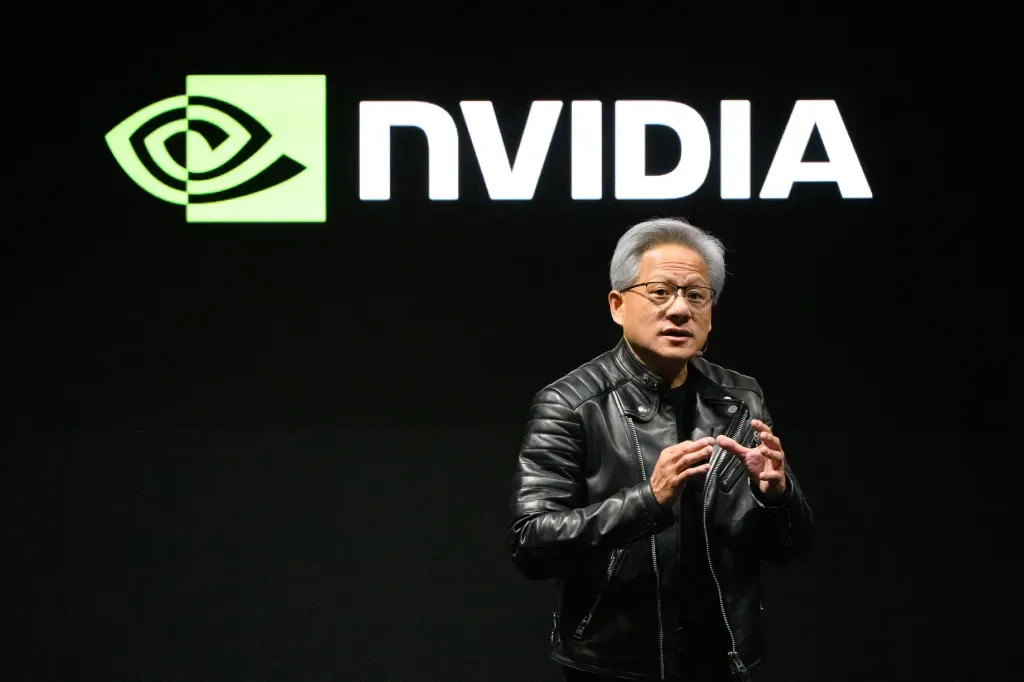
Nvidia Is Planning to Launch an Open-Source AI Agent Platform
Nvidia’s Strategic Shift to Open Source
In a move that promises to redefine the trajectory of generative AI, industry reports suggest that Nvidia is preparing to launch an open-source AI agent platform. While the company has historically built its reputation on proprietary hardware and software stacks, this pivot toward an open-source model signals a broader realization: the future of AI dominance lies in ecosystem adoption. By lowering the barrier to entry, Nvidia aims to move beyond the "closed-garden" narrative, inviting a global community of developers to build directly atop their infrastructure.
What is an AI Agent?
To understand why this launch is a watershed moment, we must first define the technology. Unlike passive Large Language Models (LLMs) that simply generate text or images, AI agents are autonomous systems capable of executing multi-step workflows. They can perceive their environment, reason through complex tasks, and perform actions across software applications—such as booking meetings, managing supply chains, or writing and deploying code.
In the enterprise, these agents represent the shift from "AI as a chatbot" to "AI as a coworker." They act as the bridge between raw intelligence and tangible productivity, making them the most sought-after tool in the current AI development landscape.
Core Features and Capabilities of the Nvidia AI Agent Platform
While official specifications are forthcoming, industry experts anticipate that the Nvidia open-source AI agent platform will integrate deeply with the company's existing CUDA-accelerated libraries. Key capabilities likely to be included are:
Multi-modal reasoning: Native support for vision, audio, and text input to handle diverse enterprise data.
Seamless API Integration: Pre-built connectors that allow agents to interact with CRM, ERP, and cloud infrastructure tools.
Scalability: Built-in optimization for Nvidia GPUs, ensuring that agents can scale from local testing to massive production workloads without performance bottlenecks.
Security and Governance: Enterprise-grade guardrails to ensure that autonomous actions remain within defined ethical and operational bounds.
Why Open Source? Implications for the AI Ecosystem
Nvidia’s strategy for autonomous AI agents is rooted in the democratization of high-level tools. By releasing an open-source framework, Nvidia effectively standardizes how agents are built. This reduces fragmentation, encourages interoperability, and prevents developer fatigue. For small businesses, this is a game-changer; it allows them to deploy sophisticated autonomous workflows without the prohibitive costs of custom, proprietary development.
The shift toward open-source frameworks is not just about goodwill; it is a calculated effort to ensure that the world's most advanced AI agents are optimized for Nvidia hardware by default.
The Competitive Landscape: Nvidia vs. The Field
Nvidia is entering a crowded space currently occupied by frameworks like LangChain, AutoGPT, and various enterprise-specific agentic tools. However, Nvidia’s competitive advantage lies in its software ecosystem. While other frameworks rely on third-party integrations, Nvidia’s platform will be uniquely positioned to leverage the Nvidia software ecosystem, providing a "metal-to-model" optimization that competing frameworks may struggle to match. This integration allows for lower latency and higher throughput, two critical metrics for real-time autonomous systems.
The Future of AI Agents in Enterprise Workflows
The transition from passive AI to active, autonomous agents is the next frontier for generative AI. As businesses look to automate complex, multi-departmental tasks, the demand for reliable, scalable, and open-source frameworks will only increase. By providing the foundational architecture, Nvidia is setting the stage for a new era of industrial automation where AI agents are as common as email clients.
Are you ready to build the future of autonomous workflows?Sign up for our newsletter to stay updated on the official release of Nvidia's AI agent platform and get the latest in AI development news.
Conclusion
Nvidia’s planned open-source AI agent platform represents a pivotal shift in how we approach autonomous computing. By combining its massive hardware footprint with an accessible, open-source framework, Nvidia is well-positioned to become the backbone of the next generation of AI development. For developers and enterprises alike, the ability to build, deploy, and scale autonomous agents is about to get significantly easier.
Related Articles
View all articlesHow to Build Your Own Agent Harness: A Comprehensive Guide
Learn how to build your own agent harness. This guide covers essential components, frameworks, and step-by-step development for custom AI agent setups.
What Makes an AI Agent “Good”? A Practical Evaluation Framework
Learn how to evaluate AI agents beyond simple accuracy. Discover a practical framework for measuring reliability, decision-making, and operational success.
Top AI Agent Development Companies for Service Businesses in 2026
Compare top AI agent development companies for service businesses in 2026, including firms building support, scheduling, voice, sales, and workflow agents.
Continue exploring
Find AI agents by workflow
More in Industry Insights
Browse more articles in the Industry Insights category.
Nvidia articles
Explore more guides and insights tagged Nvidia.
AI Agents articles
Explore more guides and insights tagged AI Agents.
AI Agent Categories
Browse use-case pages for sales, productivity, coding, customer service, and more.
AI Agents Landscape
Explore the full directory map and compare agents by workflow and category.
Agent Skills
Find reusable skills, capabilities, and building blocks for AI agent workflows.