
The Rise of Vision AI Agents: From Security Cameras to Autonomous Operations
What are Vision AI Agents?
In the rapidly evolving landscape of artificial intelligence, Vision AI Agents are emerging as a pivotal technology. These sophisticated systems go beyond simple image recognition; they are designed to process, interpret, and act upon visual information from the real world, much like a human uses their sight. By combining advanced computer vision techniques with the decision-making capabilities of AI agents, these systems can understand complex scenes, identify objects, track movements, and even predict future events. This makes them invaluable for a wide range of applications, transforming how we approach everything from basic surveillance to highly complex autonomous operations.
This post is for anyone interested in understanding the practical implications of AI's visual capabilities, from IT professionals and business leaders looking to leverage new technologies to students and enthusiasts curious about the future of automation. By the end, you'll have a clear grasp of what Vision AI agents are, how they work, their diverse applications, and what the future holds for this transformative field.
The Core Technology Behind Vision AI Agents
At their heart, Vision AI agents are powered by a confluence of cutting-edge AI technologies. The foundation is computer vision, a field that enables computers to 'see' and interpret digital images or videos. This involves tasks like object detection, image segmentation, and facial recognition.
Layered on top of computer vision is deep learning, a subset of machine learning that uses artificial neural networks with multiple layers to learn complex patterns from large datasets. Convolutional Neural Networks (CNNs) are particularly crucial for image processing, allowing Vision AI agents to identify features and hierarchies within visual data.
Machine learning algorithms further refine the capabilities of these agents, enabling them to learn from experience and improve their performance over time. This allows them to adapt to new environments, recognize novel objects, and make more accurate predictions. The integration of these technologies allows Vision AI agents to not only perceive but also to reason about their visual surroundings.
How do Vision AI Agents Work?
The process typically begins with data acquisition, where cameras or other visual sensors capture raw image or video data. This data is then pre-processed to enhance clarity and reduce noise. Next, deep learning models, trained on vast datasets, analyze the visual information. These models perform tasks such as:
Object Detection and Recognition: Identifying and classifying specific objects within a scene (e.g., people, vehicles, tools).
Scene Understanding: Interpreting the context of the visual information (e.g., a busy street, a manufacturing floor).
Activity Recognition: Identifying and classifying actions or events (e.g., a person falling, a machine malfunctioning).
Tracking: Following the movement of objects or individuals across frames.
Once the visual information is interpreted, the AI agent uses this understanding to make decisions or trigger actions. This could involve sending an alert, adjusting operational parameters, or navigating an autonomous system. The increasing sophistication of real-time video analysis is a key trend, allowing these agents to react instantaneously to dynamic environments.
From Security Cameras to Proactive Surveillance
One of the most prominent areas where Vision AI agents are making a significant impact is in security. Traditional security cameras primarily served as passive recording devices. However, with the integration of Vision AI, cameras are transforming into intelligent sentinels capable of proactive threat detection and anomaly identification.
AI agents in security can now analyze live video feeds to detect suspicious behavior, such as loitering in restricted areas, unauthorized entry, or unusual crowd movements. They can identify specific objects like unattended bags or weapons, significantly enhancing situational awareness for security personnel. This moves surveillance from a reactive approach, where footage is reviewed after an incident, to a proactive one, where potential threats are identified and addressed in real-time.
The benefits of Vision AI agents in security include:
Reduced false alarms through more accurate detection.
Faster response times to critical events.
Improved efficiency by automating routine monitoring tasks.
Enhanced ability to identify patterns and predict potential risks.
The convergence of AI agents and IoT devices is further amplifying these capabilities. Smart cameras, integrated with other sensors, can provide a richer understanding of an environment, enabling more sophisticated security protocols and a higher degree of overall safety.
Vision AI Agents in Autonomous Operations
Beyond security, Vision AI agents are fundamental to the advancement of autonomous systems. For vehicles, vision AI agents for autonomous driving are the 'eyes' that perceive the road, other vehicles, pedestrians, and traffic signals. They enable self-driving cars to navigate complex urban environments, make split-second decisions, and ensure passenger safety.
In industrial settings, AI for industrial automation powered by Vision AI agents is revolutionizing manufacturing and logistics. Robots equipped with vision systems can perform intricate tasks with precision, such as quality control, assembly, and pick-and-place operations. These agents allow machines to adapt to variations in product placement or environmental conditions, making production lines more flexible and efficient.
The role of Vision AI in enabling 'lights-out' operations is particularly noteworthy. In scenarios where human presence is minimal or non-existent, Vision AI agents can monitor machinery, detect anomalies, and even initiate maintenance protocols, ensuring continuous operation and maximizing productivity. This is a significant leap towards fully automated and self-optimizing industrial processes.
The applications extend to robotics in warehouses for inventory management, autonomous drones for inspection and surveying, and even in agriculture for crop monitoring and harvesting. With Custom agriculture software development, agribusinesses can connect Vision AI, field sensors, drones, and farm management platforms into one system for smarter monitoring and decision-making. The ability of these agents to perceive and interact with their environment is key to unlocking truly autonomous capabilities across diverse sectors.
Key Applications and Use Cases
The versatility of Vision AI agents means their applications span numerous industries:
Retail: Analyzing customer foot traffic, optimizing store layouts, managing inventory, and enabling cashier-less checkout experiences.
Manufacturing: Automating quality control, predictive maintenance, worker safety monitoring, and optimizing production lines.
Healthcare: Assisting in medical imaging analysis, robotic surgery, patient monitoring, and fall detection for the elderly.
Smart Cities: Managing traffic flow, monitoring public spaces for safety, optimizing waste management, and enhancing urban planning.
Transportation: Powering autonomous vehicles, optimizing logistics, and enhancing safety in public transport.
Agriculture: Monitoring crop health, detecting pests, optimizing irrigation, and enabling automated harvesting.
The applications of Vision AI agents are continually expanding as the technology matures and becomes more accessible. This broad utility underscores their potential to drive innovation and efficiency across the global economy.
Benefits and Challenges of Vision AI Agents
The advantages of deploying Vision AI agents are substantial, leading to:
Enhanced Efficiency and Productivity: Automating repetitive visual tasks frees up human resources for more complex work.
Improved Safety: Proactive threat detection and anomaly identification in security and industrial environments reduce accidents and risks.
Deeper Insights: Analyzing visual data can reveal trends and patterns that might otherwise go unnoticed, leading to better decision-making.
Cost Reduction: Automation and optimized operations can lead to significant savings in labor and resource management.
However, the widespread adoption of Vision AI agents also presents challenges:
Data Privacy and Security: The collection and analysis of visual data, especially involving individuals, raise significant privacy concerns. Robust ethical frameworks and data anonymization techniques are crucial.
Computational Cost: Processing vast amounts of visual data in real-time requires substantial computational power, which can be expensive to deploy and maintain. The impact of edge computing on the deployment of Vision AI agents is a growing trend, aiming to reduce latency and computational load on central servers.
Ethical Considerations: Questions surrounding bias in AI algorithms, accountability for AI-driven decisions, and the potential for misuse of surveillance technologies need careful consideration. The growing demand for explainable AI (XAI) in vision systems is an effort to address these concerns by making AI decisions more transparent.
Integration Complexity: Integrating Vision AI systems with existing infrastructure and workflows can be complex and require specialized expertise.
Addressing these challenges is paramount for the responsible and effective deployment of Vision AI agents. As mentioned, understanding the fundamental differences between computer vision and AI agents is key to grasping their capabilities. While computer vision provides the 'eyes,' AI agents provide the 'brain' to interpret and act. AI agents need eyes to effectively interact with the physical world.
The Future Trajectory of Vision AI Agents
The future of Vision AI agents is incredibly promising. We can expect continued advancements in their ability to understand context, emotion, and intent from visual cues. The integration of Vision AI with other AI modalities, such as natural language processing (NLP) and reinforcement learning, will lead to even more sophisticated and versatile AI agents capable of more nuanced interactions.
Expect to see Vision AI agents becoming more pervasive, seamlessly integrated into our daily lives and industrial processes. They will play an increasingly vital role in creating smarter cities, more efficient businesses, and more personalized experiences. The ongoing development in areas like generative AI may also lead to agents that can not only interpret but also create visual content based on their understanding of the world.
As these technologies mature, the focus will also shift towards making them more accessible, affordable, and ethically sound. The continuous innovation in this field suggests that the capabilities of Vision AI agents will expand exponentially, driving further automation and intelligent decision-making across all sectors. For businesses looking to harness AI's power, understanding how these agents can drive operational improvements is crucial, for instance, in understanding 8 Ways AI Agents Turbocharge Revenue Operations.
Discover how Vision AI agents are reshaping industries and paving the way for a more automated and intelligent future. Explore the transformative potential of visual perception and intelligent decision-making.
Related Articles
View all articles
The 5 Best AI Video Agents and Tools You Need to Know
Discover the 5 best AI video agents and tools transforming content creation. Enhance video generation, editing, and marketing with cutting-edge AI.
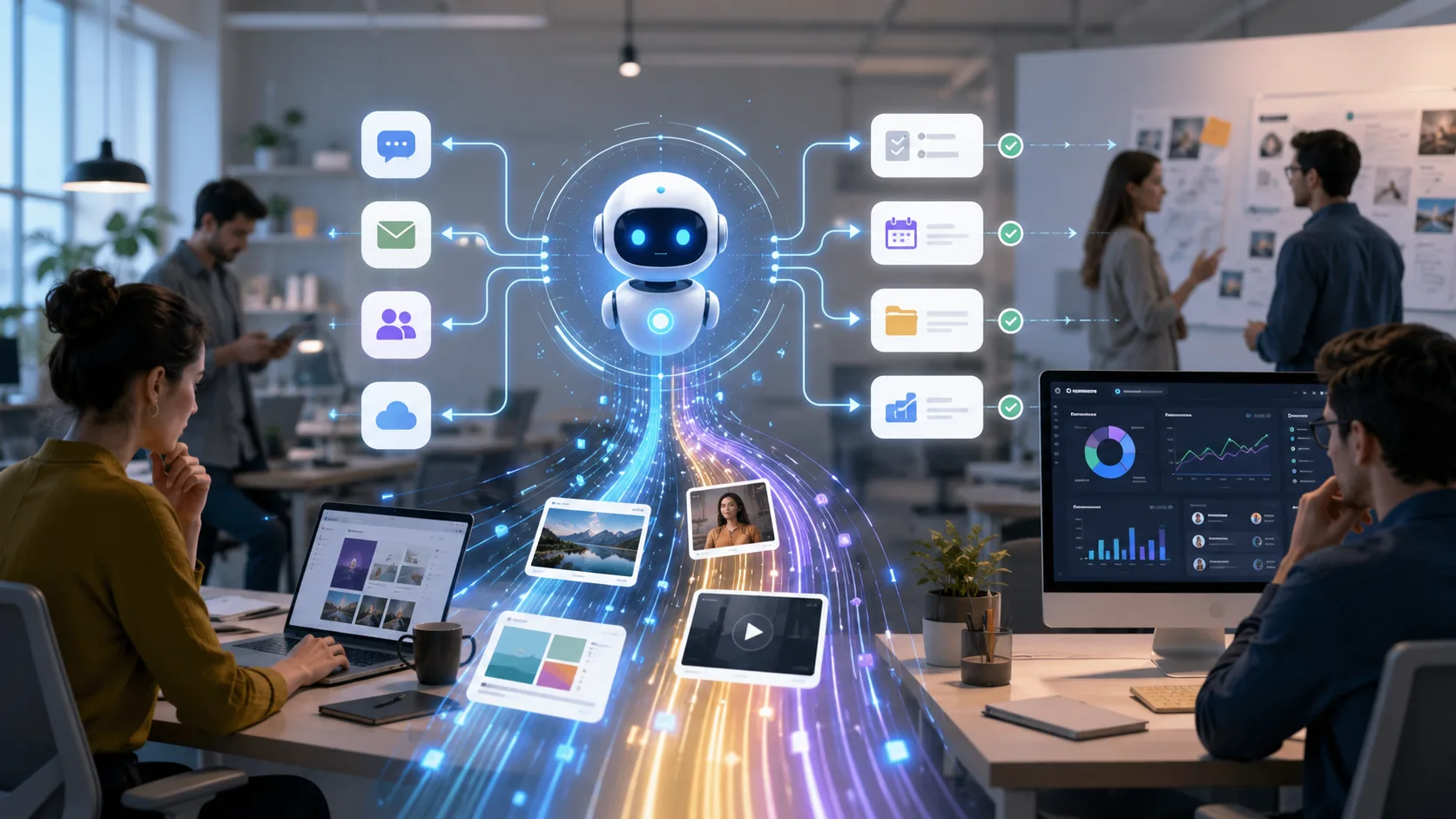
How AI Agents Are Transforming Agency Operations
Discover how AI agents are transforming agency operations, automating tasks, enhancing creativity, and improving client service. Learn the benefits and future of AI for agencies.
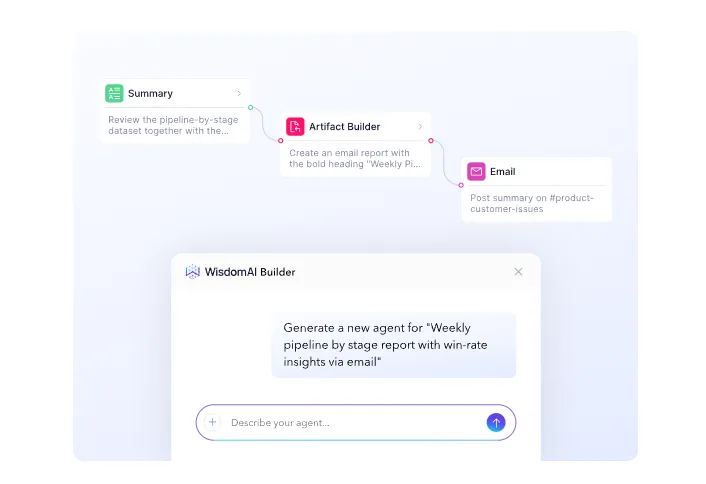
WisdomAI Launches Autonomous Analytics Agents
Explore how autonomous analytics agents like those from WisdomAI are transforming data workflows. Learn the mechanics, benefits, and tradeoffs.
Continue exploring
Find AI agents by workflow
More in Industry Insights
Browse more articles in the Industry Insights category.
Artificial Intelligence articles
Explore more guides and insights tagged Artificial Intelligence.
Computer Vision articles
Explore more guides and insights tagged Computer Vision.
AI Agent Categories
Browse use-case pages for sales, productivity, coding, customer service, and more.
AI Agents Landscape
Explore the full directory map and compare agents by workflow and category.
Agent Skills
Find reusable skills, capabilities, and building blocks for AI agent workflows.