How AI Agents Make Money: Revenue Models and Business Strategies
Introduction to AI Agent Economics
The landscape of software monetization is undergoing a seismic shift. As we transition from static tools to autonomous systems, understanding how AI agents make money has become a priority for founders, developers, and enterprise strategists alike. Unlike traditional software that simply facilitates a task, AI agents are designed to execute complex workflows independently. This fundamental difference requires a departure from legacy SaaS models toward value-based pricing that reflects the agent's actual contribution to a business.
This guide is written for those looking to build or deploy autonomous systems. We will explore the primary revenue streams currently defining the industry, compare subscription-based access against transaction-aligned models, and analyze why the market is moving toward outcome-based compensation. Whether you are wondering if AI agents are profitable or how to structure your pricing, this overview provides the framework you need to align your technology with sustainable revenue.
Subscription-Based Revenue Models
For many startups, the subscription model remains the standard for predictable recurring revenue. In the context of AI agents, this typically manifests as a tiered platform fee. Users pay a flat monthly or annual cost for access to an agentic platform, which often includes a set number of agent instances, integration capabilities, and ongoing technical support.
This model is particularly effective for B2B tools where the agent acts as a digital employee or a specialized assistant. By treating the agent as a "seat," companies can forecast costs reliably. However, as the industry matures, developers are finding that static subscriptions may undervalue the high-volume work performed by intelligent systems. While subscriptions ensure baseline cash flow, they often fail to capture the upside when an agent scales its productivity during peak business periods.
Usage and Transaction-Based Pricing
The most significant trend in the autonomous software economy is the move toward per-outcome pricing. If a traditional SaaS model charges for the right to use software, agent-based models increasingly charge for the work actually completed. This approach is often referred to as "value-aligned pricing."
There are several ways to structure these revenue streams:
Per-Token Pricing: Common in LLM-heavy applications, this charges users based on the computational resources consumed by the agent.
Per-Task/Action Pricing: The agent charges a set fee for every successful completion of a predefined task, such as processing an invoice or qualifying a lead.
Outcome-Based Pricing: The premium model where the agent is compensated based on a successful business result, such as a closed sale or a resolved customer support ticket.
This shift from 'per-user' to 'per-outcome' pricing creates a direct link between the agent's performance and its revenue. When you prioritize strategic automation, you ensure that your pricing model incentivizes the agent to be as efficient as possible, directly benefiting both the developer and the end client.
Licensing, White-Labeling, and Marketplaces
Beyond direct-to-consumer models, developers are increasingly leveraging enterprise licensing and white-labeling. In this scenario, a developer builds a specialized agent—such as a compliance auditor or a supply chain optimizer—and licenses the underlying logic to large enterprises. The enterprise then integrates this agent into their own internal infrastructure, often paying a premium for security, customization, and deployment support.
Simultaneously, the rise of the 'Agent-as-a-Service' (AaaS) economy has fueled the growth of agent marketplaces. These platforms act as intermediaries, allowing creators to sell or rent their custom agents to a broader audience. This commoditization of agent creation means that developers no longer need to build the entire infrastructure themselves; they can focus on the core logic and distribute it through established ecosystems. If you are curious about the specific mechanics of this, our deep dive into the business of agent builders provides a clear look at how creators scale their revenue beyond simple subscriptions.
Challenges in Monetizing Autonomous Systems
While the profit potential is high, monetizing autonomous systems comes with unique challenges. The primary obstacle is the cost-to-serve. Because AI agents rely on complex model inference (often via APIs like OpenAI or Anthropic), the cost to run an agent can fluctuate wildly based on the complexity of the requests it handles.
Developers must carefully balance their pricing power against these variable costs. If an agent's operation becomes too expensive due to token consumption, the profit margin can evaporate quickly. Therefore, successful monetization requires:
Predictive Cost Modeling: Understanding the average resource consumption per task.
Usage Caps: Implementing guardrails to prevent runaway costs on the provider's side.
Value-Based Tiering: Charging more for agents that handle high-stakes, high-value decisions.
Do AI agents replace traditional SaaS subscriptions? Not entirely. Instead, they represent a transition toward a more granular, performance-oriented economy where businesses pay for results rather than just access.
Conclusion: The Future of Agentic Profitability
The shift toward agent-based revenue models is indicative of a broader trend: the commoditization of intelligence. As AI agents become more autonomous, their ability to deliver measurable ROI will dictate their market value. Whether you choose a subscription model for stability or a transactional model for scalability, the key to long-term profitability lies in aligning your pricing with the tangible value the agent provides to the user.
As you refine your business model, remember that the most successful systems are those that integrate seamlessly into existing workflows. Ready to scale your autonomous operations? Read our guide on strategic implementation to ensure your AI agents deliver measurable ROI.
Related Articles
View all articlesHow AI Agent Builders Are Actually Making Money
Discover how AI agent builders make money using diverse revenue models, from usage-based pricing to enterprise outcome-oriented strategies.
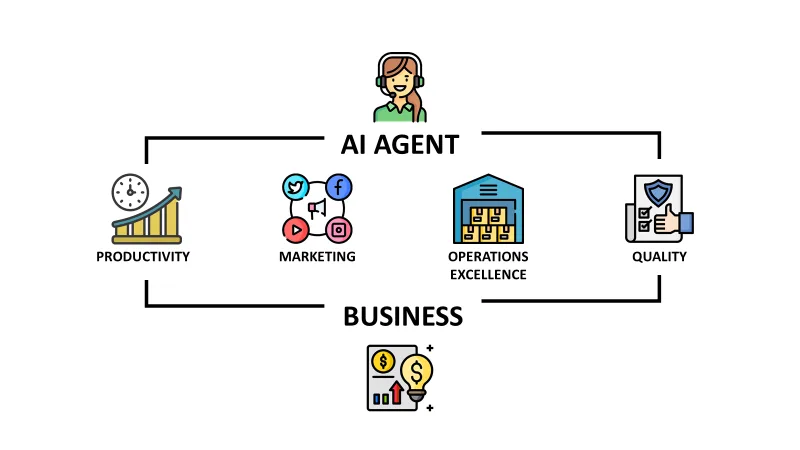
How to Make AI Agents Work for Your Business: A Strategic Guide
Learn how to effectively integrate AI agents into your business operations. Discover strategies for deployment, workflow automation, and scaling your AI capacity.

How to Turn Content Into Revenue With Custom AI Agents
Learn how to leverage custom AI agents to convert your content into scalable revenue streams. Discover strategies for automation, personalization, and sales.
Continue exploring
Find AI agents by workflow
More in Industry Insights
Browse more articles in the Industry Insights category.
AI Agents articles
Explore more guides and insights tagged AI Agents.
Monetization articles
Explore more guides and insights tagged Monetization.
AI Agent Categories
Browse use-case pages for sales, productivity, coding, customer service, and more.
AI Agents Landscape
Explore the full directory map and compare agents by workflow and category.
Agent Skills
Find reusable skills, capabilities, and building blocks for AI agent workflows.