
Google DeepMind's $10M Investment in Multi-Agent Safety
The Growing Complexity of AI Systems
Artificial intelligence is no longer confined to single, isolated tasks. Modern AI systems are increasingly sophisticated, often comprising multiple agents that interact with each other and their environment to achieve complex goals. From autonomous vehicles coordinating on roadways to sophisticated trading algorithms operating in financial markets, the landscape of AI is rapidly evolving towards multi-agent scenarios. This complexity, while promising unprecedented capabilities, also introduces significant challenges, particularly in ensuring the safety and reliability of these interconnected systems. The primary keyword, multi-agent safety, becomes paramount as we navigate this new frontier.
What is Multi-Agent Safety?
Multi-agent safety refers to the field of AI research dedicated to ensuring that systems composed of multiple interacting artificial intelligence agents behave in predictable, beneficial, and safe ways. Unlike single-agent AI, where the focus is on the behavior of one entity, multi-agent safety grapples with the emergent behaviors, coordination failures, and potential conflicts that can arise when several autonomous or semi-autonomous agents operate concurrently. The core challenge lies in understanding and controlling the collective dynamics of these agents, preventing unintended consequences, and ensuring that their interactions lead to desired outcomes rather than catastrophic failures.
Key Challenges in Multi-Agent AI Safety
The difficulties in multi-agent AI safety are multifaceted:
Emergent Behaviors: When multiple agents interact, their combined actions can lead to behaviors that were not explicitly programmed or anticipated by their designers. These emergent properties can be beneficial but also unpredictable and potentially harmful.
Coordination Failures: Ensuring that agents cooperate effectively and avoid conflicting actions is a significant hurdle. A failure in coordination can lead to gridlock, resource contention, or even direct harm.
Scalability: As the number of agents increases, the complexity of their interactions grows exponentially, making it exponentially harder to predict, monitor, and control their behavior.
Goal Misalignment: Individual agents might have slightly different objectives or interpretations of their goals, leading to suboptimal or even dangerous collective outcomes.
Adversarial Interactions: In some scenarios, agents might deliberately act in ways that are detrimental to others, requiring robust safety mechanisms to prevent malicious exploitation.
Google DeepMind's $10 Million Initiative
Recognizing the critical importance and inherent complexity of multi-agent safety, Google DeepMind has announced a significant investment of $10 million dedicated to advancing research in this domain. This substantial funding aims to accelerate progress in understanding, predicting, and controlling the behavior of multi-agent AI systems. The initiative is expected to support a range of research activities, including theoretical advancements, the development of new safety paradigms, and empirical studies. By putting significant resources behind this area, Google DeepMind signals its commitment to the responsible development of increasingly powerful AI technologies. The goal is to proactively address potential risks before they manifest in real-world applications, ensuring that advanced AI systems are aligned with human values and safety standards.
How is the $10 Million Being Used?
While specific project allocations evolve, Google DeepMind's $10 million investment is broadly directed towards:
Fundamental Research: Exploring novel theoretical frameworks for multi-agent coordination and safety.
Developing New Tools and Benchmarks: Creating environments and metrics to rigorously test and evaluate the safety of multi-agent systems.
Investigating Emergent Phenomena: Studying how complex, unpredictable behaviors arise from simple agent interactions and how to steer them towards safety.
Enhancing AI Alignment: Focusing on methods to ensure that the goals and actions of multiple AI agents remain aligned with human intent and ethical principles.
This investment underscores the growing trend of major tech companies dedicating substantial resources to ethical AI development and the crucial race to secure advanced AI systems.
Why is Multi-Agent Safety So Challenging?
The inherent nature of multiple interacting agents introduces unique and formidable challenges to safety assurance. Consider the difference between a single AI assistant designed to manage your calendar and a fleet of autonomous delivery drones. While the former's failure might result in a missed appointment, the latter's failure could have far more severe consequences, especially if multiple drones malfunction simultaneously. The complexities are amplified by factors such as:
Unforeseen Interactions: Agents may encounter situations or interact with each other in ways that designers did not anticipate. This is particularly true in dynamic and open-ended environments.
The 'Tragedy of the Commons' in AI: When agents compete for limited resources without proper coordination or regulation, they can deplete those resources, leading to system-wide failure.
Cascading Failures: A problem with one agent can trigger a chain reaction of failures across other agents, leading to widespread disruption.
Difficulty in Verification: Proving the safety of a system with a vast number of interacting agents is significantly more complex than verifying a single-agent system. Traditional verification methods often struggle to scale.
Understanding these challenges is crucial for developing effective strategies to safeguard autonomous AI systems. The potential for unexpected and harmful outcomes makes proactive research and investment in multi-agent safety essential.
Potential Risks and Real-World Implications
The implications of unsafe multi-agent systems are far-reaching and can manifest in various domains. For instance, consider:
Autonomous Transportation: Multiple self-driving cars interacting on a busy highway. A coordination error or a misinterpretation of another vehicle's intent by one agent could lead to a multi-vehicle accident.
Robotic Swarms: A group of robots tasked with disaster relief or construction. If their coordination algorithms fail, they might impede each other's progress, damage infrastructure, or even cause harm to humans.
Financial Markets: High-frequency trading algorithms that interact. A subtle bug or misaligned objective in one could trigger a flash crash, causing significant economic instability.
Smart Grids: AI agents managing energy distribution. Poor coordination could lead to widespread blackouts or surges that damage equipment.
These scenarios highlight the critical need for robust safety measures. The increasing focus on preventing unintended consequences in AI necessitates dedicated research into areas like agent coordination and ethical considerations for AI agents.
The Importance of Alignment in Multi-Agent Systems
Achieving AI alignment, especially in complex multi-agent scenarios, is paramount for safety. Alignment refers to ensuring that AI systems pursue goals and exhibit behaviors that are consistent with human values and intentions. In a multi-agent context, this means not only aligning each individual agent but also ensuring that their collective actions are aligned. This is a significantly harder problem than single-agent alignment because the interactions themselves can create emergent goals or behaviors that deviate from the intended overarching objective.
For example, if a group of agents are tasked with optimizing resource allocation, and their individual reward functions are slightly miscalibrated, they might collectively decide to hoard resources in a way that benefits no one in the long run, or even harms the overall system. Effective alignment in multi-agent systems requires:
Shared Understanding of Goals: Agents need a common, clearly defined objective that supersedes individual sub-goals.
Robust Communication Protocols: Agents must be able to communicate their intentions and status reliably to prevent misunderstandings.
Mechanisms for Conflict Resolution: There must be built-in processes for agents to resolve disagreements or conflicting actions in a safe and efficient manner.
Human Oversight and Intervention: In critical applications, mechanisms for human operators to monitor, override, and correct agent behavior are essential.
The challenge of how can AI alignment be achieved in complex multi-agent scenarios is a central question driving much of the current research in this field.
Building Safe Agent Environments
A crucial aspect of advancing multi-agent safety research is the development of robust environments and tools for experimentation and testing. Creating controlled yet realistic settings allows researchers to study agent interactions, identify potential failure modes, and validate safety mechanisms. This includes the development of sophisticated simulators that can accurately model complex environments and agent behaviors.
The importance of a well-designed agent harness cannot be overstated. Such harnesses provide the necessary infrastructure for:
Controlled Experimentation: Researchers can manipulate variables to observe how different agent configurations and learning algorithms affect overall system safety.
Reproducibility: Standardized environments ensure that experiments can be replicated by other researchers, fostering scientific progress.
Testing Safety Guarantees: Evaluating whether proposed safety mechanisms hold up under various stress conditions.
Benchmarking Progress: Comparing the safety performance of different AI approaches against common standards.
For those looking to delve deeper into the practical aspects of setting up such research infrastructure, understanding how to build your own agent harness is a valuable step.
Moreover, studying past incidents where AI systems have exhibited unintended or harmful behaviors provides invaluable lessons. Examining AI agent traps: real-life incidents and lessons learned can offer practical insights into the types of failures to anticipate and guard against in multi-agent systems.
The Role of Large Language Models
The advent of powerful large language models (LLMs) has added another layer to the multi-agent safety discussion. LLMs can act as sophisticated agents themselves, capable of complex reasoning and interaction. Their integration into multi-agent systems, whether as controllers, communicators, or even as components of other agents, introduces new dynamics. Ensuring that LLMs within a multi-agent framework remain aligned and safe is a significant research challenge. Their ability to generate novel outputs and adapt their behavior based on context means that their safety properties must be continuously monitored and validated, especially in interactive, multi-agent settings.
Conclusion
Google DeepMind's $10 million investment in multi-agent safety research marks a pivotal moment, acknowledging the growing importance of ensuring that complex, interacting AI systems are developed responsibly. As AI systems become more sophisticated and interconnected, the challenges of emergent behaviors, coordination failures, and goal misalignment become more pronounced. Addressing these issues is not merely an academic exercise; it is crucial for preventing potential real-world risks and for building trust in advanced AI technologies. By focusing on alignment and developing robust research environments, the field is moving towards a future where powerful AI can be deployed safely and beneficially.
Related Articles
View all articles
Google AI Agents Are Going Mainstream: What It Means for You
Discover how Google is bringing AI agents into everyday use, their impact on daily tasks, and the future of intelligent automation.
AI Agents in Higher Education: Uses and Best Tools for 2026
Explore how AI agents are transforming higher education in 2026, including 15 use cases, the best tools for students and faculty, benefits, risks, and implementation guidance.
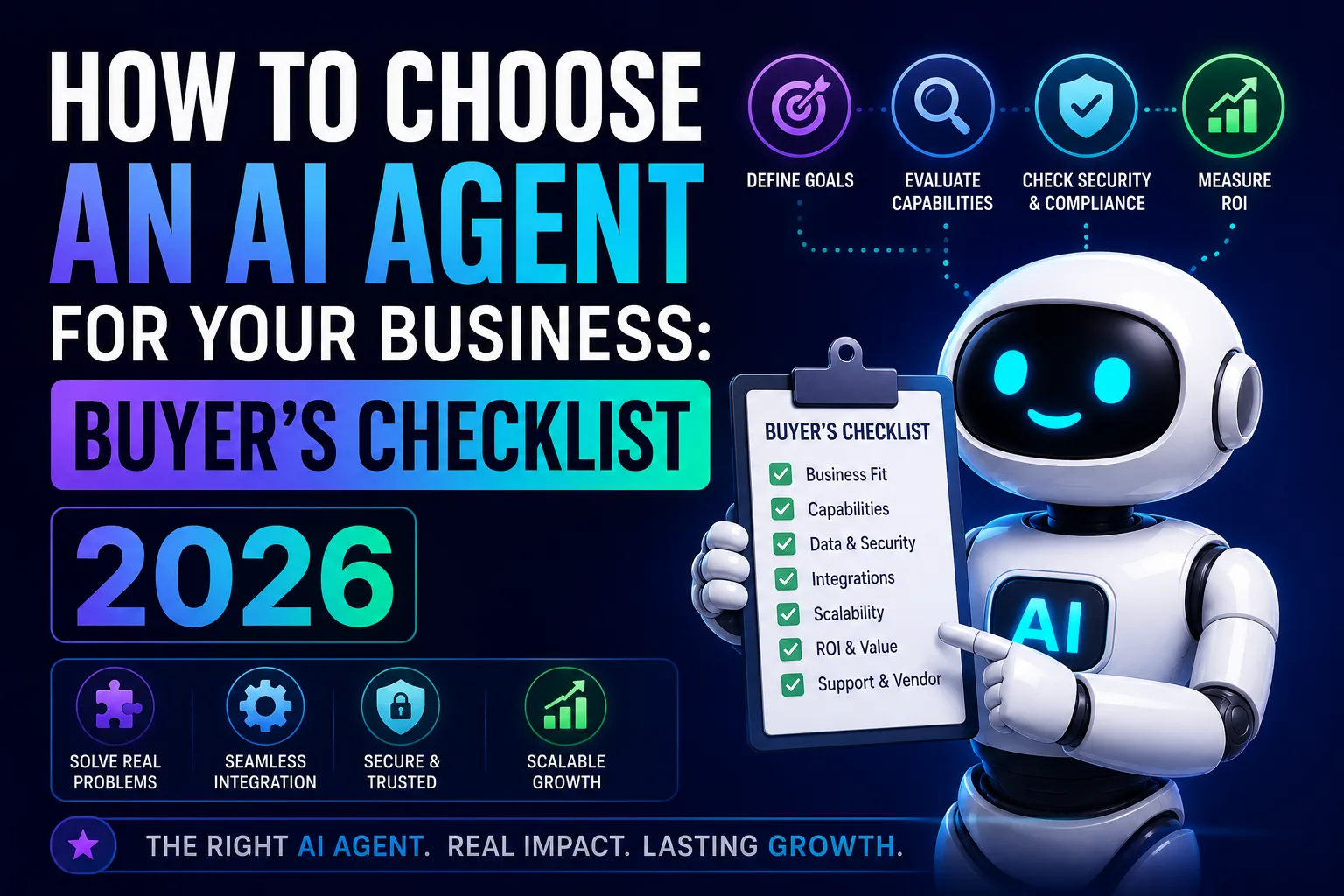
How to Choose an AI Agent for Your Business: Buyer’s Checklist 2026
Navigate AI agent selection for your business with our comprehensive checklist. Discover key criteria, essential features, and how to find the right fit.
Continue exploring
Find AI agents by workflow
More in Industry Insights
Browse more articles in the Industry Insights category.
AI Safety articles
Explore more guides and insights tagged AI Safety.
DeepMind articles
Explore more guides and insights tagged DeepMind.
AI Agent Categories
Browse use-case pages for sales, productivity, coding, customer service, and more.
AI Agents Landscape
Explore the full directory map and compare agents by workflow and category.
Agent Skills
Find reusable skills, capabilities, and building blocks for AI agent workflows.