DeepSWE's Leap Forward: Redefining AI Coding Performance
The Evolving Landscape of AI Coding
The world of software development is undergoing a profound transformation, driven by the rapid advancements in artificial intelligence. For years, AI has been a tool for analysis and automation, but its role in the creative and logical process of coding is now taking center stage. Large language models (LLMs) have demonstrated remarkable capabilities in understanding and generating human-like text, and this prowess is increasingly being applied to the structured language of programming. This evolution is not just about faster code completion; it's about fundamentally redefining how software is built, tested, and maintained. In this dynamic environment, new players are emerging, pushing the boundaries of what AI can achieve in coding. One such significant development is DeepSWE, a system that is setting new benchmarks and redefining expectations for DeepSWE AI coding performance.
This article delves into the innovations behind DeepSWE, its performance metrics, how it stacks up against existing AI coding models, and the broader implications for the future of software development. We will explore how advancements in AI coding performance are democratizing development and accelerating innovation.
What is DeepSWE and Its Core Innovations?
DeepSWE represents a significant leap forward in the domain of AI-assisted software engineering. Unlike earlier AI coding tools that primarily focused on syntax correction or basic code suggestion, DeepSWE aims to tackle more complex coding challenges with a deeper understanding of context, logic, and best practices. Its core innovations lie in its advanced architecture, which likely incorporates state-of-the-art transformer models fine-tuned on massive, diverse codebases. This allows DeepSWE to not only generate syntactically correct code but also to understand the intent behind a developer's request, predict potential issues, and even suggest algorithmic improvements.
The underlying technology of DeepSWE is built upon the foundation of large language models for code, but it distinguishes itself through several key aspects:
Contextual Understanding: DeepSWE exhibits a superior ability to grasp the broader context of a project, including existing code, dependencies, and project requirements.
Algorithmic Reasoning: It moves beyond simple pattern matching to demonstrate a degree of algorithmic reasoning, enabling it to propose efficient solutions to programming problems.
Multi-language Proficiency: While specific details may vary, advanced models like DeepSWE are often trained on a wide array of programming languages, offering versatility.
Error Prediction and Prevention: A crucial innovation is its capacity to anticipate potential bugs and security vulnerabilities, offering proactive solutions.
The race for AI coding supremacy is characterized by continuous innovation, and DeepSWE is a prime example of this competitive drive. Its development signifies a shift towards AI as a collaborative partner in the software development lifecycle, rather than just a passive assistant.
DeepSWE's Performance Metrics and Benchmarking Approach
Measuring the effectiveness of AI in coding is a complex undertaking. It requires a robust framework that goes beyond simple code generation accuracy. DeepSWE's performance is evaluated using a combination of established AI code generation benchmarks and novel methodologies designed to assess its real-world utility. These benchmarks typically involve tasks such as:
Code Completion Accuracy: How often does DeepSWE accurately predict and complete lines or blocks of code?
Function Generation: Can it generate functional code snippets based on natural language descriptions?
Bug Detection and Correction: How effective is it at identifying and fixing errors in existing code?
Code Optimization: Can it suggest improvements to code for better performance or readability?
Problem-Solving on Coding Challenges: Performance on standardized coding challenges that test algorithmic thinking and problem-solving skills.
The approach to benchmarking DeepSWE is crucial for understanding its capabilities. While standard metrics provide a baseline, DeepSWE's proponents emphasize its performance in more nuanced areas, such as its ability to generate code that is not only correct but also maintainable and adheres to industry best practices. This focus on quality, not just quantity, is what sets advanced AI programming assistants apart. The role of benchmarks in AI development is to provide objective measures for progress and to guide future research and development efforts.
DeepSWE vs. Competitors: A Comparative Analysis
The field of AI code generation is highly competitive, with numerous large language models and AI programming assistants vying for dominance. Understanding how DeepSWE performs in comparison to its peers is essential for developers and businesses looking to leverage these tools. When evaluating DeepSWE against other AI coding models, several key differentiators emerge:
Functionality and Task Complexity
Many AI coding tools excel at repetitive tasks like boilerplate code generation or simple function completion. DeepSWE, however, demonstrates a more profound capability in handling complex algorithms and intricate logic. This means it can be more effective in assisting with novel problem-solving rather than just automating familiar patterns. The question of how does DeepSWE perform in AI coding challenges often points to its ability to solve problems that require a deeper understanding of computational thinking.
Code Quality and Maintainability
Beyond just generating code that works, the quality of that code is paramount. DeepSWE aims to produce code that is not only functional but also clean, well-documented, and adheres to common programming paradigms. This directly impacts the long-term maintainability of software projects. When considering DeepSWE vs. other AI coding models, this focus on quality often represents a significant advantage.
Integration and Workflow
The practical utility of an AI coding assistant is heavily influenced by how seamlessly it integrates into existing developer workflows. DeepSWE's advancements may include better integration with popular IDEs and version control systems, making it a more practical tool for daily use. For businesses looking to adopt AI, understanding how these tools fit into their existing processes is as important as their raw performance. This is where the evaluation of AI assistants for complex tasks becomes critical, and detailed comparisons are necessary.
Democratization of Coding Through Advanced AI
The advancements in AI coding performance, exemplified by systems like DeepSWE, have a profound implication: the democratization of coding. As AI becomes more adept at understanding natural language instructions and translating them into functional code, the barrier to entry for aspiring developers and even non-programmers can be significantly lowered. This allows individuals with great ideas but limited coding expertise to bring their projects to life, accelerating innovation across various sectors. This trend is not just about making coding easier; it's about empowering a wider range of individuals to participate in the creation of technology.
The Impact of DeepSWE on AI Code Generation
DeepSWE's emergence is more than just an incremental improvement; it signifies a potential paradigm shift in AI code generation. Its ability to tackle complex tasks and generate high-quality, maintainable code sets a new bar for what we expect from AI programming assistants. The impact of DeepSWE on AI code generation can be seen in several key areas:
Accelerated Development Cycles: By automating more complex coding tasks and providing intelligent suggestions, DeepSWE can significantly reduce the time developers spend on writing, debugging, and refactoring code. This leads to faster software development cycles and quicker time-to-market for new products and features.
Enhanced Developer Productivity: Developers can focus on higher-level architectural decisions and creative problem-solving, offloading more routine or complex coding tasks to DeepSWE. This boosts overall productivity and job satisfaction.
Improved Code Quality and Reliability: The emphasis on generating robust and well-structured code can lead to fewer bugs, enhanced security, and more reliable software applications.
Facilitating Complex Projects: For large-scale or highly specialized software projects, DeepSWE's advanced capabilities can provide invaluable assistance, making previously daunting tasks more manageable.
The advancements in AI coding performance are directly influencing the trajectory of the software industry. As tools like DeepSWE become more sophisticated, they are poised to become indispensable partners for developers, reshaping the future of how software is created.
Applications and Use Cases for DeepSWE
The sophisticated capabilities of DeepSWE open up a wide range of practical applications and use cases across various industries. Its ability to understand complex instructions and generate efficient code makes it a versatile tool for both individual developers and large organizations. Some notable applications include:
Rapid Prototyping: Quickly generate functional prototypes for new applications or features, allowing for faster iteration and user feedback.
Automated Code Generation for Repetitive Tasks: Generate standard code structures, APIs, or data access layers, saving developers time on mundane tasks.
Assistance in Legacy Code Modernization: Help in understanding, refactoring, and migrating older codebases to modern architectures and languages.
Educational Tool for Learning New Languages/Frameworks: Provide code examples, explanations, and assistance as learners explore new programming technologies.
Bug Detection and Security Auditing: Assist in identifying potential vulnerabilities and errors in code before deployment.
Data Science and Machine Learning Scripting: Generate scripts for data preprocessing, model training, and analysis.
The potential for AI agents to transform business operations is vast. For businesses considering how AI can enhance their development teams, understanding the practical applications of advanced AI coding models is key. This is a topic explored in more detail in articles discussing how AI agent builders are actually making money, highlighting the tangible business value these technologies can deliver.
Challenges and Future Directions for AI Coding Performance
Despite the remarkable progress, the field of AI coding performance is still evolving and faces several challenges. As AI systems become more integrated into the software development lifecycle, addressing these challenges will be crucial for realizing their full potential. Current limitations often revolve around:
Ensuring Ethical AI Code Generation: Mitigating biases in generated code, ensuring intellectual property rights are respected, and preventing the generation of malicious code are ongoing concerns.
Handling Highly Novel or Complex Problems: While DeepSWE represents a leap, AI may still struggle with truly groundbreaking algorithmic challenges or highly domain-specific, niche problems that require deep human expertise.
Verification and Trust: Developers need to trust the code generated by AI. Robust verification processes and clear explanations of AI's reasoning are essential to build this trust.
The Evolving Nature of Software Development: As programming languages, frameworks, and best practices continue to evolve, AI models must be continuously updated and retrained to remain effective.
The future directions for AI coding performance are exciting. We can anticipate AI models that offer even more sophisticated reasoning capabilities, better understanding of user intent, and seamless collaboration with human developers. The development of AI assistants that can manage entire software projects, from initial conception to deployment and maintenance, is a long-term vision. As AI plays a larger role, understanding how to evaluate these advanced systems becomes paramount. This includes understanding how to assess AI for complex tasks, similar to how one might evaluate how to evaluate AI voice agents for business, ensuring they meet specific operational needs.
Conclusion: The Significance of DeepSWE's Leap Forward
DeepSWE's advancements in AI coding performance mark a significant milestone in the journey of artificial intelligence within software development. By pushing the boundaries of code generation accuracy, contextual understanding, and algorithmic reasoning, DeepSWE is not just an incremental improvement but a catalyst for change. Its impact is evident in the potential for accelerated development cycles, enhanced developer productivity, and the broader democratization of coding. As we continue to explore the capabilities and applications of AI in this domain, it is clear that tools like DeepSWE are essential for shaping the future of software engineering. The ongoing evolution promises a future where AI and human developers collaborate more effectively than ever before, leading to more innovative and robust software solutions.
Discover how DeepSWE is transforming AI coding. Explore its performance benchmarks and understand its impact on the future of software development.
Related Articles
View all articles
AI Agents in Higher Education: Uses and Best Tools for 2026
Explore how AI agents are transforming higher education in 2026, including 15 use cases, the best tools for students and faculty, benefits, risks, and implementation guidance.

Grok for Excel is Live: Unleash AI-Powered Data Analysis
xAI (SpaceXAI) launches Grok for Excel, an AI add-in that lets you analyze data, build formulas, and forecast using plain English. Discover its features, ben...
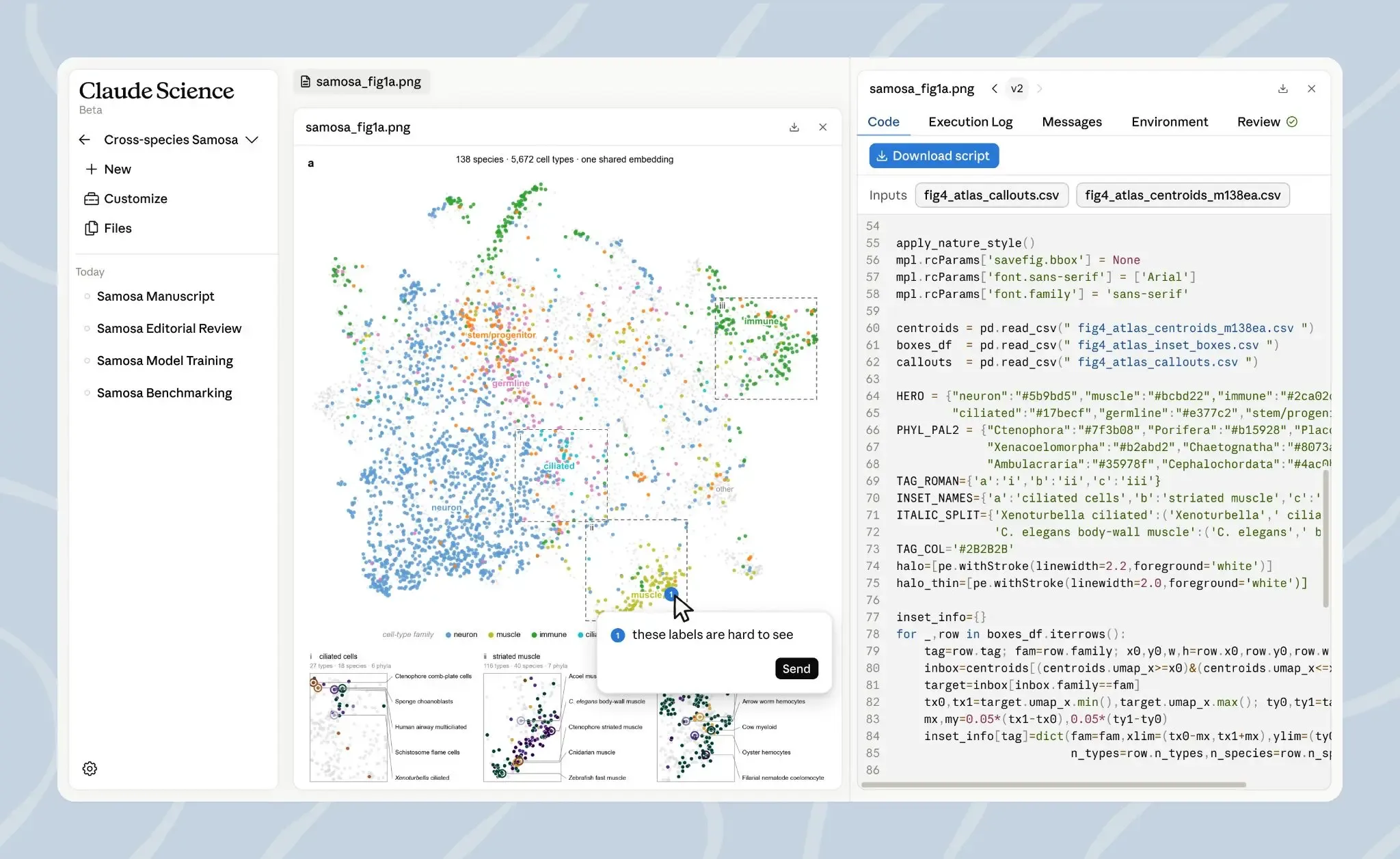
Anthropic Introduces Claude Science: A New Era for AI in Scientific Research
Discover how Anthropic's Claude Science is transforming scientific research. Learn about its capabilities, applications, and potential to accelerate discovery.
Continue exploring
Find AI agents by workflow
More in Industry Insights
Browse more articles in the Industry Insights category.
AI articles
Explore more guides and insights tagged AI.
Coding articles
Explore more guides and insights tagged Coding.
AI Agent Categories
Browse use-case pages for sales, productivity, coding, customer service, and more.
AI Agents Landscape
Explore the full directory map and compare agents by workflow and category.
Agent Skills
Find reusable skills, capabilities, and building blocks for AI agent workflows.