
AI Agents Need Eyes: Why Cameras Are Becoming the Next Agent Interface
The Limitations of Text-Based AI Agents
For years, artificial intelligence agents have primarily communicated and understood the world through text and structured data. This paradigm has powered impressive advancements in natural language processing, data analysis, and automation. However, it inherently limits an agent's ability to grasp the nuances of the physical world. Without the ability to 'see,' AI agents struggle with tasks requiring spatial reasoning, contextual understanding of environments, and direct physical interaction. This article explores why cameras are emerging as the next crucial interface for AI agents, unlocking a new era of capabilities and applications.
What are AI Agents and Their Current Interfaces?
AI agents are sophisticated software programs designed to perceive their environment, make decisions, and take actions to achieve specific goals. Traditionally, their interaction with the digital and physical realms has been mediated through various interfaces:
Text-based interactions: This includes command-line interfaces, chatbots, and natural language processing (NLP) systems that interpret and generate text.
APIs (Application Programming Interfaces): Agents can interact with other software systems and services by calling their APIs, allowing them to access data or trigger functions.
Structured data feeds: Agents can process and act upon data presented in formats like databases, spreadsheets, or sensor readings (e.g., temperature, pressure).
While effective for many tasks, these interfaces often lack the richness and immediacy of visual information. They provide a fragmented view of reality, akin to understanding a scene solely through a written description rather than experiencing it directly.
The Case for 'Eyes': Why Cameras Matter for AI Agents
The integration of cameras into AI agents, often referred to as AI agents with cameras, represents a significant leap forward. Visual input provides a direct, high-bandwidth stream of information about the agent's surroundings, enabling a far more comprehensive understanding of context and environment. Why do AI agents need cameras? The reasons are manifold:
Enhanced Perception: Cameras allow AI agents to 'see' objects, people, environments, and their relationships in real-time. This moves beyond symbolic representation to direct perceptual understanding.
Contextual Awareness: Visual data provides rich context that is often missing in purely text-based interactions. An agent can understand not just what an object is, but where it is, its orientation, and how it relates to other elements in the scene.
Spatial Reasoning: For tasks involving navigation, manipulation, or understanding physical layouts, visual input is indispensable. It enables agents to build mental maps, avoid obstacles, and plan movements effectively.
Real-time Adaptability: The dynamic nature of the physical world requires agents to adapt quickly. Cameras offer the real-time data stream necessary for such adaptive behavior.
The convergence of computer vision and AI agent development is driving this trend. Advanced algorithms can now process visual data to identify objects, track movement, understand scenes, and even infer intentions, making visual AI agents increasingly capable.
Key Capabilities Enhanced by Visual AI Agents
Giving AI agents visual capabilities unlocks a host of new functionalities and significantly improves existing ones. How do cameras improve AI agent capabilities?
Navigation and Spatial Awareness
For agents operating in physical spaces, such as robots or autonomous vehicles, cameras are fundamental for navigation. They enable:
Obstacle Detection and Avoidance: Identifying and reacting to unexpected objects or changes in the environment.
Mapping and Localization: Creating and updating maps of their surroundings, and determining their precise location within those maps.
Path Planning: Calculating optimal routes through complex or dynamic environments.
Object Recognition and Interaction
The ability to identify and understand objects is critical for many AI tasks. Visual AI agents can:
Recognize and Classify Objects: Distinguish between different items, from tools and components to people and hazards.
Understand Object State: Determine if an object is open, closed, intact, damaged, or in motion.
Facilitate Manipulation: Guide robotic arms or other manipulators for grasping, assembling, or interacting with objects.
Human-AI Interaction
Cameras can also revolutionize how humans interact with AI agents. Agents equipped with vision can:
Interpret Non-Verbal Cues: Understand gestures, facial expressions, and body language to better gauge user intent and emotional state.
Provide Visual Feedback: Show users what they are seeing or doing, making the AI's actions more transparent and understandable.
Offer Context-Aware Assistance: Provide help or information relevant to what the user is currently looking at or doing.
Embodied AI: Bridging the Digital and Physical Worlds
The concept of embodied AI is central to the argument for visual agents. Embodied AI refers to AI systems that have a physical presence and interact with the real world through sensors and actuators. What is embodied AI? It's AI that doesn't just reside in the digital realm but has a body—whether a robot, a drone, or even a simulated avatar in a virtual environment—that allows it to experience and affect the physical world.
For embodied AI to be truly effective, it needs robust perception. Cameras are the primary sensory organs for many embodied agents, providing the visual input necessary to navigate, understand, and manipulate their environment. The role of vision in AI agent development is paramount here, as it directly informs the agent's understanding of its physical context and its ability to perform tasks within it. Without vision, an embodied agent is effectively blind, severely limiting its potential applications.
The development of embodied agents is a key trend, and their reliance on perception, particularly visual perception, is fundamental. This is where the capabilities of visual AI agents shine, enabling them to move beyond abstract tasks to concrete, physical actions.
Technical Considerations and Challenges
Integrating cameras and visual processing into AI agents presents several technical hurdles. Developing AI agents with cameras requires careful consideration of:
Data Acquisition and Processing: Cameras generate vast amounts of data. Efficiently capturing, transmitting, and processing this data in real-time is crucial. This often involves specialized hardware and optimized algorithms.
AI Model Development: Training robust computer vision models that can accurately interpret diverse visual scenes under varying conditions (lighting, occlusion, etc.) is a significant undertaking. This requires large, diverse datasets and sophisticated deep learning architectures.
Hardware Integration: Selecting appropriate cameras, processors, and other hardware components that balance performance, power consumption, and cost is essential, especially for mobile or embedded agents.
Real-time Performance: For many applications, AI agents must process visual information and react within milliseconds. Achieving this low latency is a constant engineering challenge.
Robustness and Reliability: Visual AI systems must be resilient to noise, errors, and unexpected environmental changes to ensure safe and dependable operation.
These challenges are actively being addressed through advancements in hardware, software, and AI algorithms. The potential benefits are driving significant investment and research in this area, pushing the boundaries of what visual AI agents can achieve.
Real-World Applications and Future Potential
The future of AI agents with visual input is incredibly promising, with applications spanning numerous industries. The impact of visual data on AI's ability to understand and interact with the physical world is already evident in:
Robotics: Industrial robots for assembly, inspection, and logistics, as well as service robots for healthcare, hospitality, and domestic assistance.
Autonomous Vehicles: Self-driving cars, drones, and delivery robots rely heavily on cameras for navigation, perception, and safety.
Surveillance and Security: AI agents that can monitor environments, detect anomalies, and alert human operators.
Augmented and Virtual Reality: Enhancing immersive experiences by allowing AI to understand and interact with the user's physical surroundings.
Smart Manufacturing: AI agents performing quality control, process monitoring, and predictive maintenance through visual inspection.
As AI perception capabilities improve, we can expect AI agents to tackle increasingly complex real-world problems, from precision agriculture and environmental monitoring to personalized care and advanced scientific research. The evolution of human-AI interaction through more intuitive, visually-grounded interfaces will also make AI more accessible and collaborative.
The increasing sophistication of AI agents and their potential integration into complex systems also highlights the importance of understanding their operational boundaries and potential risks. For those building or deploying AI agents, familiarizing oneself with potential pitfalls is crucial, as explored in AI Agent Traps: Real-Life Incidents and Lessons Learned.
Ethical Implications and Safety Concerns
The ability of AI agents to 'see' and interact with the physical world raises significant ethical and safety considerations. As AI agents gain more visual capabilities, questions arise regarding:
Privacy: The widespread deployment of AI agents with cameras could lead to increased surveillance and potential misuse of personal data.
Bias in Perception: Visual AI models can inherit biases from their training data, leading to unfair or discriminatory outcomes in areas like facial recognition or object detection.
Accountability: Determining responsibility when an AI agent with visual capabilities makes an error or causes harm can be complex.
Security: AI agents with visual input could be vulnerable to adversarial attacks, where manipulated visual data could trick the agent into performing unintended or dangerous actions.
Job Displacement: As AI agents become more capable in tasks previously requiring human perception and dexterity, concerns about job displacement may increase.
Addressing these concerns requires robust regulatory frameworks, transparent development practices, and ongoing public discourse. The development of AI agents is not solely a technical challenge but also a societal one. Exploring the broader landscape of AI agent development, including emerging platforms and marketplaces, can provide further context for these advancements, as discussed in AI Agent Marketplaces: The Next Phase of SaaS Evolution.
Conclusion: The Visual Future of AI Agents
The trajectory of AI development is clearly moving towards agents that are not just intelligent in the abstract, but also perceptive and interactive in the real world. Cameras are not merely an add-on; they are becoming a fundamental interface, providing AI agents with the 'eyes' they need to understand, navigate, and act within our complex physical environment. This evolution promises to unlock unprecedented capabilities, from more capable robots and autonomous systems to more intuitive and helpful human-AI collaborations.
As AI agents become more visually adept, they will undoubtedly play an increasingly significant role in solving some of humanity's most pressing challenges. Understanding the implications and potential of visual AI is key to shaping a future where AI serves us effectively and responsibly.
Explore the future of AI by understanding the vital role cameras play in agent intelligence. Share your thoughts on the visual revolution in AI!
Related Articles
View all articles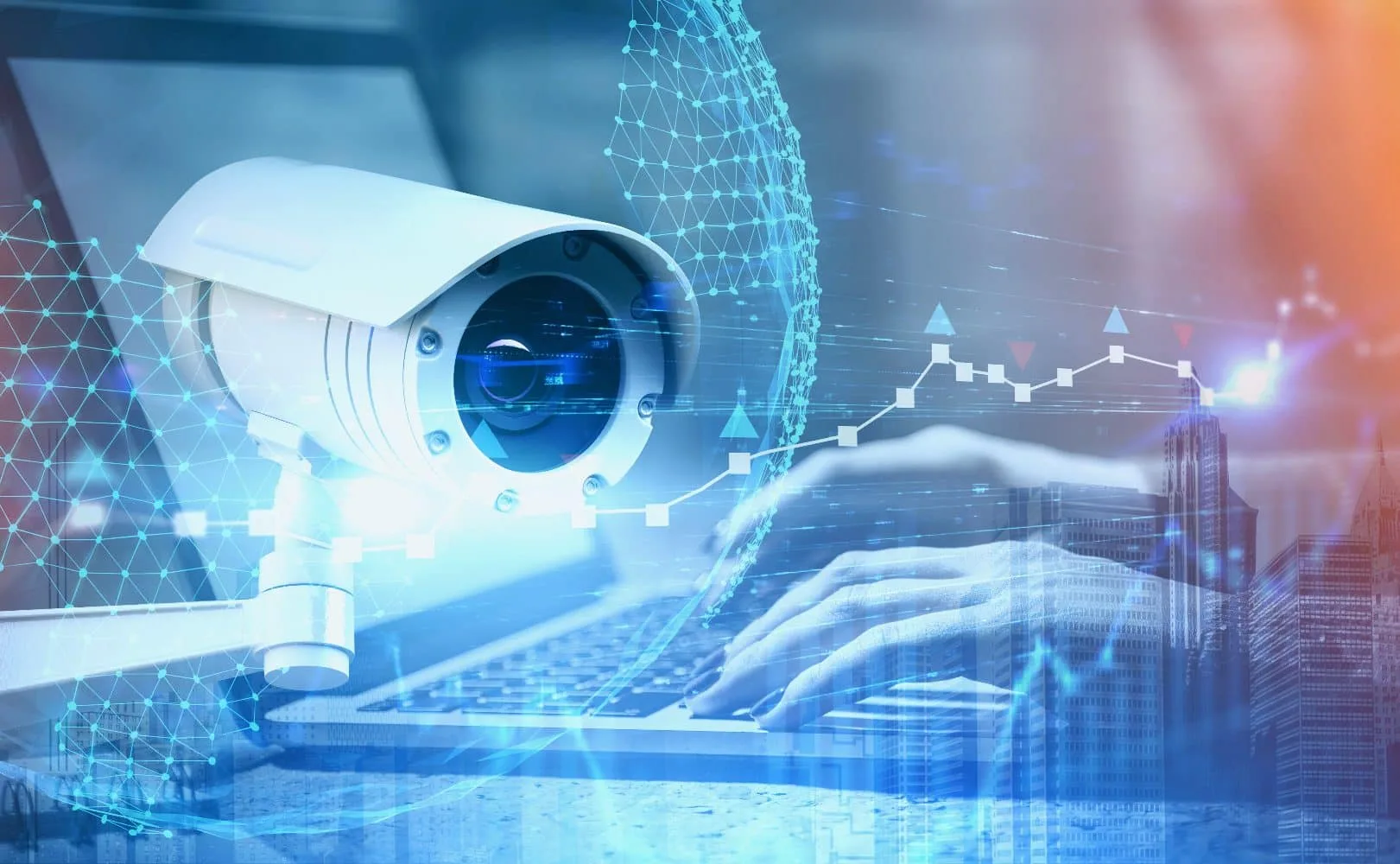
The Rise of Vision AI Agents: From Security Cameras to Autonomous Operations
Explore the transformative impact of Vision AI Agents, from enhancing security cameras to powering autonomous operations across industries. Discover their applications and future.
Why Agents Still Need Humans: The Irreplaceable Role of Human Oversight
Explore the critical reasons why human agents remain essential in the age of AI. Understand AI agent limitations and the benefits of human-AI collaboration for optimal outcomes.
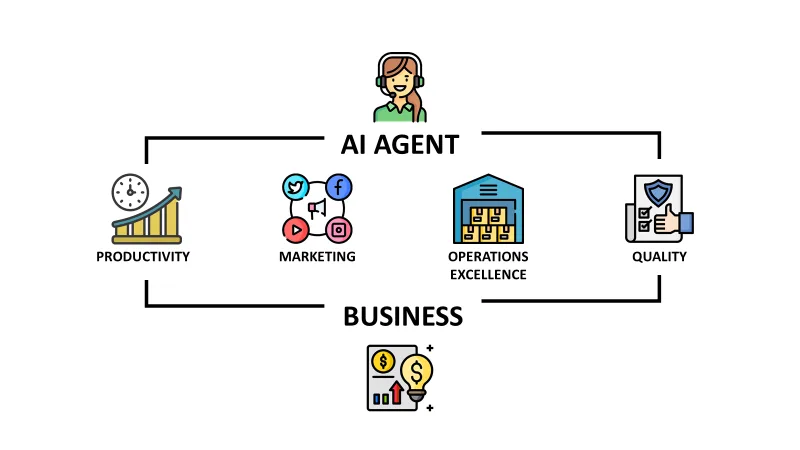
How to Make AI Agents Work for Your Business: A Strategic Guide
Learn how to effectively integrate AI agents into your business operations. Discover strategies for deployment, workflow automation, and scaling your AI capacity.
Continue exploring
Find AI agents by workflow
More in Industry Insights
Browse more articles in the Industry Insights category.
AI Agents articles
Explore more guides and insights tagged AI Agents.
Computer Vision articles
Explore more guides and insights tagged Computer Vision.
AI Agent Categories
Browse use-case pages for sales, productivity, coding, customer service, and more.
AI Agents Landscape
Explore the full directory map and compare agents by workflow and category.
Agent Skills
Find reusable skills, capabilities, and building blocks for AI agent workflows.