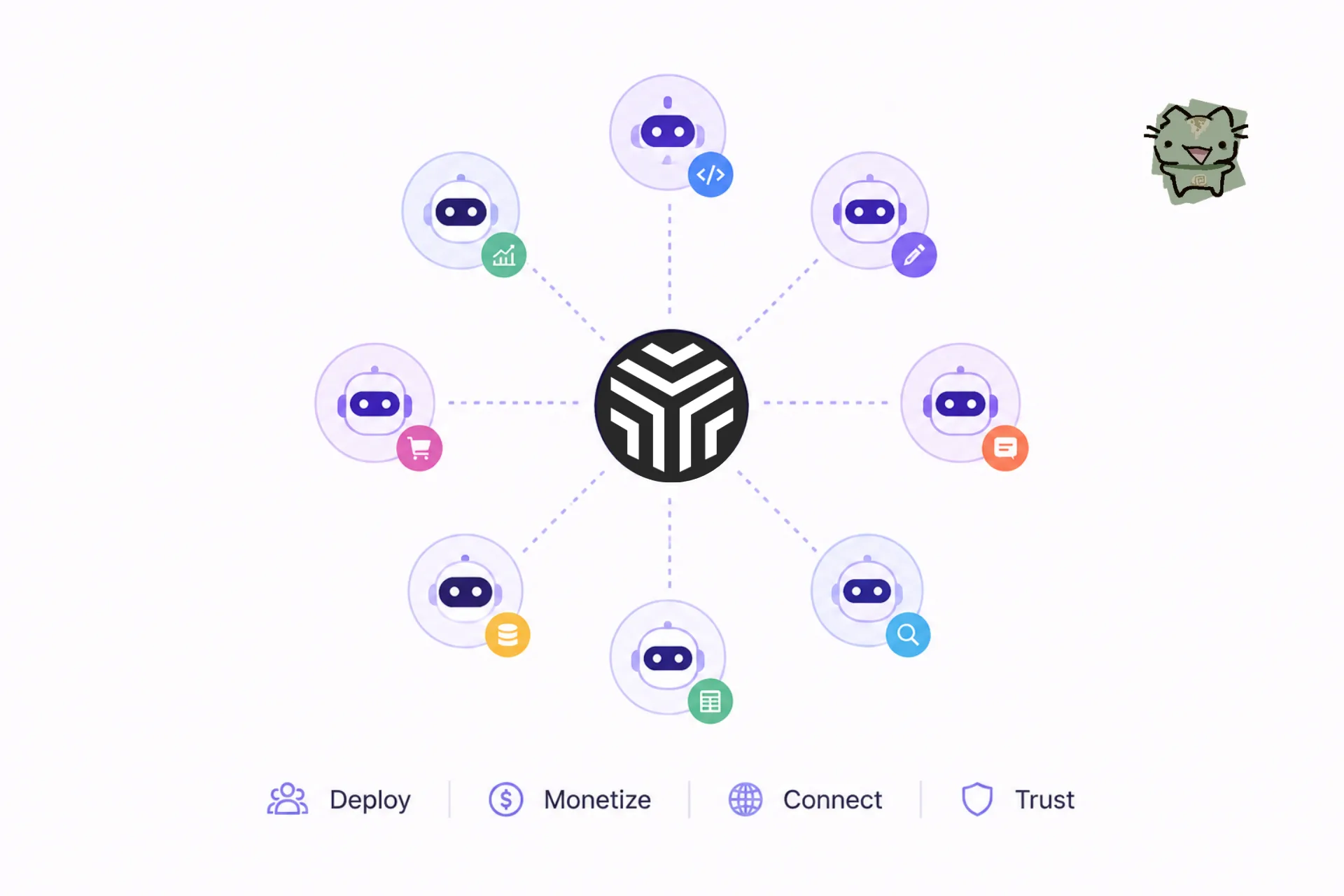
Why Agents Still Need Humans: The Irreplaceable Role of Human Oversight
The Rise of AI Agents and the Question of Human Relevance
The rapid advancement of artificial intelligence has brought forth sophisticated AI agents, capable of performing a wide array of tasks autonomously. From managing schedules and drafting communications to analyzing complex data sets and even engaging in trading, these digital entities are transforming industries. This surge in AI capabilities naturally sparks a critical question: In an era where machines can learn, adapt, and execute with increasing efficiency, do human agents still hold relevance? This article delves into the core reasons why, despite the impressive strides in AI, human agents remain not only relevant but indispensable. We will explore the inherent limitations of current AI agents, the unique strengths that humans bring to the table, and the powerful synergy that emerges from human-AI collaboration. This exploration is for professionals, decision-makers, and anyone curious about the evolving landscape of work and technology.
Understanding AI Agents: Capabilities and Current Limitations
AI agents are software programs designed to perceive their environment, process information, make decisions, and take actions to achieve specific goals. Their capabilities span across various domains, often excelling in repetitive tasks, data processing, and pattern recognition. For instance, AI agents can sift through vast amounts of data far quicker than any human could, identify anomalies, and execute predefined actions based on learned patterns. This makes them invaluable for tasks requiring speed, precision, and scalability.
However, current AI agents, even the most advanced ones, possess significant limitations. They often struggle with:
Contextual Understanding: While AI can process data, truly understanding the nuances of context, cultural sensitivities, or unspoken social cues remains a significant hurdle.
Abstract Reasoning and Common Sense: AI lacks the innate common sense and abstract reasoning abilities that humans develop through life experiences. They operate based on programmed logic and learned data, which can lead to illogical outcomes in novel situations.
Emotional Intelligence and Empathy: Empathy, compassion, and the ability to understand and respond to human emotions are uniquely human traits that AI cannot replicate. This is crucial in roles involving customer service, caregiving, or any interaction requiring genuine human connection.
Novelty and Ambiguity: AI agents perform best within well-defined parameters and on tasks they have been trained for. They can falter when faced with entirely new situations, ambiguous instructions, or problems that require creative problem-solving outside their training data.
These limitations highlight that while AI agents are powerful tools, they are not yet replacements for human judgment and intuition. Understanding these boundaries is key to determining where human intervention is not just beneficial, but necessary.
The Unique Strengths of Human Agents
The debate around AI replacing jobs often overlooks the fundamental attributes that make humans irreplaceable in many roles. Human agents bring a suite of skills and qualities that AI, in its current form, cannot match. These strengths are not just about performing tasks but about the *way* tasks are performed and the outcomes achieved.
Empathy and Emotional Nuance
In customer-facing roles, the ability to empathize with a frustrated customer, understand their underlying needs, and offer genuine reassurance is paramount. AI can follow scripts and provide information, but it cannot replicate the warmth, understanding, and trust that a human interaction can build. This emotional intelligence is critical for resolving complex disputes, fostering loyalty, and providing a positive customer experience.
Nuanced Judgment and Critical Thinking
Humans possess the capacity for nuanced judgment, weighing multiple, often conflicting, factors to arrive at a decision. This involves intuition, experience, and an understanding of unwritten rules or ethical considerations. AI, on the other hand, operates on algorithms and data. When faced with a situation not covered by its training data, or one with significant ethical implications, its decision-making can be rigid or even inappropriate. The question of why AI agents can't replace humans often boils down to this ability to apply sophisticated, context-aware judgment.
Creativity and Innovation
True innovation and creative problem-solving stem from human ingenuity, the ability to connect disparate ideas, and to think outside the box. While AI can assist in creative processes by generating options or analyzing trends, it cannot independently conceive of novel solutions or artistic expressions in the way humans can. This is essential for fields like research and development, design, and strategic planning.
Common Sense and Adaptability
Common sense, a fundamental aspect of human cognition, allows us to navigate the world with an intuitive understanding of how things work. AI lacks this bedrock of practical, everyday knowledge. Furthermore, humans are inherently adaptable. When faced with unforeseen circumstances or a complete shift in conditions, humans can quickly re-evaluate, improvise, and find new pathways forward. This adaptability is a critical advantage in dynamic environments. For example, consider the complexities of navigating physical spaces or understanding subtle social cues, areas where AI still faces significant challenges, as highlighted in discussions about AI agents needing more sophisticated interfaces.
Complex Decision-Making and Ethical Considerations
As AI agents become more integrated into decision-making processes, the need for human oversight in complex scenarios and ethical quandaries becomes increasingly apparent. AI operates on logic and data, but it doesn't inherently understand morality, fairness, or the long-term societal impact of its decisions.
When is Human Intervention Necessary for AI Agents?
Human intervention is crucial in situations involving:
High-Stakes Decisions: In fields like medicine, law, or finance, decisions can have profound consequences. AI can assist in analysis, but the final judgment, especially when it involves patient well-being, legal ramifications, or significant financial risk, must rest with a human expert.
Ethical Dilemmas: AI cannot grapple with ethical gray areas. For instance, an autonomous vehicle programmed to minimize harm might face a scenario where it must choose between two unavoidable negative outcomes. Humans, with their moral compass, are better equipped to navigate such complex ethical landscapes.
Subjective Assessments: Evaluating performance, assessing character, or making subjective recommendations often requires a human touch. AI can provide data points, but the interpretation and final assessment require human understanding and experience.
Situations Requiring Empathy and Compassion: As mentioned earlier, any scenario demanding genuine emotional connection or compassionate response is best handled by humans.
The increasing focus on explainable AI (XAI) underscores the need for human understanding. If an AI makes a critical decision, humans need to be able to understand the reasoning behind it to ensure it aligns with our values and to identify potential biases or errors. Without this human layer, the risks associated with autonomous AI decision-making are substantial.
The Importance of Human Oversight and Quality Assurance
AI agents, despite their sophistication, are not infallible. They can encounter errors, exhibit biases present in their training data, or operate in ways that are not aligned with desired outcomes. This is where human oversight and quality assurance become critical functions, ensuring that AI systems operate reliably, ethically, and effectively.
Ensuring Accuracy and Reliability
Human agents act as a crucial quality control layer. They can monitor AI performance, identify inaccuracies, and correct errors before they propagate and cause significant issues. This is particularly important in data-intensive fields where even small errors can lead to flawed conclusions or incorrect actions. For example, in prediction market trading, while AI agents can be highly effective, human oversight is still vital for strategic adjustments and risk management. While Olas agents outperform humans in prediction market trading in certain metrics, the overall strategy and oversight still benefit from human input.
Detecting and Mitigating Bias
AI systems learn from data, and if that data contains historical biases, the AI will perpetuate and potentially amplify them. Human oversight is essential for identifying these biases, understanding their origins, and implementing strategies to mitigate their impact. This is a critical aspect of ensuring fairness and equity in AI-driven processes.
Providing a Human Touch and Final Validation
In many workflows, AI acts as a powerful assistant, but the final sign-off or human touch is indispensable. This could be a manager approving a report generated by AI, a doctor validating an AI-driven diagnosis, or a customer service representative stepping in to resolve a complex issue that the AI cannot handle. This human validation ensures that the output is not only technically correct but also appropriate, ethical, and aligned with human values.
Human-AI Collaboration: A Synergistic Approach
The future of work is not about humans versus AI, but about how humans and AI can collaborate to achieve outcomes far greater than either could achieve alone. This synergistic approach leverages the distinct strengths of both humans and AI agents, creating a powerful partnership.
Leveraging Strengths for Optimal Outcomes
AI excels at speed, data processing, and repetitive tasks, freeing humans from mundane work. Humans, in turn, bring creativity, critical thinking, emotional intelligence, and ethical judgment. When combined, AI can provide the raw analysis and efficiency, while humans provide the strategic direction, nuanced interpretation, and final decision-making. This partnership can lead to:
Increased Efficiency and Productivity: AI handles the grunt work, allowing humans to focus on higher-value activities.
Enhanced Decision-Making: AI provides data-driven insights, while humans offer contextual understanding and strategic foresight.
Improved Innovation: AI can identify patterns and possibilities that humans might miss, sparking new ideas and approaches.
Better Customer Experiences: AI can manage routine inquiries, while human agents can step in for complex or emotionally charged interactions.
The development of more sophisticated AI agents and the ongoing quest for artificial general intelligence (AGI) will undoubtedly continue to shape this collaboration. However, the fundamental principle of augmenting human capabilities rather than replacing them remains a guiding force.
The Future Landscape: Evolving Roles for Human Agents
As AI continues to evolve, the role of human agents will not disappear but will transform. Instead of performing tasks that AI can do more efficiently, humans will increasingly focus on roles that require uniquely human skills. This evolution will likely see human agents taking on responsibilities such as:
AI Supervisors and Managers: Overseeing AI operations, ensuring they function correctly, ethically, and in alignment with organizational goals.
Strategists and Innovators: Using AI-generated insights to develop new strategies, products, and services.
Complex Problem-Solvers: Tackling novel, ambiguous, and high-stakes challenges that fall outside AI's current capabilities.
Relationship Builders and Empathy Providers: Focusing on human-to-human interactions that require emotional intelligence and deep understanding.
Ethical Navigators: Ensuring that AI deployments are fair, unbiased, and aligned with societal values.
The future of human agents in an AI world is one of elevated responsibility and strategic importance. It’s about leveraging technology to amplify human potential, not to diminish it.
In conclusion, while AI agents are powerful tools that can automate many tasks and enhance efficiency, they cannot replicate the full spectrum of human capabilities. Empathy, nuanced judgment, creativity, common sense, and ethical reasoning remain uniquely human attributes that are essential for complex decision-making, quality assurance, and fostering meaningful connections. The true power lies not in replacing humans with AI, but in fostering a collaborative environment where human and artificial intelligence work in tandem, each augmenting the other's strengths. This synergy ensures that we can harness the benefits of AI while maintaining the critical human elements that define effective and ethical operations.
Related Articles
View all articles
AI Agents Need Eyes: Why Cameras Are Becoming the Next Agent Interface
Explore why cameras are crucial for AI agents, enhancing perception and interaction. Learn about embodied AI and the future of visual AI.
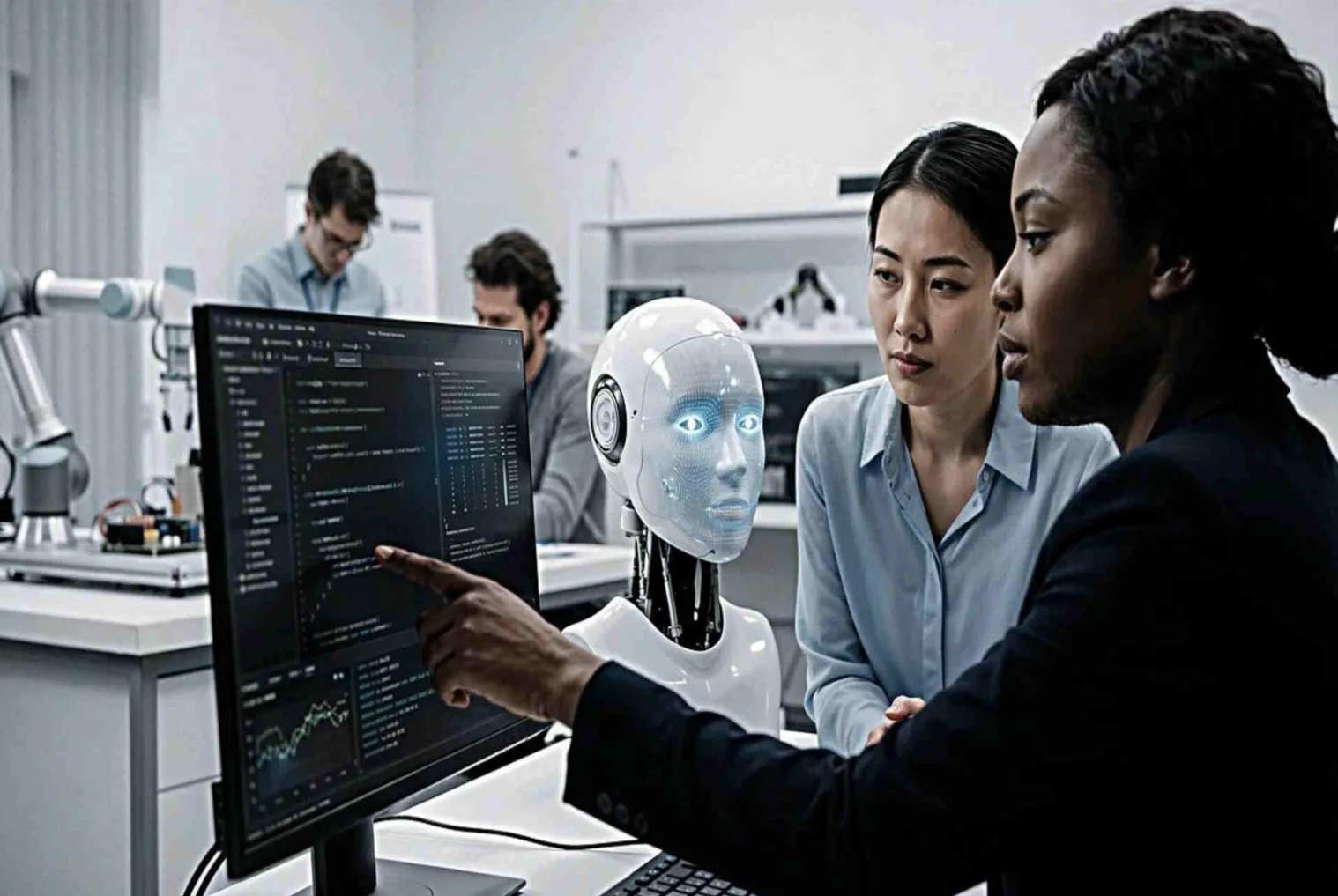
Context vs Speed: Why AI Speed Can’t Replace Human Meaning
Learn why the human vs AI context remains tech’s biggest debate. AI processes data in milliseconds, but only humans truly understand cultural context and meaning
Human-AI Social Networks: Amplifying Group Intelligence
Explore human-AI social networks designed to enhance group intelligence. Discover how AI augments collective decision-making, problem-solving, and innovation.
Continue exploring
Find AI agents by workflow
More in Industry Insights
Browse more articles in the Industry Insights category.
AI articles
Explore more guides and insights tagged AI.
Artificial Intelligence articles
Explore more guides and insights tagged Artificial Intelligence.
AI Agent Categories
Browse use-case pages for sales, productivity, coding, customer service, and more.
AI Agents Landscape
Explore the full directory map and compare agents by workflow and category.
Agent Skills
Find reusable skills, capabilities, and building blocks for AI agent workflows.