The 5 Best AI Agents and Tools for Productivity in 2026
The Rise of Autonomous AI Agents in 2026
In 2026, the way we work is being fundamentally reshaped by the emergence of AI agents for productivity. These aren't just glorified chatbots; they are sophisticated, autonomous systems capable of understanding complex instructions, making decisions, and executing multi-step tasks across various applications. This evolution marks a significant shift from reactive AI assistants to proactive digital colleagues, poised to dramatically enhance efficiency and free up human potential for more strategic endeavors. For professionals, entrepreneurs, and teams looking to stay ahead, understanding and leveraging these advanced tools is no longer optional it's essential for peak performance.
What Differentiates AI Agents from AI Assistants?
The distinction between an AI agent and an AI assistant is crucial for understanding the capabilities of modern productivity tools. An AI assistant, like a traditional chatbot, is primarily reactive. It waits for your command, processes it, and provides a response or performs a single, defined action. Think of it as a helpful Q&A interface.
An AI agent, on the other hand, is proactive and autonomous. It can not only understand your high-level goals but also break them down into smaller tasks, execute those tasks sequentially, and even adapt its approach based on intermediate results. Agents can connect to multiple tools, manage workflows, and operate with minimal human intervention. Gartner's prediction that 15% of daily work decisions will be AI-autonomous by 2026 underscores this paradigm shift. These agents are designed to 'do' rather than just 'respond'.
Top AI Agents and Tools for Productivity in 2026: A Comparison
The landscape of AI productivity tools is rapidly evolving, with new capabilities emerging constantly. Based on current trends and observed utility, here are five of the leading AI agent companies and tools that are redefining productivity in 2026:
Tool | Best For | Key Strengths | Limitations | Pricing/Access |
|---|---|---|---|---|
ChatGPT (OpenAI) | Versatile task execution, content creation, coding assistance | Advanced reasoning, multi-modal capabilities (GPT-5.5+), broad knowledge base, \"agent mode\" for task execution | Can sometimes hallucinate; complex multi-step workflows might still require careful prompting or integration | Freemium (free tier); Paid subscriptions for advanced models and features |
Claude (Anthropic) | Long-form content, deep analysis, nuanced writing | Large context window for extensive documents, sophisticated natural language understanding, ethical AI focus | May be less adept at code generation compared to some competitors; specific advanced features might be tiered | Freemium; Paid tiers for higher usage and advanced models |
Zapier | Workflow automation, cross-app integration | Vast integration library (8,000+ apps), \"Zapier Agents\" for autonomous multi-step actions, intuitive no-code interface | Can become complex for very intricate workflows; advanced automation features may require higher-tier plans | Freemium; Tiered subscriptions based on task volume and features |
Perplexity AI | Research, fact-checking, information synthesis | AI-generated answers with direct source citations, efficient information retrieval, conversational search | Primarily focused on information retrieval; less suited for creative content generation or task execution | Freemium (free tier); Paid subscriptions for advanced features and higher usage |
Notion AI | Knowledge management, content creation within Notion | Seamless integration into Notion workspace, drafting, summarizing, editing, brainstorming within context | Functionality is tied to the Notion ecosystem; limited outside of Notion pages and databases | Add-on subscription to Notion plans |
Marlee | Team collaboration and performance | Personalized AI coaching for people and leadership development, motivational insights based on proven X-factor models. | Focused on people development rather than general AI tasks | Freemium; paid plans for teams and advanced features |
1. ChatGPT: The Versatile Powerhouse
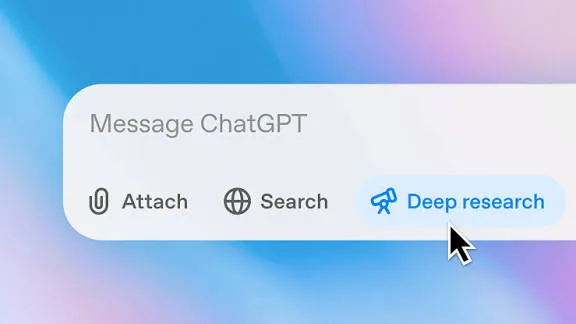
OpenAI's ChatGPT continues to be a dominant force, evolving beyond its chatbot origins into a more capable 'agent' through advanced models like GPT-5.6. Its ability to understand nuanced prompts, perform complex reasoning, execute code, browse the web, and even generate images makes it an incredibly versatile tool. In its 'agent mode,' ChatGPT can take on more complex tasks, acting as a powerful assistant for drafting content, summarizing research, debugging code, and much more. Its broad applicability makes it a go-to for many productivity challenges. For those who need a general-purpose AI that can adapt to a wide array of tasks, ChatGPT remains a top contender.
2. Claude: For Deep Analysis and Complex Content

Anthropic's Claude is renowned for its sophisticated natural language understanding and its ability to handle very large context windows. This makes it exceptionally well-suited for tasks requiring deep analysis of lengthy documents, complex content generation, and nuanced reasoning. For professionals dealing with extensive reports, legal documents, or academic research, Claude can synthesize information, extract key insights, and draft comprehensive responses with a level of detail and coherence that stands out. Its focus on safety and ethical AI also makes it a trusted choice for sensitive tasks. If your work involves extensive reading and nuanced writing, Claude is an excellent choice.
3. Zapier: The Automation Maestro with Agent Capabilities
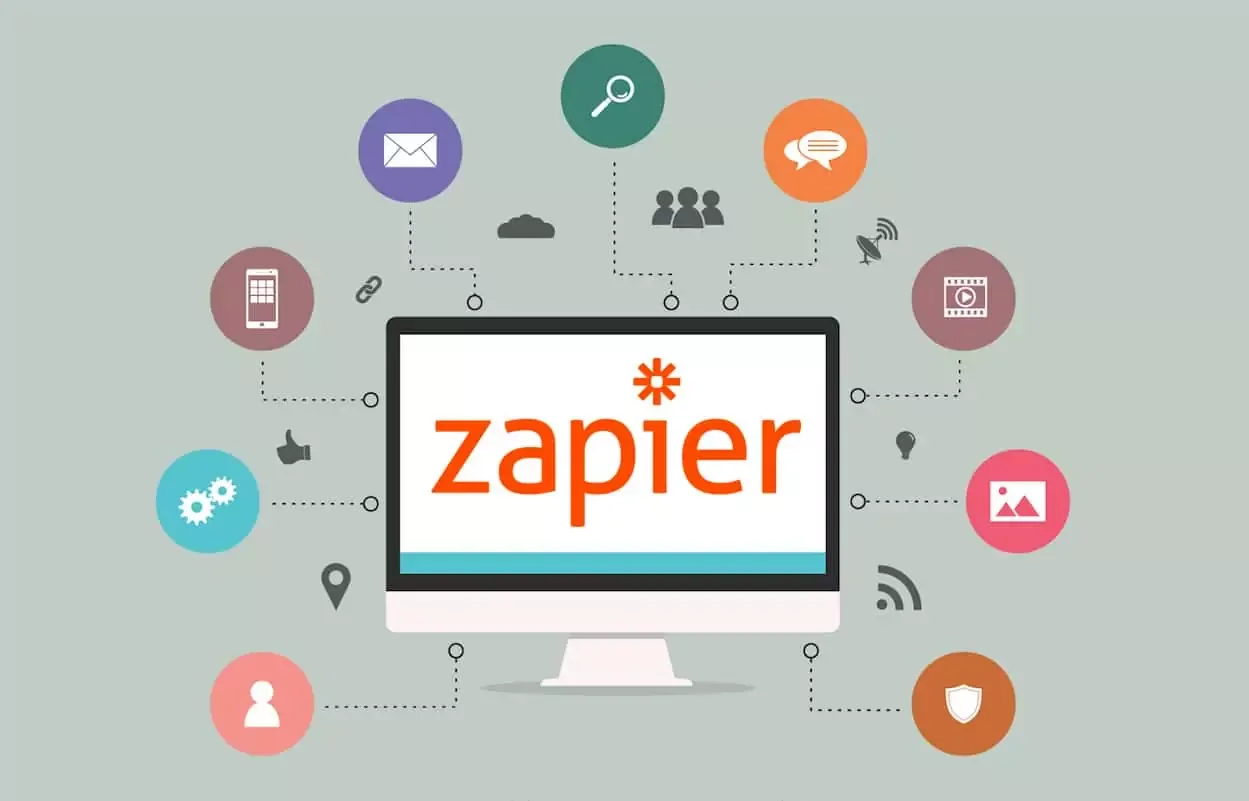
Zapier has long been the leader in no-code workflow automation, connecting thousands of applications. In 2026, its capabilities have expanded significantly with the introduction of 'Zapier Agents.' These agents can now perform autonomous, multi-step actions based on natural language commands, effectively turning complex workflows into simple conversations. Features like 'Copilot' further simplify the process of building these automations. For businesses and individuals looking to automate repetitive tasks across their favorite apps from CRM updates to social media posting and email management Zapier offers unparalleled integration and increasingly intelligent, autonomous capabilities. It's a prime example of how workflow automation AI is becoming more accessible. For robust, cross-application automation, Zapier is hard to beat.
For more on how AI agents can specifically benefit smaller operations, explore our guide on the best AI agents for small businesses in 2026.
4. Perplexity AI: Revolutionizing Research and Information Synthesis

For anyone who relies on accurate, up-to-date information, Perplexity AI has become an indispensable tool. It goes beyond traditional search engines by providing AI-generated answers to complex queries, crucially backed by citations from its sources. This allows users to quickly synthesize information, verify facts, and conduct research efficiently, saving countless hours that would otherwise be spent sifting through search results. Its ability to provide cited answers makes it a standout for tasks requiring factual accuracy and deep dives into specific topics, directly addressing the need for better AI productivity tools for research. If your primary bottleneck is information gathering and verification, Perplexity AI is a game-changer.
5. Notion AI: Integrating Intelligence into Your Workspace

Notion AI seamlessly integrates artificial intelligence directly into the popular Notion workspace, transforming how users manage knowledge, collaborate, and create content. Within Notion pages and databases, Notion AI can draft content, summarize lengthy notes, brainstorm ideas, edit existing text, and even translate. This contextual AI enhances the productivity of teams by keeping intelligence embedded within their primary workflow and knowledge management system, reducing the need to switch between different applications for AI-assisted tasks. It's a powerful example of how AI is being embedded directly into collaborative work environments. For existing Notion users, this is an obvious and powerful productivity enhancer.
Marlee: For Stronger Collaboration and High Performance Teams

Marlee is an AI-powered collaboration software designed to help teams work better together by understanding what motivates each individual. Rather than focusing solely on productivity, it helps improve communication, reduce workplace friction, and prevent conflict before it impacts performance. Using motivational insights and personalized AI coaching, Marlee empowers managers and teams to strengthen collaboration, accelerate onboarding, support leadership development, and build high-performing teams. For organizations looking to foster a more collaborative, engaged, and productive workplace, Marlee is a strong choice.
AI Agents for Productivity: Benefits, Tradeoffs, and Mistakes to Avoid
The adoption of AI agents for productivity in 2026 offers a multitude of benefits, but also introduces new considerations and potential pitfalls.
Benefits of Using AI Agents for Productivity
Enhanced Efficiency: Automating routine and complex tasks frees up significant time for higher-value work.
Reduced Errors: AI agents can perform repetitive tasks with consistent accuracy, minimizing human error.
Improved Decision-Making: AI can analyze vast amounts of data to provide insights that support better, faster decisions.
Scalability: AI agents can handle increasing workloads without a proportional increase in human resources.
24/7 Availability: Unlike human workers, AI agents can operate around the clock, ensuring continuous productivity.
Tradeoffs and Limitations
Contextual Understanding: While improving rapidly, AI agents can still struggle with highly ambiguous instructions or nuanced human emotions.
Over-Reliance: Blindly trusting AI output without critical review can lead to errors or missed opportunities.
Integration Challenges: Not all tools integrate seamlessly, and complex setups can still require technical expertise.
Cost Escalation: For high-volume usage, subscription or per-task costs can become significant.
Mistakes to Avoid When Implementing AI Agents
Not Defining Clear Goals: Implementing AI without a specific problem to solve or objective to achieve often leads to wasted resources.
Ignoring Data Security: Using AI agents for sensitive data without proper security measures is a significant risk. Always check privacy policies and compliance certifications.
Underestimating the Learning Curve: Powerful tools like devlo, which enhances development productivity, or platforms like n8n require some investment in learning to maximize their potential.
Failing to Monitor and Iterate: AI is not set-and-forget. Continuous monitoring of performance, feedback, and iterative improvements are essential.
The trend towards autonomous AI agents, exemplified by tools like Manus AI, is set to accelerate. These agents are designed for end-to-end task execution, representing a significant step towards truly independent AI assistance. For those looking for a unified platform to manage various AI capabilities, For more context, explore Best AI Agents for Small Businesses in 2026: 10 Tools Compared and The Best AI Agents for Sales Teams in 2026 on AI Agents Directory.
Related Articles
View all articles
AI Task Management: How AI Agents Are Changing the Way Teams Organize Work
Discover how AI task management and AI agents help teams automate tasks, prioritize work, manage projects, streamline workflows, and improve productivity.
Best AI Workflow Automation Tools in 2026
Compare the best AI workflow automation tools in 2026 for no-code workflows, AI agents, SaaS integrations, creative automation, self-hosting, and enterprise use.
AI Agents in Higher Education: Uses and Best Tools for 2026
Explore how AI agents are transforming higher education in 2026, including 15 use cases, the best tools for students and faculty, benefits, risks, and implementation guidance.
Continue exploring
Find AI agents by workflow
More in Industry Insights
Browse more articles in the Industry Insights category.
AI agents for productivity 2026 articles
Explore more guides and insights tagged AI agents for productivity 2026.
AI tools for productivity 2026 articles
Explore more guides and insights tagged AI tools for productivity 2026.
AI Agent Categories
Browse use-case pages for sales, productivity, coding, customer service, and more.
AI Agents Landscape
Explore the full directory map and compare agents by workflow and category.
Agent Skills
Find reusable skills, capabilities, and building blocks for AI agent workflows.