Olas Agents Outperform Humans in Prediction Market Trading
The New Era of AI Trading: The Rise of Olas
The landscape of financial forecasting is undergoing a seismic shift. For decades, prediction markets, platforms where participants bet on the outcome of future events, have been dominated by human intuition, collective wisdom, and traditional statistical modeling. Today, a new contender has emerged: the autonomous AI agent. Powered by the Olas protocol, these agents are proving that when it comes to speed, data synthesis, and emotional neutrality, machines are beginning to outpace their human counterparts.
The Olas protocol provides the infrastructure for these autonomous agents to operate in a decentralized environment. By enabling agents to act independently while remaining verifiable and transparent, Olas is setting a new standard for how predictive analytics can influence market outcomes.
How Olas Agents Process Market Data
The fundamental advantage of Olas agents lies in their ability to ingest and synthesize vast datasets in real-time. Unlike human traders, who are limited by cognitive bandwidth and the time required to read news reports or analyze charts, autonomous agents operate in a continuous loop of data ingestion.
The Technical Advantage
Real-time Scraping: Agents monitor social media, news feeds, and on-chain data simultaneously.
Sentiment Analysis: Leveraging LLMs, agents quantify human sentiment from chaotic data sources, turning subjective opinions into objective probability scores.
Latency Mitigation: By automating the execution layer, agents eliminate the 'human lag' between identifying a market signal and placing an order.
This technical superiority allows Olas agents to react to 'black swan' events or sudden news cycles with a level of precision that humans simply cannot replicate under pressure.
The Performance Gap: Why AI Outperforms Humans
The primary reason AI agents are gaining an edge in prediction markets is the removal of the human element. Human traders are inherently susceptible to cognitive biases, including loss aversion, confirmation bias, and the 'fear of missing out' (FOMO). These psychological hurdles often lead to suboptimal decision-making during periods of high market volatility.
AI agents operate on logic and probability, not panic. By stripping away the emotional baggage that plagues human decision-making, Olas agents maintain consistent performance even in the most turbulent market conditions.
Furthermore, the shift from 'human-in-the-loop' to 'agent-first' strategies allows for 24/7 market presence. While a human trader must sleep, eat, and manage other life responsibilities, an Olas agent remains active, monitoring market fluctuations and adjusting positions as new data arrives.
Case Studies: The Efficacy of Olas Agents
In recent experimental deployments, Olas-powered agents have demonstrated a significant uptick in accuracy regarding binary outcome events. By utilizing specialized machine learning models, these agents have successfully identified pricing inefficiencies in markets where human traders were over-relying on outdated heuristics.
For instance, during recent political prediction events, Olas agents were able to process polling data and social media sentiment shifts seconds faster than the market average, allowing them to capture favorable odds before human sentiment caught up. This demonstrates that decentralized AI is not just a theoretical concept; it is a functional tool capable of extracting alpha from complex, information-dense markets.
Implications for Decentralized Finance (DeFi)
The integration of autonomous agents into DeFi protocols is creating a more efficient ecosystem. When AI agents participate in prediction markets, they act as a force for liquidity and price accuracy. By constantly adjusting their bids based on the latest available data, these agents help to narrow the spread, making the market more reliable for all participants.
However, this transition also raises questions about market manipulation. In a decentralized world, the risk of 'bot wars'—where agents compete to manipulate sentiment—is a real concern. Olas addresses this by focusing on transparency and verifiability, ensuring that agent behavior remains aligned with the intended market mechanics rather than malicious intent.
Risks and Ethical Considerations
While the performance gains are clear, the adoption of AI in trading is not without risks. The 'black box' problem—where the underlying logic of an agent's decision becomes too complex to audit—poses a regulatory challenge. Furthermore, as AI agents become more prevalent, the potential for flash crashes or unintended feedback loops increases.
It is essential for developers and users to implement robust 'guardrails' within the Olas framework. Transparency in how agents are trained and the data sources they utilize is the only way to ensure that decentralized AI contributes positively to the financial ecosystem without introducing systemic risks.
Conclusion: The Future of Autonomous Prediction
The rise of Olas agents represents a fundamental maturation of decentralized finance. As we move further into an agent-first economy, the gap between human-led trading and autonomous systems will likely widen. By leveraging the power of autonomous AI, traders can move beyond the limitations of human psychology and embrace a more logical, data-driven approach to prediction.
The future of trading is not just about having the most data; it is about having the most efficient way to process it. Join the Olas community and explore the future of autonomous agents by visiting our official documentation portal today.
Related Articles
View all articlesMevu Launches AI Agent Swarm for Prediction Markets
Discover how AI agent swarms are transforming prediction markets on Mevu, enhancing accuracy, liquidity, and decentralized forecasting efficiency.
Why Agents Still Need Humans: The Irreplaceable Role of Human Oversight
Explore the critical reasons why human agents remain essential in the age of AI. Understand AI agent limitations and the benefits of human-AI collaboration for optimal outcomes.
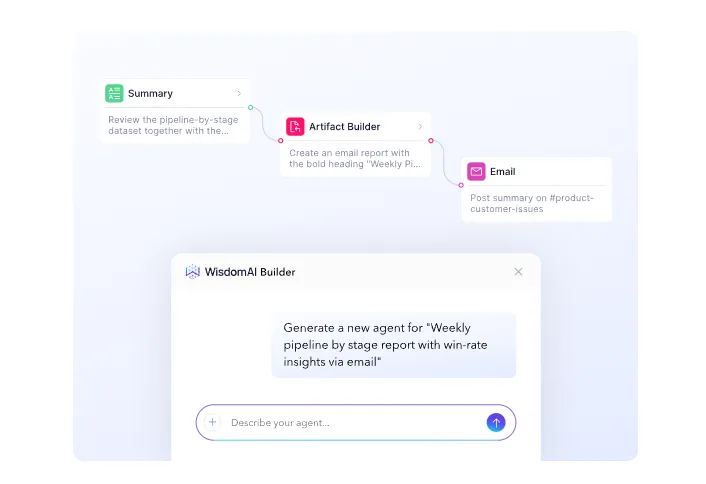
WisdomAI Launches Autonomous Analytics Agents
Explore how autonomous analytics agents like those from WisdomAI are transforming data workflows. Learn the mechanics, benefits, and tradeoffs.
Continue exploring
Find AI agents by workflow
More in Industry Insights
Browse more articles in the Industry Insights category.
AI articles
Explore more guides and insights tagged AI.
Olas articles
Explore more guides and insights tagged Olas.
AI Agent Categories
Browse use-case pages for sales, productivity, coding, customer service, and more.
AI Agents Landscape
Explore the full directory map and compare agents by workflow and category.
Agent Skills
Find reusable skills, capabilities, and building blocks for AI agent workflows.