
What Is x402 Protocol? A Guide to AI Agent Interoperability
Introduction to the x402 Protocol
As the artificial intelligence landscape shifts from simple chatbot interfaces to complex, goal-oriented autonomous entities, the need for a shared language has become critical. The x402 protocol is an emerging standard designed to facilitate seamless communication and value exchange between AI agents. By providing a structured framework for interaction, x402 aims to solve the "silo problem" that currently prevents autonomous software from collaborating effectively.
This guide is intended for developers, systems architects, and technical product managers who are preparing for the transition from human-in-the-loop systems to fully autonomous agent economies. By the end of this article, you will understand how x402 serves as a foundational layer for agent-to-agent (A2A) orchestration and why it is becoming a vital component of the decentralized AI stack.
Why AI Agents Need a Standardized Protocol
In the current state of AI development, most agents exist as isolated islands. If Agent A needs to access data or services held by Agent B, it often relies on proprietary APIs, hard-coded authentication, or manual human intervention. This lack of autonomous agent interoperability creates a significant bottleneck for scaling complex workflows.
When we look at the broader landscape of agent research, it becomes clear that fragmentation is the primary barrier to growth. In our investigation where we analyzed 2,000 AI agents, we discovered that the vast majority operate without a unified method for handshaking or verifying the identity of peer agents. Without a standard like x402, agents cannot reliably verify that they are transacting with a legitimate partner, leading to security risks and inefficient, manual integration processes.
Is x402 an official internet standard?
It is important to clarify that x402 is an evolving technical specification rather than a ratified internet standard like HTTP or TCP/IP. It acts more like an application-layer protocol designed to sit atop existing web infrastructure. Developers should monitor official repositories and community-led documentation for version updates, as the protocol is still in its early stages of widespread adoption.
How x402 Enables Autonomous Transactions
The core innovation of the x402 protocol is its ability to bundle authentication, negotiation, and payment into a single transactional flow. Unlike traditional web requests, which are often stateless and agnostic to the value being exchanged, x402 is explicitly designed to handle agent-to-agent payments.
The technical mechanism typically follows these steps:
Discovery: The initiating agent queries a directory or another agent for available services.
Negotiation: Both agents agree on the scope of work and the price, often denominated in digital assets or stablecoins.
Authentication: Using cryptographic signatures, the agents verify their identities to ensure the request is coming from an authorized entity.
Settlement: Once the task is performed, the protocol triggers an automated payment, closing the loop on the transaction without human oversight.
This process shifts the paradigm from simple data retrieval to a value-aware economy. By automating the financial layer of AI interactions, x402 allows agents to act as autonomous economic actors, capable of purchasing compute, storage, or insights from one another to complete complex user objectives.
Comparing x402 to Traditional Web APIs
To understand the value of x402, one must contrast it with the standard RESTful APIs that power the modern web. Traditional APIs are deterministic; they follow a rigid request-response pattern where the client and server must have pre-existing knowledge of each other’s endpoints and schemas. While efficient for human-built software, this is brittle for autonomous agents that need to navigate dynamic environments.
x402 vs traditional API protocols:
Flexibility: x402 allows agents to negotiate terms on the fly, whereas REST APIs require hard-coded logic for every interaction.
Value Awareness: x402 natively supports payment settlement, whereas standard APIs require separate, third-party payment gateways.
Decentralization: While REST relies on centralized API keys and proprietary hosting, x402 is built to support decentralized AI protocols, allowing agents to interact across different service providers without a central intermediary.
The industry is watching these developments closely, especially as consolidation continues to shape the market. For instance, recent shifts in the ecosystem, such as when Cal AI was acquired by MyFitnessPal, highlight the importance of building on open, interoperable standards rather than proprietary, closed-loop systems that may be subject to acquisition or sunsetting.
The Future of Autonomous Infrastructure
As we move toward a future where AI agents manage complex supply chains, research tasks, and financial portfolios, the role of protocols like x402 will only grow. The intersection of fintech and AI agent orchestration represents the next major frontier in software engineering. Does x402 require blockchain technology? While x402 is often associated with blockchain-based payment rails, the protocol itself is designed to be ledger-agnostic. It provides the messaging format for the transaction, while the actual settlement layer can be handled by various financial systems, including traditional banking APIs or decentralized ledgers.
The benefits of these decentralized AI protocols are clear: they reduce dependency on single platforms, increase the resilience of autonomous systems, and allow for a permissionless marketplace where agents can compete based on speed, cost, and accuracy.
Conclusion: What Developers Should Monitor
The x402 protocol is a foundational step toward a truly autonomous web. By standardizing how agents talk, verify, and pay, it removes the friction that currently keeps agents trapped in silos. For developers, the task is to stay informed. As you build your own autonomous agents, prioritize modular architectures that can support evolving communication standards. We recommend reviewing the latest technical documentation at W3C standards resources to understand how these emerging protocols align with broader web architecture.
Related Articles
View all articles
AWS AI Agent Payments: A Guide to Coinbase and Stripe Integration
Learn how AWS is enabling AI agent payments through Coinbase and Stripe. Understand the infrastructure, security, and the future of autonomous commerce.
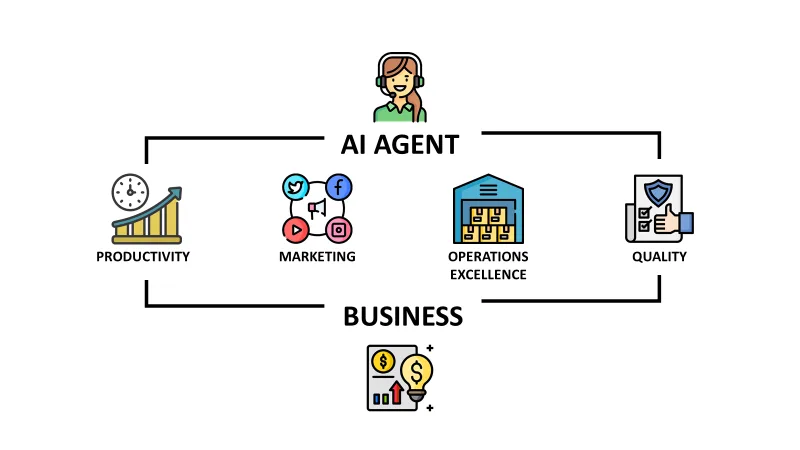
How to Make AI Agents Work for Your Business: A Strategic Guide
Learn how to effectively integrate AI agents into your business operations. Discover strategies for deployment, workflow automation, and scaling your AI capacity.
Runta Secures $20M Seed for AI Agent Execution Layer
Discover how Runta's $20M a16z-backed AI agent execution layer addresses critical production challenges like token efficiency, security, and operational cont...
Continue exploring
Find AI agents by workflow
More in Industry Insights
Browse more articles in the Industry Insights category.
AI Agents articles
Explore more guides and insights tagged AI Agents.
Protocols articles
Explore more guides and insights tagged Protocols.
AI Agent Categories
Browse use-case pages for sales, productivity, coding, customer service, and more.
AI Agents Landscape
Explore the full directory map and compare agents by workflow and category.
Agent Skills
Find reusable skills, capabilities, and building blocks for AI agent workflows.