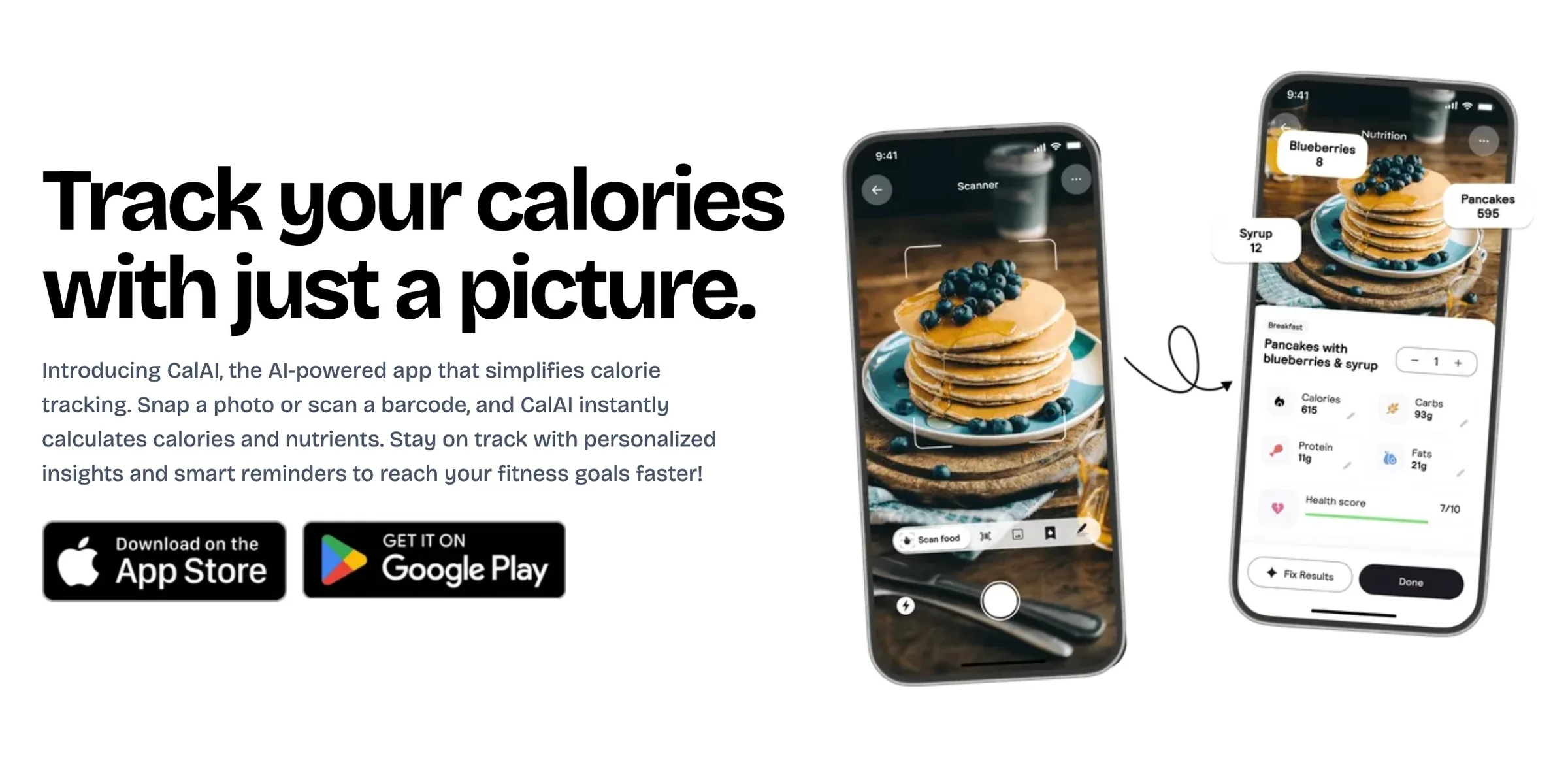
Cal AI Has Been Acquired by MyFitnessPal — Here's What You Need to Know
The fitness app world just got a significant shake-up. Cal AI has been acquired by MyFitnessPal, bringing together one of the most recognized names in nutrition tracking and one of the fastest-growing AI-powered calorie scanning apps in recent memory. For millions of users on both platforms, this deal raises immediate and practical questions: What happens to the Cal AI app? Will MyFitnessPal finally get smarter? And what does this mean for the future of AI-driven food logging? This article breaks it all down.
What Is Cal AI and Why Did It Go Viral?
Cal AI is a mobile app built around a deceptively simple premise: point your phone camera at any meal, and the app uses artificial intelligence to estimate the calorie and macronutrient content almost instantly. No barcode scanning, no manual search, no guesswork about portion sizes — just a photo and a result.
That frictionless experience resonated powerfully with younger users, particularly on TikTok, where food logging content and app reviews helped Cal AI rack up downloads at a pace that caught the broader fitness tech industry off guard. The app's viral growth wasn't driven by a big marketing budget; it was driven by users genuinely excited about a tool that removed the most tedious part of calorie tracking.
At its core, Cal AI uses a combination of computer vision and machine learning to identify foods, estimate portion sizes, and generate nutritional breakdowns. While no AI food scanner is perfectly accurate, Cal AI's speed and ease of use made it a compelling alternative to legacy logging methods — and that's exactly what made it an attractive acquisition target.
MyFitnessPal Acquires Cal AI: The Official Announcement
MyFitnessPal confirmed the acquisition of Cal AI, marking one of the more consequential deals in the health and wellness app space in recent years. The announcement positions the move as a strategic investment in artificial intelligence capabilities rather than simply absorbing a competitor.
In statements accompanying the announcement, MyFitnessPal's leadership emphasized that Cal AI's technology aligns with their long-term goal of reducing friction in food logging — a problem they've acknowledged as the single biggest barrier to consistent app usage. Cal AI's founding team is expected to continue working on the technology under the MyFitnessPal umbrella, which suggests this is as much a talent acquisition as a product one.
For Cal AI's founders, the deal represents validation of a product that went from concept to viral sensation in a compressed timeline. The acquisition gives the team resources, infrastructure, and a user base of tens of millions to scale technology that was already demonstrating real-world utility.
Key takeaway: This is not a shutdown. Both companies have signaled that Cal AI's core technology will be integrated and expanded, not retired.
Why MyFitnessPal Made This Move
To understand why MyFitnessPal pursued this acquisition, you have to look at the pressure the company has been under. MyFitnessPal has long been the default calorie tracking app for millions of people, but its manual food database search model — while comprehensive — hasn't fundamentally changed in years. Meanwhile, newer apps have been chipping away at its dominance by offering smarter, faster, and more intuitive experiences.
The AI Disruption Threat
AI-powered photo food logging isn't a niche experiment anymore. It represents a genuine category shift in how people interact with nutrition apps. When users can log a meal in seconds with a photo instead of spending two minutes searching a database, the behavioral difference is enormous. MyFitnessPal understood that ignoring this shift wasn't an option.
The Gen Z User Gap
Younger users — the demographic that grew up with TikTok and expects apps to be effortless — were gravitating toward Cal AI and similar tools rather than MyFitnessPal. Acquiring Cal AI isn't just about technology; it's about relevance. Bringing in an app that already has organic traction with a younger audience gives MyFitnessPal a credible on-ramp into that demographic.
The Consolidation Wave
This acquisition is also part of a broader trend across health and wellness tech. Established platforms are increasingly acquiring AI startups rather than trying to build comparable capabilities from scratch. The time and cost of developing reliable food recognition AI in-house is substantial, and buying a proven product accelerates the roadmap significantly.
What This Means for Current Cal AI Users
If you're currently using Cal AI, the most important thing to know is that the app is not being shut down immediately. Acquisitions of this type typically involve a transition period during which both apps operate independently before any meaningful integration begins. That said, here's what you should realistically expect:
Short-term continuity: Cal AI should continue to function as it does today during the integration phase. No abrupt shutdowns have been announced.
Subscription considerations: If you're on a paid Cal AI plan, monitor communications from the app closely. Pricing structures may change as the two platforms align.
Data migration: MyFitnessPal will likely offer pathways to migrate your Cal AI history and preferences, though the specifics haven't been fully detailed yet.
Feature evolution: Expect Cal AI's standalone features to gradually appear within MyFitnessPal's ecosystem rather than remaining exclusively in the Cal AI app long-term.
Account linking: There may be options to connect Cal AI and MyFitnessPal accounts ahead of any full migration, similar to how other acquisitions in this space have handled the transition.
The honest answer is that some uncertainty remains. Users who rely heavily on Cal AI's specific interface should stay tuned to official communications from both platforms and be prepared for the product experience to evolve over the coming months.
How Cal AI's Technology Could Transform MyFitnessPal
This is where things get genuinely interesting for long-time MyFitnessPal users. The platform already has one of the largest verified food databases in existence, with millions of entries. Layer Cal AI's photo recognition technology on top of that database, and the result could be a significantly more powerful logging experience.
Smarter Food Logging
Imagine snapping a photo of your lunch and having MyFitnessPal not only identify each food item but also pull from its extensive database to provide verified nutritional data. That combination of AI recognition speed and database depth is something neither platform can fully offer on its own right now.
Meal and Restaurant Recognition
One of the most requested MyFitnessPal features has always been better restaurant meal logging. Cal AI's visual recognition capabilities could make it significantly easier to log meals from restaurants without manually searching for each item — a pain point that causes many users to abandon logging altogether.
Personalized Nutrition Insights
With machine learning at its core, Cal AI's technology could also power more personalized recommendations within MyFitnessPal — adapting to individual eating patterns, flagging nutritional gaps, and offering context-aware suggestions rather than static tracking.
The Competitive Landscape: AI Calorie Tracking Apps in 2024
The Cal AI acquisition doesn't happen in isolation. It's a direct response to a competitive environment that's heating up fast. Apps like Lose It!, Cronometer, and newer AI-first entrants are all working on or already offering photo-based food logging features. Google's food recognition tools and Apple's health ecosystem are also putting pressure on standalone nutrition apps to differentiate.
By acquiring Cal AI, MyFitnessPal is essentially placing a bet that AI photo logging will become the standard interface for calorie tracking — and that being the platform with the best version of that feature matters enormously for retention and growth. Whether that bet pays off depends on how well the integration is executed.
What Fitness and Nutrition Experts Are Saying
Reactions from nutritionists, fitness coaches, and tech analysts have been largely positive, with some important caveats. The consensus view is that reducing friction in food logging is genuinely valuable — research consistently shows that the harder it is to log, the less consistently people do it, which undermines the core value of any tracking app.
\"Any technology that makes it easier for people to understand what they're eating has real potential to support healthier behaviors. The key question is always accuracy — and that's where AI food recognition still has room to improve.\"
Tech analysts point to this deal as evidence that the health and wellness app market is entering a consolidation phase, with AI capabilities becoming the primary battleground. The apps that own reliable, fast, and accurate food recognition technology will have a structural advantage as user expectations continue to rise.
The Road Ahead: What to Expect from MyFitnessPal Post-Acquisition
Looking ahead, the most likely scenario is a phased integration over the next 12 to 24 months. Here's a realistic picture of what that could look like:
Near-term (0–6 months): Both apps continue operating independently. Cal AI's team integrates into MyFitnessPal's product organization. Early beta features may appear for select users.
Mid-term (6–12 months): Photo food logging features begin rolling out within the MyFitnessPal app, likely first on iOS. Cal AI users may be offered migration paths or bundled subscription options.
Related Articles
View all articles
Figma Buys Bud to Push Agentic App Building
Explore how Figma's acquisition of Bud is poised to revolutionize app development by integrating agentic AI, empowering designers and developers to build sophisticated applications.
Meta Just Acquired Moltbook: What You Need to Know
Meta has officially acquired Moltbook. Discover the details of the deal, what it means for the platform's future, and how it fits into Meta's broader strategy.
SpaceX Acquires Cursor: A $60 Billion AI Software Revolution
Explore the groundbreaking $60 billion acquisition of AI coding startup Cursor by SpaceX. Understand the implications for the future of software development.
Continue exploring
Find AI agents by workflow
More in Industry Insights
Browse more articles in the Industry Insights category.
Cal AI acquired by MyFitnessPal articles
Explore more guides and insights tagged Cal AI acquired by MyFitnessPal.
Cal AI acquisition articles
Explore more guides and insights tagged Cal AI acquisition.
AI Agent Categories
Browse use-case pages for sales, productivity, coding, customer service, and more.
AI Agents Landscape
Explore the full directory map and compare agents by workflow and category.
Agent Skills
Find reusable skills, capabilities, and building blocks for AI agent workflows.