
Uber's AI Spending Spree: A $3.4 Billion Lesson in ROI
The Staggering AI Investment: What Uber Spent $3.4 Billion On
In a move that sent ripples through the tech industry, Uber reportedly allocated a staggering $3.4 billion of its budget towards Artificial Intelligence initiatives over a mere four-month period. This substantial investment, while indicative of a deep commitment to technological advancement, has raised significant questions about its efficacy and return on investment (ROI). For businesses of all sizes, understanding the scale and potential pitfalls of such ambitious AI spending is crucial. This article delves into what this massive expenditure might have entailed, the expected outcomes, and the critical lessons learned from Uber's experience.
What Uber Hoped to Achieve with AI
Uber's strategic vision for AI has always been multi-faceted, aiming to revolutionize not just its core ride-sharing service but also its broader ecosystem of logistics and delivery. The company has long been a pioneer in leveraging AI for:
Enhanced Operational Efficiency: Optimizing driver-rider matching, dynamic pricing, route planning, and predicting demand to minimize wait times and maximize utilization.
Autonomous Systems Development: Investing heavily in self-driving technology, a long-term bet on transforming transportation and potentially creating 'zero human' operational models. This is a key area where companies are exploring the possibility of autonomous business models.
Improved Customer Experience: Personalizing user journeys, providing better support through AI-powered chatbots, and anticipating user needs.
New Service Offerings: Developing and scaling new ventures like Uber Eats and Uber Freight, where AI plays a vital role in logistics and demand forecasting.
Data Analysis and Insights: Harnessing vast amounts of data to gain deeper insights into market trends, user behavior, and operational bottlenecks.
The expectation was that these AI investments would not only streamline existing operations but also unlock new revenue streams and solidify Uber's market dominance. The potential for AI to automate complex tasks and create more efficient, scalable services is immense, driving companies to pour resources into its development.
The Zero Return: Why the Investment Failed to Deliver (So Far)
Despite the substantial financial commitment, initial reports suggest that Uber's $3.4 billion AI expenditure has yet to yield discernible returns within the specified timeframe. Several factors could contribute to this apparent lack of immediate ROI:
Challenges in AI Investment ROI
Understanding why AI investments might not immediately pay off requires looking at the inherent complexities of AI development and deployment:
Long Development Cycles: Cutting-edge AI, particularly in areas like autonomous driving, requires extensive research, development, testing, and regulatory hurdles. These are not short-term projects.
High Infrastructure Costs: Training complex AI models often demands significant investment in computing power, data storage, and specialized hardware.
Talent Acquisition and Retention: The demand for skilled AI engineers and researchers is exceptionally high, leading to competitive salaries and recruitment challenges.
Integration Complexity: Successfully integrating new AI systems into existing, large-scale operational infrastructures can be a monumental task, prone to delays and unforeseen issues.
Market Conditions and Competition: The ride-sharing market is intensely competitive. Even with advanced AI, economic downturns, regulatory changes, or aggressive competitor strategies can impact profitability.
Measuring Intangible Benefits: Some AI benefits, like improved user satisfaction or enhanced brand perception, can be difficult to quantify directly in financial terms in the short term.
The question of why did Uber spend $3.4B on AI with no return likely stems from the difficulty in isolating the impact of such a broad investment across various AI initiatives within a short period. It's possible that some projects are still in nascent stages, while others might be delivering incremental improvements that are not yet significant enough to offset the initial outlay.
The Evolution of AI in Commerce and Operations
The landscape of AI is rapidly evolving, moving beyond simple automation to more sophisticated applications. We are seeing the rise of AI shopping agents and sophisticated systems capable of performing complex transactions with minimal human intervention. This trend towards agentic commerce signifies a future where AI is not just a tool but a core operational component. However, achieving this level of automation often requires substantial upfront investment and a clear, long-term strategy.
Understanding AI Investment ROI: Key Considerations for Businesses
Uber's situation underscores a broader trend of increased scrutiny on AI spending and ROI across major tech companies. The initial rush to adopt AI is giving way to a more strategic and measured approach. For businesses considering their own AI investments, several key considerations are paramount:
Defining Clear Objectives and Metrics
Before investing, clearly define what success looks like. Is it reduced operational costs, increased revenue, improved customer satisfaction, or the development of a new product? Establish specific, measurable, achievable, relevant, and time-bound (SMART) goals and the metrics that will track progress. For instance, instead of a vague goal like 'improve efficiency,' aim for 'reduce average delivery time by 15% within 12 months through AI-powered route optimization.'
Phased Implementation and Iteration
Large-scale AI projects can be daunting. Consider a phased approach, starting with pilot programs to test hypotheses, gather data, and refine models before a full-scale rollout. This iterative process allows for adjustments based on real-world performance and minimizes the risk of large, unrecoverable losses.
Focus on Business Value, Not Just Technology
It's easy to get caught up in the technological marvel of AI. However, the ultimate goal should be to solve a specific business problem or create tangible business value. Ask: How will this AI solution directly contribute to our bottom line or strategic objectives? The cost of AI development in ride-sharing, for example, should be weighed against its potential to disrupt the market or significantly lower operational expenses.
Realistic Expectations on Timelines
AI is not a magic bullet. Significant breakthroughs and widespread adoption often take time. Understand that the path to realizing the full benefits of AI investment can be long and may involve navigating unforeseen challenges. Companies need to set realistic timelines for achieving their desired outcomes.
Lessons Learned from Uber's AI Spending
Uber's substantial investment in AI, while perhaps not yielding immediate, headline-grabbing returns, offers valuable insights for the broader business community. The experience highlights the importance of:
Strategic Alignment: Ensuring AI investments are tightly aligned with overall business strategy and have clear pathways to revenue generation or significant cost savings.
Patience and Persistence: Recognizing that transformative technologies like AI often require sustained investment and a long-term perspective.
Rigorous Measurement: Implementing robust frameworks for tracking and measuring the ROI of AI initiatives, even if those benefits are initially indirect or long-term.
Adaptability: Being prepared to pivot strategies and adjust approaches as AI technology evolves and market conditions change.
The evolution of AI in commerce, from simple chatbots to complex autonomous systems, is a testament to its potential. However, as Uber's significant outlay illustrates, the journey from investment to impactful ROI requires careful planning, strategic execution, and a realistic understanding of the challenges involved.
Related Articles
View all articles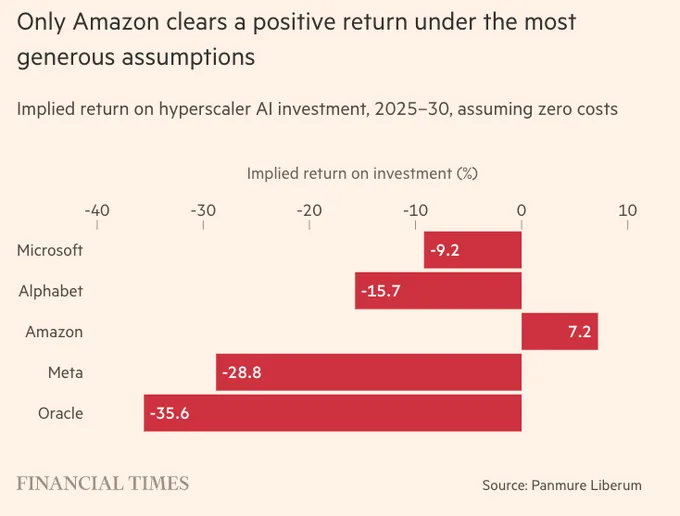
The AI Numbers Are Starting to Look Very Ugly
Discover why major tech companies are seeing negative AI ROI, even under best-case scenarios. Explore the financial reality behind AI hype.
AI Consultant Reveals Client Accidentally Spent $500M in a Month Due to No Employee Limits
Learn from a real-world AI spending blunder where a client lost $500M in a month. Discover how to set employee limits and implement AI budget management to prevent overspending.
The AI Boom Has Entered Its 'Wait, Is This Worth It?' Era
The initial AI hype is giving way to critical evaluation. Learn how businesses can assess the true return on investment for their AI initiatives.
Continue exploring
Find AI agents by workflow
More in Industry Insights
Browse more articles in the Industry Insights category.
Uber articles
Explore more guides and insights tagged Uber.
Artificial Intelligence articles
Explore more guides and insights tagged Artificial Intelligence.
AI Agent Categories
Browse use-case pages for sales, productivity, coding, customer service, and more.
AI Agents Landscape
Explore the full directory map and compare agents by workflow and category.
Agent Skills
Find reusable skills, capabilities, and building blocks for AI agent workflows.