
Agentic Commerce 2026: AI Shopping Agents, UCP, and Zero-Click Shopping
What is Agentic Commerce?
Agentic commerce represents a paradigm shift in how consumers interact with businesses and make purchases. It moves beyond traditional e-commerce trends, where the consumer initiates and controls every step of the buying journey, towards a more automated and intelligent system. At its core, agentic commerce leverages artificial intelligence (AI) to empower 'agents' software entities that can autonomously perform tasks on behalf of a user. These agents understand user preferences, context, and intent to proactively identify needs, find solutions, negotiate terms, and even complete transactions, often with minimal or no direct human intervention. This evolution is transforming the landscape of online shopping, making it more personalized, efficient, and seamless than ever before. This post will explore the key components of agentic commerce, including AI shopping agents, Universal Commerce Platforms (UCP), and the rise of zero-click shopping, and what to expect in 2026 and beyond.
The Rise of AI Shopping Agents
AI shopping agents are the driving force behind agentic commerce. These sophisticated AI systems are designed to act as personal shoppers, assistants, and negotiators for consumers. They learn from a user's past behavior, stated preferences, and real-time context to make informed recommendations and take action.
How AI Shopping Agents Work
The functionality of AI shopping agents relies on several key AI technologies:
Natural Language Processing (NLP): Enables agents to understand and process human language, allowing users to communicate their needs conversationally.
Machine Learning (ML): Powers the agent's ability to learn user preferences, identify patterns, and predict future needs. This is crucial for personalization.
Recommendation Engines: Analyze vast datasets of products, services, and user behavior to suggest the most relevant options.
Automation and Orchestration: These capabilities allow agents to perform complex sequences of actions, such as comparing prices across multiple vendors, checking stock availability, and initiating checkout processes.
The question of how AI shopping agents work is central to understanding their impact. They operate by integrating with various data sources, including user profiles, browsing history, purchase records, and even calendar events, to build a comprehensive understanding of the consumer's needs and intent. For example, an AI agent might notice a user frequently purchases a certain brand of coffee and is running low based on past purchase frequency. It could then proactively search for the best deals on that coffee, present them to the user, and, with approval, even place the order. As this ecosystem expands, an AI agent store could provide a centralized place to discover and access specialized AI agents designed to assist with different shopping tasks, from finding products and comparing prices to managing purchases.
AI Shopping Agents and Customer Experience
AI shopping agents significantly improve customer experience by offering:
Hyper-personalization: Tailoring product recommendations and offers to an individual's unique tastes and needs.
Time Savings: Automating tedious search and comparison tasks, freeing up consumer time.
Discovery: Helping users discover new products or services they might not have found otherwise.
Convenience: Streamlining the entire purchasing process, from initial search to final delivery.
Indeed, how do AI shopping agents improve customer experience? They do so by removing friction, anticipating needs, and providing a level of personalized service that was previously unattainable at scale. This proactive approach shifts the focus from a reactive search-and-buy model to a predictive and assisted one.
Understanding Universal Commerce Platforms (UCP)
For agentic commerce to function effectively and at scale, underlying infrastructure is required. This is where Universal Commerce Platforms (UCPs) come into play. A UCP is designed to unify and streamline all aspects of commerce, providing a single, integrated environment for businesses to manage their operations, customer data, and interactions across all channels.
The Role of UCPs in Agentic Commerce
UCPs serve as the backbone that enables agentic commerce by:
Data Integration: Consolidating customer data, product information, inventory levels, and order history from disparate systems into a unified view.
API-First Architecture: Allowing seamless integration with AI agents, payment gateways, logistics providers, and other third-party services.
Orchestration and Workflow Management: Providing the tools to define and manage complex automated workflows that AI agents can execute.
Personalization Engine: Offering robust capabilities for delivering personalized experiences, which AI agents can leverage.
The benefits of UCPs for businesses are substantial. They reduce operational complexity, enhance data accuracy, and enable a more agile and responsive approach to market changes. By providing a consistent and reliable foundation, UCPs empower businesses to deploy and manage sophisticated AI-driven commerce strategies effectively. The impact of UCP on customer experience is profound, as it allows for consistent, personalized, and efficient interactions regardless of the touchpoint or the AI agent involved.
The Emergence of Zero-Click Shopping
Zero-click shopping is a direct outcome of advanced agentic commerce capabilities. It refers to a transaction where the consumer does not need to actively click through multiple pages, enter payment details, or confirm every step of the purchase. The AI agent, having understood the user's intent and pre-approved parameters, completes the transaction autonomously.
What is Zero-Click Shopping?
What is zero-click shopping? It's the ultimate convenience in e-commerce. Imagine needing a specific item, like a replacement part for a household appliance. Your AI agent, recognizing the need based on your device's diagnostics or your calendar indicating an upcoming event, could identify the correct part, find the best price from a trusted vendor, and complete the purchase without you having to lift a finger, beyond perhaps an initial setup or authorization. This is enabled by secure, authenticated payment systems and trusted AI agents operating within defined parameters.
Technologies enabling zero-click shopping include:
Biometric Authentication: For secure user verification.
Pre-authorized Payments: Setting spending limits or preferred vendors for agentic transactions.
IoT Integration: Devices communicating their needs directly to AI agents (e.g., a smart refrigerator ordering milk).
Advanced AI Decision-Making: Agents capable of making complex judgments based on learned behavior and real-time data.
The role of voice commerce and smart devices is particularly significant in driving zero-click transactions. Voice assistants, already integrated into many homes and vehicles, can act as the interface for AI agents, allowing for natural language commands that can trigger autonomous purchases.
Key Trends and Predictions for Agentic Commerce in 2026
As we look towards 2026, agentic commerce is poised for significant growth and evolution. Several key trends will shape its trajectory:
Evolution from Reactive to Proactive Shopping: The emphasis will continue to shift from consumers actively searching for products to AI agents anticipating needs and offering solutions before the consumer even realizes they have a requirement.
Impact of AI on Consumer Decision-Making: AI agents will become more sophisticated in influencing purchasing decisions by providing highly tailored recommendations and personalized value propositions. This raises important considerations about consumer autonomy and choice.
Potential for Hyper-Personalization at Scale: While personalization is already a buzzword, agentic commerce will enable true hyper-personalization, where every interaction, recommendation, and transaction is uniquely crafted for the individual consumer.
Integration of AI Agents with Existing Platforms: We will see deeper integration of AI agents with popular e-commerce platforms, payment systems, and digital wallets, making their adoption more seamless for both businesses and consumers. The partnership between Stripe and Google on agentic commerce is an example of this trend.
Ethical Considerations and Data Privacy: As AI agents handle more sensitive data and make purchasing decisions, ethical frameworks and robust data privacy measures will become paramount. Consumers will demand transparency and control over how their data is used.
Benefits and Challenges of Agentic Commerce
Agentic commerce offers compelling advantages but also presents significant challenges that need to be addressed for widespread adoption.
Benefits for Businesses and Consumers:
For Businesses: Increased sales conversion rates, improved customer loyalty through enhanced experiences, reduced customer service costs via automation, deeper customer insights, and new revenue streams through personalized offerings.
For Consumers: Unparalleled convenience, significant time savings, access to better deals through automated price comparison, highly personalized shopping experiences, and reduced decision fatigue.
Challenges to Adoption:
What are the challenges of implementing agentic commerce? They include:
Data Privacy and Security: The collection and use of vast amounts of personal data raise significant privacy concerns. Ensuring robust security measures to prevent breaches and misuse of data is critical.
Trust and Transparency: Consumers need to trust that their AI agents are acting in their best interest and that transactions are secure and transparent. The 'black box' nature of some AI can be a barrier.
Integration Complexity: Integrating AI agents and UCPs with existing legacy systems can be technically challenging and costly for businesses.
Consumer Education and Adoption: Many consumers are still unfamiliar with the concept of agentic commerce and may be hesitant to cede control over their purchasing decisions to AI.
Regulatory Landscape: As agentic commerce evolves, new regulations regarding AI accountability, data usage, and consumer protection will likely emerge.
What is the difference between agentic commerce and traditional e-commerce? Traditional e-commerce is largely manual, requiring active consumer input at every stage. Agentic commerce, conversely, is automated and intelligent, with AI agents performing tasks autonomously based on user preferences and context. You can read more about how agentic AI is reshaping commerce in related discussions.
The Interplay of AI and Commerce: Real-World Examples and Case Studies
While the full vision of agentic commerce is still unfolding, early examples demonstrate its potential. Companies are already using AI for personalized product recommendations, automated customer service chatbots, and dynamic pricing. The integration of AI agents with smart home devices is another area seeing rapid development. For instance, a smart speaker could be programmed to reorder groceries based on consumption patterns, or a car's infotainment system could suggest and book maintenance appointments based on mileage and sensor data. These early applications highlight the growing trend towards autonomous commerce, where AI takes on more active roles in the consumer journey.
Preparing for the Future of Shopping
The shift towards agentic commerce is not a distant future but an ongoing evolution. Both consumers and businesses need to prepare.
For Consumers:
Educate Yourself: Understand how AI agents work and the data they use.
Set Clear Preferences: Define your shopping preferences, budget limits, and trusted vendors to guide your AI agents effectively.
Prioritize Privacy: Be mindful of the permissions you grant to AI agents and platforms regarding your data.
For Businesses:
Invest in UCPs: Adopt or develop Universal Commerce Platforms to create a unified and data-rich environment.
Develop AI Capabilities: Build or partner for AI expertise to create intelligent shopping agents and personalized customer experiences.
Focus on Trust and Transparency: Design AI systems that are explainable and provide clear controls for consumers.
Adapt Business Models: Rethink customer engagement strategies to embrace proactive and automated interactions.
How can businesses prepare for the shift to agentic commerce? By focusing on data infrastructure, AI talent, and building customer trust. Embracing a customer-centric approach that prioritizes convenience and personalization will be key. Understanding the underlying technology and potential impact, as discussed in resources like the partnership between Stripe and Google on agentic commerce, can provide valuable insights.
Conclusion
Agentic commerce, powered by AI shopping agents, Universal Commerce Platforms, and the rise of zero-click shopping, is set to redefine the retail landscape by 2026. It promises a future of hyper-personalized, efficient, and convenient shopping experiences. While challenges related to privacy, security, and adoption remain, the potential benefits for both consumers and businesses are immense. Proactive preparation and a focus on building trust will be crucial for navigating this exciting new era of commerce.
Related Articles
View all articles
Agentic AI Is Reshaping Commerce
Discover how agentic AI is reshaping commerce by moving beyond simple chatbots to autonomous agents that execute complex tasks and optimize supply chains.
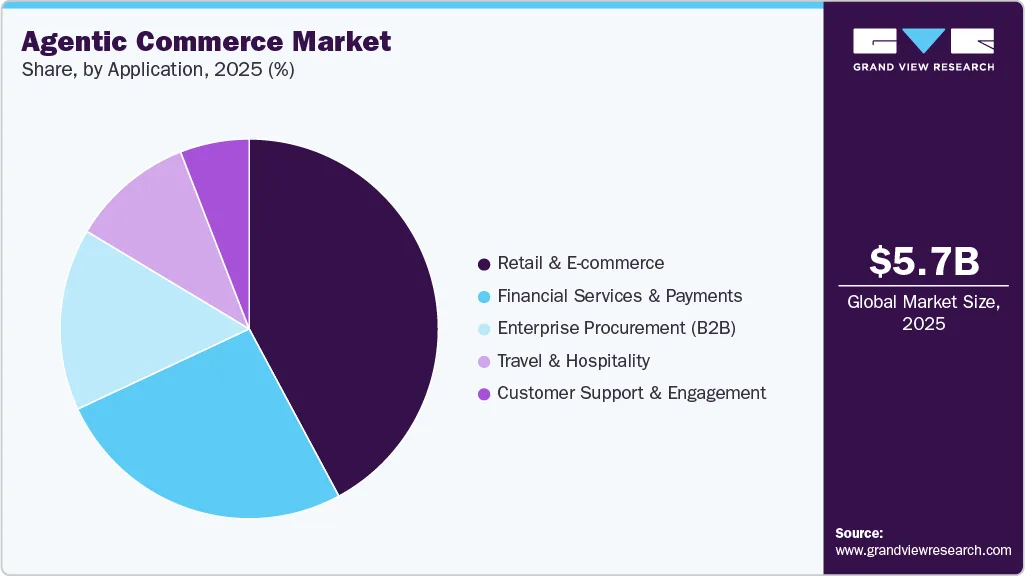
Agentic Commerce Is Starting to Show Real Revenue Share
Discover how agentic commerce moves beyond search to autonomous purchasing, driving measurable revenue growth through intent-based AI workflows.
Shopify is preparing for AI shopping agents to change everything
Discover how Shopify is preparing for AI shopping agents and what this shift means for your store's future, SEO, and the move toward conversational commerce.
Continue exploring
Find AI agents by workflow
More in Industry Insights
Browse more articles in the Industry Insights category.
agentic commerce articles
Explore more guides and insights tagged agentic commerce.
AI articles
Explore more guides and insights tagged AI.
AI Agent Categories
Browse use-case pages for sales, productivity, coding, customer service, and more.
AI Agents Landscape
Explore the full directory map and compare agents by workflow and category.
Agent Skills
Find reusable skills, capabilities, and building blocks for AI agent workflows.