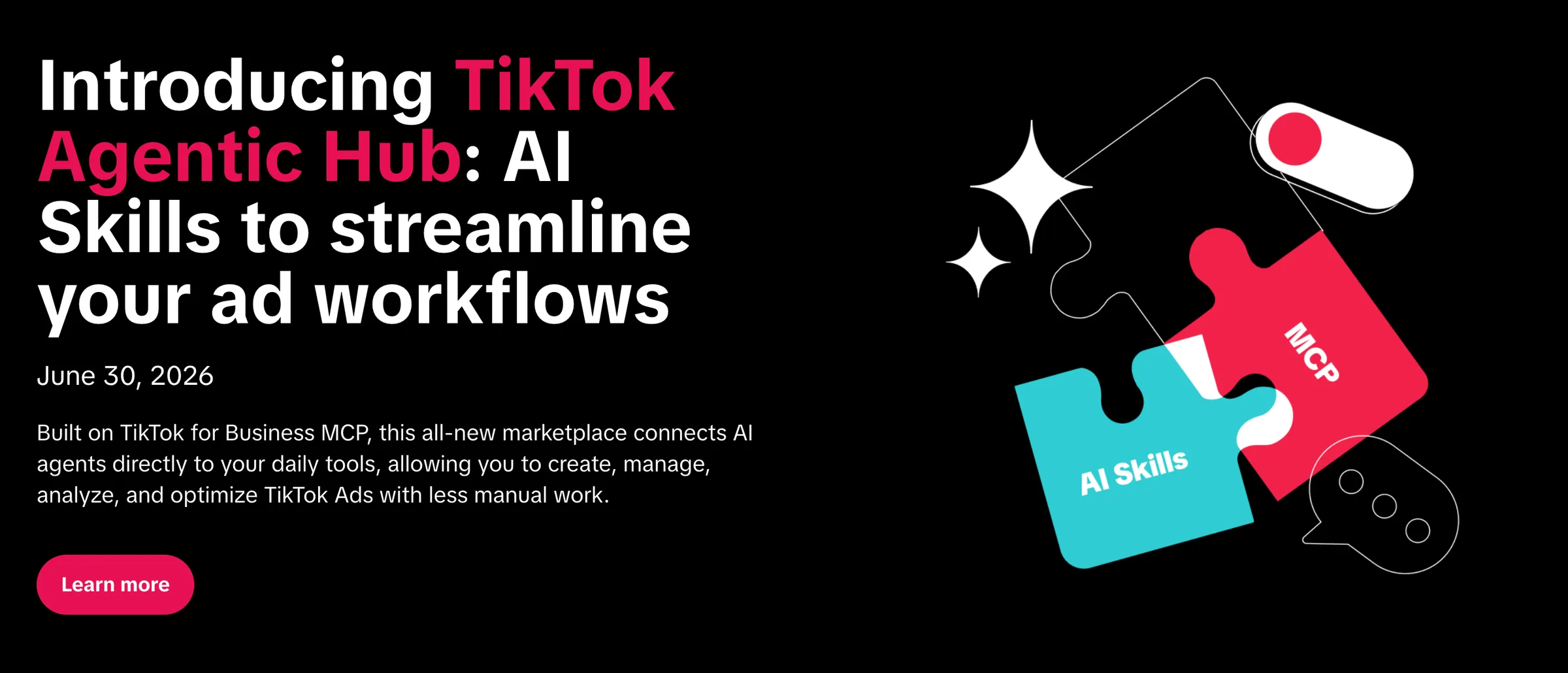
TikTok Agentic Hub: Revolutionizing AI Development for Creators
What is the TikTok Agentic Hub?
TikTok has unveiled the TikTok Agentic Hub, a significant step into the rapidly evolving world of artificial intelligence. This new platform is designed to empower developers and creators by providing tools to build and deploy AI agents. Essentially, the Agentic Hub is TikTok's answer to the growing demand for sophisticated, autonomous AI capabilities within a social media ecosystem. Its core purpose is to democratize access to advanced AI development, allowing users to harness the power of generative AI and create novel experiences on the platform.
For developers, this means a streamlined environment to experiment with and integrate AI into their applications and workflows. For creators, it promises new avenues for content generation, audience engagement, and personalized experiences. This initiative signals TikTok's strategic focus on AI infrastructure, moving beyond a content consumption platform to a space where AI is a co-creator and enhancer.
How Does the TikTok Agentic Hub Work?
The TikTok Agentic Hub operates by providing a framework for the creation and management of AI agents. At its heart, an AI agent is a piece of software that can perceive its environment, make decisions, and take actions to achieve specific goals. In the context of the Agentic Hub, these agents are built using generative AI technologies and are designed to interact with the TikTok platform and its users.
The process typically involves:
Development Environment: Providing SDKs and APIs that allow developers to code and configure their AI agents.
Agent Training and Fine-tuning: Enabling the use of large language models and other generative AI techniques to train agents for specific tasks, such as content summarization, personalized recommendations, or interactive storytelling.
Deployment and Integration: Offering mechanisms to deploy these agents within the TikTok ecosystem, making them accessible to users or integrated into existing features.
Monitoring and Management: Tools to oversee the performance, behavior, and impact of deployed AI agents.
This infrastructure aims to abstract away much of the complexity traditionally associated with AI development, making it more accessible to a broader audience. The goal is to foster innovation by lowering the barrier to entry for building autonomous AI functionalities.
Key Features and Capabilities of the TikTok Agentic Hub
The TikTok Agentic Hub introduces a suite of tools and capabilities aimed at fostering AI-driven innovation. While specific details may evolve, the platform is expected to offer:
AI Agent Creation Tools: A user-friendly interface or robust SDKs for developers to design, build, and train AI agents tailored for various TikTok functionalities.
Generative AI Integration: Seamless integration with state-of-the-art generative AI models, allowing agents to produce creative text, images, or even video elements.
API Access: Access to TikTok's extensive APIs, enabling AI agents to interact with user data (with appropriate permissions), content, and platform features.
Testing and Simulation Environments: Sandboxed environments where developers can test their AI agents' performance and safety before public deployment.
Community and Collaboration Features: Platforms for developers to share insights, code, and collaborate on AI agent projects, fostering a vibrant ecosystem.
These capabilities are designed to support the development of autonomous AI applications that can personalize user experiences, automate content creation tasks, and potentially introduce entirely new forms of interactive entertainment on TikTok. For those interested in the broader implications of agentic AI, exploring advancements in this field, such as those highlighted in the context of 2026 AI Breakthrough Winners, provides valuable perspective.
The Role of AI Agents on TikTok
AI agents have the potential to fundamentally reshape how users interact with TikTok and how content is created and consumed. The concept of an AI agent extends beyond simple automation; these are entities designed to act with a degree of autonomy to achieve objectives.
Within the TikTok ecosystem, AI agents could manifest in several ways:
Content Curation and Discovery: Agents that learn user preferences with high granularity and proactively suggest highly personalized content, going beyond traditional algorithms.
Interactive Content Experiences: Agents that can participate in live streams, respond to comments in real-time, or even co-create content with users through conversational interfaces.
Creative Assistance: Agents that can help creators brainstorm ideas, generate scripts, edit videos, or even create visual assets, significantly speeding up the content production pipeline.
Moderation and Safety: More sophisticated AI agents could assist in content moderation, identifying and flagging harmful content with greater accuracy and nuance.
Personalized Avatars and Companions: The possibility of users interacting with AI-driven characters or companions within the TikTok app.
The rise of personalized and automated content experiences is a key trend, and the Agentic Hub positions TikTok at the forefront of this shift. Understanding how AI can be used on TikTok is becoming increasingly important as these technologies mature.
Implications for Content Creation and User Experience
The launch of the TikTok Agentic Hub carries significant implications for both content creators and the end-user experience. For creators, it represents an unprecedented opportunity to leverage AI as a powerful co-pilot. Imagine AI agents that can:
Automate repetitive tasks: From generating captions to finding trending sounds, freeing up creators to focus on creativity.
Enhance content quality: Assisting with video editing, visual effects, and audio mixing.
Personalize content for different audience segments: Creating variations of a single piece of content optimized for various viewer preferences.
Facilitate new forms of interactive content: Enabling creators to build dynamic, AI-powered experiences that engage audiences in novel ways.
For users, the benefits could include a more deeply personalized feed, interactive content that responds to their input, and potentially even AI-driven companions or assistants within the app. This intersection of generative AI and short-form video promises a more dynamic and engaging platform. However, the benefits of autonomous AI also come with considerations. The ability of AI to act independently raises questions about accountability and control.
The platform's move into AI infrastructure also mirrors trends seen elsewhere, such as the development of specialized marketplaces. For instance, exploring platforms like Swap's Agentic Storefront provides insight into how specialized AI agent marketplaces are emerging.
The Broader Landscape of Agentic AI and Future Potential
The TikTok Agentic Hub is not an isolated development but a significant entry into the burgeoning field of agentic AI. Agentic AI refers to AI systems capable of acting autonomously in an environment to achieve goals, often involving complex decision-making and interaction. This field is rapidly advancing, with potential applications spanning from personal assistants to complex industrial automation.
TikTok's strategic move into AI infrastructure and developer tools is a testament to the growing recognition of AI agents' transformative power. By providing a dedicated hub, TikTok is fostering the democratization of AI development on social media platforms, allowing a wider range of individuals and businesses to build and deploy intelligent agents.
The future potential is vast:
Hyper-personalized digital experiences: Agents that understand and cater to individual needs and preferences across various digital interactions.
New forms of digital economy: Agents that can perform tasks, manage resources, and participate in transactions autonomously.
Enhanced human-AI collaboration: Seamless partnerships between humans and AI agents in creative, professional, and personal domains.
However, the widespread deployment of autonomous AI on a large scale also brings ethical considerations to the forefront. Questions surrounding data privacy, algorithmic bias, job displacement, and the potential for misuse need careful consideration and robust governance frameworks. These are challenges that the entire AI community, including platforms like TikTok, must proactively address.
Ultimately, the TikTok Agentic Hub represents a pivotal moment, signaling a future where AI agents are not just tools but active participants in our digital lives. As the capabilities of generative AI continue to expand, so too will the potential applications of platforms like the Agentic Hub.
Related Articles
View all articles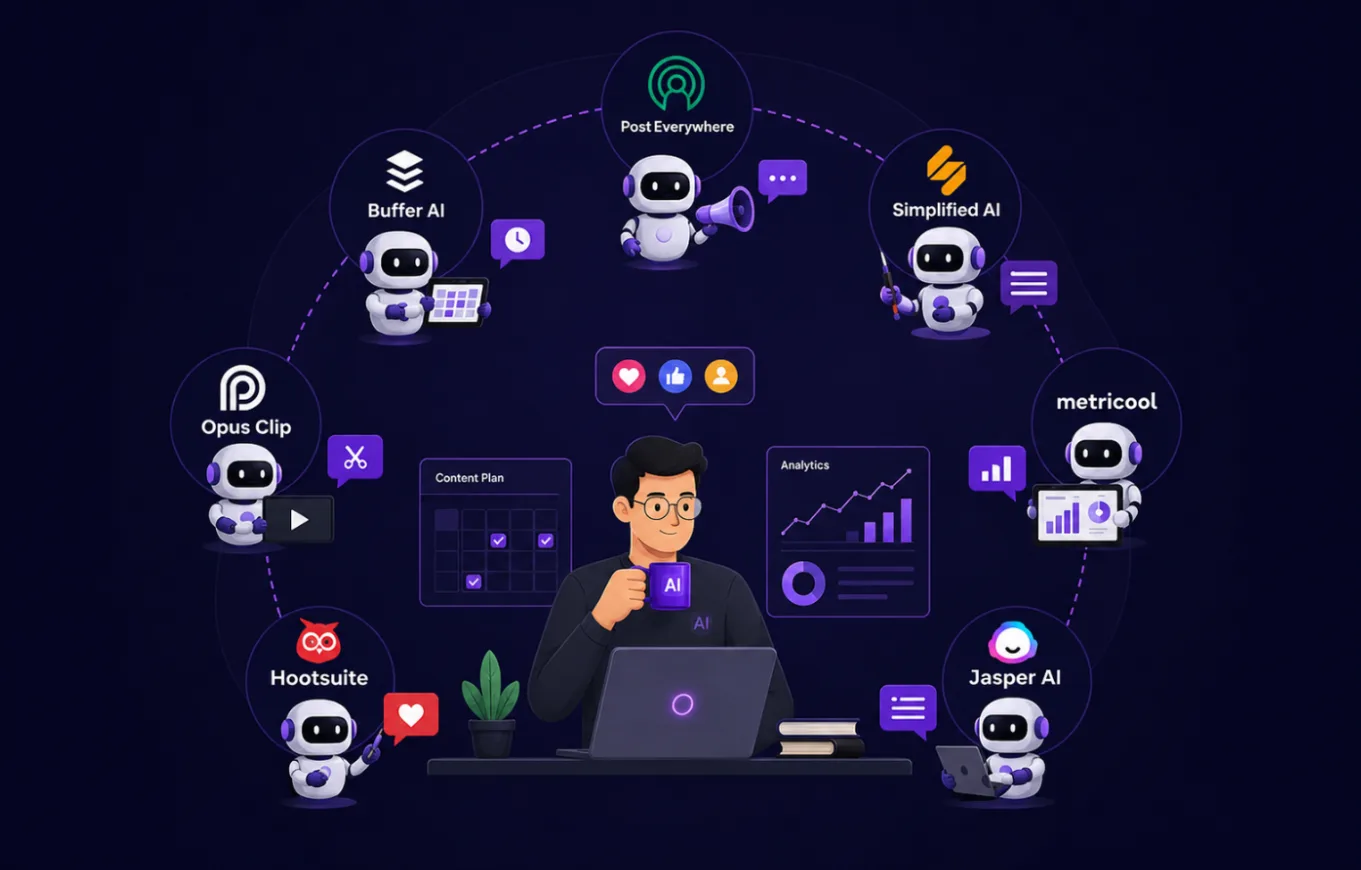
7 AI Agents That Let a Solopreneur Run Social Media Like a Full Team
Discover 7 AI agents that help solopreneurs manage social media content, design, video, scheduling, analytics, engagement, and strategy without a full team.
OpenAI Launches GPT-5.4 — A Frontier Model Built for Autonomous AI Agents
OpenAI has officially launched GPT-5.4, a frontier model engineered specifically for autonomous AI agents. Discover the new features and agentic capabilities.
2026 AI Breakthrough Winners Put Agentic AI in the Spotlight
Explore the rise of agentic AI. Learn how autonomous systems are shifting from simple chatbots to complex workflows and what this means for the future of work.
Continue exploring
Find AI agents by workflow
More in Industry Insights
Browse more articles in the Industry Insights category.
TikTok articles
Explore more guides and insights tagged TikTok.
AI articles
Explore more guides and insights tagged AI.
AI Agent Categories
Browse use-case pages for sales, productivity, coding, customer service, and more.
AI Agents Landscape
Explore the full directory map and compare agents by workflow and category.
Agent Skills
Find reusable skills, capabilities, and building blocks for AI agent workflows.