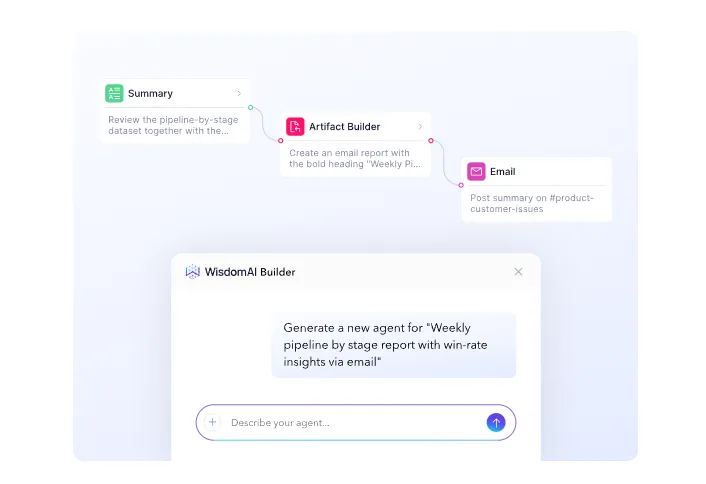
WisdomAI Launches Autonomous Analytics Agents
Introduction to Autonomous Analytics Agents
In the modern data landscape, the bottleneck is no longer the availability of information, but the capacity to synthesize it into actionable insights. WisdomAI has officially introduced its suite of autonomous analytics agents, marking a significant shift from passive reporting to active, self-directed data exploration. This guide is designed for data leaders and business analysts looking to understand how these agents function, how they differ from legacy tools, and what role they play in the future of the enterprise data stack.
By the end of this article, you will understand the architecture behind agentic insights, how to evaluate their security, and how to integrate them into your existing workflows to reduce analyst burnout and accelerate decision-making.
How Autonomous Analytics Agents Differ from Traditional BI
To understand the leap forward, one must first look at the limitations of traditional Business Intelligence (BI). Standard BI tools are fundamentally reactive; they require a human to build a dashboard, define a metric, or write a SQL query to extract value from a database. They are static representations of past performance.
In contrast, an autonomous analytics agent is an intelligent entity capable of independent reasoning. When a user poses a business question, the agent does not merely pull a pre-configured report. Instead, it determines the necessary data sources, performs data cleaning, selects the appropriate statistical model, and generates a narrative explanation. If the agent detects an anomaly, it can proactively alert stakeholders, effectively shifting from a passive dashboard to an active, agentic insight generator.
What is an autonomous analytics agent?
An autonomous analytics agent is a software program powered by artificial intelligence that can execute multi-step data tasks without constant human intervention. Unlike a chatbot that simply summarizes data, an agent acts as a virtual analyst, navigating your data warehouse and refining its approach based on the feedback it receives during the analysis loop.
The Core Architecture of Intelligent Data Agents
The efficacy of an agent lies in its modular design. WisdomAI’s platform utilizes a framework that combines data ingestion, reasoning engines, and continuous monitoring. The process typically follows three phases:
Data Ingestion and Contextualization: The agent maps your data schema, ensuring it understands the relationships between disparate tables, such as sales records and inventory logs.
Autonomous Reasoning: Using advanced LLMs, the agent translates natural language queries into executable code or query language, testing hypotheses through iterative exploration.
Continuous Monitoring: The agent observes data streams in real-time, triggering automated reporting with AI agents only when significant deviations from established patterns occur.
For organizations looking to scale these capabilities, the AI Agents Directory Launches Skill Hub offers a valuable repository of modular components that allow teams to expand their agents' capabilities, such as adding specialized forecasting skills or integrating with niche CRM platforms.
The Role of Frontier Models in Agentic Workflows
The reasoning capability of these agents is not magic; it is powered by high-capacity, large-scale machine learning models. As teams integrate more complex logic, the need for models that can handle multi-step reasoning becomes paramount. The release of OpenAI Launches GPT-5.4 — A Frontier Model Built for Autonomous AI Agents illustrates how frontier models are being specifically fine-tuned to maintain coherence over long, complex data analysis tasks, reducing the hallucination risks inherent in general-purpose models.
Key Benefits and Operational Tradeoffs
The primary advantage of deploying autonomous agents is the reduction of data analyst burnout. By offloading repetitive ad-hoc reporting to an agent, human analysts are freed to focus on high-value strategic initiatives and data governance. However, this shift comes with inherent tradeoffs.
Security and Governance
A common question is: What are the security risks of using autonomous AI for data analysis? The risk primarily involves data leakage and unauthorized access. Because agents require read-access to sensitive data, organizations must implement strict Role-Based Access Control (RBAC) and ensure that all agentic actions are logged in an immutable audit trail. Furthermore, while these tools are powerful, they are not a replacement for data quality standards. If your underlying data is messy, the agent's insights will be flawed—a principle known as "garbage in, garbage out."
Does WisdomAI automate data cleaning?
While WisdomAI streamlines the preparation phase, it is best practice to maintain a robust data pipeline. Agents excel at handling minor inconsistencies in data formatting, but they cannot replace the foundational work of data engineering. For a deeper dive into data ethics and standards, refer to the NIST AI Risk Management Framework.
Best Practices for Implementation
If you are planning to adopt an autonomous analytics strategy, follow this checklist to ensure a smooth transition:
Start with a Pilot: Select a single department—such as marketing or finance—where data queries are frequent but predictable.
Define Guardrails: Set clear limits on what the agent can access and, more importantly, what actions it is permitted to take (e.g., read-only vs. write-back capabilities).
Human-in-the-Loop (HITL): Require human validation for high-stakes decisions. The agent should present a draft, not execute a final strategy.
Monitor Drift: Regularly review agent performance to ensure the logic remains aligned with current business KPIs.
Conclusion
The launch of autonomous analytics agents represents a fundamental evolution in how we interact with information. By transitioning from static dashboards to reasoning agents, businesses can finally achieve true data democratization, allowing non-technical stakeholders to derive insights through natural language. While the technology is powerful, successful adoption requires a balanced approach that prioritizes data security and human oversight. As you explore the potential of the WisdomAI platform, be sure to verify specific feature availability via the official WisdomAI documentation to ensure your implementation aligns with the most current capabilities. Ready to optimize your data stack? Subscribe to our newsletter for weekly updates on autonomous agent integrations and enterprise AI trends.
Related Articles
View all articles
AI Analytics Agents vs. Traditional BI: What’s the Difference?
AI analytics agents vs traditional BI: compare dashboards, natural-language analytics, automated insights, use cases, benefits, and when to use each.
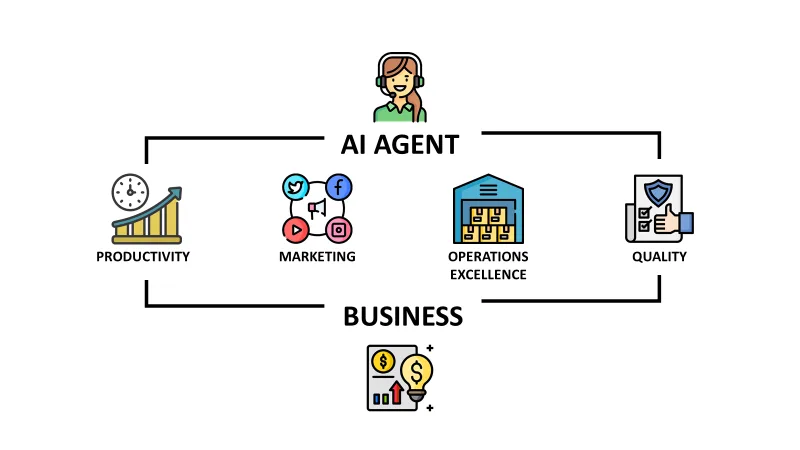
How to Make AI Agents Work for Your Business: A Strategic Guide
Learn how to effectively integrate AI agents into your business operations. Discover strategies for deployment, workflow automation, and scaling your AI capacity.
Zero Human Companies: How Autonomous Business Models Work
Explore the concept of zero human companies, where AI and automation replace traditional staffing to create scalable, fully autonomous business operations.
Continue exploring
Find AI agents by workflow
More in Industry Insights
Browse more articles in the Industry Insights category.
AI articles
Explore more guides and insights tagged AI.
Data Science articles
Explore more guides and insights tagged Data Science.
AI Agent Categories
Browse use-case pages for sales, productivity, coding, customer service, and more.
AI Agents Landscape
Explore the full directory map and compare agents by workflow and category.
Agent Skills
Find reusable skills, capabilities, and building blocks for AI agent workflows.