8 Ways AI Agents Turbocharge Revenue Operations
The Shift from Manual RevOps to Autonomous Agents
Revenue Operations (RevOps) has long been defined by the struggle to keep disparate systems in sync. For years, teams relied on manual data entry, complex spreadsheet modeling, and 'co-pilot' tools that required constant human oversight. Today, we are witnessing a fundamental shift from human-in-the-loop co-pilots to autonomous AI agents in revenue operations. Unlike traditional software, these agents act as digital employees capable of executing complex workflows, making decisions, and learning from outcomes without needing a human to click every button.
By deploying autonomous agents, organizations are moving beyond mere automation. They are building a self-healing revenue engine that operates 24/7, reducing burnout and allowing high-growth companies to scale without linear headcount expansion.
1. Automated Lead Qualification and Scoring
Traditional lead scoring is often static and outdated by the time a sales rep sees it. AI agents change this by processing real-time signals, such as website engagement, intent data, and social interactions, to score prospects dynamically. These agents don't just assign a number; they qualify leads by cross-referencing company firmographics against your ideal customer profile (ICP) in real-time, ensuring sales reps only focus on high-intent prospects.
2. Real-Time Data Hygiene and Enrichment
Bad data is the silent killer of RevOps efficiency. AI agents act as constant custodians of your CRM. They automatically detect duplicates, standardize naming conventions, and enrich incomplete records by scraping public data or cross-referencing third-party databases. By maintaining a single source of truth, agents ensure that your forecasting models are built on accurate, clean data.
3. Predictive Forecasting and Pipeline Analysis
Human forecasting is prone to bias and optimism. AI agents leverage predictive revenue analytics to analyze thousands of data points within the pipeline. They can flag 'stalled' deals that show subtle signs of decay, such as a decrease in stakeholder engagement or a delayed response, before the sales rep even notices. This proactive approach allows leadership to intervene early and rescue at-risk revenue.
4. Personalized Multi-Channel Sales Outreach
Gone are the days of generic email blasts. Modern agents utilize context from a prospect’s recent activity to draft hyper-personalized messages across email, LinkedIn, and SMS. By analyzing the prospect's industry challenges and recent company news, these agents ensure every touchpoint feels relevant, significantly increasing engagement rates compared to traditional AI-driven RevOps outreach tools.
5. Intelligent Contract and Renewal Management
Revenue leakage often happens during the renewal cycle. AI agents track contract milestones, identify upcoming renewal dates, and trigger automated health checks based on product usage data. If a customer’s engagement drops below a certain threshold, the agent can automatically notify the Customer Success team or initiate a 'save' campaign to mitigate churn risk.
6. Seamless Cross-Departmental Data Syncing
Silos between marketing, sales, and customer success are the primary obstacles to a unified revenue strategy. AI agents serve as the connective tissue, automatically syncing data across stacks. For example, when a marketing campaign generates a lead, the agent immediately updates the lead’s status in the CRM and notifies the relevant sales rep, ensuring that no lead is left behind in the hand-off process.
7. Automated Sales Coaching and Performance Feedback
AI agents for sales teams don't just manage data; they manage performance. By analyzing call transcripts and email sentiment, agents provide immediate, actionable feedback to reps. They can highlight winning talk tracks used by top performers and suggest improvements for reps struggling with objection handling, essentially acting as an always-on sales coach.
8. Scaling Through Autonomous Workflows
The transition from traditional SaaS tools to autonomous agents marks a new era in ROI. While traditional tools require significant setup and manual configuration, AI agents adapt to your specific business logic. Implementing these agents requires a focus on clear objectives, identifying which repetitive tasks consume the most time and delegating them to agents that can perform the work with higher speed and accuracy.
Frequently Asked Questions
What is the difference between AI and AI agents in RevOps? AI is the underlying technology that processes data, while AI agents are autonomous entities that use that technology to execute tasks and make decisions.
How do AI agents improve sales productivity? By handling administrative burdens, qualifying leads, and providing real-time insights, agents allow reps to spend more time on high-value closing activities.
What are the best tools for RevOps automation? The best tools are those that integrate natively with your current CRM and offer agentic capabilities rather than simple trigger-based rules.
How does AI impact revenue operations strategy? It allows for a shift from reactive reporting to proactive, predictive growth strategies.
Conclusion: Embracing the Future of Revenue
The integration of AI agents is no longer a luxury; it is a necessity for companies aiming to stay competitive in an increasingly automated landscape. By offloading manual tasks and leveraging predictive analytics, RevOps teams can finally focus on the strategic initiatives that drive long-term revenue growth.
Related Articles
View all articles
The Best AI Agents for Sales Teams in 2026
Discover top AI agents for sales in 2026. Enhance prospecting, outreach, and CRM with AI sales tools to boost team productivity and revenue.

The Impact of AI Agents on Customer Support, Sales, and Business Automation
Explore how AI agents are changing customer support, sales, and business automation through faster service, lead qualification, and workflow execution.
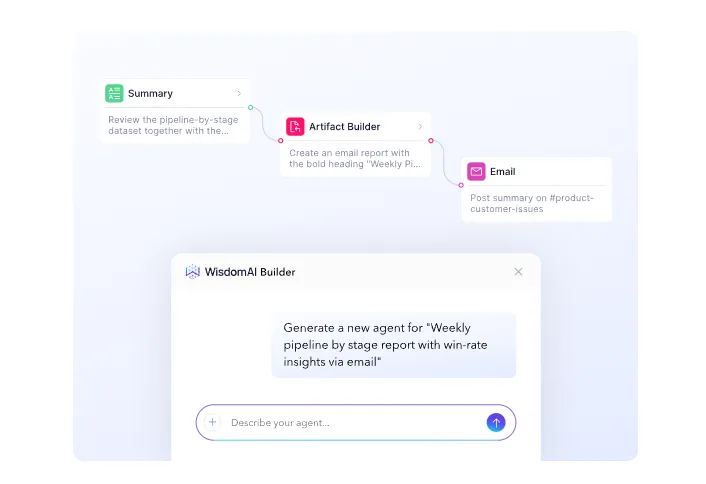
WisdomAI Launches Autonomous Analytics Agents
Explore how autonomous analytics agents like those from WisdomAI are transforming data workflows. Learn the mechanics, benefits, and tradeoffs.
Continue exploring
Find AI agents by workflow
More in Industry Insights
Browse more articles in the Industry Insights category.
RevOps articles
Explore more guides and insights tagged RevOps.
AI articles
Explore more guides and insights tagged AI.
AI Agent Categories
Browse use-case pages for sales, productivity, coding, customer service, and more.
AI Agents Landscape
Explore the full directory map and compare agents by workflow and category.
Agent Skills
Find reusable skills, capabilities, and building blocks for AI agent workflows.