
The Future of AI Reliability: Understanding Agent Stress Testing
The Rise of Autonomous AI Systems
The transition from static chatbots to autonomous AI agents represents a fundamental shift in how software interacts with the world. Unlike traditional Large Language Models (LLMs) that respond to prompts, AI agents are designed to execute multi-step workflows, interact with APIs, and make decisions in real-time. As Google AI Agents are going mainstream, the complexity of these systems has outpaced our ability to verify their behavior through simple prompt testing.
For developers and enterprise leaders, the challenge is no longer just about generating accurate text; it is about ensuring that an agent can navigate ambiguous environments without causing operational or security failures. This is why AI agent stress testing has emerged as a critical discipline in the software development lifecycle.
Why Traditional Testing Falls Short
Traditional evaluation methods often rely on static benchmarks—datasets of questions and answers designed to measure a model's knowledge. However, these benchmarks fail to capture the nuance of an agent operating in a dynamic environment. If an agent is tasked with managing a cloud infrastructure or coordinating a supply chain, it will encounter edge cases that a static list of questions cannot predict.
Static benchmarks suffer from a lack of context. They measure the what but rarely the how. When an agent makes a decision, it does so based on a sequence of observations. Traditional testing cannot simulate the consequences of a faulty action or the way an agent recovers from a misstep. Consequently, relying solely on static benchmarks often leads to a false sense of security, leaving production systems vulnerable to unexpected behaviors that only manifest under real-world pressure.
Understanding Digital Worlds for Stress Testing
To overcome the limitations of static evaluation, the industry is shifting toward the creation of digital worlds—simulated environments specifically engineered for AI agent stress testing. These environments act as a sandbox where agents can perform tasks, interact with simulated APIs, and face adversarial conditions without risking actual production data.
How do digital worlds simulate AI behavior? They function by creating a controlled, high-fidelity replica of the agent's target environment. By injecting chaos, such as simulated API latency, corrupted input data, or unexpected user requests, developers can observe how an agent maintains its logic under pressure. This approach is essential for identifying the risks of autonomous AI agents, such as decision-making loops or unauthorized task escalation.
Key Metrics for AI Agent Performance
When engineers subject an agent to these simulated environments, they look for more than just a successful outcome. Critical performance metrics include:
Task Completion Rate: The percentage of complex workflows successfully finalized.
Recovery Latency: How quickly an agent corrects its course after encountering an error.
Safety Threshold Adherence: The frequency with which an agent violates pre-defined guardrails or security policies.
Resource Efficiency: The token usage and compute cost required to reach a solution.
The Broader Landscape of Agent Development
As the ecosystem matures, the focus is shifting from simple model training to robust orchestration. Just as xAI Introduces Grok Build to provide more tailored developer experiences, companies like Patronus AI are building the infrastructure required to validate these custom implementations at scale. The market is increasingly prioritizing \"safety-first\" development cycles, where evaluation is baked into the CI/CD pipeline rather than treated as an afterthought.
For enterprise teams, this means that AI safety evaluation is no longer optional. Whether you are building internal automation tools or customer-facing agents, you must treat your agents as you would any critical piece of software infrastructure. This includes implementing rigorous regression testing for model updates and maintaining a clear audit trail of agent decisions.
Best Practices for Implementing AI Safety Protocols
Building secure autonomous systems requires a proactive stance. To improve the reliability of your agents, consider adopting these best practices:
Define Hard Guardrails: Use deterministic logic to enforce safety boundaries that the AI agent cannot override.
Simulate Failure Modes: Don't just test the "happy path." Design scenarios where inputs are intentionally ambiguous or malicious to see how the agent handles uncertainty.
Continuous Evaluation: Integrate automated testing tools that check agent performance against every new deployment.
Human-in-the-Loop (HITL) Triggers: For high-stakes decisions, design your agents to request human verification before executing irreversible actions.
According to the NIST AI Risk Management Framework, effective safety protocols must be iterative. You should continuously refine your stress-testing parameters as your agents encounter new types of data and user interactions in the wild.
Conclusion
AI agent stress testing is the bridge between experimental prototypes and reliable, production-grade autonomous systems. By leveraging digital worlds to simulate complex scenarios, organizations can identify vulnerabilities before they impact operations. As AI agents become more deeply integrated into the enterprise tech stack, the ability to rigorously test and validate their behavior will be a primary differentiator for successful teams. Ready to secure your AI operations? Subscribe to our newsletter for the latest technical deep-dives into AI evaluation and agent safety.
Related Articles
View all articlesWhat Makes an AI Agent “Good”? A Practical Evaluation Framework
Learn how to evaluate AI agents beyond simple accuracy. Discover a practical framework for measuring reliability, decision-making, and operational success.

Runta Secures $20M Seed for AI Agent Execution Layer
Discover how Runta's $20M a16z-backed AI agent execution layer addresses critical production challenges like token efficiency, security, and operational cont...
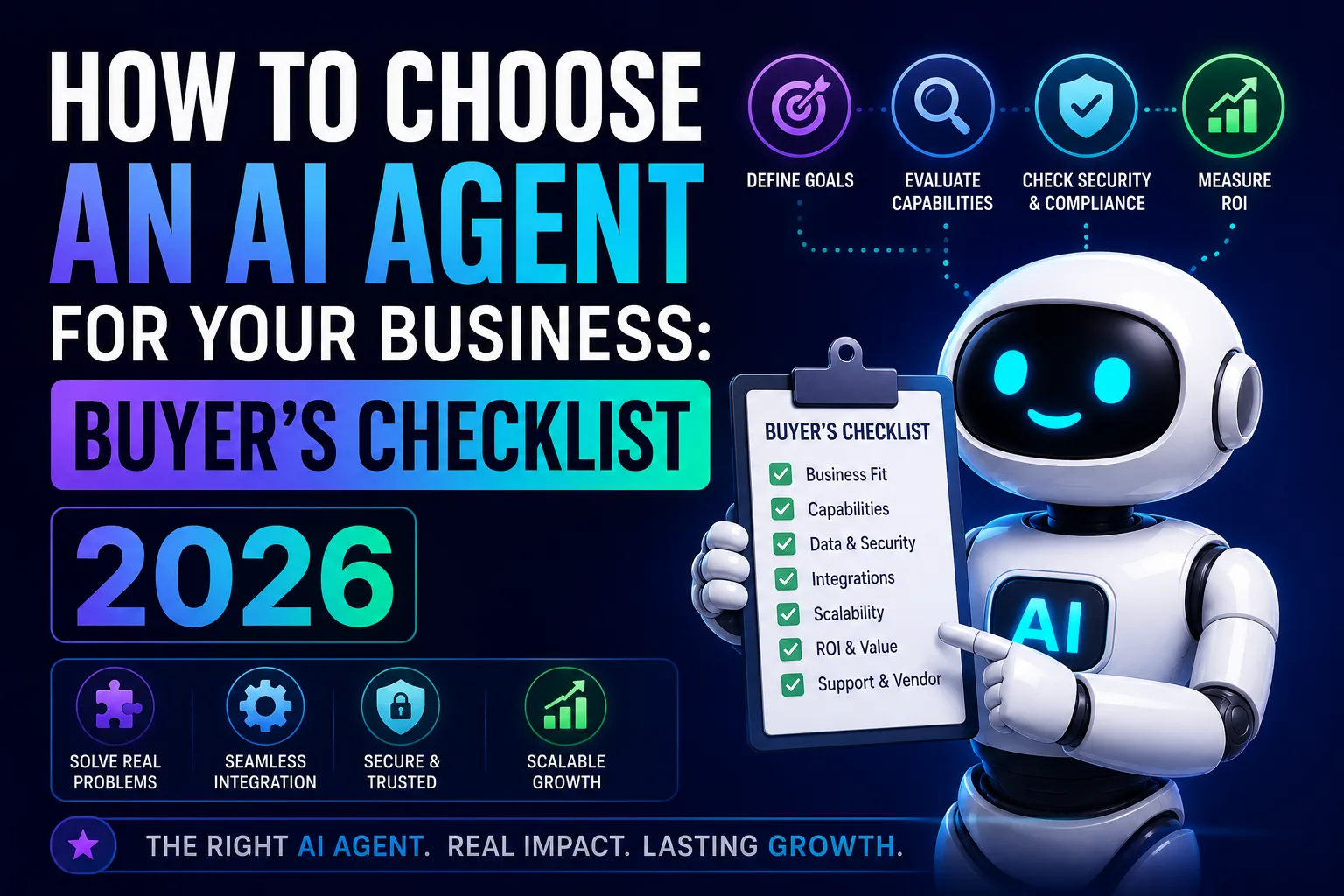
How to Choose an AI Agent for Your Business: Buyer’s Checklist 2026
Navigate AI agent selection for your business with our comprehensive checklist. Discover key criteria, essential features, and how to find the right fit.
Continue exploring
Find AI agents by workflow
More in Industry Insights
Browse more articles in the Industry Insights category.
AI agent stress testing articles
Explore more guides and insights tagged AI agent stress testing.
AI safety evaluation articles
Explore more guides and insights tagged AI safety evaluation.
AI Agent Categories
Browse use-case pages for sales, productivity, coding, customer service, and more.
AI Agents Landscape
Explore the full directory map and compare agents by workflow and category.
Agent Skills
Find reusable skills, capabilities, and building blocks for AI agent workflows.