The Agent Economy’s Missing Layer: Identity, Reputation, and Trust
The agent economy is no longer theoretical.
AI agents are already:
Researching products
Comparing options
Executing tasks
Initiating transactions
But as agents move from demos into real economic activity, one problem keeps resurfacing:
We don’t know who or what to trust.
Humans have centuries-old systems for trust brands, contracts, courts, reputation, regulation.
Agents have none of that by default.
This gap is becoming the biggest constraint on the agent economy’s growth.
What Is the Agent Economy, Really?
At its core, the agent economy is a system where autonomous or semi-autonomous software agents perform economic actions on behalf of humans or organizations.
That includes:
Buying services
Selecting tools
Negotiating prices
Executing workflows
Triggering payments
As soon as agents can act economically, three questions become unavoidable:
Who is this agent?
What is it allowed to do?
Can its decisions be trusted?
Right now, the ecosystem has no consistent answers.
Why Identity Is Harder for Agents Than for Humans
Human identity is anchored to:
Legal names
Governments
Documents
Jurisdictions
Agents don’t fit that model.
An agent can be:
Spun up instantly
Forked infinitely
Modified continuously
Acting for multiple principals
Operating across platforms
Traditional identity systems break under that flexibility.
Without agent-native identity, systems can’t distinguish:
A legitimate purchasing agent from a spoofed one
A trusted evaluation agent from a biased one
An authorized agent from an overreaching one
This isn’t a theoretical issue it’s already blocking adoption.
Reputation: The Currency Agents Actually Respond To
Humans trust brands.
Agents trust track records.
In an agent economy, reputation isn’t about perception.
It’s about verifiable performance over time.
A meaningful agent reputation system needs to answer:
How often does this agent succeed?
Under what conditions does it fail?
How consistent are its outputs?
Has it behaved maliciously or unexpectedly?
How does it perform relative to alternatives?
Without this, agents default to:
Closed ecosystems
First-party tools
Hardcoded preferences
That kills competition and innovation.
The Trust Gap Is Slowing Agentic Commerce
Agentic commerce, the ability for agents to transact autonomously, depends on trust being machine-readable.
Today, most systems still require:
Human approvals
Manual verification
Centralized control
Not because autonomy isn’t possible but because trust infrastructure is missing.
This is why the market is seeing increased focus on:
Agent identity frameworks
Permissioned agent scopes
Audit logs
Evaluation benchmarks
Reputation layers
Without these, autonomy becomes risk, not leverage.
Why Discovery and Evaluation Are Becoming Trust Primitives
Before agents can transact, they must:
Discover options
Evaluate them objectively
This is where platforms like AArena play a critical role not as marketplaces in the traditional sense, but as trust surfaces.
When agents (and humans) can:
Compare agents side-by-side
Test under identical conditions
See performance deltas clearly
Trust becomes emergent, not assumed.
Reputation stops being marketing-driven and starts being evidence-driven.
Closed vs. Open Agent Economies
There’s a clear fork emerging.
Closed Agent Economies
Agents operate only within a single platform
Identity and trust are internal
Innovation is controlled
Switching costs are high
Open Agent Economies
Agents interoperate across systems
Identity is portable
Reputation is composable
Competition happens on performance
History suggests open systems win but only if trust can scale.
The next few years will determine which model dominates.
What Builders Should Be Paying Attention To Now
If you’re building in the agent economy, the key question isn’t:
“How smart is my agent?”
It’s increasingly:
“How will my agent be trusted?”
That means thinking early about:
Clear agent identity
Scoped permissions
Transparent behavior
Observable performance
Auditability
Reputation accumulation
These aren’t compliance details.
They are growth constraints.
The Big Insight
The agent economy won’t scale on intelligence alone.
It will scale on:
Identity
Reputation
Trust
Evaluation
Accountability
The most valuable layer won’t be the smartest agent.
It will be the infrastructure that lets agents trust each other enough to act.
Related Articles
View all articles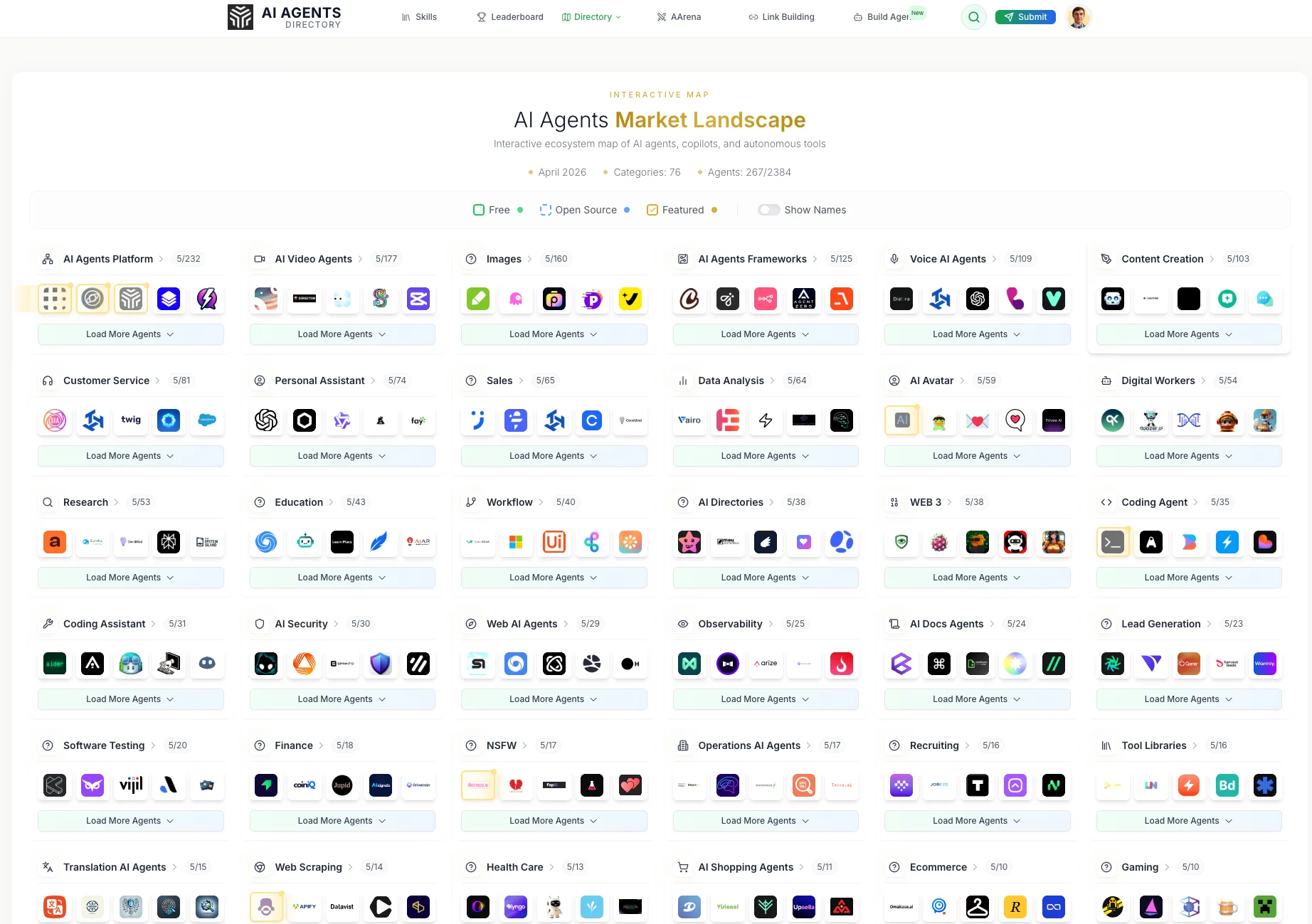
The Autonomous Marketplace: How AI Agent Directory is Building the Agentic Economy
Explore how AI Agent Directories are pioneering the Autonomous Marketplace, paving the way for the agentic economy and transforming how AI agents operate.
Top 8 AI Agent Trends Transforming E-Commerce in 2026 and Beyond
Discover the 8 pivotal AI agent trends revolutionizing e-commerce in 2026 and beyond, from agentic commerce and hyper-personalization to autonomous customer...

Identity Digital Proposes DNS Identity for AI Agents
Explore how Identity Digital's proposal for DNS-based identity provides a scalable, secure standard for verifying autonomous AI agents in the digital ecosystem.
Continue exploring
Find AI agents by workflow
More in Industry Insights
Browse more articles in the Industry Insights category.
AI Agent Categories
Browse use-case pages for sales, productivity, coding, customer service, and more.
AI Agents Landscape
Explore the full directory map and compare agents by workflow and category.
Agent Skills
Find reusable skills, capabilities, and building blocks for AI agent workflows.
Free AI Agents
Discover free AI agents and tools for testing agentic workflows without upfront cost.
Open Source AI Agents
Compare open-source agents, frameworks, and developer-friendly agent projects.