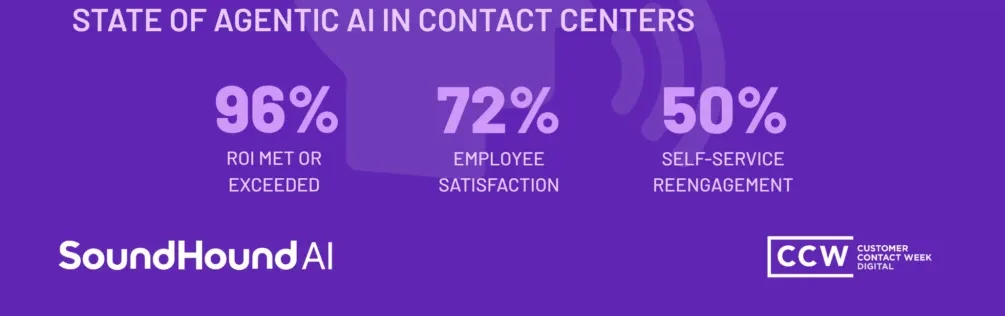
SoundHound Survey: 96% of AI Agent Deployments Meet ROI Expectations
The Promise of AI Agents: A Tangible ROI Driver
The integration of Artificial Intelligence (AI) into business operations is no longer a futuristic concept but a present-day reality, particularly within customer-facing roles. AI agents, designed to handle inquiries, automate tasks, and augment human capabilities, are rapidly becoming a cornerstone of modern customer service and contact center strategies. For businesses contemplating or already implementing these technologies, the critical question often revolves around return on investment (ROI). A recent survey by SoundHound offers compelling data, indicating that a remarkable 96% of AI agent deployments are meeting or exceeding their expected ROI. This statistic signals a significant shift, moving AI from a promising experiment to a proven driver of business value.
This post delves into the findings of the SoundHound survey, exploring what constitutes ROI for AI agents, the factors contributing to their success, and how businesses can strategically deploy and manage these powerful tools to maximize their impact. We will also address common questions about AI in customer service and its future trajectory.
Key Findings: AI Agents Exceeding Expectations
The headline finding from the SoundHound survey is clear: 96% of organizations deploying AI agents are achieving their anticipated return on investment. This is a powerful endorsement of AI's practical application in business. It suggests that the initial concerns and uncertainties surrounding AI agent implementation are giving way to demonstrable results. This high success rate implies that the benefits of AI agents are not just theoretical but are being realized in tangible ways across various industries.
What does this high success rate mean for businesses? It means that the investment in AI agent technology is proving to be a sound financial decision. It validates the strategic shift towards leveraging AI for enhanced operational efficiency, improved customer experiences, and ultimately, greater profitability. The widespread achievement of ROI underscores the maturity of AI agent technology and the effectiveness of current deployment strategies.
Understanding 'ROI Expectations' for AI Agents
When we talk about the ROI of AI agents, it's crucial to define what that entails. ROI in this context is not a single, monolithic metric but a composite of several key performance indicators (KPIs) that reflect both cost savings and value creation. Businesses typically measure the success of AI agent deployments against expectations in areas such as:
Cost Reduction: This includes savings on labor costs, reduced training expenses for human agents, and decreased operational overhead. AI agents can handle a significant volume of routine queries, freeing up human agents for more complex issues.
Efficiency Gains: Measuring how quickly inquiries are resolved, the number of interactions handled per agent (human or AI), and the overall throughput of the customer service operation. AI agents can operate 24/7 without breaks, significantly boosting efficiency.
Customer Satisfaction (CSAT) and Net Promoter Score (NPS): Improved response times, consistent service quality, and the ability of AI agents to provide accurate information contribute to higher customer satisfaction. This can lead to increased customer loyalty and positive word-of-mouth referrals.
Agent Productivity and Satisfaction: By handling repetitive tasks, AI agents allow human agents to focus on more engaging and challenging work, potentially leading to higher job satisfaction and reduced burnout. AI can also act as a co-pilot, providing real-time information and support to human agents.
Revenue Generation: In some cases, AI agents can be trained to upsell or cross-sell, identify new sales opportunities, or facilitate smoother purchase processes, directly contributing to revenue growth.
The fact that 96% of deployments are hitting these varied expectations suggests that businesses are effectively aligning their AI strategies with measurable business outcomes.
Factors Contributing to High AI Agent ROI
Several interconnected factors contribute to the high success rate and positive ROI observed in AI agent deployments. These elements, when harmonized, create a powerful synergy that drives value:
Improved Agent Productivity and Efficiency
AI agents excel at handling high volumes of routine inquiries with speed and accuracy. This capability directly enhances the productivity of the entire customer service operation. By automating repetitive tasks, AI agents free up human agents to concentrate on complex problem-solving, empathetic customer interactions, and tasks requiring nuanced judgment. This division of labor not only increases the overall throughput of the contact center but also elevates the role of human agents, making their work more fulfilling and less prone to burnout.
Enhanced Customer Experience
In today's competitive landscape, a superior customer experience is a key differentiator. AI agents contribute to this by offering:
24/7 Availability: Customers can receive support anytime, anywhere, without waiting for business hours.
Instant Responses: AI agents can provide immediate answers to common questions, reducing wait times and customer frustration.
Consistency: AI agents deliver consistent responses based on programmed knowledge bases, ensuring that every customer receives accurate and uniform information.
Personalization: Advanced AI can leverage customer data to offer personalized recommendations and support, making interactions more relevant and engaging.
These improvements in service delivery translate directly into higher customer satisfaction scores and increased loyalty.
Reduced Operational Costs
The implementation of AI agents can lead to significant cost savings. Automating a portion of customer interactions reduces the need for a proportionally larger human workforce to handle fluctuating demand. Furthermore, AI agents can streamline training processes, as new agents (both AI and human) can be onboarded more efficiently with AI-powered assistance. The continuous availability of AI agents also minimizes the need for overtime or extensive shift coverage for certain types of inquiries.
Strategic Deployment and Management: The Key to Success
While the technology itself is powerful, achieving high ROI is not solely dependent on the AI agent's capabilities. The strategic deployment and ongoing management of these systems are paramount. This involves careful planning, thoughtful implementation, and continuous optimization. Businesses that excel in AI agent ROI often demonstrate a strong understanding of their customer service workflows and identify the most suitable use cases for AI.
Planning and Implementation Best Practices
The journey to successful AI agent deployment begins with a clear strategy. This includes:
Identifying Use Cases: Pinpointing the specific customer interactions or tasks that AI agents are best suited to handle. This often involves analyzing current customer service data to identify common queries, peak times, and areas of inefficiency.
Data Quality and Training: Ensuring that the AI models are trained on high-quality, relevant data is crucial for accurate and effective performance.
Integration with Existing Systems: Seamless integration with CRM, ticketing systems, and other business tools is essential for a unified customer experience and efficient data flow.
Phased Rollout: Deploying AI agents in stages allows for testing, refinement, and gradual scaling, minimizing disruption and allowing for adjustments based on real-world performance.
Human Oversight and Escalation: Establishing clear protocols for when and how AI agents should escalate complex or sensitive issues to human agents is critical for maintaining customer trust and resolving issues effectively. This ensures that the AI agent acts as a supportive tool rather than a barrier.
For those looking to build their own AI agent infrastructure, understanding the foundational components is key. A comprehensive guide on how to build your own agent harness can provide valuable insights into the technical aspects of creating robust AI solutions.
The Importance of Continuous Optimization
AI is not a set-it-and-forget-it technology. To maintain and enhance ROI, continuous monitoring and optimization are necessary. This involves:
Performance Monitoring: Regularly tracking key metrics such as resolution rates, customer satisfaction scores, and error rates.
Feedback Loops: Gathering feedback from both customers and human agents to identify areas for improvement.
Model Retraining: Periodically retraining AI models with new data to adapt to evolving customer needs and language patterns.
Feature Enhancement: Exploring new functionalities and capabilities for the AI agent as the technology advances and business requirements change.
By actively managing and refining their AI agent deployments, businesses can ensure they continue to deliver significant value over time and avoid potential pitfalls. Understanding common challenges, such as those detailed in AI Agent Traps: Real-Life Incidents and Lessons Learned, can help organizations proactively mitigate risks.
Measuring and Maximizing AI Agent Success
To truly understand and maximize the ROI of AI agents, businesses must establish robust measurement frameworks. This involves more than just tracking basic metrics; it requires a holistic view of how AI impacts the entire customer service ecosystem and broader business objectives.
Key Metrics for AI Agent Performance
Beyond the general ROI indicators mentioned earlier, specific metrics can provide deeper insights into AI agent performance:
First Contact Resolution (FCR) Rate (AI-specific): The percentage of customer issues resolved by the AI agent without requiring human intervention.
Average Handling Time (AHT) Reduction: The decrease in AHT for interactions that involve AI agents, either directly or as a support tool for human agents.
Containment Rate: The percentage of customer inquiries that are fully handled by the AI agent without escalation to a human agent.
Deflection Rate: The number of customer inquiries that are successfully diverted from live agent channels (e.g., phone, chat) to self-service options powered by AI.
AI Accuracy Rate: The precision with which the AI agent understands queries and provides correct information or actions.
Customer Effort Score (CES): Measuring how easy it is for customers to get their issues resolved when interacting with AI agents.
Regularly analyzing these metrics allows businesses to pinpoint strengths, identify weaknesses, and make data-driven decisions for optimization. For instance, a low containment rate might indicate a need for more comprehensive training data or improved conversational design.
Leveraging AI for Competitive Advantage
The widespread success of AI agents is also reshaping competitive landscapes. Businesses that effectively leverage AI gain a significant edge by:
Offering Superior Customer Service: Differentiating through speed, availability, and personalized experiences.
Optimizing Resource Allocation: Freeing up human capital for strategic initiatives rather than routine tasks.
Gaining Data-Driven Insights: AI systems can analyze vast amounts of customer interaction data, revealing trends, pain points, and opportunities for product or service improvement.
Driving Innovation: The insights gained from AI deployments can fuel further innovation in product development, marketing, and operational strategies.
As the adoption of AI in customer-facing roles continues to grow, staying ahead requires a proactive approach to understanding and implementing these technologies.
The Future of AI Agents in Customer Service
The trajectory of AI agents in customer service is one of continuous evolution and increasing sophistication. As AI technology advances, we can expect:
More Natural Conversations: AI agents will become even better at understanding nuanced language, sentiment, and context, leading to more human-like and empathetic interactions.
Proactive Engagement: AI will move beyond reactive problem-solving to proactively engage with customers, anticipating needs and offering solutions before issues arise.
Deeper Personalization: Leveraging advanced analytics and machine learning, AI agents will offer highly personalized experiences tailored to individual customer histories, preferences, and behaviors.
Seamless Human-AI Collaboration: The lines between human and AI agents will blur further, with AI acting as an indispensable co-pilot for human agents, augmenting their capabilities in real-time.
Expansion into New Domains: AI agents will likely expand their roles beyond traditional customer service to encompass more complex advisory, sales, and support functions.
The continued investment in AI agents is not just about efficiency; it's about building more intelligent, responsive, and customer-centric organizations prepared for the future of business.
Conclusion: AI Agents as a Proven Investment
The SoundHound survey finding that 96% of AI agent deployments meet or exceed ROI expectations is a powerful testament to the tangible value these technologies bring to businesses. From significant cost savings and enhanced operational efficiency to improved customer satisfaction and agent productivity, AI agents are proving to be a critical component of modern business strategy. The success hinges not only on the technology itself but also on strategic planning, thoughtful implementation, and continuous optimization. As AI continues to evolve, its role in customer service and beyond will only become more profound, offering businesses unparalleled opportunities for growth and competitive advantage.
Ready to explore how AI agents can transform your customer service and drive measurable ROI? Start by understanding the foundational components of successful AI deployments and consider how these principles can be applied to your specific business needs.
Related Articles
View all articles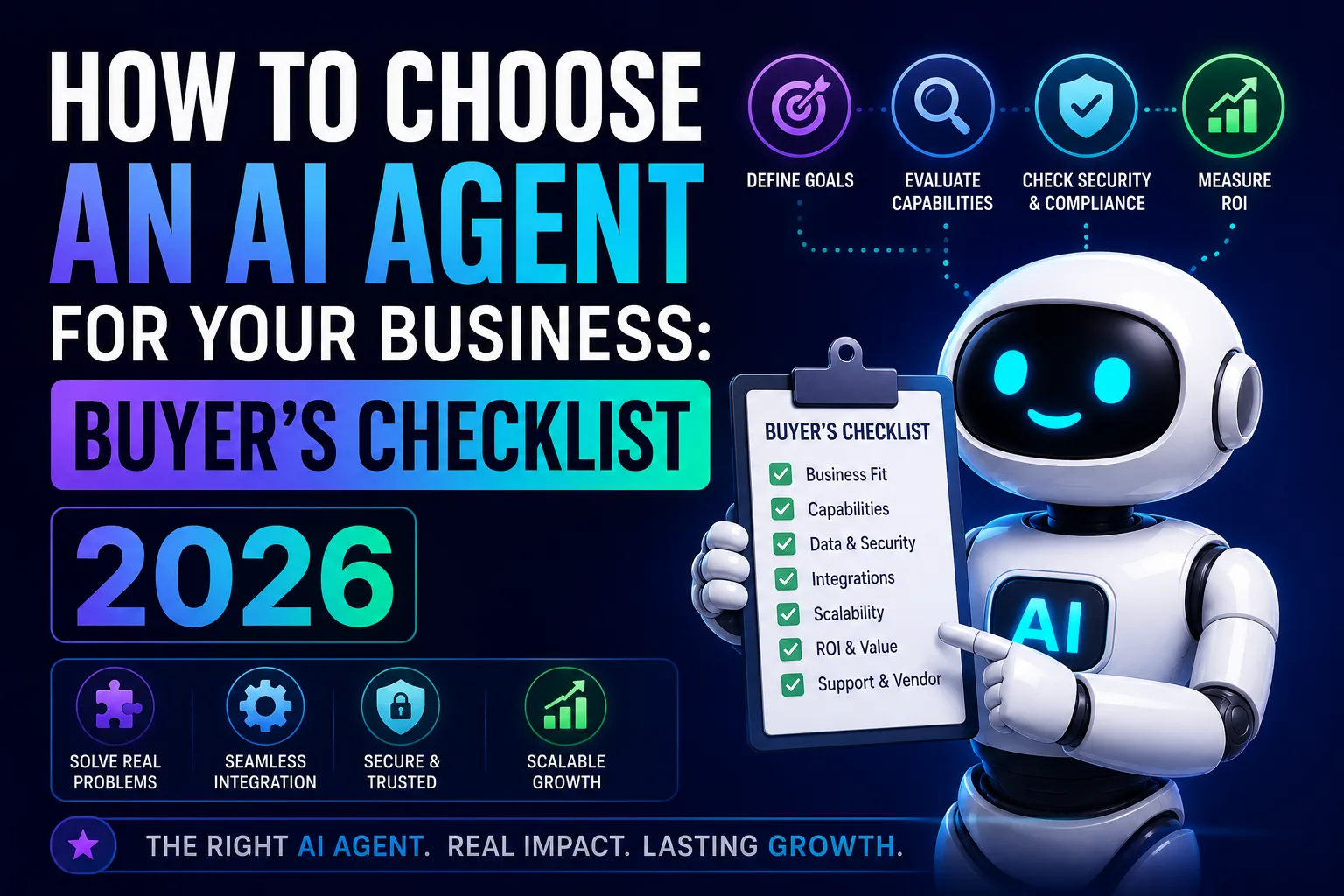
How to Choose an AI Agent for Your Business: Buyer’s Checklist 2026
Navigate AI agent selection for your business with our comprehensive checklist. Discover key criteria, essential features, and how to find the right fit.
Top 5 AI Agents for Customer Service in 2026
Compare the best AI agents for customer service in 2026, including Zendesk, Fin, Sierra, Ada and Salesforce Agentforce, by features, pricing, channels and use cases.
What Makes an AI Agent “Good”? A Practical Evaluation Framework
Learn how to evaluate AI agents beyond simple accuracy. Discover a practical framework for measuring reliability, decision-making, and operational success.
Continue exploring
Find AI agents by workflow
More in Industry Insights
Browse more articles in the Industry Insights category.
AI articles
Explore more guides and insights tagged AI.
Customer Service articles
Explore more guides and insights tagged Customer Service.
AI Agent Categories
Browse use-case pages for sales, productivity, coding, customer service, and more.
AI Agents Landscape
Explore the full directory map and compare agents by workflow and category.
Agent Skills
Find reusable skills, capabilities, and building blocks for AI agent workflows.