Robots, Cameras, and Agents: The Hardware Stack Behind Physical AI
What is Physical AI?
Artificial Intelligence (AI) has made incredible strides, largely within the digital realm. We interact with AI through our screens, benefiting from its capabilities in areas like language processing, data analysis, and recommendation engines. However, a distinct and rapidly evolving field is Physical AI. This branch of AI focuses on giving machines the ability to perceive, reason about, and interact with the physical world. Unlike purely software-based AI, physical AI requires a sophisticated hardware stack – a collection of components that work in concert to enable embodied intelligence.
This post delves into the essential hardware components that form the foundation of physical AI. We'll explore the robotic platforms that serve as the physical bodies, the sensory systems that act as their eyes and ears, the processing units that function as their brains, and the actuators that allow them to perform actions. Understanding this hardware stack is crucial for appreciating how AI is moving beyond the screen and into tangible, real-world applications.
The Robotic Body: Platforms for Physical AI
At its core, physical AI needs a physical form to operate within the real world. This is where robotic platforms come into play. These are the mechanical structures, often equipped with mobility and manipulation capabilities, that house the AI's intelligence and sensors. The type of robotic platform dictates the scope and nature of the physical AI's interactions.
Mobile Robots: These platforms are designed for locomotion, allowing AI to navigate diverse environments. Examples include autonomous vehicles, delivery robots, and exploration rovers. Their hardware typically includes wheels, tracks, or legs for movement, along with chassis and power systems.
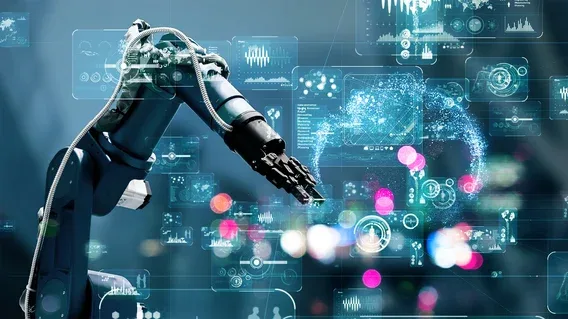
Manipulators (Robotic Arms): These are designed for precise movement and interaction with objects. Industrial robotic arms in manufacturing, surgical robots, and robotic arms used in research labs are prime examples. They feature joints, motors, and end-effectors (like grippers or specialized tools) that enable them to grasp, move, and assemble items.
Drones (Unmanned Aerial Vehicles - UAVs): Drones provide AI with aerial mobility, enabling tasks like surveillance, delivery, and aerial mapping. Their hardware includes rotors, flight controllers, and sophisticated stabilization systems.
Humanoid Robots: These robots are designed to resemble humans in form and function, aiming for versatile interaction in human-centric environments. They often combine mobility and manipulation capabilities, presenting complex hardware integration challenges.
The choice of robotic platform is a fundamental decision in developing a physical AI system, as it defines the operational domain and the types of tasks the AI can perform.
The AI's Senses: Cameras and Vision Systems
For any physical AI to understand its surroundings, it needs to perceive them. Cameras and AI vision systems are arguably the most critical sensory inputs, providing a rich stream of data that allows the AI to 'see' and interpret the world. This is where the increasing sophistication of vision AI for autonomous systems truly shines.
Cameras, ranging from simple RGB sensors to complex depth cameras (like stereo cameras or LiDAR-based sensors), capture visual information. This raw data is then processed by specialized AI algorithms to perform a variety of tasks:
Object Detection and Recognition: Identifying and classifying objects within a scene (e.g., distinguishing a person from a chair, or a stop sign from a traffic light).
Scene Understanding: Interpreting the context of a visual scene, understanding relationships between objects, and inferring the overall environment.
Localization and Mapping: Using visual cues to determine the robot's position within an environment and to build a map of that environment.
Pose Estimation: Determining the orientation and position of objects or the robot itself in 3D space.
The development of advanced AI vision systems is directly enabling more capable autonomous operations. From security cameras that can intelligently monitor vast areas to the sophisticated visual processing required for self-driving cars, cameras are the primary interface through which many AI agents interact with the physical world. This ability to 'see' and understand is a foundational element for embodied AI.
For a deeper dive into how AI agents leverage visual data, explore AI Agents Need Eyes: Why Cameras Are Becoming the Next Agent Interface.
Beyond Vision: Other Essential Sensors
While cameras are paramount, a comprehensive understanding of the physical world requires a diverse array of sensors. These sensors provide complementary data that fills in gaps left by vision systems and enables the AI to perceive aspects of reality that are invisible to cameras alone.
Types of Crucial Sensors for Physical AI
LiDAR (Light Detection and Ranging): Emits laser pulses to measure distances to surrounding objects, creating detailed 3D point clouds of the environment. This is invaluable for precise mapping and obstacle avoidance, especially in varying light conditions.
IMUs (Inertial Measurement Units): These sensors, typically comprising accelerometers and gyroscopes, measure an object's acceleration and angular velocity. They are essential for tracking motion, orientation, and detecting subtle changes in movement, crucial for stable locomotion and navigation.
Ultrasonic Sensors: Use sound waves to detect the presence and distance of objects. They are often used for short-range obstacle detection and are cost-effective.
Tactile Sensors: Provide a sense of 'touch,' allowing robots to detect pressure, texture, and slippage when interacting with objects. This is vital for delicate manipulation tasks and ensuring a secure grip.
Microphones and Audio Sensors: Enable AI to 'hear' its environment, detecting sounds, speech, and potential anomalies. This can be used for environmental monitoring, human-robot interaction, and even detecting machinery malfunctions.
Infrared (IR) Sensors: Can detect heat signatures, useful for tracking objects or people in low-light conditions or for environmental sensing.
The integration of data from these diverse sensors, a process known as sensor fusion, is critical for building a robust and accurate model of the physical world. Sensor fusion allows the AI to combine the strengths of different sensors, mitigate their weaknesses, and achieve a more reliable perception than any single sensor could provide.
The Brain's Hardware: Processing Units and Compute
All the data gathered by sensors needs to be processed, analyzed, and acted upon. This requires significant computational power, forming the 'brain' of the physical AI. The demands of real-time perception, decision-making, and control necessitate specialized processing hardware.
Computational Power for Robot AI
CPUs (Central Processing Units): The general-purpose workhorses, responsible for executing most software instructions and managing overall system operations.
GPUs (Graphics Processing Units): Highly parallel processors originally designed for graphics rendering, but now indispensable for accelerating AI workloads, particularly deep learning inference and training, due to their ability to perform many calculations simultaneously.
NPUs (Neural Processing Units) / AI Accelerators: These are specialized chips designed specifically to optimize the performance of neural networks and other AI algorithms. They offer significant power efficiency and speed for AI tasks, often found in edge devices.
Edge Computing Devices: As physical AI systems become more prevalent, there's a growing trend towards edge computing. This means processing data closer to the source (i.e., on the robot itself) rather than sending it to a central cloud server. Edge devices often integrate CPUs, GPUs, and NPUs in compact, power-efficient form factors, reducing latency and improving responsiveness.
The computational hardware must be capable of handling the high volume of sensor data in real-time, running complex AI models, and making rapid decisions to control the robot's actions. The development of specialized AI chips for edge computing is a key trend enabling more sophisticated physical AI applications.
The Hands and Feet: Actuators and Effectors
Once the AI has perceived its environment and made a decision, it needs a way to interact with the physical world. This is achieved through actuators and effectors.
Translating AI Decisions into Physical Actions
Actuators: These are the components that convert electrical signals into physical motion. Common types include electric motors (DC motors, servo motors, stepper motors), hydraulic actuators, and pneumatic actuators. They provide the force and movement needed to operate robotic limbs, wheels, or other mechanisms.
Effectors: These are the end-point tools or devices that perform specific tasks. For manipulators, this might be a gripper, a welding tool, or a suction cup. For mobile robots, the wheels or legs are effectors that enable locomotion.
The precision, speed, and strength of actuators and effectors directly impact the robot's ability to perform its intended physical tasks. The design and control of these components are critical for achieving smooth, accurate, and safe physical interactions.
Integrating the Stack: Sensor Fusion and Communication
The true power of physical AI emerges when its various hardware components work together seamlessly. This requires robust integration strategies, particularly in sensor fusion and communication.
Sensor Fusion for Robust Perception
As mentioned, sensor fusion is key. It's the process of combining data from multiple sensors to produce more accurate, complete, and reliable information than could be obtained from any single sensor. For example, combining LiDAR data for precise distance measurements with camera data for object identification creates a much richer understanding of the environment.
Communication Protocols
For different hardware components to communicate effectively, standardized protocols are essential. These can range from low-level communication between sensors and processing units (e.g., I2C, SPI) to higher-level communication between different modules or even between robots (e.g., ROS - Robot Operating System, Wi-Fi, Ethernet). Efficient and reliable communication ensures that data flows smoothly, enabling real-time control and decision-making.
The Role of AI Agents in the Hardware Stack
While hardware provides the physical capabilities, it's the AI agent that orchestrates these capabilities to achieve goals. An AI agent is the intelligent software layer that perceives its environment, makes decisions, and takes actions through the hardware stack. In the context of physical AI, the agent doesn't just process data; it directs the robot's movements, interprets sensor readings, and plans sequences of actions to accomplish tasks in the real world.
The agent's intelligence, often powered by machine learning models running on the computational hardware, dictates how the robot perceives the world and responds to it. The increasing sophistication of vision AI agents, for instance, allows them to perform complex tasks autonomously, from guiding robotic arms in assembly lines to enabling autonomous navigation in dynamic environments. This convergence of robotics and AI is driving practical applications across numerous industries.
The evolution of human-robot interaction is also heavily influenced by the hardware interfaces enabled by these agents and their underlying hardware. As physical AI becomes more integrated into our lives, understanding these hardware stacks becomes increasingly important.
For a broader perspective on how AI agents are evolving, consider The Rise of Vision AI Agents: From Security Cameras to Autonomous Operations.
Conclusion
The physical AI hardware stack is a complex yet elegant interplay of robotic platforms, sensory systems, computational power, and actuation mechanisms. From the 'eyes' of cameras and LiDAR to the 'brains' of specialized processors and the 'hands' of actuators, each component plays a vital role in enabling AI to interact meaningfully with our physical world. The ongoing advancements in sensor technology, processing efficiency, and AI algorithms continue to push the boundaries of what physical AI can achieve.
Understanding these hardware foundations is key to appreciating the practical applications of AI in robotics, autonomous systems, and beyond. As this field matures, we can expect to see increasingly sophisticated and capable physical AI systems reshaping industries and our daily lives.
Learn more about the hardware enabling the next generation of intelligent machines.
Related Articles
View all articles
How to Choose an AI Agent for Your Business: Buyer’s Checklist 2026
Navigate AI agent selection for your business with our comprehensive checklist. Discover key criteria, essential features, and how to find the right fit.

AI Agents Need Eyes: Why Cameras Are Becoming the Next Agent Interface
Explore why cameras are crucial for AI agents, enhancing perception and interaction. Learn about embodied AI and the future of visual AI.

The Rise of Vision AI Agents: From Security Cameras to Autonomous Operations
Explore the transformative impact of Vision AI Agents, from enhancing security cameras to powering autonomous operations across industries. Discover their applications and future.
Continue exploring
Find AI agents by workflow
More in Industry Insights
Browse more articles in the Industry Insights category.
physical AI articles
Explore more guides and insights tagged physical AI.
robotics articles
Explore more guides and insights tagged robotics.
AI Agent Categories
Browse use-case pages for sales, productivity, coding, customer service, and more.
AI Agents Landscape
Explore the full directory map and compare agents by workflow and category.
Agent Skills
Find reusable skills, capabilities, and building blocks for AI agent workflows.