
Mistral Text-to-Speech: A Guide to Open-Source AI Audio
Introduction to Mistral's Text-to-Speech Technology
The landscape of generative AI audio is rapidly evolving, with the release of a new Mistral text-to-speech model marking a significant milestone for developers and researchers alike. By bringing high-quality speech synthesis into the open-source ecosystem, Mistral AI is lowering the barrier to entry for building conversational interfaces that sound natural and human-like. This post explores the technical foundations of this release, its role in the broader AI landscape, and how you can leverage it for your own applications.
For developers, understanding this technology is essential for creating responsive AI agents. Whether you are building virtual assistants, accessibility tools, or interactive media, this guide provides a roadmap for navigating the shift toward open-source voice synthesis.
How AI-Driven Text-to-Speech Works
At its core, modern text-to-speech technology has moved away from the robotic, concatenated phonemes of the past. Today, we rely on neural speech synthesis, where deep learning models map text inputs to acoustic features—such as mel-spectrograms—which are then converted into waveforms by a vocoder. The Mistral AI models approach this by leveraging transformer architectures that understand context, prosody, and emotional nuance, resulting in output that feels less like a machine reading text and more like human speech.
The efficiency of these models is paramount. As we see in the shift toward efficient AI architectures, the goal is to achieve high-fidelity audio while maintaining low latency, which is critical for real-time generative audio applications.
Why Open-Source Matters for Speech Synthesis
The move toward open-source generative AI audio represents a major shift from proprietary black-box solutions. When you rely on closed-source APIs, you are subject to the pricing, rate limits, and data privacy policies of a single vendor. By contrast, an open-source model allows for:
Transparency: You can audit the training data and architecture, ensuring the model aligns with your specific use cases.
Local Deployment: Running models on your own infrastructure ensures data sovereignty and eliminates dependency on external API availability.
Customization: Developers can fine-tune the model on specific datasets, such as niche industry terminology or unique voice profiles.
Is Mistral's text-to-speech model open weights? Generally, Mistral releases its models with open weights, allowing for broad experimentation. This stands in contrast to proprietary platforms like ElevenLabs, which offer high-quality synthesis but often limit the ability to run the model locally or modify the underlying parameters. While proprietary models may lead in specific creative use cases, the benefits of open-source TTS models include long-term cost savings and complete control over the deployment environment.
Integrating Mistral TTS into AI Workflows
Integrating speech synthesis into a broader system requires more than just a model; it requires a framework that can handle text generation, audio synthesis, and streaming. As you build more complex systems—such as those discussed in the context of open-source AI agent frameworks—the TTS model becomes a critical component of the "ears and voice" of your application.
To build a high-performance agent, you need to manage the pipeline between the Large Language Model (LLM) and the TTS engine. The LLM generates the text, which is then streamed to the TTS model to minimize latency. Mistral AI speech synthesis capabilities are particularly well-suited for this, as they are designed to be compatible with standard inference engines, allowing for seamless integration into existing Python-based tech stacks.
Technical Considerations and Best Practices
Before deploying a Mistral text-to-speech model, consider the following technical requirements:
Hardware Acceleration: While these models can run on CPUs, using a GPU with sufficient VRAM is recommended for real-time performance.
Latency Optimization: Use streaming inference to begin playing audio as soon as the first chunks are generated, rather than waiting for the entire sentence to complete.
Environment Management: Utilize containers (like Docker) to manage dependencies and ensure consistent performance across development and production environments.
For further reading on speech standards and audio processing, refer to the W3C Speech Synthesis Markup Language (SSML) documentation, which remains a standard for controlling voice parameters in many TTS systems.
Future Outlook for Generative Audio
The trajectory of open-source speech synthesis is clear: we are moving toward a future where multimodal AI—models that can see, hear, and speak simultaneously—is the standard. By democratizing access to high-quality audio models, Mistral AI is enabling a new wave of innovation in human-computer interaction.
As you plan your next project, remember that the choice between local deployment and cloud-based APIs should be driven by your specific needs regarding latency, privacy, and cost. With the new tools available, the capability to build sophisticated, voice-enabled applications has never been more accessible.
Stay updated on the latest open-source AI releases by subscribing to our newsletter for deep-dive technical breakdowns.
Related Articles
View all articles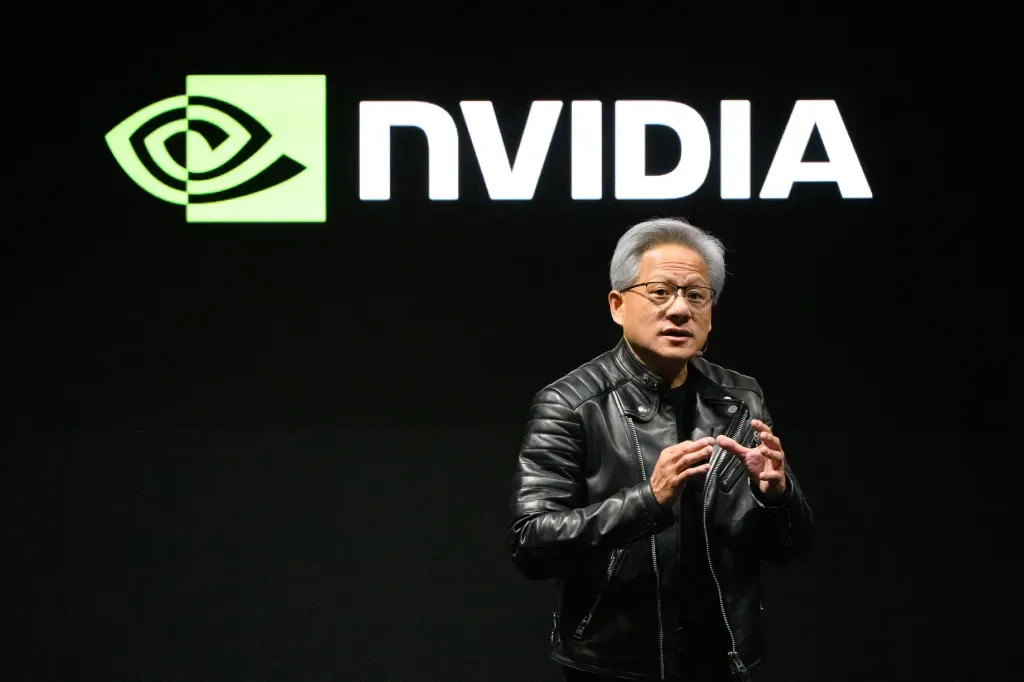
Nvidia Is Planning to Launch an Open-Source AI Agent Platform
Nvidia is reportedly launching an open-source AI agent platform. Explore how this move could reshape the AI development landscape and empower developers.
MiniMax M3: The First Open-Weights Model to Combine Three Frontier Capabilities
Discover MiniMax M3, the pioneering open-weights AI model uniquely merging three frontier capabilities. Learn its features, impact, and what this means for AI.
Understanding Gemma 4: A Guide to Google's Open-Weight AI
Explore the architecture and capabilities of Google's Gemma model series. Learn how these open-weight AI tools fit into your development workflow.
Continue exploring
Find AI agents by workflow
More in Industry Insights
Browse more articles in the Industry Insights category.
AI articles
Explore more guides and insights tagged AI.
Mistral AI articles
Explore more guides and insights tagged Mistral AI.
AI Agent Categories
Browse use-case pages for sales, productivity, coding, customer service, and more.
AI Agents Landscape
Explore the full directory map and compare agents by workflow and category.
Agent Skills
Find reusable skills, capabilities, and building blocks for AI agent workflows.