
Microsoft's AI Shift: Why They're Replacing Claude with Internal Tools
Understanding the Shift: Microsoft's Evolving AI Landscape
The world of artificial intelligence is in constant flux, with major technology players continuously refining their strategies to leverage this transformative technology. Recently, there's been a notable shift within Microsoft's internal operations concerning their use of AI assistants. Specifically, Microsoft has begun phasing out the use of Claude AI for its internal teams, opting instead to prioritize and deploy its own proprietary AI solutions. This move is more than just a simple tool swap; it signifies a deeper strategic direction for Microsoft in the realm of generative AI for business and underscores the growing trend of tech giants prioritizing in-house development.
This article delves into the reasons behind Microsoft's decision, exploring the implications for its employees, its broader AI strategy, and what this means for the competitive landscape of AI tools. We will examine why companies like Microsoft are increasingly looking inward for their AI needs and what this trend portends for the future of AI adoption in the enterprise.
Why the Move Away from Claude AI?
The decision by Microsoft to discontinue the internal use of Claude AI by Anthropic is a strategic one, likely driven by a confluence of factors related to control, customization, data security, and long-term vision. While Claude AI is a powerful and capable model, enterprises often seek specific advantages when integrating AI into their core workflows.
Data Control and Customization
One of the primary drivers for large organizations to develop proprietary AI solutions is the desire for complete control over their data. When using third-party AI models, companies may have concerns about how their data is processed, stored, and utilized by the AI provider. Microsoft, handling vast amounts of sensitive internal and customer data, would naturally prioritize solutions that offer maximum data governance and privacy. Developing their own AI tools allows them to ensure that data remains within their secure ecosystem, adhering to strict internal policies and regulatory requirements. This also opens the door for deeper customization, enabling Microsoft to tailor AI models to its unique business processes, internal jargon, and specific operational needs. This level of bespoke functionality is often difficult to achieve with off-the-shelf solutions.
Integration and Synergy with Existing Ecosystem
Microsoft's strength lies in its comprehensive suite of products, including Windows, Office 365, Azure, and Dynamics. A key strategic advantage of developing in-house AI tools is the ability to seamlessly integrate them across this entire ecosystem. This allows for a more cohesive and powerful user experience, where AI capabilities are not just add-ons but are deeply embedded into the tools employees use daily. Think of AI assistants that can proactively suggest actions based on the content of an email, a document, or a meeting, all while leveraging data from across Microsoft's services. This deep integration fosters greater efficiency and unlocks new potential workflows that might be hindered by the interoperability limitations of third-party tools.
Strategic Independence and Vendor Lock-in Avoidance
Relying heavily on external AI vendors can lead to vendor lock-in, where an organization becomes dependent on a single provider. This can limit flexibility, increase costs over time, and pose risks if the vendor's strategy or service offering changes. By investing in and developing its own AI capabilities, Microsoft gains strategic independence. This allows them to dictate the pace of innovation, control the roadmap, and avoid being subject to the pricing or feature changes of external partners. The move aligns with a broader trend of companies seeking AI sovereignty – the ability to control and manage their AI infrastructure and models independently.
Microsoft's Proprietary AI Solutions: The Rise of Internal Tools
Microsoft's commitment to AI is evident in its significant investments in research and development, as well as its strategic acquisitions. The company has been actively building out its own suite of generative AI tools, often powered by its Azure AI platform and the advanced models developed in partnership with OpenAI. These internal solutions are designed to be versatile and applicable across a wide range of business functions.
Key areas of internal AI development include:
Copilot Integration: Microsoft Copilot is perhaps the most prominent example, acting as an AI-powered assistant embedded across Microsoft 365 applications. It aims to boost productivity by summarizing documents, drafting emails, generating presentations, and analyzing data.
Azure AI Services: Microsoft's cloud platform, Azure, offers a robust set of AI services that developers and businesses can use to build custom AI applications. This includes natural language processing, computer vision, and machine learning capabilities.
Custom Model Development: Beyond off-the-shelf solutions, Microsoft has the capability to train and fine-tune AI models specifically for its internal needs, ensuring optimal performance and alignment with its unique operational requirements.
The emphasis is on creating AI that is not only powerful but also contextually aware of the Microsoft environment, leading to more intuitive and effective assistance for its employees.
Implications for Microsoft Employees and Workflows
The transition from a third-party AI tool like Claude to Microsoft's own suite of AI solutions has practical implications for the daily work of Microsoft employees. Initially, there might be a learning curve as employees adapt to new interfaces and functionalities. However, the long-term goal is to enhance productivity and streamline workflows.
Enhanced Productivity and Efficiency
When AI tools are deeply integrated into the existing work environment, they can significantly reduce the time spent on repetitive tasks. For instance, an employee might use an AI assistant to quickly generate meeting minutes from a transcript, draft responses to common customer inquiries, or analyze large datasets for insights. The goal is to free up employees' time to focus on more strategic and creative aspects of their roles.
Impact of Microsoft's AI Shift on Employees
For employees, this shift means becoming more familiar with Microsoft's own AI offerings, such as Copilot. It represents an opportunity to harness the power of AI directly within the tools they already use, potentially leading to a more seamless and integrated digital workspace. While some may initially miss specific features of Claude, the strategic advantage of a unified AI ecosystem is expected to yield greater long-term benefits. The focus will be on upskilling employees to effectively utilize these new AI capabilities, ensuring that the technology serves to augment human potential rather than replace it.
The Broader Generative AI Market Context
Microsoft's decision to prioritize in-house AI development is not an isolated event; it mirrors a significant trend across the technology industry. As generative AI matures, more large enterprises are recognizing the strategic imperative of controlling their AI destiny. This trend is driven by several key factors:
The Rise of In-House AI Development
Many leading tech companies are investing heavily in building their own AI models and platforms. This allows them to differentiate their offerings, maintain competitive advantages, and ensure their AI strategies align perfectly with their business objectives. The move away from solely relying on third-party AI providers is a testament to the increasing maturity and strategic importance of AI within enterprise operations. Companies are realizing that AI is not just a feature but a core component of future business success.
Strategic Importance of Data Control
As mentioned earlier, data control is paramount. In an era where data is often called the new oil, companies are reluctant to entrust their most valuable asset to external parties without stringent guarantees. The ability to manage, secure, and leverage data for AI training and inference internally provides a significant competitive edge. This is particularly true for companies that handle sensitive information or operate in highly regulated industries. This strategic importance of data control also influences how companies approach AI integration, favoring solutions that offer transparency and robust security protocols.
Competitive Landscape and AI Sovereignty
The generative AI market is becoming increasingly competitive, with a diverse range of players offering various solutions. For large enterprises, the ability to develop and deploy custom AI models provides a pathway to unique innovation and market differentiation. The concept of AI sovereignty is gaining traction, empowering organizations to build and maintain their AI capabilities without being beholden to external dependencies. This allows for greater agility in responding to market changes and technological advancements. While tools like Claude offer impressive capabilities, the strategic long-term vision for many enterprises involves building foundational AI expertise and infrastructure in-house, enabling them to explore advanced applications and tailor solutions for specific industry challenges. For those still exploring the capabilities of various AI assistants, understanding that integrations like Claude for Excel, PowerPoint, and Word are available can inform their own adoption strategies, even as major players shift their focus.
Looking Ahead: Microsoft's AI Future
Microsoft's strategic pivot towards proprietary AI solutions signals a clear vision for its future. By doubling down on its internal AI development, the company aims to create a more powerful, integrated, and secure AI ecosystem for its employees and, by extension, its customers. This move is not about abandoning AI but about deepening its commitment and ensuring that its AI capabilities are intrinsically linked to its core business and technological infrastructure.
The future likely holds even more sophisticated AI integrations across Microsoft's product suite. We can expect AI to play an even more critical role in areas such as software development, customer service, data analysis, and strategic decision-making. This approach allows Microsoft to maintain a leading edge in the rapidly evolving AI landscape, fostering innovation and providing its users with cutting-edge tools. The development of proprietary AI also supports broader initiatives, such as the ongoing exploration in areas like AI-driven design, by providing a robust foundation for experimentation and implementation.
Ultimately, Microsoft's decision to move away from Claude for its internal teams is a strategic play to solidify its position as an AI leader, ensuring greater control, customization, and integration of AI technologies into its vast ecosystem. This approach is likely to influence how other large organizations think about their own AI strategies in the years to come.
Related Articles
View all articles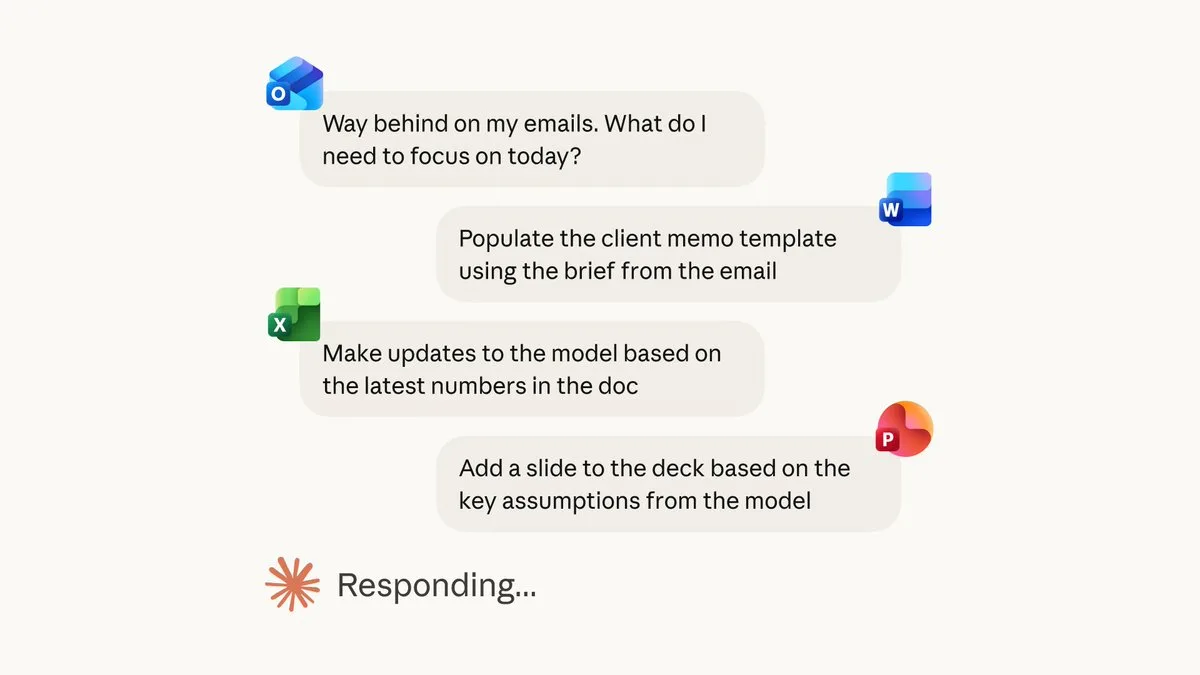
Claude for Excel, PowerPoint, and Word are now generally available
Learn how Claude integrates with Excel, PowerPoint, and Word to streamline your workflow. Explore features, best practices, and security considerations.
Best AI Agents for Small Businesses in 2026: 10 Tools Compared
Discover top AI agents revolutionizing small businesses in 2026. Compare 10 essential tools to boost productivity, automate tasks, and drive growth.
AI Agents in Higher Education: Uses and Best Tools for 2026
Explore how AI agents are transforming higher education in 2026, including 15 use cases, the best tools for students and faculty, benefits, risks, and implementation guidance.
Continue exploring
Find AI agents by workflow
More in Industry Insights
Browse more articles in the Industry Insights category.
Microsoft AI articles
Explore more guides and insights tagged Microsoft AI.
Generative AI articles
Explore more guides and insights tagged Generative AI.
AI Agent Categories
Browse use-case pages for sales, productivity, coding, customer service, and more.
AI Agents Landscape
Explore the full directory map and compare agents by workflow and category.
Agent Skills
Find reusable skills, capabilities, and building blocks for AI agent workflows.