Kalshi's AI Agent: Upholding Integrity in Prediction Contracts
The Crucial Need for Integrity in Prediction Markets
Prediction markets offer a fascinating way to bet on future events, from political elections to economic indicators. However, for these markets to be truly valuable and trustworthy, they must operate with a high degree of integrity. Ensuring fairness, accuracy, and the prevention of manipulation is paramount. Kalshi, a leading platform for event contracts, is taking a significant step forward in this area by developing and deploying an AI agent designed specifically to police its prediction contracts. This innovation addresses critical challenges in maintaining a level playing field and fostering confidence among participants.
This article delves into what prediction contracts are, how Kalshi's new AI agent functions, the benefits of this automated enforcement, and how it contributes to a more robust and reliable prediction market ecosystem. We will also explore how this technology compares to traditional methods and discuss its future potential.
Understanding Prediction Contracts on Kalshi
At its core, a prediction contract is a financial instrument that allows users to trade on the outcome of future events. On platforms like Kalshi, these contracts are structured as simple yes/no propositions. For instance, a contract might ask, "Will the S&P 500 close above 4,500 on December 31, 2024?" Users can buy contracts that resolve to "Yes" if they believe the event will occur, or "No" if they believe it will not. The price of a contract fluctuates based on the collective belief and trading activity of participants, theoretically reflecting the market's probability of the event occurring.
When the event's outcome is definitively known, the contract resolves. Holders of "Yes" contracts receive $1 if the event occurred, and holders of "No" contracts receive $1 if it did not. This mechanism allows for both speculation and hedging, providing valuable insights into future expectations.
Introducing Kalshi's AI Agent for Contract Policing
Kalshi's development of an AI agent to police its prediction contracts represents a significant advancement in automated contract enforcement. The primary function of this agent is to monitor contract activity and ensure that all trades and resolutions adhere to the platform's rules and the predetermined event outcomes. This proactive approach aims to safeguard market integrity by identifying and flagging potential irregularities, disputes, or attempts at manipulation.
The agent acts as an impartial arbiter, leveraging sophisticated algorithms to analyze vast amounts of data. Its introduction signifies a move towards more sophisticated and scalable compliance tools within the prediction market space. This is crucial as prediction markets grow and attract a wider range of participants. The agent is designed to be an integral part of Kalshi's infrastructure, working continuously to uphold the trust and transparency that are vital for any financial market.
How the AI Agent Works: Mechanisms and Technologies
The Kalshi AI agent operates by employing a multi-faceted approach to contract monitoring and enforcement. It continuously analyzes various data streams to ensure adherence to contract specifications and fair trading practices.
Data Analysis: The agent processes diverse datasets, which can include real-time market data, historical trading patterns, news feeds, and publicly available information related to the event's outcome. This comprehensive analysis helps it understand the context surrounding a contract and identify anomalies. For example, it might analyze trading volume spikes that don't correlate with public information, suggesting potential manipulation.
Rule Enforcement: Based on predefined rules and the contract's specific parameters, the AI agent enforces compliance. This includes verifying that trades are executed within legitimate price ranges and that contract resolutions are aligned with verifiable event outcomes.
Dispute Resolution Support: In cases of ambiguity or disagreement regarding an event's outcome or contract resolution, the AI agent can provide data-driven insights to facilitate a fair and efficient dispute resolution process. It can flag contentious resolutions and present evidence to human oversight if necessary.
Preventing Manipulation: The agent is trained to detect patterns indicative of market manipulation, such as wash trading, spoofing, or coordinated attempts to influence contract prices unfairly. By identifying these patterns early, it can trigger alerts for review.
Benefits of Automated Enforcement
The implementation of an AI agent for policing prediction contracts brings several key advantages:
Increased Efficiency: AI can process information and identify potential issues far more rapidly than human operators, allowing for near real-time monitoring and intervention.
Reduced Bias: Unlike human reviewers who may be subject to unconscious biases, an AI agent operates based on objective data and pre-programmed rules, leading to more consistent and impartial enforcement.
Enhanced Scalability: As prediction markets grow and the volume of contracts and trades increases, an AI agent can scale its operations without a proportional increase in human resources, making it a cost-effective solution for compliance.
24/7 Monitoring: The agent can operate around the clock, ensuring continuous oversight and protection of market integrity, regardless of time zones or trading hours.
Ensuring Fairness and Preventing Manipulation
A core objective of Kalshi's AI agent is to foster a fair and transparent trading environment. It actively works to prevent manipulation by identifying and flagging suspicious activities that could distort the true market sentiment. For example, how Kalshi uses AI to police prediction contracts involves looking for unusual trading patterns that might indicate someone is trying to artificially inflate or deflate a contract's price before a key event.
The agent can detect if a small group of users is making coordinated trades that don't align with broader market expectations or verifiable information. This proactive stance is crucial for maintaining investor confidence. By intervening early or flagging suspicious behavior for review, the AI agent helps ensure that contract prices reflect genuine beliefs about event outcomes rather than artificial influence. This commitment to fairness is a hallmark of robust decentralized prediction markets.
Comparing AI Enforcement to Traditional Methods
Traditionally, contract policing and dispute resolution in financial markets have relied heavily on human oversight. While human judgment is invaluable, it can be slow, prone to error, and difficult to scale. The introduction of an AI agent marks a shift towards a more automated and data-driven approach.
Traditional Oversight: This typically involves compliance officers manually reviewing trades, investigating disputes, and enforcing rules. While thorough, this process can be time-consuming and may struggle to keep pace with high-volume markets. Human review can also be susceptible to subjective interpretations or biases. Furthermore, how does automated enforcement differ from human oversight in contract disputes? Automated enforcement offers speed and impartiality, processing data consistently according to predefined logic. Human oversight, on the other hand, brings nuanced understanding, contextual judgment, and the ability to handle novel situations that an AI might not be programmed for.
AI-Powered Enforcement: Kalshi's AI agent offers a complementary solution. It handles the high-volume, repetitive tasks of monitoring and initial flagging, freeing up human experts to focus on complex edge cases and strategic oversight. This hybrid approach leverages the strengths of both AI and human intelligence. The AI can quickly identify patterns that might indicate manipulation, such as analyzing the type of data Kalshi's AI agent might analyze to detect unusual activity. This data could include trading volumes, price movements, and the correlation of these with external news events.
Addressing Potential Challenges and Future Developments
While the deployment of an AI agent is a significant step, it's important to acknowledge potential challenges and future directions. One challenge can be the "black box" nature of some AI algorithms, making it difficult to fully understand the reasoning behind certain decisions. Transparency and explainability in AI are ongoing areas of research and development. Another consideration is the potential for AI agents to be tricked or bypassed, a risk highlighted in discussions about AI agent traps. Robust testing and continuous updates are essential to mitigate these risks.
Looking ahead, the capabilities of these agents are likely to expand. We might see AI agents becoming more sophisticated in predicting potential market anomalies before they occur, or in handling more complex dispute resolution scenarios. The ongoing evolution of AI in financial markets, particularly in areas like decentralized finance (DeFi), suggests that automated enforcement will play an increasingly vital role in ensuring market integrity. As the technology matures, it could also inform the development of new types of prediction contracts or market structures. For those interested in the underlying technology and how such agents are built, exploring guides on how to build your own agent harness can provide valuable insights.
Conclusion: The Future of Fair Prediction Markets
Kalshi's initiative to build an AI agent for policing prediction contracts is a forward-thinking move that addresses the critical need for integrity and trust in prediction markets. By automating enforcement, enhancing efficiency, and reducing bias, this technology promises to create a more robust, fair, and scalable environment for participants. While challenges remain, the trend towards AI-driven compliance and dispute resolution is clear, signaling a future where technology plays an indispensable role in safeguarding financial markets.
Explore the future of fair and transparent prediction markets with Kalshi's innovative AI agent.
Related Articles
View all articlesMevu Launches AI Agent Swarm for Prediction Markets
Discover how AI agent swarms are transforming prediction markets on Mevu, enhancing accuracy, liquidity, and decentralized forecasting efficiency.
BNB Chain Launches Agent Survival Pack: Essential Tools for Developers
Discover the BNB Chain Agent Survival Pack, a suite of tools empowering AI agent development and smart contract security on BNB Chain. Learn how to get started.
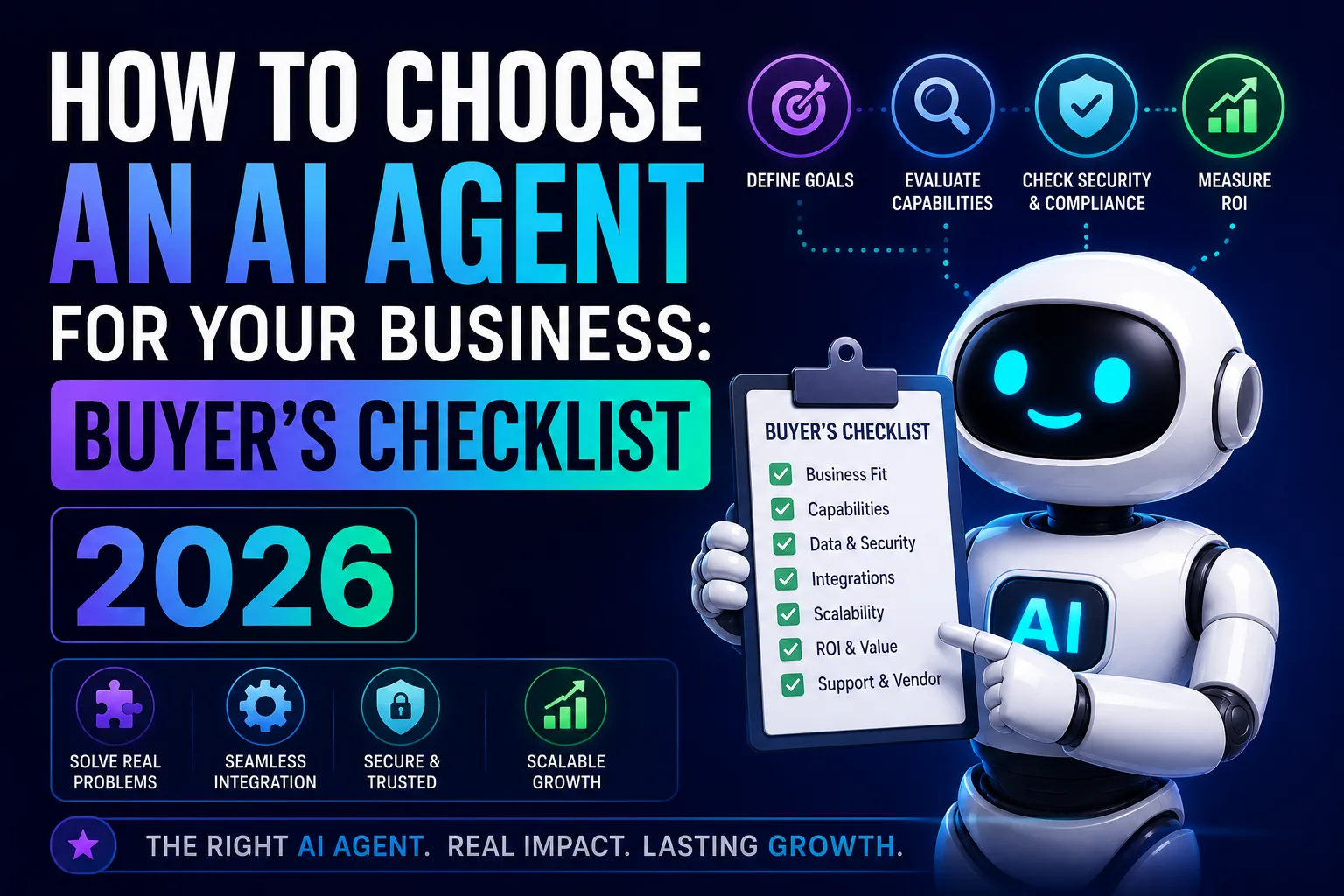
How to Choose an AI Agent for Your Business: Buyer’s Checklist 2026
Navigate AI agent selection for your business with our comprehensive checklist. Discover key criteria, essential features, and how to find the right fit.
Continue exploring
Find AI agents by workflow
More in Industry Insights
Browse more articles in the Industry Insights category.
Kalshi articles
Explore more guides and insights tagged Kalshi.
AI articles
Explore more guides and insights tagged AI.
AI Agent Categories
Browse use-case pages for sales, productivity, coding, customer service, and more.
AI Agents Landscape
Explore the full directory map and compare agents by workflow and category.
Agent Skills
Find reusable skills, capabilities, and building blocks for AI agent workflows.