AnthropicAI vs OpenAI? You’re asking the wrong question.
The Fallacy of the 'Best' AI Model
In the current landscape of generative AI, the conversation is dominated by a recurring, binary debate: Anthropic vs OpenAI. Executives, developers, and product managers frequently find themselves paralyzed by the need to pick a winner between Claude and ChatGPT. However, this focus on model-centric supremacy is a strategic trap. The reality is that performance is inherently contextual. A model that excels at creative writing or nuanced reasoning may fall behind in structured data extraction or low-latency API performance.
For enterprise leaders, the goal is not to find the single "best" model, but to build an architecture that survives the rapid evolution of the ecosystem. Whether you are scaling an internal tool or building a customer-facing agent, your focus should shift from brand loyalty to functional utility. This guide explores why your AI procurement strategy must move toward model-agnostic frameworks to ensure long-term stability and operational agility.
Evaluating Strategic Alignment: Safety vs. Velocity
When choosing between providers, it is helpful to look at their foundational philosophies. Anthropic has built its reputation on "Constitutional AI," a safety-first approach designed to make models more predictable and aligned with specific human values from the start. OpenAI, conversely, has historically prioritized aggressive capability expansion and rapid deployment to maintain its position at the frontier of AGI research.
If your organization operates in a highly regulated industry such as finance, healthcare, or legal services the differences in AI safety philosophy between the two providers will dictate your integration strategy. While both companies offer robust enterprise data privacy controls, the underlying "personality" of their models often manifests in how they handle edge cases, ambiguity, and complex ethical prompts. Before committing to a vendor, audit your internal tolerance for "model drift" versus your need for rapid feature iteration.
Understanding Ecosystem Integration and Agentic Capabilities
The true value of an AI provider is rarely found in a chat interface; it is found in how that model integrates with your existing tech stack. As the industry shifts toward autonomous workflows, the ability to support complex, multi-step reasoning becomes the primary differentiator. We are seeing a move toward specialized autonomous agentic infrastructure that requires more than just a powerful LLM; it requires a reliable "brain" that can handle long-context windows and tool-calling with high fidelity.
When evaluating model capabilities for workflows, consider these factors:
Context Window Utilization: Can the model reliably recall information from a 100k+ token document without losing coherence?
Structured Output: Does the model consistently return JSON or other schema-compliant formats required by your downstream services?
Latency vs. Reasoning: Do you need a lightweight, near-instant model for simple tasks, or a heavy-duty reasoning model for complex analysis?
By decoupling your application logic from the underlying model, you ensure that you can swap out providers as new capabilities emerge without rewriting your entire codebase.
The Impact of Corporate Shifts on Long-term Planning
One of the most overlooked risks in AI adoption is vendor lock-in. When you build your entire product on the proprietary features or unique API extensions of one provider, you are essentially outsourcing your R&D roadmap to them. As we have seen with recent industry consolidations and organizational changes, the stability of your AI stack depends on your ability to remain portable.
Vendor lock-in is the single biggest risk in AI adoption today. If a provider changes their pricing model, modifies their safety filters, or pivots their business focus, your product could be negatively impacted overnight. A model-agnostic architecture—which utilizes abstraction layers like LangChain or custom middleware—allows you to route tasks to the most cost-effective or highest-performing model for any given query, effectively insulating your operations from the volatility of the AI market.
A Framework for Selecting Your AI Partner
To move beyond the "Claude vs. ChatGPT" debate, adopt a structured checklist for your procurement process. Use this framework to evaluate models based on your internal constraints:
Data Sovereignty: Does the provider offer zero-retention policies and private deployment options that meet your compliance requirements?
Performance Benchmarking: Have you tested the model against your specific, proprietary datasets rather than relying on public leaderboard rankings?
Integration Cost: How much engineering effort is required to switch the model if the current provider fails to meet your performance benchmarks?
Cost-to-Utility Ratio: Is the "frontier" capability of a flagship model necessary for every task, or can 80% of your workflows be handled by smaller, more cost-effective models?
For further reading on standardized evaluation, refer to the NIST AI Risk Management Framework, which provides a comprehensive guide for managing the risks associated with AI system adoption.
Conclusion
The debate over Anthropic vs OpenAI is a distraction from the real work of AI engineering. Whether you choose one, the other, or a hybrid approach, the objective remains the same: building resilient, high-utility systems that solve real business problems. By focusing on model-agnostic architecture and evaluating providers based on your specific operational constraints, you can stop chasing the latest model release and start building a sustainable AI strategy. Need help building an AI-agnostic infrastructure? Contact our consulting team to audit your current stack and future-proof your automation strategy.
Related Articles
View all articles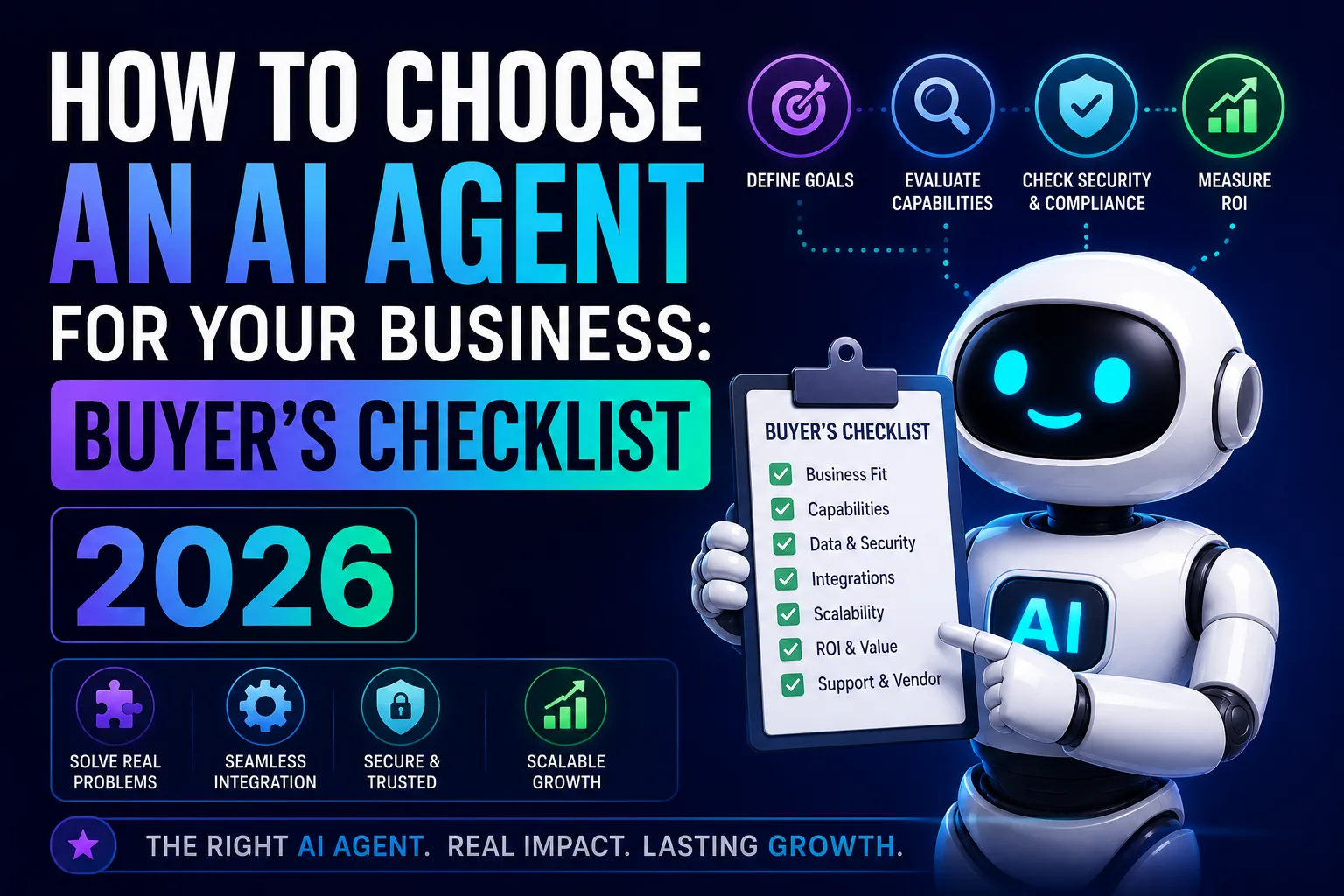
How to Choose an AI Agent for Your Business: Buyer’s Checklist 2026
Navigate AI agent selection for your business with our comprehensive checklist. Discover key criteria, essential features, and how to find the right fit.
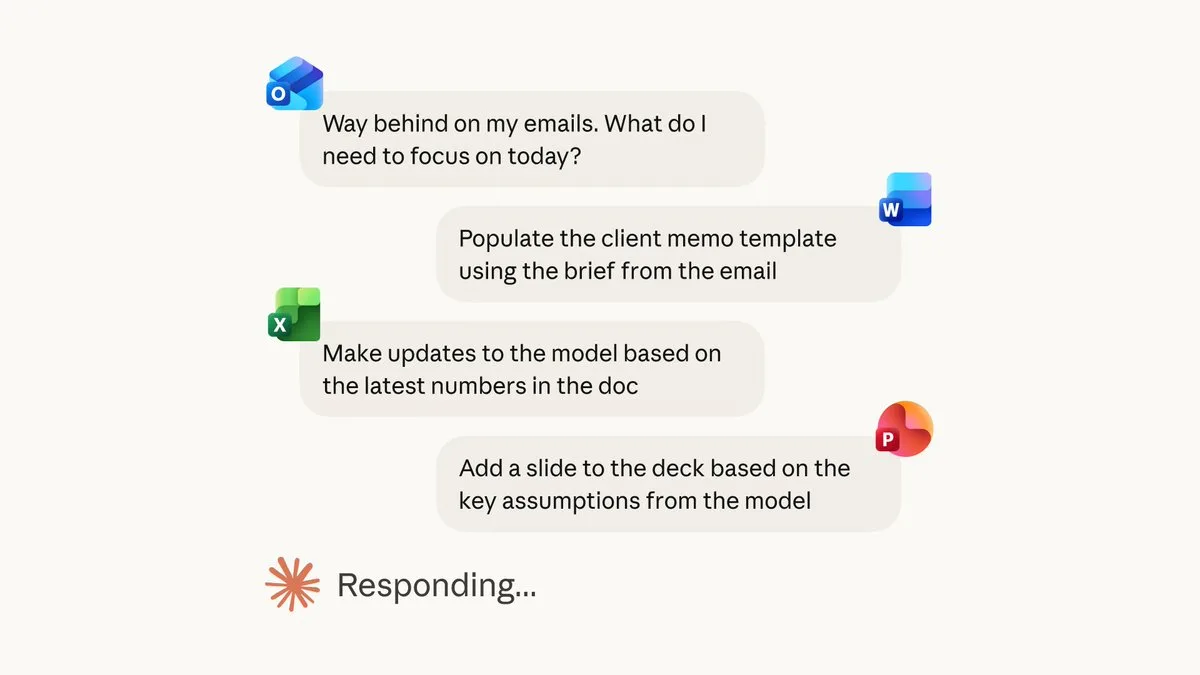
Claude for Excel, PowerPoint, and Word are now generally available
Learn how Claude integrates with Excel, PowerPoint, and Word to streamline your workflow. Explore features, best practices, and security considerations.
Anthropic Goes All-In on “Enterprise Agents” (Cowork + Plugins)
Explore Anthropic's new 'enterprise agents' strategy, combining Cowork and Plugins to revolutionize business AI workflows and productivity.
Continue exploring
Find AI agents by workflow
More in Industry Insights
Browse more articles in the Industry Insights category.
AI Strategy articles
Explore more guides and insights tagged AI Strategy.
Enterprise AI articles
Explore more guides and insights tagged Enterprise AI.
AI Agent Categories
Browse use-case pages for sales, productivity, coding, customer service, and more.
AI Agents Landscape
Explore the full directory map and compare agents by workflow and category.
Agent Skills
Find reusable skills, capabilities, and building blocks for AI agent workflows.