Why AI Video Analytics Surveillance Software Needs Oversight
Key takeaways
- Treat analytics alerts as leads that require verification before consequential action.
- Train operators to assess footage and context instead of relying solely on automated matches.
- Evaluate model performance across relevant operating conditions and demographic groups.
- Document the system’s purpose and approve new uses separately.
- Define footage retention, access permissions and sharing rules before deployment.
- Record configuration changes and assign responsibility for ongoing oversight.
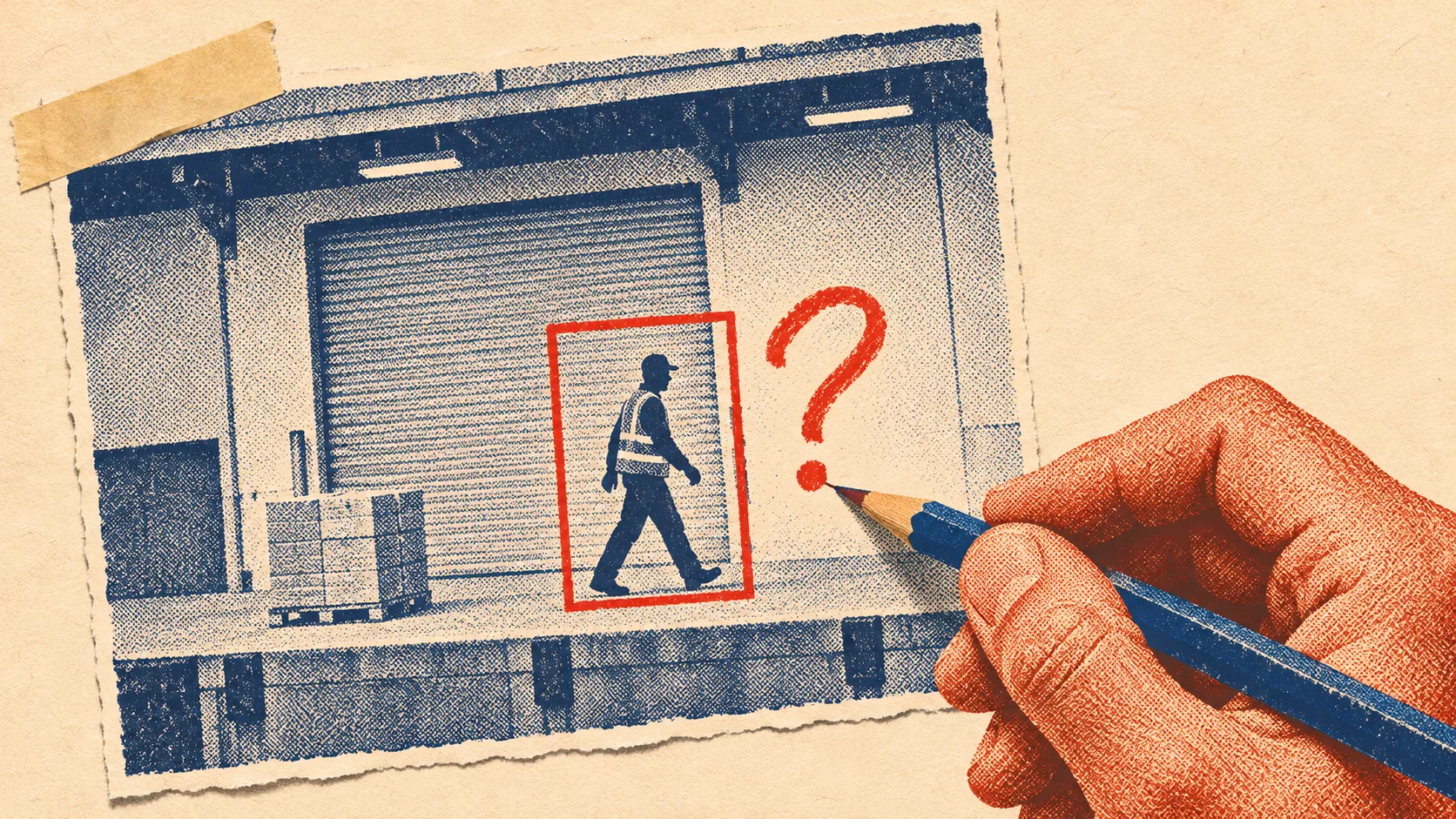
An analytics system flags a person at a loading dock as a match for someone on a watch list. The alert looks authoritative, so the operator treats it as fact and sends a response team. If the match is wrong, the software has just manufactured a confrontation out of a bad guess. The camera did not make a decision. A person acting on an unverified output did.
That gap is why AI video analytics deserves oversight rather than blind trust. AI video analytics surveillance software can classify objects, read license plates, and flag behavior at a scale no human team could match, but it produces leads, not conclusions. Treating its output as proof, instead of as a prompt for human verification, is where the real risk sits for any organization running them.
A Match Is a Lead, Not Proof
The most common failure with analytics is not a software bug. It is automation bias, the tendency to trust a confident-looking algorithmic answer over your own judgment. An operator who treats a match as probable cause skips the verification step that the whole detect, verify, respond workflow depends on.
Oversight means building that step back in. Every high-stakes alert should route to a trained person who confirms the footage and context before anyone acts. The software narrows what your team looks at. It does not get to decide what happens next.
Accuracy Is Not Even Across People
Analytics models do not perform equally for everyone, and pretending otherwise invites both bad outcomes and legal exposure. Federal testing of facial recognition found demographic differentials in the majority of algorithms studied, meaning match accuracy can vary by age, sex, and race or country of origin.
For a security team, that is not an abstract fairness debate. A misidentification is more likely for some people than others, and acting on one can produce a wrongful stop that harms a person and exposes your organization. Knowing where a model is weak is part of using it responsibly.
Watching a Site Is Different From Watching Everyone
Analytics installed for a clear security purpose can drift into something broader without anyone deciding to cross that line. A system meant to protect a perimeter can be repurposed to track employee break times, log every visitor's movements, or build a profile no one authorized. Each step feels small. The sum is continuous monitoring of people on camera, never agreed to.
Scope discipline keeps analytics tied to the reason you deployed them. Define what the system watches, why, and how long you keep the footage, and treat any new use as a decision that needs its own approval.
The Black Box Problem
You cannot govern what you cannot see into. Many deployments run on vendor models whose training data and logic are shielded as intellectual property, so no one outside the vendor can test how a conclusion was reached. Settings that matter, like privacy masks, data-retention limits, and sharing rules, can often be changed with no record of who changed them or when.
Push for transparency you can act on. Ask vendors how a model was tested, insist on an audit trail for configuration changes, and keep access logs on who can alter retention or sharing.
Build the Guardrails Before You Deploy
Oversight works best when it is designed in, not bolted on after an incident. A workable governance baseline rests on a few commitments.
Human review of consequential alerts. No automated output triggers a stop, detention, or dispatch without a person verifying it first.
Pre-deployment testing. Check how a model performs across conditions and groups before it goes live, not after a complaint.
Defined retention and access. Set how long footage lives and who can reach it, with logs that record every change.
A documented purpose. Write down what the system is for, so mission creep becomes a visible exception rather than an unexamined default.
Conclusion
AI video analytics is a strong force multiplier for a security team, and that is exactly why it needs limits. The technology is fast and scalable, and confident even when wrong, so the human structure around it carries the accountability the software cannot. For low-stakes uses like counting occupancy, light oversight may be enough. Once an output can affect someone's freedom or livelihood, verification, transparency, and a clear purpose stop being optional. Govern the system, and it stays a tool. Trust it blindly, and it starts making decisions no one signed off on.
Related Articles
View all articles
From Raw Clips to Finished Videos: How AI Is Changing Everyday Video Editing
Learn how AI is changing video editing with automatic subtitles, transcription, voice generation, resizing, and faster workflows for creators and businesses.

AI Video Generation for Social Media & TikTok Creators
Learn how TikTokers and social media creators use AI video generation to post daily: model choice, 9:16 workflows, hooks, captions, and tools like ImagineArt explained.
The 5 Best AI Video Agents and Tools You Need to Know
Discover the 5 best AI video agents and tools transforming content creation. Enhance video generation, editing, and marketing with cutting-edge AI.
Continue exploring
Find AI agents by workflow
More in Partner Insights
Browse more articles in the Partner Insights category.
AI Video Analytics articles
Explore more guides and insights tagged AI Video Analytics.
Surveillance Oversight articles
Explore more guides and insights tagged Surveillance Oversight.
AI Agent Categories
Browse use-case pages for sales, productivity, coding, customer service, and more.
AI Agents Landscape
Explore the full directory map and compare agents by workflow and category.
Agent Skills
Find reusable skills, capabilities, and building blocks for AI agent workflows.