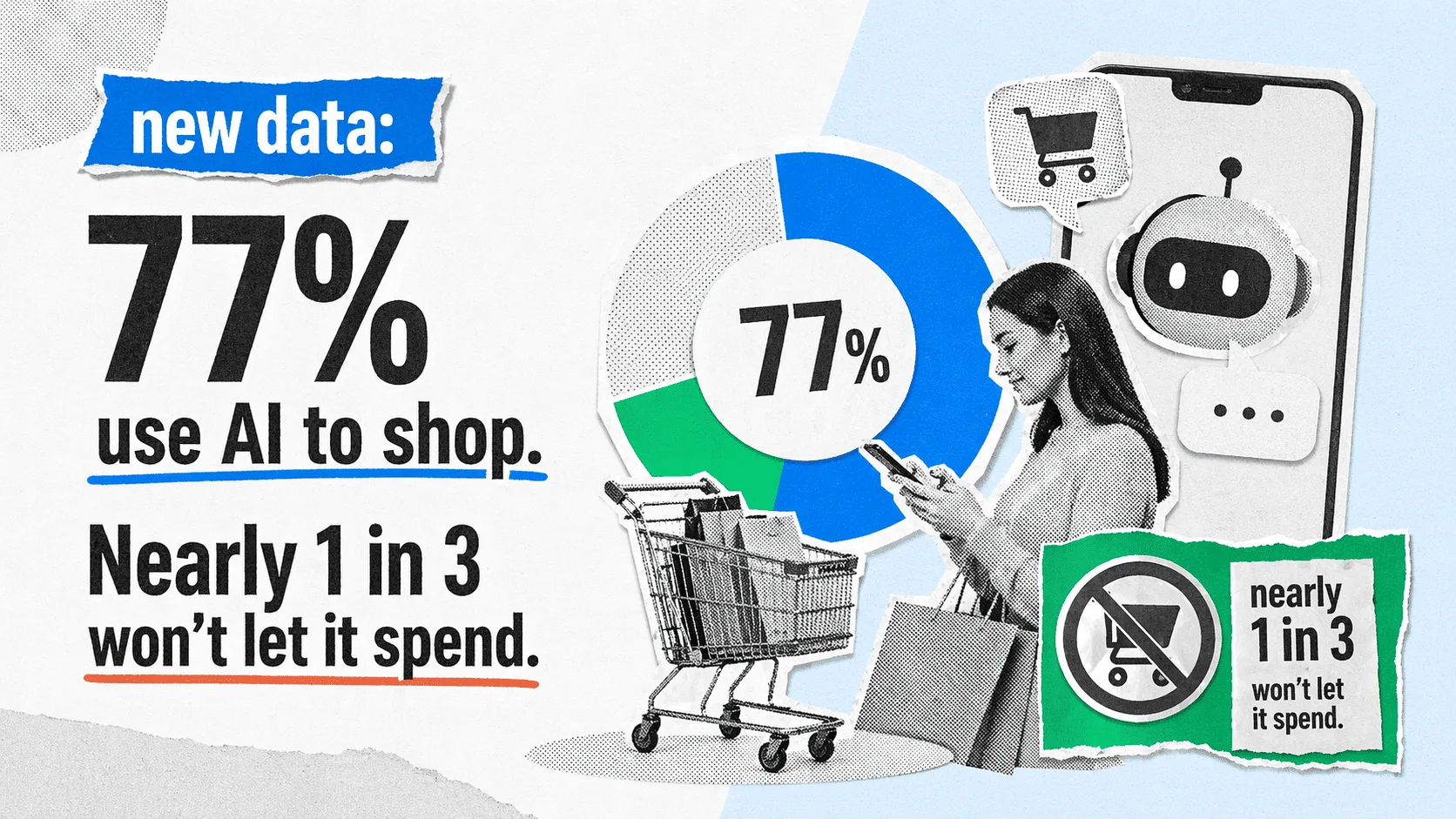
77% use AI to shop. Nearly 1 in 3 won’t let it spend.
The Rise of AI in the Shopping Journey
The landscape of retail has shifted dramatically as AI in online shopping transitions from a novelty to a daily utility. Today, artificial intelligence serves as the invisible engine behind the modern consumer experience. From personalized product recommendations that predict your next purchase to intelligent search bars that understand natural language queries, AI is woven into the fabric of e-commerce. These AI-powered shopping assistants are designed to reduce friction, helping shoppers navigate massive inventories to find exactly what they need in seconds.
However, the function of these tools is evolving. We are seeing a transition from AI acting merely as a passive tool to AI acting as an active agent. This shift means that software is no longer just showing you products; it is increasingly capable of comparing prices, checking inventory across multiple sites, and, in some cases, completing the transaction on your behalf. This evolution raises a critical question: while we trust AI to find our products, are we ready to trust it with our wallets?
Why Consumers Hesitate: The 'Human-in-the-Loop' Requirement
Despite the high adoption rates of AI for product research and discovery, a significant segment of the population remains wary of automated purchasing. This hesitation is rooted in a fundamental psychological and security barrier: the desire for a 'human-in-the-loop' at the point of sale. Many consumers worry about the risks of AI-powered shopping assistants, specifically regarding unexpected billing, algorithmic bias, or the lack of recourse if an automated purchase goes wrong.
Is it safe to let AI make purchases for me? Currently, the consensus among security experts is one of cautious skepticism. While AI can process data faster than any human, it lacks the subjective judgment required for financial accountability. A machine may find the lowest price, but it might not account for vendor reliability, return policies, or the subtle nuances of a product's quality. For many, the risk of an unauthorized or incorrect transaction outweighs the convenience of one-click automation.
Learning the Tools: How to Leverage AI Effectively
To maximize the benefits of retail technology without sacrificing financial security, shoppers should treat AI as a research partner rather than a purchasing agent. By leveraging the right tools, you can conduct exhaustive market research and price comparisons before you ever reach the checkout screen.
If you are looking to refine your digital research skills, it is helpful to explore the best AI websites for comparing data and researching purchases, as well as tools like ai virtual try-on that allow you to visualize products in realistic scenarios. Many of these platforms offer analytical frameworks that apply just as well to shopping as they do to academic study.
When using AI to research products, follow this structured approach to ensure you remain in control:
Define your constraints: Explicitly tell the AI your budget, brand preferences, and must-have features.
Verify the data: Always cross-reference AI-generated pricing or availability with the retailer's official website.
Review the terms: Ensure that the AI is not signing you up for subscription services or auto-renewals.
Manual finalization: Always complete the payment process yourself to ensure you have reviewed the final cart contents.
Developing AI Literacy for Smarter Consumption
As AI becomes more sophisticated, consumers must develop a framework for vetting the advice provided by these algorithms. This is known as AI literacy the ability to understand how these systems operate and how to interpret their outputs critically. Just as you might use specialized systems to organize information, such as using AI to structure and synthesize complex product reviews into digestible summaries, you can apply similar logic to retail. By breaking down AI-generated recommendations into clear, verified points, you protect yourself from potential hallucinations or biased marketing content.
Transparency is the bedrock of consumer trust in AI. Retailers who provide clear explanations for their algorithmic choices are building a stronger relationship with their customers. According to the National Institute of Standards and Technology (NIST), transparency in AI systems is essential for ensuring that automated processes remain fair and accountable to the end user.
The Future of Automated Commerce
The future of shopping lies in a delicate balance between AI-driven convenience and human-directed financial security. While the industry is moving toward fully autonomous agents capable of managing household procurement, the current reality favors a hybrid model. In this model, AI handles the heavy lifting of research, comparison, and organization, while the human retains the final 'yes' or 'no' on every transaction.
As you navigate this evolving digital marketplace, remember that your role as an informed shopper is becoming more important than ever. AI can provide the insights, but you provide the intent. By keeping the decision-making process firmly in your hands, you can enjoy the efficiency of modern retail technology without the risks of blind automation.
Related Articles
View all articles
Gap Inc. Elevates Online Shopping with AI-Powered Fit and Conversational Checkout
Explore how retailers like Gap Inc. leverage AI-powered fit and conversational checkout to reduce returns and streamline the online shopping experience.

Agentic Commerce 2026: AI Shopping Agents, UCP, and Zero-Click Shopping
Explore agentic commerce in 2026: AI shopping agents, Universal Commerce Platforms (UCP), and zero-click shopping. Discover the future of personalized retail.
Agentforce Commerce Turns Shopping Into an Agent-Led Experience
Discover how Agentforce Commerce transforms online shopping into a personalized, agent-led experience, leveraging AI for streamlined purchases and enhanced customer journeys.
Continue exploring
Find AI agents by workflow
More in Industry Insights
Browse more articles in the Industry Insights category.
AI articles
Explore more guides and insights tagged AI.
E-commerce articles
Explore more guides and insights tagged E-commerce.
AI Agent Categories
Browse use-case pages for sales, productivity, coding, customer service, and more.
AI Agents Landscape
Explore the full directory map and compare agents by workflow and category.
Agent Skills
Find reusable skills, capabilities, and building blocks for AI agent workflows.