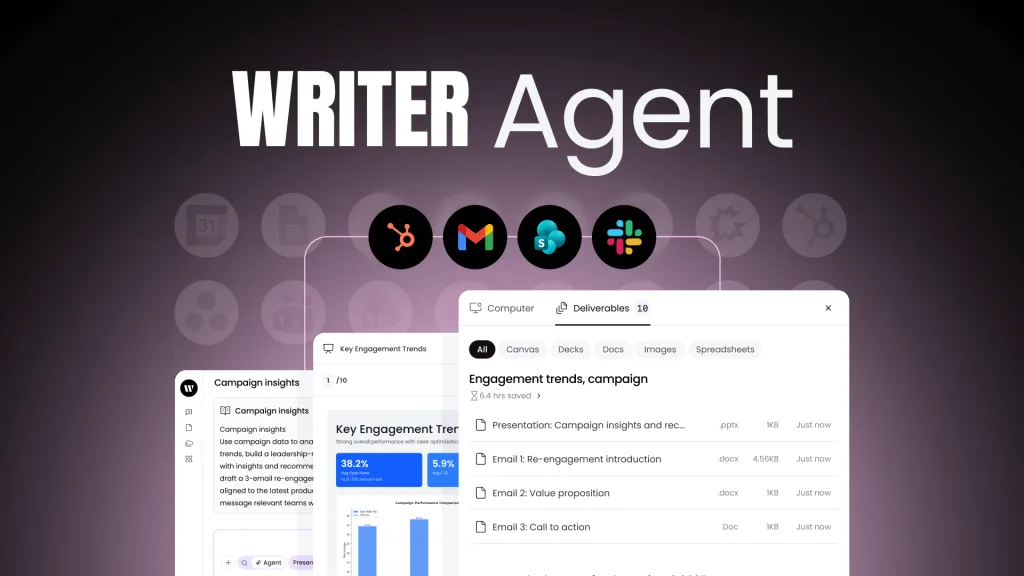
WRITER Launches Event-Based Triggers for Enterprise AI
The Evolution of Enterprise AI: From Reactive to Proactive
For most organizations, the first wave of enterprise AI adoption was defined by the chat interface. Employees would query a Large Language Model (LLM) to summarize documents, draft emails, or synthesize data. While useful, this approach remains strictly reactive it requires a human to initiate a request, wait for a response, and then manually integrate that output into a business process. As businesses seek to scale, this "human-in-the-loop" bottleneck is becoming a significant barrier to productivity.
The introduction of event-based triggers for enterprise AI marks a fundamental shift in how organizations deploy intelligence. By moving from manual chat-based interactions to automated, event-driven systems, enterprises can now trigger AI workflows based on real-time data changes, API events, or system alerts. This transition is essential for companies aiming to move toward "human-on-the-loop" automation, where AI agents act independently within predefined parameters, escalating to humans only when necessary.
What Are Event-Based Triggers in the Context of AI?
At its core, an event-based trigger is a mechanism that executes a pre-defined action automatically when a specific condition is met. In the context of modern infrastructure, these are typically powered by webhooks, message queues, or API events sent from legacy enterprise systems (like a CRM, ERP, or project management tool).
When an event occurs such as a new customer record being created in Salesforce or a support ticket being flagged as "urgent" in Jira the system sends a signal to the AI platform. The platform then processes this data, executes a generative task, and routes the output back into the workflow without any manual intervention. This is how business process automation becomes truly intelligent; the AI is no longer waiting for a prompt, but is instead constantly "listening" to the pulse of the organization.
How do event-based triggers work in AI?
To understand the mechanics, consider the difference between a poll-based system and an event-based system. In a poll-based system, the AI might check a database every hour for updates, leading to latency and wasted compute resources. Conversely, an event-based system uses a push model. When a change occurs, the source system notifies the AI engine, which initiates the workflow immediately. This architecture is vital for reducing AI latency and ensuring that the information provided is always up-to-date with the current state of the enterprise.
The Strategic Value of Event-Driven Enterprise AI
Implementing AI workflow orchestration through event-based triggers provides three primary strategic advantages: efficiency, consistency, and scalability.
The true power of enterprise AI lies in its ability to operate within the background of existing infrastructure, acting as a connective tissue between disparate data silos.
By automating repetitive tasks such as updating client records, generating compliance reports, or monitoring supply chain signals organizations can reduce the cognitive load on their teams. Furthermore, because the triggers are standardized, the AI performs tasks with a level of consistency that manual processing cannot match. As businesses look to centralize these operations, many are looking at how Kore.ai launches AMP as a command center for enterprise agent sprawl, providing a unified interface to govern these complex, multi-agent environments.
Managing Complex Agent Ecosystems
As enterprises deploy more AI agents, the risk of "agent sprawl" grows. If every department develops its own event-based triggers and automation workflows, the organization quickly loses visibility into how data is being processed. This is why robust orchestration is non-negotiable. An effective enterprise AI platform must not only execute triggers but also provide audit trails, security governance, and performance monitoring.
The future of this technology is moving toward autonomous agents capable of handling increasingly complex, multi-step tasks. While current systems might handle a single trigger-to-action flow, the next generation will involve agents that can collaborate to solve broader business problems. This mirrors the trajectory seen in the industry where Anthropic goes all-in on enterprise agents, signaling a shift toward agents that can function as digital coworkers capable of navigating enterprise software ecosystems.
Best Practices for Implementation
Integrating event-based AI triggers into your existing tech stack requires a methodical approach to ensure security and reliability. Follow this checklist to ensure a successful rollout:
Define Clear Inputs: Identify the specific API events or webhooks that should trigger an AI action. Avoid "noisy" events that could cause unnecessary model calls.
Establish Guardrails: Always implement input validation and output filtering. Ensure that the AI has access only to the data necessary for the specific task.
Monitor Latency: Use observability tools to measure the time between an event and the AI response. If latency exceeds thresholds, optimize the prompt chain or the underlying model architecture.
Human-on-the-Loop Reviews: For high-stakes processes, implement a manual review step within the workflow where a human must approve the AI's output before it is pushed to production systems.
Standardize Authentication: Ensure that all trigger-based integrations use secure protocols like OAuth 2.0 to maintain the integrity of your enterprise data.
For further reading on standardizing these integrations, refer to the W3C standards on EventSource, which provide a foundation for understanding how real-time data streams can be managed across web-based architectures.
Conclusion: The Path to Scalable Automation
The transition to event-based architectures is the final hurdle in moving from experimental AI to operational excellence. By leveraging the WRITER AI platform and similar enterprise-grade tools, organizations can stop treating AI as a standalone chat tool and start integrating it as a core component of their digital nervous system. Proactive automation is not just about speed; it is about building a system that can adapt to the needs of the business in real-time. Ready to streamline your enterprise AI? Contact our team to learn how to integrate event-driven triggers into your current workflow.
Related Articles
View all articles
Best AI Workflow Automation Tools in 2026
Compare the best AI workflow automation tools in 2026 for no-code workflows, AI agents, SaaS integrations, creative automation, self-hosting, and enterprise use.
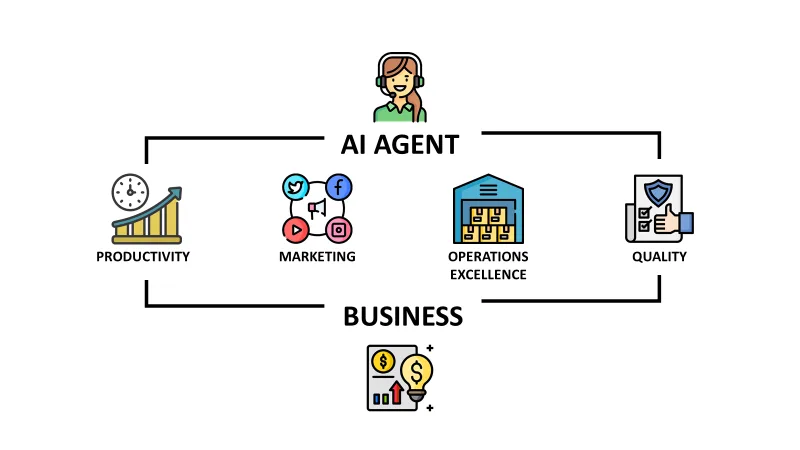
How to Make AI Agents Work for Your Business: A Strategic Guide
Learn how to effectively integrate AI agents into your business operations. Discover strategies for deployment, workflow automation, and scaling your AI capacity.

How to Compare AI Agents Before Using Them in Your Business
Learn how to compare AI agents effectively. Evaluate performance, integration capabilities, and security to choose the right automation tools for your business.
Continue exploring
Find AI agents by workflow
More in Industry Insights
Browse more articles in the Industry Insights category.
Enterprise AI articles
Explore more guides and insights tagged Enterprise AI.
Automation articles
Explore more guides and insights tagged Automation.
AI Agent Categories
Browse use-case pages for sales, productivity, coding, customer service, and more.
AI Agents Landscape
Explore the full directory map and compare agents by workflow and category.
Agent Skills
Find reusable skills, capabilities, and building blocks for AI agent workflows.