WordPress.com now lets AI agents write and publish posts, and more
The Evolution of the CMS: From Tool to Autonomous Partner
The landscape of digital publishing is undergoing a seismic shift. WordPress has officially introduced WordPress AI agents, a feature that transforms the world’s most popular CMS from a passive tool into an active, autonomous partner. This development marks the end of the era where the blogger must manually type every character; instead, site owners can now leverage AI to research, draft, and publish content directly to their sites.
This evolution represents more than just a convenience it is a fundamental change in how we approach content strategy. By delegating the heavy lifting of drafting to intelligent agents, creators are moving toward a model of oversight rather than execution. However, this raises critical questions about the future of human-led blogging, the role of authenticity, and the technical realities of automated search engine optimization.
How AI Agents Handle Content Creation
The workflow for WordPress AI agents is designed to streamline the traditional publishing pipeline. Unlike standard AI chatbots that require constant copy-pasting, these integrated agents work within the WordPress dashboard environment to maintain site continuity.
The technical workflow generally follows these stages:
Topic Generation: The agent analyzes site history and current trends to suggest relevant topics.
Research and Drafting: The AI pulls information, structures the narrative, and formats the post using standard WordPress blocks.
Review and Refinement: The agent presents a draft that the human user can edit, approve, or reject before it goes live.
Autonomous Publishing: Once configured, the agent can be granted permission to push posts to the live site, effectively automating the entire production cycle.
For site owners, this means scaling content operations without increasing headcount. By defining a specific scope of work, users can effectively deploy a "content engine" that works around the clock.
The Impact on Content Strategy and SEO
One of the most frequent questions from site owners is: Can WordPress AI agents write SEO-friendly content? The answer is nuanced. While AI is excellent at structure and keyword placement, it often lacks the unique perspective that Google’s helpful content systems prioritize.
Does Google penalize AI-generated WordPress posts? Google has clarified that it does not penalize content simply because it is AI-generated. Instead, it penalizes low-quality, unoriginal, or spammy content. If your AI agents produce derivative work that adds no value to the user, you may see your rankings drop. Conversely, if you use these tools to generate high-quality, informative, and structured posts, AI can be a significant asset to your SEO strategy.
The Pros and Cons of Automated Publishing
Pros: Increased consistency, faster output, and the ability to maintain a content calendar without burnout.
Cons: Risk of generic tone, potential for AI hallucinations (factual errors), and the danger of flooding a site with "fluff" content that dilutes your domain authority.
Maintaining Brand Voice in an Automated World
To successfully implement WordPress autonomous agents, you must move beyond generic prompts. The secret to success lies in prompt engineering and rigorous human oversight. You cannot simply "set it and forget it" if you want to maintain a loyal audience.
The decline of the manual blogger does not mean the end of human creativity; it means the rise of the human editor.
To protect your brand, follow these best practices:
Define a Style Guide: Feed your AI agent examples of your best-performing posts so it can mimic your tone, sentence length, and formatting style.
Fact-Check Aggressively: Always verify claims, statistics, and external links generated by the AI.
Add the Human Element: Inject personal anecdotes, unique data, or expert opinions into the AI-generated drafts. This ensures that the content remains distinct and authoritative.
Risks and Ethical Considerations
Despite the efficiency, there are limitations to WordPress.com new AI publishing tools. The primary risk is "hallucination," where the AI presents incorrect information with absolute confidence. Additionally, relying too heavily on automation can lead to a site that feels robotic. To avoid this, site owners must ensure they have a human-in-the-loop (HITL) process for every post.
Furthermore, consider the ethical implications of transparency. Many readers appreciate knowing when a post is written or assisted by AI. Being open about your use of these tools can actually build trust with your audience, provided the content remains high-quality.
Conclusion: Is AI Publishing Right for Your Blog?
The introduction of WordPress AI agents is a powerful milestone for the CMS. It allows small teams and solo entrepreneurs to compete at a scale previously reserved for large media organizations. However, the technology is a tool, not a replacement for your strategic vision.
If you are looking to scale content production, focus on using AI to handle the heavy lifting of drafting and formatting, while reserving your human energy for strategy, fact-checking, and audience engagement. When balanced correctly, this partnership between human and machine can lead to a more productive, efficient, and successful blogging career.
Related Articles
View all articles
Best AI Marketing Agents for SEO, Social Media, Email & Content
Discover the best AI marketing agents to boost SEO, social media, email campaigns, and content creation. Learn how AI tools can transform your marketing.
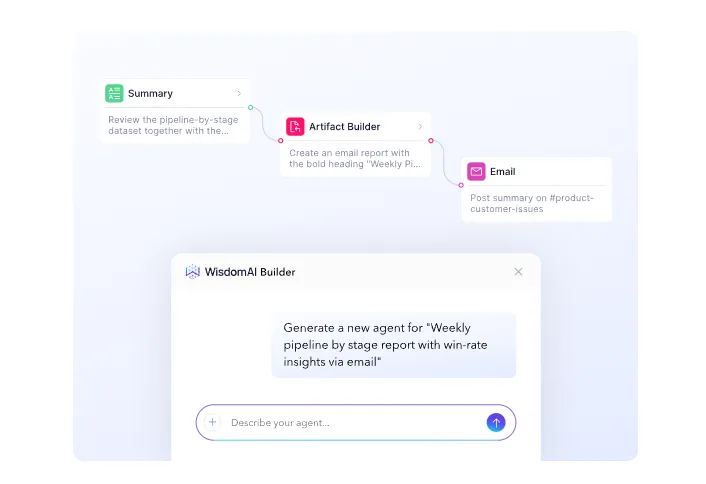
WisdomAI Launches Autonomous Analytics Agents
Explore how autonomous analytics agents like those from WisdomAI are transforming data workflows. Learn the mechanics, benefits, and tradeoffs.
How to Turn Content Into Revenue With Custom AI Agents
Learn how to leverage custom AI agents to convert your content into scalable revenue streams. Discover strategies for automation, personalization, and sales.
Continue exploring
Find AI agents by workflow
More in Industry Insights
Browse more articles in the Industry Insights category.
WordPress articles
Explore more guides and insights tagged WordPress.
Artificial Intelligence articles
Explore more guides and insights tagged Artificial Intelligence.
AI Agent Categories
Browse use-case pages for sales, productivity, coding, customer service, and more.
AI Agents Landscape
Explore the full directory map and compare agents by workflow and category.
Agent Skills
Find reusable skills, capabilities, and building blocks for AI agent workflows.