Why AI Agents Are Becoming the New Digital Workforce
Artificial intelligence has evolved rapidly over the past few years, moving beyond simple chatbots and automation tools into systems capable of performing increasingly sophisticated tasks. One of the biggest developments is the rise of AI agents, software designed to make decisions, complete workflows, and adapt to changing conditions with minimal human intervention.
Rather than simply responding to commands, AI agents can manage multi-step processes, coordinate with other software, analyze data, and continuously improve their performance. As businesses look for ways to increase productivity while controlling costs, these intelligent systems are becoming an important part of the modern workplace.
AI Agents Go Beyond Traditional Automation
Traditional automation relies on predefined rules. If a process changes unexpectedly, the system often requires manual updates before it can continue operating effectively.
AI agents work differently. They can interpret goals, gather information, evaluate multiple options, and decide on the next action based on available data. This makes them useful for workflows that involve uncertainty or changing conditions.
Businesses are increasingly using AI agents for tasks such as:
Customer service
Project coordination
Content organization
Research assistance
Scheduling
Data analysis
Internal knowledge management
Instead of replacing employees outright, AI agents often handle repetitive work, allowing people to spend more time on strategic decisions, creativity, and customer relationships.
Digital Workspaces Are Expanding Into Specialized Industries
As AI becomes more capable, organizations are integrating digital workers into industries that previously depended almost entirely on human expertise.
Manufacturing companies use AI agents to monitor production schedules. Marketing teams deploy them to analyze campaign performance. Healthcare providers apply them to administrative workflows. Financial firms use them to identify unusual transaction patterns.
Even recreational industries are beginning to benefit from intelligent automation. Companies managing sports technology, for example, often rely on AI-assisted systems to organize customer support, product recommendations, inventory, and technical documentation. Businesses involved with golf simulator enclousres may also use AI-driven tools to help customers compare room dimensions, equipment compatibility, installation options, and complete simulator setups more efficiently. Modern golf simulator enclosures provide the controlled environment needed for safe play and realistic projection, making them the foundation of many indoor simulator installations.
The flexibility of AI agents makes them valuable across industries because they can adapt to specialized business requirements without requiring every decision to be manually programmed.
AI Agents Can Work Around the Clock

Photo by Iyus sugiharto on Unsplash
Unlike human employees, AI agents do not require shifts, breaks, or time off. They can monitor systems continuously, respond to incoming requests at any hour, and maintain consistent performance throughout the day.
For global organizations operating across multiple time zones, this provides significant operational advantages. Customers receive faster responses, routine administrative work is completed overnight, and business processes continue moving even when offices are closed.
Continuous operation also helps organizations reduce bottlenecks. Instead of waiting until the next business day for simple approvals, document processing, or data collection, AI agents can complete preliminary work immediately so employees can begin with actionable information when they arrive.
This always-on capability has become especially valuable for businesses handling large volumes of customer interactions or rapidly changing information.
Collaboration Between Humans and AI Is Becoming the Standard
Despite impressive advances, AI agents are most effective when working alongside people rather than replacing them entirely.
Human workers still excel in areas involving judgment, negotiation, empathy, ethical reasoning, and creative problem-solving. AI agents complement these strengths by managing repetitive administrative work, organizing information, identifying trends, and executing structured workflows.
A typical collaboration might involve an AI agent providing AI Assistance by preparing research, summarizing documents, organizing meeting notes, and generating preliminary reports. A human employee can then review the information, apply business knowledge, and make final decisions.
This partnership improves both efficiency and quality while reducing time spent on routine administrative tasks.
Many organizations are discovering that productivity gains come not from eliminating employees but from enabling them to focus on work where human expertise provides the greatest value.
Organizations Must Build Trust Through Responsible AI
As AI agents take on more responsibilities, transparency and governance become increasingly important.
Businesses need clear policies regarding:
Data privacy
Decision oversight
Security controls
Human review
Accountability
Regulatory compliance
Employees also need to understand how AI systems reach conclusions and when human intervention is necessary. Building trust requires explaining AI capabilities realistically rather than presenting them as flawless decision-makers.
Responsible implementation also includes monitoring outputs, correcting errors, and regularly evaluating whether AI systems continue to meet organizational goals.
Companies that balance innovation with responsible oversight are generally better positioned to integrate AI successfully over the long term.
The Digital Workforce Will Continue Growing
The rapid improvement of large language models, reasoning systems, and workflow automation suggests that AI agents will become increasingly capable over the next several years.
Future digital workers are expected to manage more complex business operations, collaborate with multiple software platforms simultaneously, and coordinate tasks that currently require significant human supervision.
Organizations that begin experimenting today gain valuable experience in designing workflows where humans and AI complement one another effectively. Rather than viewing AI agents solely as cost-saving tools, many businesses are recognizing them as scalable digital teammates that can improve efficiency, consistency, and responsiveness across a wide variety of operations.
As technology continues advancing, the concept of a digital workforce will likely become a standard component of everyday business, with AI agents supporting professionals across nearly every industry while people remain responsible for strategy, innovation, and meaningful decision-making.
Related Articles
View all articles
The Impact of AI Agents on Customer Support, Sales, and Business Automation
Explore how AI agents are changing customer support, sales, and business automation through faster service, lead qualification, and workflow execution.
Why Agents Still Need Humans: The Irreplaceable Role of Human Oversight
Explore the critical reasons why human agents remain essential in the age of AI. Understand AI agent limitations and the benefits of human-AI collaboration for optimal outcomes.
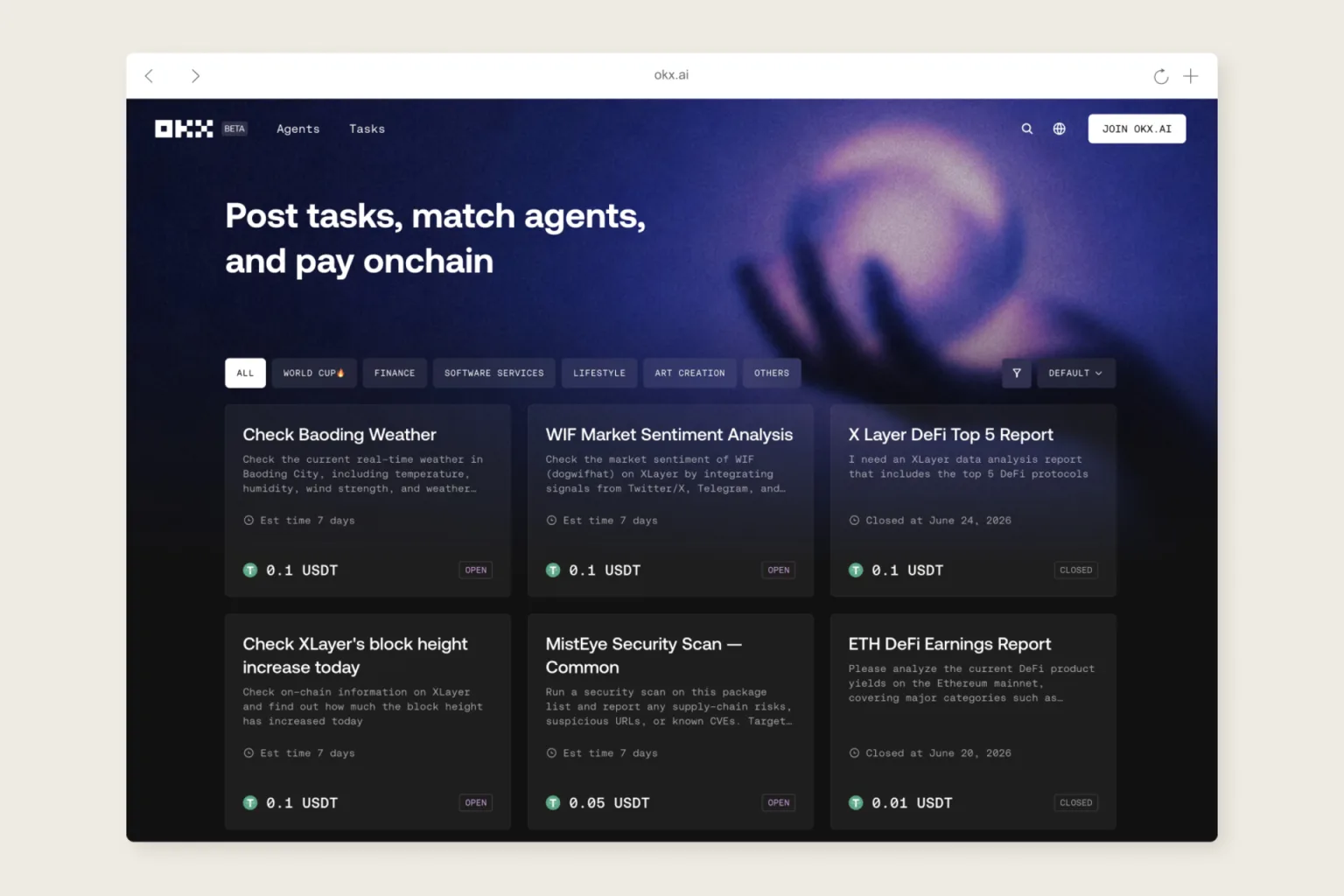
OKX's Vision: AI Agents Hiring and Paying Each Other
Explore OKX's groundbreaking proposal for AI agents to autonomously hire and compensate each other, and what this could mean for the future of work.
Continue exploring
Find AI agents by workflow
More in Partner Insights
Browse more articles in the Partner Insights category.
ai articles
Explore more guides and insights tagged ai.
ai agents articles
Explore more guides and insights tagged ai agents.
AI Agent Categories
Browse use-case pages for sales, productivity, coding, customer service, and more.
AI Agents Landscape
Explore the full directory map and compare agents by workflow and category.
Agent Skills
Find reusable skills, capabilities, and building blocks for AI agent workflows.