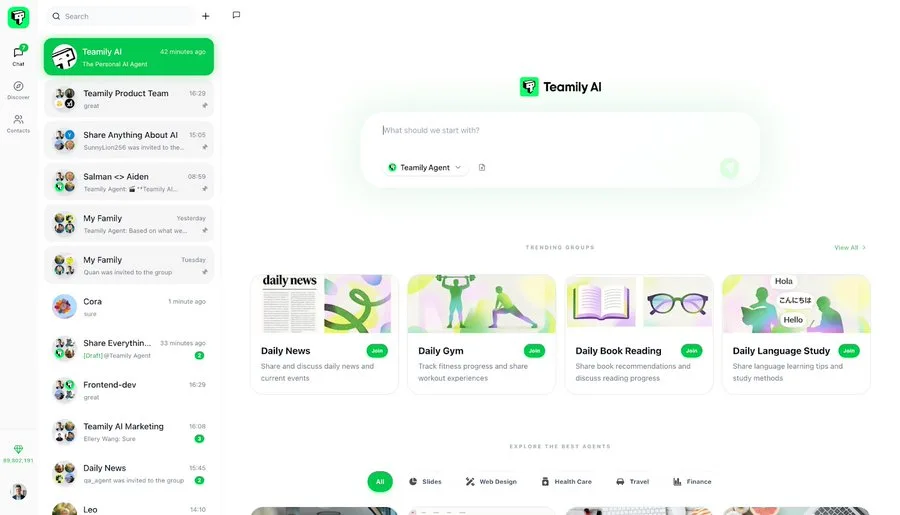
The Instant Messenger Is Where Humans and Agents Belong Together in 2026
The Evolving Landscape of Instant Messaging
Instant messaging has moved far beyond its origins as a simple chat tool. It's now a central hub for communication, collaboration, and information access. As our digital lives become increasingly intertwined, the demand for more intelligent, efficient, and personalized interactions within these platforms is surging. This evolution is paving the way for a new era where instant messenger AI agents are not just a novelty but an integral part of how we communicate and work. By 2026, expect these intelligent agents to be seamlessly integrated, transforming our messaging experiences.
What Are AI Agents in the Context of Instant Messengers?
When we talk about AI agents within instant messengers, we're referring to sophisticated artificial intelligence programs designed to understand, process, and respond to human language in a conversational manner. Unlike basic chatbots that follow pre-programmed scripts, AI agents leverage advanced natural language processing (NLP) and machine learning to interpret context, learn from interactions, and perform complex tasks. They can proactively offer assistance, automate workflows, and provide nuanced responses, making them far more than simple automated responders.
AI Agents vs. Chatbots: A Crucial Distinction
It's important to differentiate AI agents from traditional chatbots. While both use AI, their capabilities differ significantly:
Chatbots: Typically rule-based or keyword-driven, designed for specific, narrow tasks (e.g., answering FAQs, basic order tracking). Their responses are often pre-defined.
AI Agents: Possess a deeper understanding of language and context. They can handle more complex queries, learn over time, adapt their responses, and even initiate actions on behalf of the user. They aim to mimic human-like conversational abilities and problem-solving skills.
The increasing sophistication of NLP is a key trend driving this advancement, making AI agents more conversational and capable of understanding subtle nuances in human communication. This enhanced understanding allows them to be truly helpful partners rather than just automated tools.
The Synergy: Why Humans and AI Agents Belong Together
The most compelling aspect of AI agents in instant messengers platform is their potential for human-AI collaboration. This isn't about replacement; it's about augmentation. Humans and AI agents possess complementary strengths that, when combined, create a more powerful and efficient communication ecosystem.
Complementary Strengths in Action
Humans excel at empathy, creativity, complex problem-solving requiring abstract reasoning, and understanding intricate social cues. AI agents, on the other hand, excel at speed, data processing, consistency, and handling repetitive tasks without fatigue. This synergy is invaluable across various applications.
Consider customer service. An AI agent can handle initial inquiries, gather necessary information, and provide instant answers to common questions. If the issue becomes more complex or requires emotional intelligence, the AI agent can seamlessly escalate the conversation to a human agent, providing them with all the relevant context. This ensures faster response times for customers and frees up human agents to focus on high-value interactions. This directly addresses the question: What are the benefits of using AI in customer service chat? The benefits include increased efficiency, reduced wait times, 24/7 availability, and improved customer satisfaction through quicker problem resolution.
Similarly, in internal team communication, AI agents can summarize long threads, schedule meetings, assign tasks, and retrieve information from company knowledge bases. This allows team members to stay focused on their core responsibilities, enhancing overall productivity. The trend of platforms integrating AI capabilities to enhance user experience and productivity is making this a reality.
Key Use Cases and Applications
The integration of AI agents into instant messengers opens up a vast array of practical applications, transforming how we interact with technology and each other.
Customer Service Transformation
As mentioned, AI agents are poised to revolutionize customer service. They can act as the first line of support, handling a significant volume of inquiries. For example, an AI agent could guide a customer through troubleshooting steps for a product, process a return request, or provide real-time updates on an order status. This leads to improved problem-solving and personalized interactions, as the AI can access customer history and preferences to tailor its responses. This is a prime example of how AI agents enhance instant messaging by providing immediate, context-aware support.
Internal Team Collaboration and Productivity
Within organizations, AI agents can streamline internal communications. Imagine an agent that monitors project channels, flags urgent messages, summarizes key decisions, and even drafts follow-up actions. This can significantly reduce information overload and ensure that critical tasks don't fall through the cracks. The convergence of communication tools and productivity software through AI is making these workflows more seamless.
Personal Assistants and Information Retrieval
For individuals, AI agents can act as powerful personal assistants. They can manage calendars, set reminders, book appointments, and retrieve information from the web or personal documents based on simple conversational queries. This provides real-time AI assistance in conversations, making information access more intuitive and efficient.
Content Creation and Management
Emerging capabilities, such as those seen with platforms that let AI agents write and publish posts, hint at future applications in content generation and management. AI agents might assist in drafting initial content, summarizing research, or even moderating community discussions within messaging platforms.
Benefits of AI Agent Integration
The advantages of integrating AI agents into instant messaging platforms are numerous, impacting both individuals and businesses.
Enhanced Efficiency: Automating routine tasks and providing instant responses dramatically speeds up communication and problem-solving.
Improved Accuracy and Consistency: AI agents can access and process vast amounts of data, ensuring accurate information and consistent service delivery.
24/7 Availability: AI agents don't sleep or take breaks, offering continuous support and assistance.
Personalized Experiences: By learning user preferences and accessing relevant data, AI agents can deliver tailored interactions and recommendations.
Reduced Costs: Automating tasks can lead to significant cost savings for businesses, especially in areas like customer support.
Focus on High-Value Tasks: By handling mundane queries, AI agents allow human professionals to concentrate on more complex, strategic, and creative work.
Challenges and Considerations
Despite the immense potential, the widespread adoption of AI agents in instant messaging also presents challenges and ethical considerations that must be addressed.
Data Privacy and Security
AI agents process significant amounts of data, raising concerns about privacy and security. Robust measures are needed to ensure that user data is protected and used ethically. Understanding the ethical implications of AI agents in communication is paramount.
Need for Human Oversight
While AI agents are becoming more sophisticated, they are not infallible. Human oversight remains crucial to handle edge cases, address errors, and ensure that AI interactions align with human values and organizational policies. This addresses the question: Will AI replace human agents in customer support? It's more likely to be a collaborative relationship, with AI augmenting human capabilities rather than outright replacing them in complex scenarios.
Bias and Fairness
AI models can inadvertently perpetuate biases present in the data they are trained on. Developers must actively work to mitigate bias and ensure that AI agents provide fair and equitable interactions for all users.
Reliability and Trust
Building trust in AI agents requires consistent performance and transparency. Users need to understand when they are interacting with an AI and have confidence in its capabilities and limitations. Ensuring AI reliability is an ongoing development effort.
The Future Outlook: What to Expect by 2026
By 2026, the integration of AI agents into instant messaging will likely be far more pervasive. We can expect:
Ubiquitous AI Assistance: AI agents will be standard features in most messaging platforms, offering proactive support and task automation.
Deeper Personalization: Agents will become even better at understanding individual user needs and preferences, offering highly tailored experiences.
Seamless Cross-Platform Integration: AI agents will likely bridge communication gaps between different platforms and applications, creating a more unified digital experience.
Advanced Conversational Capabilities: NLP advancements will make AI agents indistinguishable from humans in many conversational contexts, though transparency will remain important.
Specialized Agents: We'll see the rise of highly specialized AI agents designed for specific industries or tasks, offering expert-level assistance within messaging environments.
The trend of platforms integrating AI capabilities to enhance user experience and productivity will accelerate, making AI agents a core component of modern communication tools. This convergence of communication tools and productivity software through AI will redefine efficiency. For those interested in how AI can extend beyond communication, exploring how AI agents can excel in prediction markets offers a glimpse into their broader analytical capabilities, as seen in research like Olas Agents Outperform Humans in Prediction Market Trading.
Conclusion: Embracing the Human-AI Partnership
The instant messenger is rapidly evolving into a dynamic space where humans and AI agents will increasingly work together. This partnership promises to unlock new levels of efficiency, personalization, and productivity in our daily communications. By understanding the capabilities and limitations of AI agents, and by fostering responsible development and deployment, we can harness this technology to create more intelligent, helpful, and human-centric communication experiences. The future of communication is collaborative, and the instant messenger is at its forefront.
Related Articles
View all articles
Top 5 AI Agents for Customer Service in 2026
Compare the best AI agents for customer service in 2026, including Zendesk, Fin, Sierra, Ada and Salesforce Agentforce, by features, pricing, channels and use cases.
Zendesk Rebrands Service Around AI Agents
Explore Zendesk's strategic shift to AI agents. Understand the implications for businesses, key features, and the future of AI-powered customer service.
PwC and OpenAI Forge Path to Agentic Customer Engagement
Discover how PwC is leveraging OpenAI's frontier models to transform customer engagement and service with agentic AI solutions, enhancing customer experience...
Continue exploring
Find AI agents by workflow
More in Industry Insights
Browse more articles in the Industry Insights category.
AI articles
Explore more guides and insights tagged AI.
Messaging articles
Explore more guides and insights tagged Messaging.
AI Agent Categories
Browse use-case pages for sales, productivity, coding, customer service, and more.
AI Agents Landscape
Explore the full directory map and compare agents by workflow and category.
Agent Skills
Find reusable skills, capabilities, and building blocks for AI agent workflows.