
Stripe Gives AI Agents Their Own Wallet
The Rise of Autonomous AI Agents
The landscape of digital automation is shifting. We are moving away from passive AI assistants that simply generate text or summarize documents toward active, task-oriented autonomous AI agents. These systems are designed to operate independently, executing multi-step workflows that often require interacting with external services, booking resources, or procuring digital goods. As these agents become more sophisticated, the ability to perform tasks without human oversight is no longer just a technical goal—it is a functional requirement for the next generation of commerce.
Understanding this growth is essential for developers and business leaders. In our recent research, we analyzed 2,000 AI agents to categorize their operational patterns and identify where these systems are most effectively deployed. This analysis highlights a clear trend: agents are increasingly performing complex, real-world tasks that necessitate financial autonomy.
Why AI Agents Need Financial Autonomy
For an AI agent to be truly useful, it must be able to complete a transaction from start to finish. Without financial autonomy, an agent is perpetually tethered to a human "approver" who must manually authorize every payment, creating a bottleneck that defeats the purpose of automation. Providing these agents with their own wallets—or more precisely, controlled access to payment infrastructure—enables true machine-to-machine payments.
When an agent can hold a balance or initiate a secure payment, it can participate in the machine economy. This shift allows for micro-transactions, such as purchasing API credits, cloud compute time, or specific data sets, without waiting for human intervention. This capability is the cornerstone of a future where AI-driven commerce operates at the speed of computation rather than the speed of human manual approval.
How Stripe Enables AI Wallets
Stripe has begun providing the financial infrastructure necessary for agents to operate securely. By utilizing the Stripe API, developers can provision specific financial identities for their AI agents. This process involves creating restricted API keys that follow the principle of least privilege, ensuring that an agent can only perform authorized financial actions within defined parameters.
Can AI agents hold money?
Technically, AI agents do not "hold" money in the traditional sense of a human bank account. Instead, they are granted access to a virtual wallet or a sub-account structure managed by a platform like Stripe. The agent uses secure credentials to authenticate with the payment processor, which then validates the transaction against the agent’s pre-set spending limits, budget constraints, and risk controls.
How do autonomous agents process payments?
The process is typically structured as follows:
Authentication: The agent uses a secure, scoped API key to connect to the financial service.
Verification: The system checks the agent's permissions and available balance or credit limit.
Transaction Execution: The agent initiates a payment request for a specific service or resource.
Clearing and Settlement: The payment processor manages the movement of funds, providing an audit trail for all machine-initiated activity.
Security and Governance in Agent Transactions
Are AI agent payments secure? Security is the primary concern for any business integrating autonomous financial agents. Relying on hard-coded secrets or overly permissive API keys is a significant risk. Instead, developers must adopt a model of granular governance. This includes implementing robust logging, real-time monitoring of transaction velocity, and anomaly detection to identify if an agent has been compromised or is behaving unexpectedly.
According to official Stripe documentation, businesses should leverage webhooks to receive real-time notifications about payment activity. By monitoring these events, human operators can maintain oversight even while the agent acts autonomously. This hybrid approach—autonomous execution with human-in-the-loop oversight for high-value transactions—is currently the industry standard for managing financial risk.
Expanding Agent Functionality
As agents gain the ability to pay for services, the ecosystem of available "skills" grows exponentially. When an agent can purchase access to specialized tools or databases, it can solve problems that were previously beyond its reach. We have seen this growth reflected in the AI agents directory launches skill hub, which demonstrates how agents are evolving to become modular, plug-and-play components within larger business software stacks.
This modularity allows companies to compose complex workflows by chaining together agents that each have specific payment and execution capabilities. For example, a research agent might purchase a data report from one provider and then pay a generative agent to synthesize that data into a final brief, all without human input.
Considerations for Developers and Businesses
Implementing a system where AI agents manage payments requires a rigorous approach to architecture. Before deploying, ensure your team has addressed the following checklist:
Define Spending Limits: Set hard caps on what an agent can spend per transaction and per day.
Implement Scoped Credentials: Never use account-wide admin keys; use restricted keys scoped to the specific payment functions the agent requires.
Audit Trails: Ensure every transaction is mapped to a specific agent identity and intent.
Monitoring and Alerts: Set up automated alerts for any transaction that exceeds typical patterns.
Dispute Resolution: Establish a clear process for how the business will handle and resolve failed or fraudulent machine-initiated transactions.
As the machine economy matures, the role of financial infrastructure will be to provide the guardrails that allow innovation to flourish while protecting against systemic risk. Stripe’s focus on providing these tools to developers suggests a future where autonomous commerce is a standard feature of business operations rather than an experimental edge case.
Stay ahead of the curve in AI automation. Sign up for our newsletter to receive the latest updates on autonomous infrastructure and developer tools.
Related Articles
View all articles
AWS AI Agent Payments: A Guide to Coinbase and Stripe Integration
Learn how AWS is enabling AI agent payments through Coinbase and Stripe. Understand the infrastructure, security, and the future of autonomous commerce.
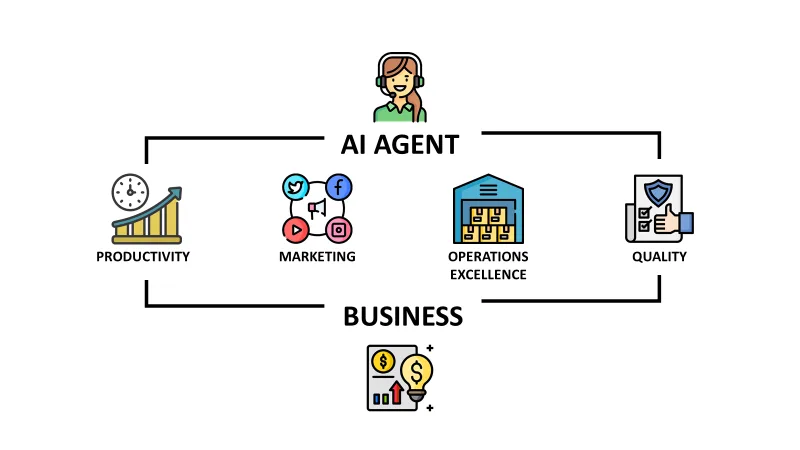
How to Make AI Agents Work for Your Business: A Strategic Guide
Learn how to effectively integrate AI agents into your business operations. Discover strategies for deployment, workflow automation, and scaling your AI capacity.

Your Next Customer Might Be an AI Agent With a Wallet
Learn how AI agents with wallets are transforming commerce through machine-to-machine transactions. Prepare your business for the autonomous economy.
Continue exploring
Find AI agents by workflow
More in Industry Insights
Browse more articles in the Industry Insights category.
Fintech articles
Explore more guides and insights tagged Fintech.
AI articles
Explore more guides and insights tagged AI.
AI Agent Categories
Browse use-case pages for sales, productivity, coding, customer service, and more.
AI Agents Landscape
Explore the full directory map and compare agents by workflow and category.
Agent Skills
Find reusable skills, capabilities, and building blocks for AI agent workflows.