No More Dropped Balls: How Operations Teams Build Handoff Systems That Actually Work
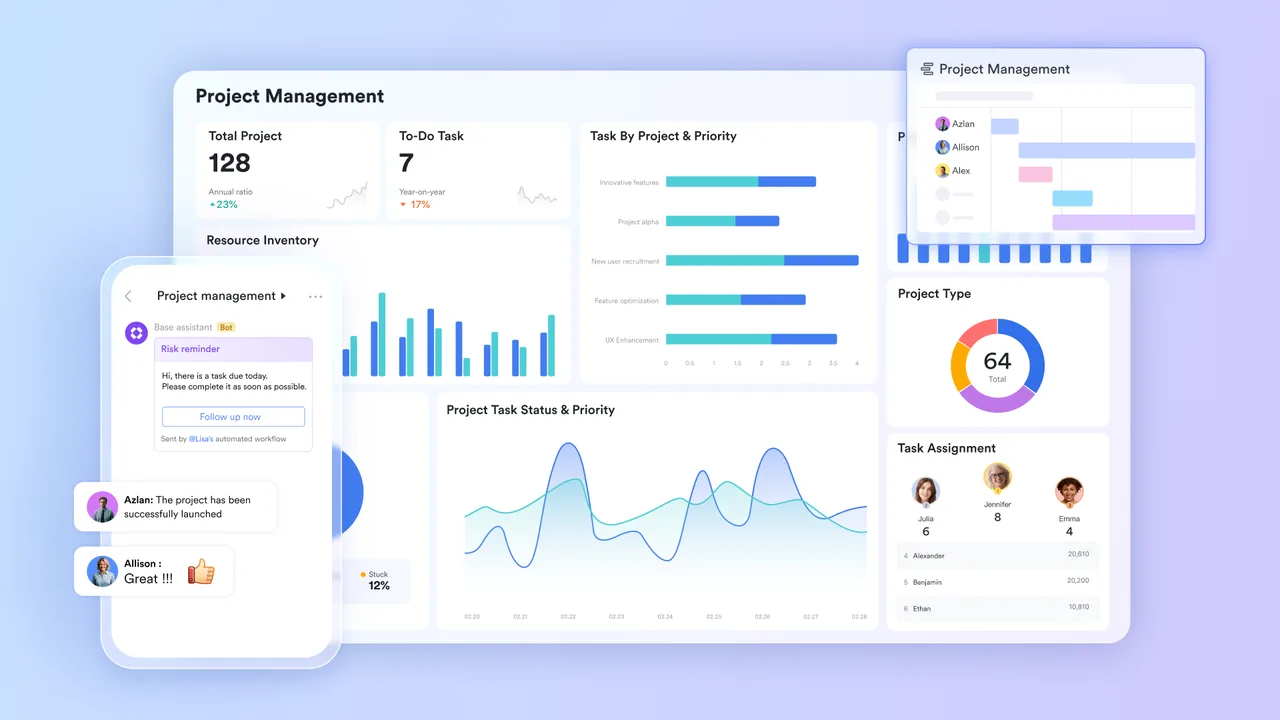
Every operations team has a version of the same recurring failure. A task moves from one person to another, and somewhere in the transition the context does not travel with it. The new owner does not know what has already been tried. The deadline that was implicitly understood by the previous owner is not visible to the new one. The approval that was pending gets assumed to have happened. The stakeholder who was waiting for an update never receives it because the person who knew they were waiting has already moved on to the next thing. These are not failures of individual competence. They are failures of handoff infrastructure. The operations teams that have eliminated dropped balls have not hired better people. They have built systems where the context, the ownership, and the deadline are structural properties of the task itself rather than knowledge that lives in an individual's memory. That starts with project management tools designed to make every handoff clean by default.

Making ownership and context structural with Lark Base

Most handoff failures happen because the task record is incomplete. The new owner can see what needs to be done but not why the current approach was chosen, what was tried before, or who has relevant context. Lark Base addresses this at the record level rather than relying on the departing owner to brief the incoming one.
Every Base record can carry a full history of status changes, attached documents, linked communications, and field-level edits, all logged with timestamps and editor names. When a task changes owner, the new person opens the record and finds a complete operational history rather than a blank starting point. "People fields" make the current and previous owners explicitly named within the record itself, so accountability does not evaporate when someone moves on. Dropdown fields enforce a consistent status taxonomy across every task in the organization, so "In Progress," "Blocked," and "Waiting for Review" mean the same thing to the new owner as they did to the previous one.
Keeping approval handoffs clean and documented with Lark Approval

Approval processes are one of the highest-risk points in any operational workflow because they require the task to leave one person's control and enter another's without a guaranteed handoff protocol. Email-based approvals drop balls constantly because the approver's inbox is the only queue, and there is no visibility into whether the request has been seen, considered, or acted on. Lark Approval replaces that uncertainty with a structured, trackable workflow.
"Parallel Routing" allows approval requests to be sent to multiple stakeholders at the same time, helping reduce delays caused by sequential handoffs. In addition, Lark supports manual delegation, where approvers can authorize others to handle approval tasks on their behalf for a specified time period and scope. During this period, both the original and delegated approver can process requests, and all authorization records remain visible.
If an approver leaves the organization, pending requests are automatically reassigned to their direct manager, or to an approval administrator if no manager is defined. Every approval action is recorded with a timestamp, and delegation records are also maintained, giving full visibility into who handled each step and ensuring continuity across the approval process.
Turning documents into explicit handoff tools with Lark Docs

The most common form of undocumented handoff is the one that happens through documents that were never finished. A colleague builds a brief, a proposal, or a process document, leaves it in a partially complete state, and moves on. The person who picks it up later cannot tell what was deliberate, what was draft, and what was outdated. Lark Docs gives teams the features to make every document an explicit, trustworthy handoff object.
"Version History" logs every edit with the editor's name and timestamp, so the incoming owner can trace what was added, what was removed, and what changed between when the previous owner last touched it and now. "@mention" allows the previous owner to assign specific pending sections or open questions directly to the new owner within the document, so the handoff tasks are visible in context rather than communicated in a separate message that may not survive the transition. "Comment" threads that have not been resolved travel with the document as explicit flags of outstanding work rather than disappearing when the previous owner leaves the project.
Keeping the incoming owner informed through communication history with Lark Messenger

When a task changes owner, the new person typically needs to understand not just the current state of the work but the history of the conversations that shaped it. Who raised the concern that delayed the last milestone. Which stakeholder has a specific sensitivity that informed the current approach. What the team agreed in the meeting that took place before the new owner joined the project. Without access to that history, the new owner operates with an incomplete picture that leads to repeated mistakes.
Lark Messenger preserves communication context at the group level rather than tying it to individual accounts. When an owner changes, the group chat history remains accessible to the new member, including pinned reference materials, key decisions captured in threads, and the full record of prior discussions. "Chat Tabs & Threads" keep the most important context pinned at the top of the group rather than buried in message history, so the new owner's first step in the group is a structured briefing rather than an archaeology exercise. "Rich Formatting" in past messages ensures that annotated updates, visual context, and structured summaries are preserved in the format they were originally shared rather than as unreadable text.
Replacing unstructured handoff requests with structured intake with Lark Forms

Many operational handoffs begin with an unstructured request: a message, a forwarded email, or a verbal briefing. The incoming owner receives incomplete information and spends their first hours tracking down what they should have been given at the start. Lark Forms transforms the initiation of a handoff into a structured process that arrives complete.
Conditional logic within forms means the fields a handoff form shows adapt based on the type of task being transferred, the urgency level, and the stakeholders involved. Every handoff submission includes exactly the information the incoming owner needs without relying on the departing owner to remember what is relevant. Each submission maps directly into a Lark Base record as a structured entry, so the new owner's first view of the task is an organized operational record rather than a message they have to interpret and manually enter into a tracker. Completion notifications confirm receipt automatically, so the departing owner knows the handoff was received without sending a follow-up.
Bonus: Why handoff failures persist in well-intentioned teams
The most common handoff tool in most organizations is email, supplemented by Slack messages and verbal briefings. Platforms like Asana and monday.com improve the task record layer but do not address the communication history or the document context that travels alongside operational tasks, with many teams utilising a Monday.com discount to make upgrading their team's project tracking more budget-friendly. Notion and Confluence improve the documentation layer but do not include approval workflows or structured intake.
Looking at Google Workspace pricing and adding task management, documentation, and communication tools separately creates a handoff system where the task record, the approval trail, the relevant documents, and the communication history all live in different places. The incoming owner has to visit all four systems to assemble the picture that should have been in one place from the start. Lark keeps all four layers connected in a single environment so that every handoff is, by design, complete.
Conclusion
Dropped balls are not a people problem. They are an infrastructure problem. When every task carries its full operational history, every approval leaves a traceable record, every document makes outstanding work explicit, and every communication thread is accessible to the incoming owner, the conditions for a clean handoff are structural rather than dependent on individual conscientiousness. A unified set of productivity tools that makes context a property of the task rather than a property of the person holding it is how operations teams finally eliminate the dropped ball.
Related Articles
View all articles
8 Ways AI Agents Turbocharge Revenue Operations
Discover how AI agents are transforming revenue operations. Learn 10 ways to use autonomous agents to boost efficiency, pipeline accuracy, and revenue growth.
How to Make AI Agents Work for Your Business: A Strategic Guide
Learn how to effectively integrate AI agents into your business operations. Discover strategies for deployment, workflow automation, and scaling your AI capacity.

Why Do In-House Teams Struggle to Manage Contracts at Scale?
Learn why in-house legal teams struggle to manage contracts at scale, from renewals and intake to version control, visibility, AI extraction, and post-signature risk.
Continue exploring
Find AI agents by workflow
More in Partner Insights
Browse more articles in the Partner Insights category.
AI Agent Categories
Browse use-case pages for sales, productivity, coding, customer service, and more.
AI Agents Landscape
Explore the full directory map and compare agents by workflow and category.
Agent Skills
Find reusable skills, capabilities, and building blocks for AI agent workflows.
Free AI Agents
Discover free AI agents and tools for testing agentic workflows without upfront cost.
Open Source AI Agents
Compare open-source agents, frameworks, and developer-friendly agent projects.