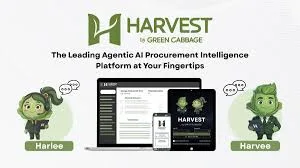
Green Cabbage Launches Agentic Procurement Platform
Introduction to Agentic Procurement
In the evolving landscape of enterprise operations, the shift from static software to intelligent systems is accelerating. The recent launch of the Green Cabbage agentic procurement platform marks a significant milestone in this transition. For procurement leaders and supply chain managers, this shift represents a move away from manual data entry and reactive decision-making toward proactive, autonomous workflows. An agentic procurement platform is defined by its ability to not just process data, but to act on it—executing complex tasks like vendor negotiation, contract analysis, and real-time purchasing without constant human oversight. This article explores how these systems function, the benefits of AI procurement automation, and what leaders must consider when integrating such powerful tools into their existing tech stacks.
How Agentic AI Differs from Traditional Automation
To understand the value proposition of Green Cabbage, one must first distinguish between traditional rule-based automation and true agentic AI. Traditional procurement software operates on 'if-then' logic. If a purchase requisition meets specific criteria, the system approves it. If not, it flags it for human review. While useful, this approach is brittle and struggles with the dynamic, unpredictable nature of global supply chains.
Agentic AI, by contrast, operates on goals rather than rigid rules. It utilizes large language models and reasoning engines to interpret context, handle ambiguity, and adjust strategies in real-time. Where traditional systems stop at reporting, agentic systems start at execution. This evolution mirrors broader shifts in software, such as how Adobe brings agentic AI to Firefly with Claude next, demonstrating that the future of enterprise software lies in agents that can reason across complex datasets to deliver specific, actionable outcomes.
Core Capabilities of the Green Cabbage Platform
The Green Cabbage platform is built to handle the end-to-end procurement lifecycle. By leveraging autonomous agents, it addresses several high-friction areas in enterprise buying:
Autonomous Vendor Negotiation: The system can initiate contact with suppliers, compare quotes against historical data, and negotiate terms based on pre-set company parameters.
Intelligent Contract Analysis: Using natural language processing, the platform scans legal documents to identify compliance risks or unfavorable terms, flagging them for human legal counsel only when necessary.
Dynamic Purchasing: The platform monitors inventory levels and market pricing, automatically placing orders when conditions are optimal, thereby reducing procurement costs.
These features transform the role of procurement professionals from operational gatekeepers to strategic planners, allowing them to focus on high-value supplier relationships rather than administrative minutiae.
Solving the Integration Bottleneck in Modern Commerce
A primary challenge for any new procurement tool is the legacy system integration hurdle. Enterprise supply chains are often fragmented across ERPs, CRM platforms, and disparate communication tools. Just as Firmly tries to remove the integration bottleneck in agentic commerce, Green Cabbage emphasizes interoperability. Without a seamless flow of data between the procurement agent and the rest of the enterprise stack, the 'autonomous' label becomes marketing fluff rather than functional reality. Effective agentic procurement requires robust APIs and a centralized data architecture to ensure that the AI is making decisions based on the most accurate, real-time information available across the organization.
Key Considerations for Procurement Leaders
Adopting autonomous supply chain management tools involves more than just software deployment; it requires a shift in organizational governance. When evaluating an agentic procurement platform, leaders should consider the following checklist:
Human-in-the-Loop Requirements: Define which high-stakes decisions require manual approval and which can be fully delegated to the AI.
Data Privacy and Security: Ensure that the platform adheres to global data protection standards, such as the General Data Protection Regulation (GDPR), especially when sharing supplier and internal financial data with AI models.
ROI Metrics: Focus on performance indicators such as cycle time reduction, cost savings through better negotiation, and the percentage of 'touchless' transactions completed.
Addressing Common Risks
What are the risks of autonomous procurement platforms? The primary concern is algorithmic drift, where the AI's decision-making logic evolves in unintended ways. To mitigate this, organizations should implement regular 'model audits' and maintain strict guardrails on spending limits and vendor selection criteria.
Conclusion: The Future of Agentic Workflows
The introduction of the Green Cabbage platform represents a broader shift toward autonomous execution in the enterprise. By automating the repetitive, data-heavy aspects of supply chain management, organizations can significantly reduce operational friction and improve agility. As these systems mature, the focus will shift from simply 'automating' tasks to 'orchestrating' entire supply chain ecosystems. For procurement leaders, the imperative is to begin experimenting with these tools now, ensuring that their teams are prepared to manage the agents that will soon define the modern enterprise. Ready to modernize your supply chain? Subscribe to our newsletter for the latest technical deep-dives into agentic AI and procurement software updates.
Related Articles
View all articles
Pivot Raises $40M: What the Funding Round Signals for Agentic Procurement
Explore the implications of Pivot's $40M funding round for agentic procurement. Understand how AI and autonomous sourcing are reshaping enterprise purchasing.

Doss raises $55M for AI inventory management that plugs into ERP
Explore how AI inventory management platforms like Doss integrate with ERP systems to solve complex supply chain challenges and boost operational efficiency.

Botify Agentic Feeds: A Guide to AI-Driven SEO Automation
Learn how Botify Agentic Feeds leverage autonomous AI to streamline SEO workflows. Discover the benefits of agentic AI for technical search performance.
Continue exploring
Find AI agents by workflow
More in Industry Insights
Browse more articles in the Industry Insights category.
AI articles
Explore more guides and insights tagged AI.
Procurement articles
Explore more guides and insights tagged Procurement.
AI Agent Categories
Browse use-case pages for sales, productivity, coding, customer service, and more.
AI Agents Landscape
Explore the full directory map and compare agents by workflow and category.
Agent Skills
Find reusable skills, capabilities, and building blocks for AI agent workflows.