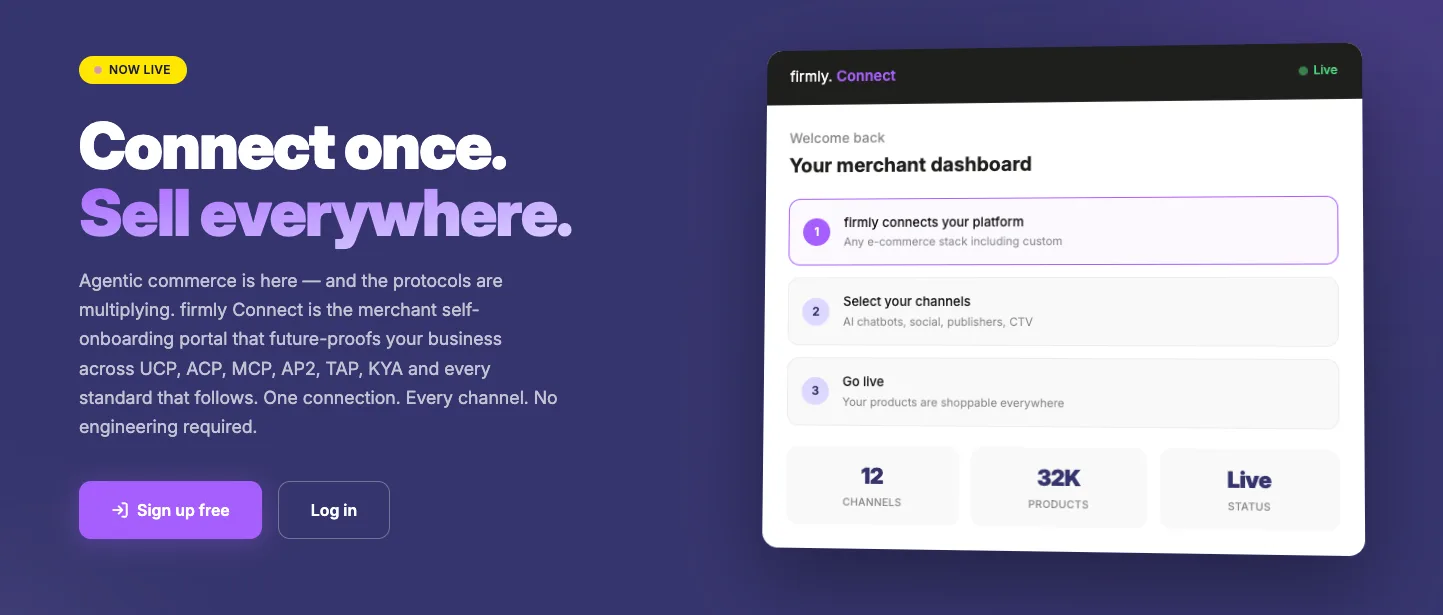
Firmly Tries to Remove the Integration Bottleneck in Agentic Commerce
Defining the Integration Bottleneck in Agentic Commerce
The rise of autonomous systems in retail has shifted the focus from simple automation to complex, decision-making workflows. However, many organizations find themselves stalled by a persistent integration bottleneck in agentic commerce. At its core, this bottleneck is the friction between legacy enterprise commerce systems—often built on rigid, synchronous request-response patterns—and the fluid, asynchronous requirements of autonomous agents. While these agents are designed to navigate multi-step tasks like inventory reconciliation or personalized customer negotiations, they frequently fail because the underlying infrastructure cannot interpret intent or handle stateful, long-running processes efficiently.
For technical leaders and architects, this is not merely a technical debt issue; it is a fundamental mismatch in communication protocols. Autonomous agents require high-fidelity access to data and logic, yet traditional systems treat them as standard API consumers, leading to rate-limiting, data silos, and a lack of situational awareness. Understanding how these systems interact is critical to unlocking the full potential of agentic AI as it is currently reshaping commerce by moving beyond static rulesets toward dynamic, goal-oriented execution.
Why Traditional Architectures Struggle with Autonomous Agents
To solve the integration challenge, one must first recognize why existing stacks fail. Traditional commerce systems are typically monolithic or semi-decoupled, relying on RESTful APIs that expect a specific sequence of operations. Autonomous agents, by contrast, operate in non-linear loops—observing, thinking, and acting based on real-time environmental changes.
API Integration Challenges and Data Silos
The primary API integration challenges stem from a lack of context-sharing. If an agent needs to process a return, it might need to query order history, shipping status, and inventory availability. In a siloed environment, these are three separate API calls requiring three separate authentication flows and data transformations. Without a unified interface, the agent experiences significant latency, often causing it to time out or make incorrect assumptions based on incomplete data.
The Need for Autonomous Agent Interoperability
Why is interoperability critical for agentic commerce? Without standard communication protocols, agents remain trapped in their own isolated domains. Interoperability ensures that an agent managing customer support can seamlessly trigger a logistics agent to expedite a shipment. When systems lack this capability, the result is a fragmented experience where the "agentic" nature of the software is nullified by the manual work required to connect disparate data points.
Core Principles for Reducing Integration Friction
Reducing friction requires a shift in how we build digital infrastructure. As we move toward agentic commerce as the next evolution of the internet economy, architectural modularity becomes non-negotiable. To successfully scale autonomous agents in retail, teams should adopt the following principles:
Event-Driven Communication: Shift from polling-based API structures to event-driven architectures where agents react to real-time commerce events (e.g., "order_placed" or "stock_low").
Standardized API Protocols: Implement GraphQL or gRPC to allow agents to request exactly the data they need, reducing payload bloat and network overhead.
State Management Middleware: Utilize agentic AI middleware to track agent state, ensuring that if a process is interrupted, the agent can resume its task without losing the context of the transaction.
Semantic Data Layers: Use standardized schemas (such as those defined by Schema.org) to ensure that the data provided to the agent is machine-readable and semantically consistent across all microservices.
The Strategic Role of Agentic AI in Modern Retail
The transition toward agent-ready architectures is not just about performance; it is about business survival. Enterprises that fail to resolve these bottlenecks will find themselves unable to participate in the automated marketplaces of the future. By balancing security and autonomy, organizations can create environments where agents operate within guardrails while still exercising the flexibility required to solve complex customer problems. This shift requires moving away from the "human-in-the-loop" bottleneck toward "human-on-the-loop" governance, where the integration layer provides the necessary visibility for oversight without slowing down execution speed.
Checklist for Evaluating Integration Readiness
Before deploying autonomous agents at scale, technical decision-makers should audit their infrastructure using this readiness checklist:
Data Accessibility: Can your agents access all required commerce data through a single, authenticated gateway?
Event Availability: Are your commerce systems exposing granular, real-time events that agents can subscribe to?
Error Handling: Do you have a mechanism for agents to report failures or request human intervention when they encounter ambiguous states?
Security Scoping: Are agent permissions defined by the principle of least privilege, ensuring they can only execute actions relevant to their specific domain?
Latency Benchmarking: Have you measured the time-to-first-byte for agent-initiated requests compared to human-initiated requests?
Building Future-Proof Commerce Systems
The path forward involves treating your commerce stack as a platform for agents, not just a storefront for humans. This means embracing headless architectures where the backend services are decoupled from the presentation layer, allowing agents to interact with logic directly. Overcoming data silos for agentic workflows is the defining challenge of the next decade in retail technology. By investing in robust middleware, standardized protocols, and event-driven design, you can eliminate the bottlenecks that currently hinder your AI initiatives.
Related Articles
View all articles
AI Integration Is Not an API Call: What Enterprise Teams Get Wrong and How to Fix It
Learn why enterprise AI integration requires more than an API call, with guidance on architecture, model abstraction, data pipelines, validation, monitoring, and fallbacks.
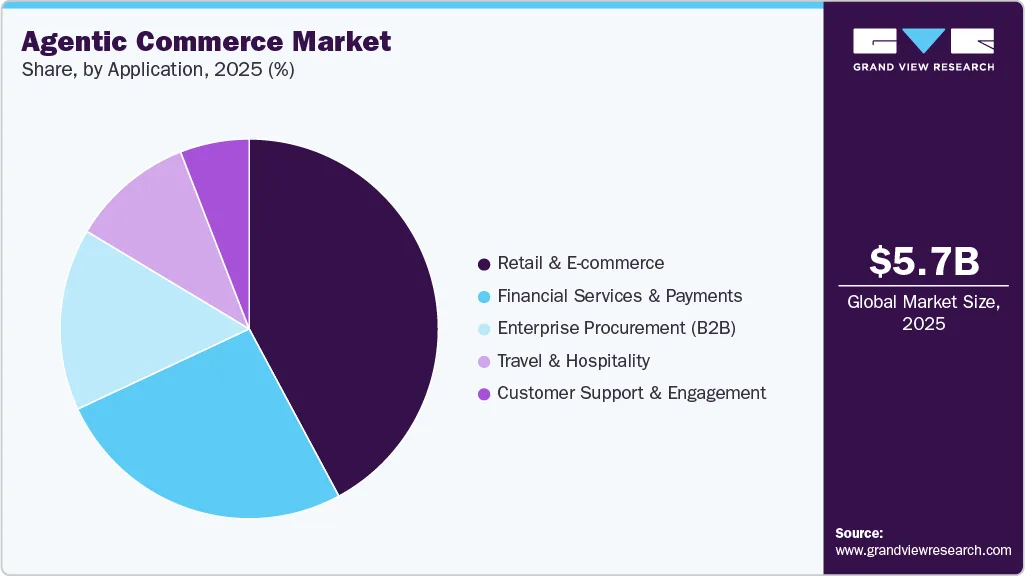
Agentic Commerce Is Starting to Show Real Revenue Share
Discover how agentic commerce moves beyond search to autonomous purchasing, driving measurable revenue growth through intent-based AI workflows.

Agentic AI Is Reshaping Commerce
Discover how agentic AI is reshaping commerce by moving beyond simple chatbots to autonomous agents that execute complex tasks and optimize supply chains.
Continue exploring
Find AI agents by workflow
More in Industry Insights
Browse more articles in the Industry Insights category.
Agentic AI articles
Explore more guides and insights tagged Agentic AI.
Commerce Architecture articles
Explore more guides and insights tagged Commerce Architecture.
AI Agent Categories
Browse use-case pages for sales, productivity, coding, customer service, and more.
AI Agents Landscape
Explore the full directory map and compare agents by workflow and category.
Agent Skills
Find reusable skills, capabilities, and building blocks for AI agent workflows.