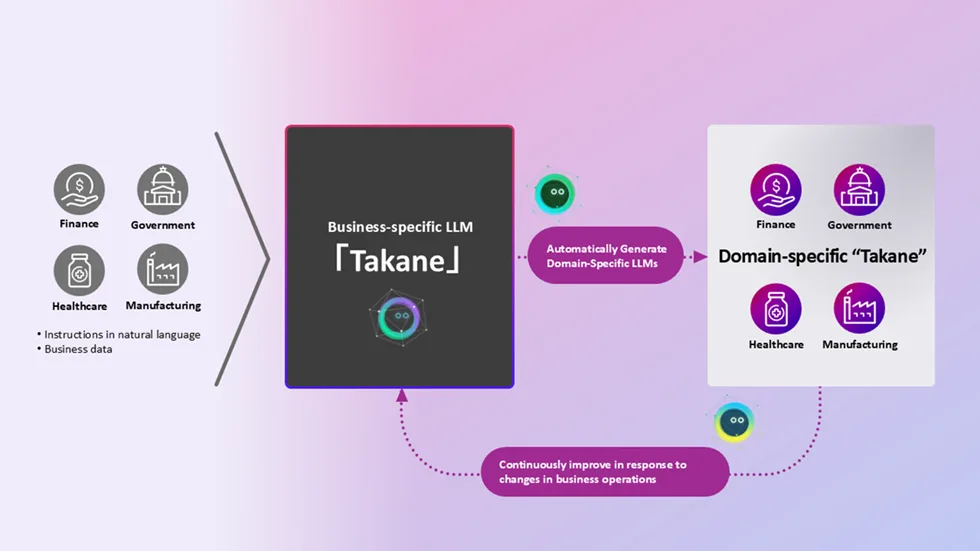
Fujitsu Develops Self-Evolving Multi-AI Agent Technology
Introduction to Fujitsu's Self-Evolving Multi-AI Agent Technology
In the rapidly advancing landscape of artificial intelligence, Fujitsu has unveiled a significant innovation: self-evolving multi-AI agent technology. This groundbreaking development promises to usher in a new era of intelligent systems capable of learning, adapting, and collaborating autonomously to tackle increasingly complex problems. For professionals and enthusiasts alike, understanding this technology is key to grasping the future trajectory of AI. This article will delve into what these agents are, how Fujitsu's unique approach works, their potential applications, and the broader implications for AI development.
What are Self-Evolving Multi-AI Agents?
At its core, Fujitsu's self-evolving multi-AI agent technology refers to a system composed of multiple individual AI agents that can not only interact with each other but also independently improve their own capabilities and strategies over time without direct human intervention. This represents a substantial leap beyond traditional AI, which often requires significant retraining or reprogramming for new tasks or environments.
To understand this concept, let's break down the key components:
Multi-AI Agents: This signifies a system where several distinct AI entities work in concert. Each agent might specialize in a particular function or possess unique knowledge, but they are designed to communicate and coordinate their actions.
Self-Evolving: This is the crucial differentiator. Instead of being static, these agents possess mechanisms that allow them to learn from their experiences, adapt their internal models, and refine their decision-making processes autonomously. This evolution can occur through observation, interaction, or even by analyzing the outcomes of their collective actions.
Autonomous: The agents operate with a high degree of independence, making decisions and adapting their behavior based on their programming and learned experiences, rather than relying on constant external control.
The question of what is a multi-agent system in AI becomes particularly relevant here. A multi-agent system (MAS) is a decentralized system comprising multiple interacting intelligent agents. These agents can be cooperative, competitive, or a mix of both. Fujitsu's innovation builds upon this foundation by adding the crucial element of continuous, autonomous evolution within each agent and potentially across the collective.
How Fujitsu's Technology Works: The Core Mechanisms
Fujitsu's approach to developing self-evolving multi-AI agents is rooted in sophisticated algorithms and architectural design that enable both individual agent improvement and synergistic collaboration. While specific proprietary details remain confidential, the general principles often involve a combination of machine learning techniques, reinforcement learning, and novel coordination frameworks.
The process of how AI agents learn and evolve typically involves:
Observation and Data Acquisition: Agents continuously gather data from their environment, their own actions, and the actions of other agents.
Learning and Adaptation: Using advanced machine learning models, agents process this data to identify patterns, predict outcomes, and update their internal parameters. This could involve techniques like deep learning for pattern recognition or reinforcement learning to optimize decision-making based on rewards or penalties.
Strategy Refinement: Based on learned insights, agents modify their strategies to achieve their objectives more effectively. This self-evolution means they become better at their tasks over time, even in dynamic or unpredictable conditions.
Inter-Agent Communication and Coordination: Agents share information, negotiate tasks, and coordinate their efforts to achieve common goals. This collaboration is vital for tackling problems that are too complex for a single agent. The benefits of using multiple AI agents often stem from this ability to divide labor, leverage diverse expertise, and achieve emergent behaviors that are greater than the sum of their parts.
Fujitsu's innovation likely lies in the seamless integration of these learning and coordination mechanisms. The self-evolving aspect means that the system doesn't just perform tasks; it actively seeks to improve its performance and adapt to new challenges as they arise, making it highly resilient and efficient. This is crucial for addressing the increasing complexity of AI systems that are being deployed across various sectors.
Key Features and Innovations
Fujitsu's self-evolving multi-AI agent technology stands out due to several key features that address limitations in current AI paradigms. The drive towards more autonomous and adaptive AI is a central theme in modern research, and Fujitsu's work directly contributes to this goal.
Key innovations include:
Continuous Learning and Adaptation: Unlike traditional AI models that might require periodic retraining, these agents are designed for ongoing learning, allowing them to remain relevant and effective in perpetually changing environments.
Emergent Collaboration: The multi-agent architecture is designed to foster emergent behaviors, where complex problem-solving capabilities arise from the interactions of simpler agents. This can lead to novel solutions that human designers might not have foreseen.
Resilience and Robustness: By distributing intelligence across multiple agents and enabling self-evolution, the system can become more resilient to failures. If one agent encounters an issue, others can potentially compensate, or the affected agent can adapt.
Scalability: The modular nature of multi-agent systems often allows for easier scaling by adding more agents or enhancing existing ones as computational needs grow.
These advancements are critical for meeting the challenges of developing advanced AI, where static solutions quickly become obsolete. Fujitsu's approach to AI research and development emphasizes creating systems that are not just intelligent but also flexible and self-improving, aligning with the broader trend of the role of collaboration in AI development.
Potential Applications and Use Cases
The versatility of Fujitsu's self-evolving multi-AI agent technology opens up a vast array of potential applications across numerous industries. The ability of these agents to learn, adapt, and collaborate autonomously makes them ideal for scenarios requiring dynamic decision-making and complex problem-solving.
Consider these potential use cases:
Smart Manufacturing and Supply Chains
In a smart factory, multiple AI agents could manage different aspects of production, from quality control and predictive maintenance to robotic coordination and inventory management. These agents could dynamically adjust production schedules in response to real-time demand fluctuations or equipment issues, optimizing efficiency and minimizing downtime. Similarly, in supply chain management, agents could collaborate to optimize logistics, predict demand, and manage disruptions autonomously.
Autonomous Systems and Robotics
For autonomous vehicles, fleets of AI agents could coordinate to navigate complex traffic scenarios, optimize routes, and manage energy consumption. In robotics, multi-agent systems could enable teams of robots to perform intricate tasks in unstructured environments, such as disaster response or complex construction projects, where they can adapt their strategies based on unforeseen obstacles and changing conditions.
Financial Markets and Trading
In finance, multiple AI agents could analyze market data from various perspectives, identify trading opportunities, and execute strategies with speed and precision. Their self-evolving nature would allow them to adapt to changing market dynamics and develop new predictive models, potentially leading to more robust and profitable trading systems. However, it's important to be aware of potential AI agent traps: real-life incidents and lessons learned, which underscore the need for rigorous testing and oversight in high-stakes applications.
Healthcare and Personalized Medicine
AI agents could assist in diagnosing diseases by analyzing vast amounts of medical data, collaborating to cross-reference symptoms and research findings. They could also personalize treatment plans by continuously learning from patient responses and adapting recommendations, leading to more effective and tailored healthcare. The future of intelligent automation in healthcare hinges on such adaptive and collaborative systems.
Scientific Research and Discovery
In scientific research, multi-AI agents could accelerate discovery by autonomously designing experiments, analyzing complex datasets, and generating hypotheses. Their ability to evolve their research strategies based on experimental outcomes could lead to breakthroughs in fields like material science, drug discovery, and climate modeling.
The Importance of Evaluating AI Agent Performance
As AI systems become more autonomous and complex, establishing robust methods for evaluating their performance is paramount. This is not just about achieving desired outcomes but also about ensuring safety, reliability, and ethical behavior. Understanding what makes an AI agent “good”? A practical evaluation framework is crucial for deploying these advanced technologies responsibly.
When assessing Fujitsu's self-evolving multi-AI agents, several evaluation criteria come into play:
Effectiveness: Do the agents achieve their intended goals efficiently and accurately? This involves measuring task completion rates, resource utilization, and the quality of outputs.
Adaptability: How well do the agents learn from new data and adapt to changing environments or unforeseen circumstances? This can be tested by introducing novel scenarios or perturbations to their operational context.
Collaboration Efficiency: For multi-agent systems, it's critical to evaluate how well agents coordinate, communicate, and resolve conflicts to achieve collective objectives.
Robustness and Resilience: Can the system withstand unexpected inputs, partial failures, or adversarial attacks without catastrophic consequences?
Explainability and Transparency: While complex AI can be a "black box," efforts are needed to understand the decision-making processes of agents, especially in critical applications.
Safety and Ethics: Ensuring that agents operate within predefined ethical boundaries and do not cause harm is a non-negotiable aspect of evaluation.
The challenges in developing advanced AI are significant, and effective evaluation is a key part of mitigating risks. Frameworks for evaluating AI agents help ensure that these powerful tools are developed and deployed in a manner that maximizes benefits while minimizing potential downsides.
Challenges and Considerations in Multi-AI Systems
While Fujitsu's self-evolving multi-AI agent technology holds immense promise, it also presents significant challenges and considerations that must be addressed. The very nature of autonomous, evolving systems introduces complexities that require careful management.
Key challenges include:
Unpredictable Behavior: As agents evolve autonomously, their behavior might become less predictable. Understanding and controlling emergent behaviors, especially in critical systems, is a major hurdle. This relates to the broader issue of AI agent traps: real-life incidents and lessons learned, where unexpected outcomes can have serious consequences.
Ethical Dilemmas: In complex scenarios, agents might face ethical trade-offs. Programming ethical guidelines into evolving AI and ensuring adherence is an ongoing research problem.
Security Vulnerabilities: Multi-agent systems can present a larger attack surface. Securing communication channels and preventing malicious manipulation of agents is crucial.
Computational Resources: The continuous learning and interaction of multiple agents can be computationally intensive, requiring substantial processing power and data storage.
Integration Complexity: Integrating these advanced AI systems into existing infrastructure and workflows can be challenging, requiring significant technical expertise and organizational adaptation.
Addressing these challenges requires a multidisciplinary approach, combining technical innovation with ethical foresight and robust governance frameworks. The future of multi-AI agents, including Fujitsu's evolving systems, will depend on our ability to navigate these complexities effectively.
The Future Outlook for Self-Evolving AI
Fujitsu's development of self-evolving multi-AI agent technology marks a significant step towards more intelligent, adaptive, and autonomous systems. This innovation aligns with the broader trend of increasing automation and the quest for artificial intelligence that can learn and improve continuously, mirroring human learning processes.
We can anticipate a future where:
AI becomes more proactive: Instead of merely responding to commands, AI systems will increasingly anticipate needs and initiate actions to optimize outcomes.
Complex problem-solving becomes democratized: As AI agents become more capable, they can assist humans in tackling challenges that were previously insurmountable due to complexity or scale.
Human-AI collaboration deepens: These advanced AI agents will likely serve as sophisticated partners, augmenting human capabilities and freeing up human intellect for more creative and strategic tasks.
The journey towards truly self-evolving AI is ongoing, and Fujitsu's contribution is a compelling indicator of the direction AI research is heading. The potential impact on industries, society, and our daily lives is profound, necessitating continued exploration, responsible development, and thoughtful implementation.
Related Articles
View all articles
Top AI Agent Development Companies for Service Businesses in 2026
Compare top AI agent development companies for service businesses in 2026, including firms building support, scheduling, voice, sales, and workflow agents.

Gartner Warns 40% of Autonomous Agents Could Be Demoted by 2027
Gartner predicts a significant challenge for autonomous agents. Discover why 40% could face demotion by 2027 and what this means for AI adoption.
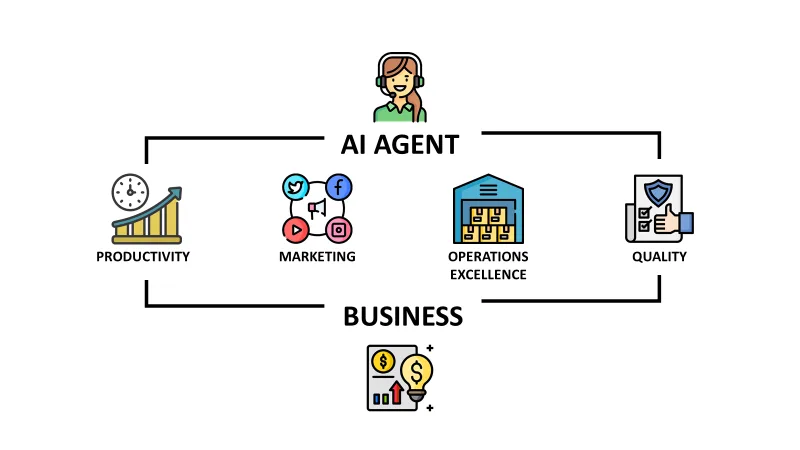
How to Make AI Agents Work for Your Business: A Strategic Guide
Learn how to effectively integrate AI agents into your business operations. Discover strategies for deployment, workflow automation, and scaling your AI capacity.
Continue exploring
Find AI agents by workflow
More in Industry Insights
Browse more articles in the Industry Insights category.
Artificial Intelligence articles
Explore more guides and insights tagged Artificial Intelligence.
Fujitsu articles
Explore more guides and insights tagged Fujitsu.
AI Agent Categories
Browse use-case pages for sales, productivity, coding, customer service, and more.
AI Agents Landscape
Explore the full directory map and compare agents by workflow and category.
Agent Skills
Find reusable skills, capabilities, and building blocks for AI agent workflows.